

Reviewed · TAJ MAHAL TOURS
2 Days Tour of Agra (Taj Mahal) & Delhi City Tour
The big draw here is simple: you get the Taj Mahal and Delhi’s major monuments in two days, without trying to cram Agra into a frantic same-day dash. A private car takes you from Delhi to Agra, where a local guide leads you through the Taj Mahal, Agra Fort, and Baby Taj before returning you to Delhi.
I like the private door-to-door transport, especially for the three-and-a-half-hour drive each way. I also like the guide-led approach, since the details at the Taj Mahal and Agra Fort mean far more when someone explains the Mughal rulers, building work, and family stories behind them.
The main catch is the pace on Day 2. Qutub Minar, Lotus Temple, Jama Masjid, Akshardham, India Gate, Parliament House, and President House make for a full city circuit, and traffic can affect how much time you have at each stop.
In This Review
- Key points to know before booking
- Why this two-day Agra and Delhi plan works
- The three-and-a-half-hour drive from Delhi to Agra
- Entering the Taj Mahal
- Lunch between the Taj Mahal and Agra Fort
- Reading Agra Fort through Shah Jahan’s story
- The delicate details of Baby Taj
- Qutub Minar and Delhi’s medieval past
- Lotus Temple’s quiet change of pace
- India Gate, Parliament House, and President House
- Jama Masjid in Old Delhi
- Akshardham and the final temple visit
- Guides who add value to the day
- What the $100 price really covers
- Who should book this tour
- Should you book the two-day Agra and Delhi tour?
- FAQ
- Is this a private tour?
- Does the tour provide hotel pickup and drop-off?
- How long is the drive from Delhi to Agra?
- Which Agra monuments are visited?
- Which Delhi sights are included?
- Is lunch included?
- Are monument entry tickets included?
- Can I cancel for a full refund?
Key points to know before booking

- The Taj Mahal gets a proper visit: You have about two hours at India’s most famous monument, rather than simply stopping for a photograph.
- A private car keeps the Agra day comfortable: Hotel pickup, tolls, parking, taxes, bottled water, and driver allowances are covered.
- The guide makes the difference: Guides such as Vinny, Deepak, Naeem Bobby, and Majid Khan are praised for clear English, history explanations, patience, and taking photographs.
- Agra’s three major sights fit into one day: The Taj Mahal, Agra Fort, and Itimad-Ud-Daulah give you three distinct views of Mughal architecture.
- Day 2 mixes old and new Delhi: Qutub Minar, Lotus Temple, Jama Masjid, India Gate, Parliament House, President House, and Akshardham show very different sides of the capital.
- Check the ticket option carefully: Monument entry tickets are included only if you select the applicable booking option.
Why this two-day Agra and Delhi plan works
Delhi and Agra are close enough to combine, but not so close that the trip feels effortless. Agra is about three and a half hours from Delhi by road, and the return journey takes about the same time. That makes the private car more than a convenience. It gives you control over the day and avoids dealing with a separate transfer, local transport, and guide arrangement in Agra.
The first day is built around Agra’s Mughal monuments. The second turns to Delhi, combining imperial avenues, religious buildings, medieval architecture, and Old Delhi. You get a broad introduction rather than an exhaustive study, but the plan covers the main sights many people want on a first visit.
At $100 per person, the value depends partly on how many people are in your group and which ticket option you choose. For a private group, the cost includes a car, driver, hotel pickup and drop-off in Delhi, an English-speaking guide, road charges, bottled water, and applicable taxes. Food, drinks, accommodation, tips, and some or all monument tickets may cost extra.
That price is attractive if you want convenience and a guide without arranging each piece yourself. It is less appealing if you are traveling alone and prefer public transport, slow visits, or a very flexible schedule.
More Agra and Fatehpur Sikri days:
- Same Day Taj Mahal, Agra Fort & Baby Taj Tour from Delhi by Car
★ 5.0 · 4,304 reviews - Full Day Taj Mahal, Agra Fort & Baby Taj Tour from Delhi by Car
★ 5.0 · 3,647 reviews - From Delhi: Taj Mahal & Agra Private Day Trip with Transfers
★ 4.9 · 3,181 reviews
The three-and-a-half-hour drive from Delhi to Agra
Your chauffeur picks you up from your Delhi hotel or the airport and drives toward Agra on the Yamuna Expressway. The road transfer takes about three and a half hours in each direction, so this is a substantial part of Day 1.
The strength of this arrangement is ease. You do not need to find the correct train, negotiate local transport on arrival, or work out how to connect three Agra monuments. Your chauffeur drops you back at your Delhi hotel after the sightseeing.
The tradeoff is that Agra is not a quick side trip. You should be ready for a long road day, even though the sightseeing itself is sensibly divided. Bottled mineral water is provided, but lunch and other food or drinks are your own expense.
A private tour also means only your group participates. That matters if you want to ask questions, stop for photographs, or keep the guide focused on your interests. It does not mean every part of the day will move at your preferred speed, since the fixed distance and monument hours still shape the schedule.
Entering the Taj Mahal
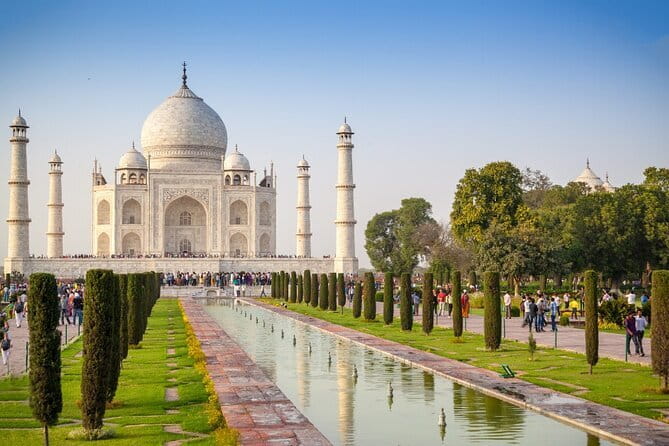
The Taj Mahal is the emotional center of the tour, and you have around two hours here. That is a useful amount of time for the main approach, the white marble mausoleum, the gardens, and photographs, with a guide explaining the building and its place in Mughal history.
The monument was built as an immense marble mausoleum. Its fame can make it easy to treat the visit as a single photograph, but the details reward a slower look. Notice the carved marble, the inlay work, the symmetry, and the way the building changes as you move closer.
Your guide can also help you use the time well. Deepak is specifically praised for arranging a sunrise visit on one occasion, while Vinny is praised for clear English, giving a full explanation of the Taj Mahal, and allowing enough time inside the complex. If your start time is important, confirm it before the day begins, since the listed schedule itself does not guarantee a sunrise departure.
This is one place where a guide adds real value. The Taj Mahal is visually clear but historically layered. Without explanation, you may miss how the monument connects to Shah Jahan, Mughal court life, and the larger building tradition that appears again at the next stops.
Lunch between the Taj Mahal and Agra Fort
After the Taj Mahal, the tour takes you to a well-known local restaurant or hotel for lunch. You get about one hour, and the meal is not included in the tour price.
That setup is practical, though it gives you less control than choosing your own restaurant. One guide, Naeem Bobby, is praised for knowing good places to eat and drink, so you can ask your guide for help if you want advice. Still, confirm menu prices yourself and remember that any shopping or meals are your own expense.
The one-hour pause also breaks up the sightseeing. Agra Fort is a large complex, and visiting it immediately after the Taj Mahal without a rest can make the afternoon feel heavy.
More ways to see the Taj Mahal:
- Taj Mahal Day Tour from Delhi by Superfast Train – TOP RATED TOUR
★ 5.0 · 4,166 reviews - Taj Mahal Tour from Delhi by Express Train (Viator Award Winner)
★ 5.0 · 2,849 reviews - All Inclusive Private Taj Mahal Luxury Tour from Delhi by Car
★ 5.0 · 2,564 reviews - Same Day Taj Mahal, Fort & Baby Taj Tour from Delhi by Car
★ 4.9 · 2,534 reviews
Reading Agra Fort through Shah Jahan’s story

Agra Fort receives about two hours, which is enough to see its principal areas with a guide rather than simply walking through the gates. Emperor Akbar began constructing the fort in 1565, and later Mughal rulers expanded and altered it.
The fort includes buildings such as Moti Masjid and Musamman Burj. Musamman Burj is especially meaningful because Shah Jahan spent his final years confined there, with a view toward the Taj Mahal. That link gives the two monuments a human story: the Taj Mahal represents imperial love and memorial, while the fort shows the power struggles and family conflicts of the same ruling house.
I like the order of this day. Seeing the Taj Mahal first gives you the famous image, then Agra Fort supplies political and architectural context. You can compare the pale marble of the mausoleum with the fort’s defensive walls and palace spaces.
The site is broad, so comfortable shoes make sense. The exact amount you see depends on the guide, timing, and crowds, but two hours gives this stop enough weight to avoid feeling like a token addition.
The delicate details of Baby Taj
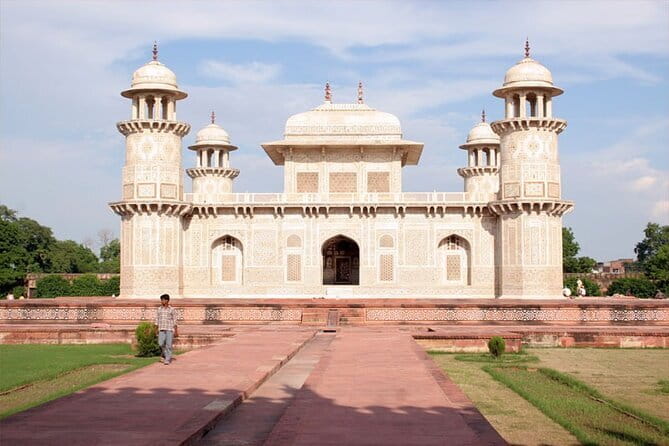
Itimad-Ud-Daulah, often called Baby Taj, takes about an hour. It is smaller than the Taj Mahal, but do not treat it as a spare stop. Its elaborate carving and inlay work are important because the tomb is viewed as a forerunner of the Taj Mahal’s decorative style.
This visit changes the rhythm of the day. After two enormous imperial complexes, Baby Taj offers a more intimate look at surface decoration and craftsmanship. Your guide can point out details that are easy to miss when you are focused only on size.
The one-hour visit is well judged. It lets you appreciate the building without turning the day into a long architectural survey. Afterward, your chauffeur begins the return drive to Delhi and drops you at your hotel.
Qutub Minar and Delhi’s medieval past
Day 2 begins with Qutub Minar, with about one hour set aside for the visit. The minaret rises 72.5 meters and is one of India’s tallest. The site reflects the early Islamic rulers of Delhi and the conflicts between Mughal and earlier Hindu kingdoms described in the tour material.
One hour is enough for an introduction, photographs, and a guide’s explanation, but not for a slow archaeological study of every feature. You will get more from the stop if you listen to the historical background instead of treating the tower as a quick photo stop.
The tour presents Qutub Minar as evidence of architectural skill and changing political power. That makes it a useful counterpoint to the Mughal monuments in Agra, even though the historical periods and styles are not identical.
Lotus Temple’s quiet change of pace
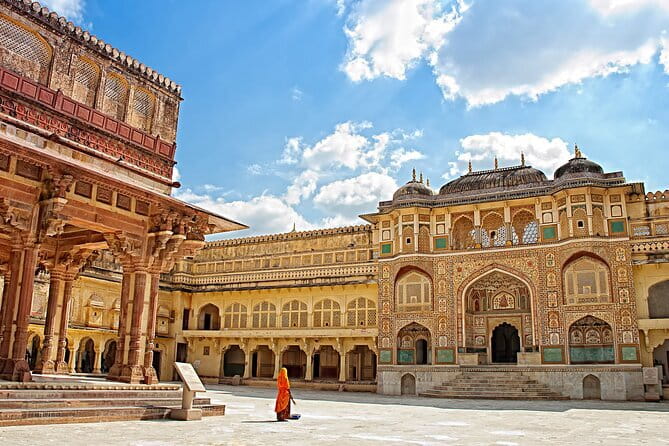
The Lotus Temple is associated with the Bahai faith and is open to people of all faiths for meditation. The building’s lotus form symbolizes peace, and the structure is a modern addition to Delhi’s collection of monuments.
About an hour is planned here. This stop gives you a break from forts, tombs, and imperial buildings. The appeal is less about a long historical story and more about the building’s shape, its purpose, and the calm atmosphere connected with prayer and meditation.
The listed entrance is free, though time and access inside can depend on the site’s operating arrangements. Your guide can explain the religious setting, but you should treat the temple as a place for quiet observation rather than a standard sightseeing hall.
India Gate, Parliament House, and President House
The central Delhi drive includes India Gate, Parliament House, and President House. These stops help explain the capital’s modern political identity and its British-era planning.
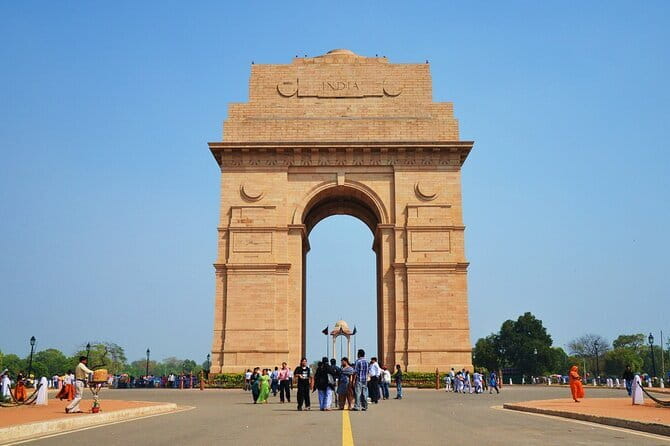
India Gate was first called the All India War Memorial and honors soldiers who died in the First World War. It was designed by Sir Edwin Lutyens, the British architect associated with New Delhi’s grand central avenues.
Parliament House contains the Rajya Sabha and Lok Sabha. The building is described as a colonnaded structure, and the tour generally treats it as a drive-by or exterior viewing stop rather than a full interior visit.
President House was originally the residence of the British Viceroy and became the home of India’s president after independence. These sites are best understood from the vehicle and through the guide’s explanation. Do not expect the same kind of entry and close inspection you receive at the Taj Mahal or Qutub Minar.
Jama Masjid in Old Delhi
Jama Masjid, also called Jumma Masjid, brings you into the historical center of Old Delhi. It was constructed by Shah Jahan in 1650 and is one of the largest mosques in India.
The planned visit lasts about an hour. The mosque is an important architectural stop, but dress and conduct matter at a religious site. Follow your guide’s instructions, and check any photography rules or entry conditions at the time of your visit.
This stop also shifts the feel of the day. Qutub Minar and the central government buildings present Delhi through monuments and grand planning. Jama Masjid connects you with the city’s older religious and urban core.
Akshardham and the final temple visit
Swaminarayan Akshardham is described as one of the biggest and most famous temples in the Delhi NCR region. The complex presents Indian art, heritage, rituals, and spiritual values connected with the Swaminarayan tradition.
About an hour is planned here, and the listed admission is free. The visit rounds out the religious side of the tour after the Lotus Temple and Jama Masjid, but these sites represent very different faiths and architectural traditions.
Because Day 2 already contains many stops, you should think of Akshardham as an introduction. The schedule does not promise a long program or an extended examination of every part of the temple complex. Ask your guide what can realistically be seen during the available time.
Guides who add value to the day
The strongest part of this experience is likely to be the individual guide you receive. Several guides are named in the feedback connected with the tour.
Vinny is praised for clear, understandable English, careful explanations at the Taj Mahal, and taking photographs. Deepak is described as patient and professional, with strong explanations of the Taj Mahal and Agra Fort. He also arranged a sunrise Taj Mahal visit on one occasion.
Naeem Bobby is praised for knowing good places to eat and drink, as well as for his historical explanations and care with visitors. Majid Khan is praised for pleasant English explanations, availability, and photography skills.
You cannot assume which guide you will receive, so the names are useful mainly as a guide to what to request. If you have a preference, ask whether that person is available when booking. In any case, tell your guide early if you want more history, more photographs, less shopping, or extra time at a particular monument.
Shopping is mentioned in connection with guide assistance. That can be useful if you want local products, but it can also add time and pressure to a tightly scheduled day. Be clear about your interest before stopping.
What the $100 price really covers
The package includes transportation in a private air-conditioned car, pickup and drop-off at a Delhi hotel or airport, an English-speaking professional guide, tolls, parking, inter-state taxes, driver allowances, bottled water, and applicable road taxes.
Monument admission tickets are included only if the option you book includes them. This detail matters because the headline price alone may not show your final cost. Food, drinks, accommodation, and gratuity are not included.
For a family or small private group, the price can be a sensible way to combine transport and guiding. You are paying for time saved, a dedicated vehicle, and a local guide who can connect the monuments instead of leaving you to manage the route.
For a solo visitor, compare the cost with other transport options before booking. The privacy, comfort, and simplicity may still be worth it, especially if this is your only chance to see Agra.
Who should book this tour
I would choose this tour if you have two days, want the major sights, and prefer someone else to handle the long road transfer. It suits families, first-time visitors, and small groups that want a private schedule rather than a large coach.
It also suits people who want history explained in English. The guides connected with this experience are praised for patience, clear speech, photography, and practical help with meals and shopping.
I would think twice if you want a slow, unplanned Delhi visit. Day 2 covers a lot of ground, and the three-and-a-half-hour Agra drive makes Day 1 a full day even though the sightseeing is sensibly spaced.
Free cancellation is available if you cancel at least 24 hours before the local start time. Changes or cancellations inside that window are not accepted for a refund.
Should you book the two-day Agra and Delhi tour?
Book it if your priority is seeing the Taj Mahal, Agra Fort, Baby Taj, and Delhi’s main monuments with private transport and a guide. The strongest value comes from the combination of a dedicated car, hotel service, and a guide who can explain the sites and help with photographs.
Before paying, confirm the monument-ticket option, the pickup time, and whether you have a preferred guide such as Vinny, Deepak, Naeem Bobby, or Majid Khan. If you accept the long drives and full second day, this is a practical way to cover the essential sights without arranging every transfer yourself.
FAQ
Is this a private tour?
Yes. Only your group participates in the activity.
Does the tour provide hotel pickup and drop-off?
Yes. Pickup and drop-off are provided in Delhi, including pickup from a Delhi hotel or airport.
How long is the drive from Delhi to Agra?
The drive takes approximately three and a half hours each way.
Which Agra monuments are visited?
The Agra portion includes the Taj Mahal, Agra Fort, and Itimad-Ud-Daulah, also called Baby Taj.
Which Delhi sights are included?
The Delhi sightseeing includes Qutub Minar, Lotus Temple, India Gate, Parliament House, President House, Jama Masjid, and Swaminarayan Akshardham.
Is lunch included?
No. Food and drinks are not included in the tour price.
Are monument entry tickets included?
Monument entry tickets are included if you book the option that includes them. Check the selected option before completing your purchase.
Can I cancel for a full refund?
Yes, if you cancel at least 24 hours before the experience start time. Cancellations made less than 24 hours in advance are not refunded.
More 2-Day Experiences in New Delhi
- 2 Days Overnight Taj Mahal & Agra Tour From Delhi
★ 5.0 · 743 reviews - Delhi: 2-Day Delhi & Taj Mahal Tour by Car
★ 4.9 · 138 reviews - 2-Day Golden Triangle Tour to The Taj Mahal, Agra and Jaipur from Delhi by Car
★ 5.0 · 110 reviews - 2 Days Private Delhi & Agra Tour with Taj Mahal from Delhi by Car
★ 5.0 · 101 reviews
Just added around New Delhi
- Delhi: All-Inclusive Full or Half Day Tour With Hotel Pickup★ 5.0 · 3 reviews
- From Delhi : All Inclusive Taj Mahal Tour by Gatimaan Express★ 5.0 · 3 reviews
- Skip the line: Taj Mahal Agra Private Day Trip From Delhi By Car★ 5.0 · 3 reviews
- Delhi: Old and New Delhi One Day Private Guided City Tour★ 5.0 · 3 reviews
- New Delhi Night City Tour★ 5.0 · 3 reviews
- Old Delhi Half day private city tour★ 5.0 · 3 reviews
- Sultanpur Bird Sanctuary Tour Near Delhi★ 5.0 · 3 reviews
- A full-day tour of Old & New Delhi Monument Express Entry★ 5.0 · 3 reviews
Taj Mahal Tours, compared.

Same Day Taj Mahal, Agra Fort & Baby Taj Tour from Delhi by Car
Read our review →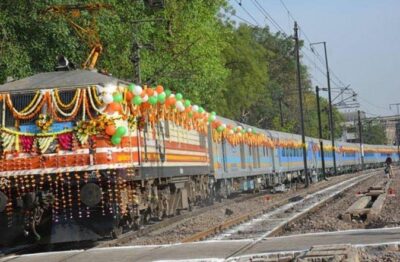
Taj Mahal Day Tour from Delhi by Superfast Train – TOP RATED TOUR
Read our review →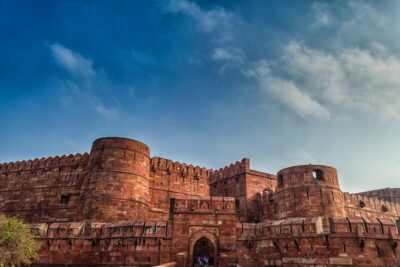
Full Day Taj Mahal, Agra Fort & Baby Taj Tour from Delhi by Car
Read our review →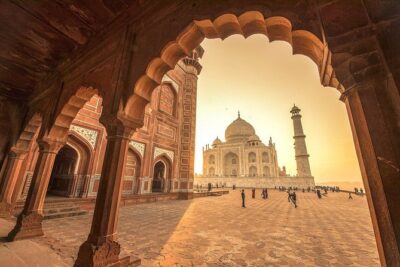
Taj Mahal & Agra Private Day Trip with Transfers
Read our review →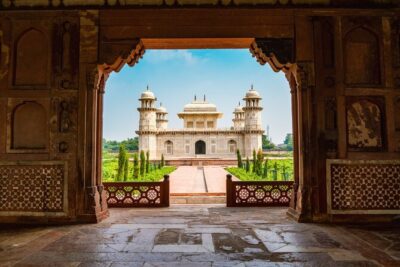
Taj Mahal Tour from Delhi by Express Train (Viator Award Winner)
Read our review →
All Inclusive Private Taj Mahal Luxury Tour from Delhi by Car
Read our review →
Same Day Taj Mahal, Fort & Baby Taj Tour from Delhi by Car
Read our review →
Browse the lists this tour appears in