
Reviewed · NEW DELHI
Dalai Lama Himalayan Trek
The best part of this 11-day India adventure is its sharp change of pace. You begin among Delhi’s grand temples and traffic, ride an overnight train north, then trade city streets for donkey tracks, village paths, forest bridges, and snowy Himalayan peaks near the Dalai Lama’s home. I like the mix of spiritual sites and outdoor challenge, and I like that Manu and his team handle the practical work, including tents, meals, transport, and train berths.
I also like the finish at the Taj Mahal, which gives the trip a famous final flourish after the quieter mountain days. The main caution is physical: five days of trekking, including steep and rocky sections near Triund Hill, demand strong fitness. This is not a relaxed sightseeing holiday with a short walk added on.
In This Review
- Key points at a glance
- Why this route feels different from a standard India tour
- Delhi begins with temples, traffic, and a soft landing
- The overnight train changes the rhythm
- The five-day trek starts with donkeys and day bags
- Village paths and Naddi View Point show the quieter Himalayas
- Rhododendron forest leads to Magic View tea
- Triund Hill brings the biggest views and hardest walking
- Descending to McLeod Ganj gives you time to recover
- Cable cars, tea, and cricket finish the mountain visit
- The Taj Mahal gives the journey a memorable final scene
- What the $1,463.90 price includes
- Who should book this Himalayan trek
- Should you book the Dalai Lama Himalayan Trek?
- FAQ
- Where does the Dalai Lama Himalayan Trek begin?
- What time does the tour start?
- How long does the experience last?
- Is airport pickup available?
- What meals are included?
- Is transportation included?
- How physically demanding is the trek?
- How many people can join the group?
- Is the experience refundable if I cancel?
Key points at a glance
- Five days of Himalayan trekking: Walk between rustic villages, rhododendron forest, springs, viewpoints, and high camps near Triund Hill.
- Donkeys carry the heavy load: You trek with a day bag while tents, supplies, and camp equipment move ahead with the support team.
- Delhi and Agra are built into the route: Visit Akshardham Temple, India Gate, the Hanuman Monkey Temple, and the Taj Mahal.
- An overnight train adds local character: Train tickets are included, with transport arranged between Pathankot and Dharamsala.
- Camping comfort matters here: The supplied gear includes warm tents, thick mattresses, fleece-lined sleeping bags, and cooked meals.
- A small enough group to stay personal: The maximum group size is 35 people, with Manu, his family, guides, and colleagues supporting the journey.
Why this route feels different from a standard India tour
Many India itineraries stay on the main sightseeing circuit. This one takes you from New Delhi to the foothills of Himachal Pradesh, where the pace slows and the trip becomes a walking journey through rural communities.
The contrast is the point. In Delhi, you visit places built to impress: Akshardham’s silver and jewel-like decoration, India Gate, and the Hanuman temple near your first hotel. In the mountains, the memorable details are smaller: children laughing beside the trail, women in saris tending goats and cows, a cup of tea at Magic View, and clear water running beside camp.
I find that combination valuable because you get both the famous India you came to see and a less polished side of the country. You are not simply transferred from monument to monument. You spend several days moving under your own power, with time to notice village life.
The tradeoff is a packed schedule. Most days are listed at roughly four or five hours, but the route also includes transfers, train journeys, hotel changes, and early or late travel. You should expect an active holiday, not a slow retreat.
A few more New Delhi departures worth comparing
- Moderate Himalayan Treks Near Rishikesh From Delhi
★ 5.0 · 21 reviews
Delhi begins with temples, traffic, and a soft landing
Your trip starts at Indira Gandhi International Airport in New Delhi, where pickup is offered. The first day includes a hotel transfer, time to freshen up, and a visit to the Hanuman Monkey Temple, located close to the hotel area.
The airport stop is shown at TWG Tea Boutique, and the first day lasts about four hours with admission included. That gives you an easy start after an international flight. You can get settled before confronting Delhi at full speed.
The Hanuman temple offers an immediate introduction to the city’s religious life. It is less formal than a major monument, and the presence of monkeys gives it a memorable, slightly chaotic edge. Keep your first afternoon flexible. Even with a transfer arranged, Delhi can be tiring after a long flight.
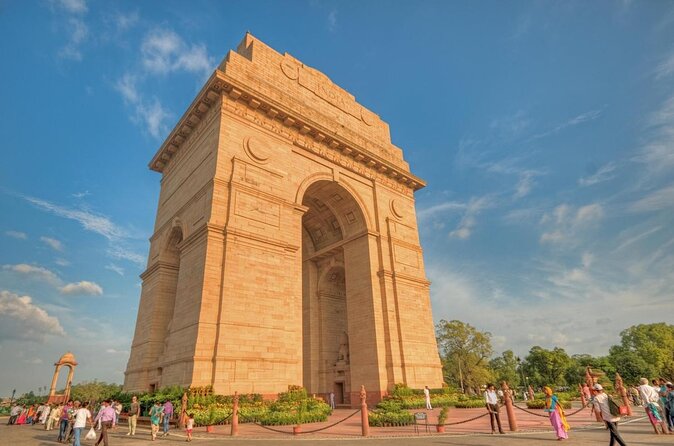
On the second day, you visit India Gate and Akshardham Temple. Akshardham is the more unusual stop. Its glittering silver and jewel-like decoration reflects the care placed on religious architecture, and it is described as being away from the usual tourist path while still popular with local visitors.
I like this pairing because India Gate gives you a familiar national landmark, while Akshardham shows a more theatrical and devotional side of modern India. The visit is around four hours with admission included, so it is an introduction rather than a full day of Delhi sightseeing.
The overnight train changes the rhythm
Day three brings the journey north to Pathankot. After arriving at the station, you are taken to an open-air restaurant for breakfast, then continue by road to Dharamsala.
An overnight train is one of the most distinctive parts of the trip. It is also one of the parts that requires the right attitude. Train travel in India can feel social, noisy, and basic compared with a hotel transfer, but it gives you a direct sense of how people move across the country.
Manu is reported to organize group members into nearby sleeper berths, which makes the experience easier. Train tickets are included, and the wider transport plan uses air-conditioned vehicles. That combination gives you local flavor without leaving every detail to chance.
After reaching Dharamsala and checking into your hotel, you can wander down into the village. This is your first chance to see the mountain setting before the trek begins. The transition from Delhi to Dharamsala is dramatic, and I would use this evening to rest rather than over-plan.
The five-day trek starts with donkeys and day bags
The walking portion begins at Kareri. You meet the rest of the team and the donkeys that carry tents, food, and camping supplies from one camp to the next.
This arrangement changes the effort in a useful way. You still need to walk for several hours, but you do not carry the full weight of camping equipment. You travel with a day bag while the support team manages the heavier load.
The first trek day lasts about five hours. The route follows donkey tracks and village paths, with mountain scenery replacing city traffic. You camp beside clear, flowing springs, and the outdoor setting becomes the focus of the trip.
The camping setup is a real strength. Manu Adventures India is described as providing warm, dry tents, thick and comfortable mattresses, fleece-lined sleeping bags, and meals cooked for the group. Those details matter after a long walk. A thin sleeping mat or cold night can spoil a mountain trip quickly, while proper bedding gives you a better chance to recover.
The food also receives particular praise. You should not expect a restaurant menu in the mountains, but the team prepares breakfast, dinner, and some lunches during the route. The surprise is how much can be produced from a tent camp.
Same city, a completely different day out:
- Old & New Delhi City Tour – Half or Full Day Options Available
★ 5.0 · 4,811 reviews - Old & New Delhi City Tour – Choose Half or Full Day Experience
★ 5.0 · 4,513 reviews - Same Day Taj Mahal, Agra Fort & Baby Taj Tour from Delhi by Car
★ 5.0 · 4,304 reviews - Taj Mahal Day Tour from Delhi by Superfast Train – TOP RATED TOUR
★ 5.0 · 4,166 reviews
Village paths and Naddi View Point show the quieter Himalayas
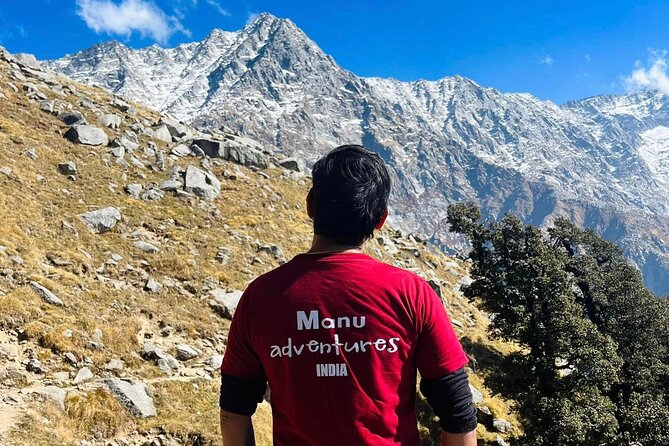
Day five takes you toward Naddi View Point. The walk gently rises and falls through rustic villages where families live by tending animals and working with limited resources.
This is one of the most authentic parts of the route. The villages are not presented as a staged cultural stop. You pass through ordinary communities, and your contact with local life comes from the trail itself.
The day lasts around four hours, with breakfast included. You may find the pace easier than the steeper sections ahead, but the distance is still part of a five-day effort. I would save energy here rather than treating the gentler walking as a reason to push too hard.
Naddi View Point gives you a broad mountain outlook and a useful sense of the route ahead. The scenery is not only about dramatic peaks. The village walls, livestock, forest, and changing height make the walk feel varied.
Rhododendron forest leads to Magic View tea
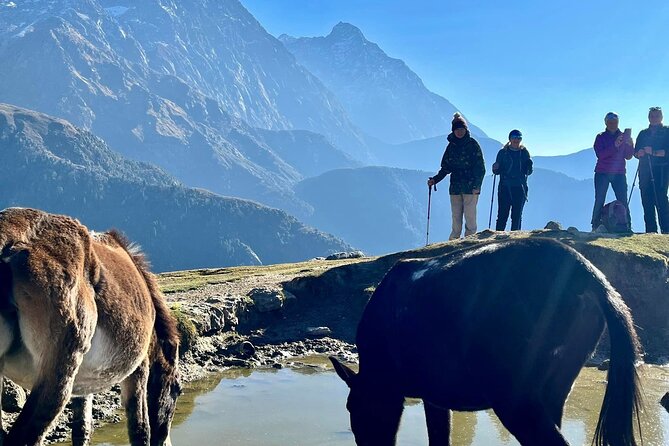
On day six, the route crosses small bridges and moves through rhododendron forest toward Manu Adventures Camp at Triund Hill. A tea stop at Magic View provides a natural rest point.
The name tells you what to expect: a tea shop with a steady view over the hills. It is the kind of pause that makes a trek feel human. You stop, drink something warm, and look back over the ground you have covered.
This section lasts about five hours and includes admission to the listed stop. Forest walking can feel cooler and more sheltered than the open mountain sections, while the bridges add small changes in rhythm to the path.
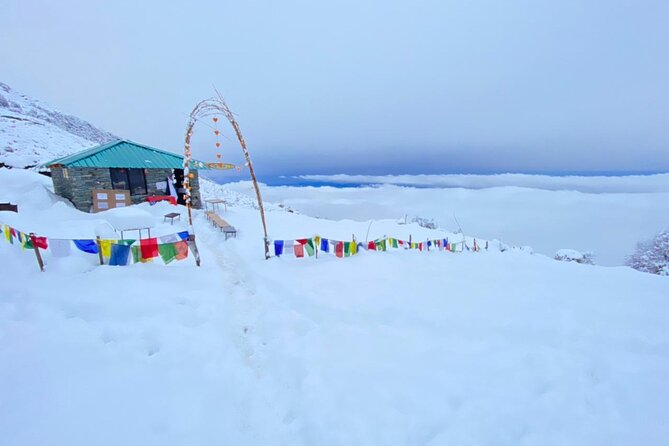
The camp at Triund Hill is an important marker. You are now close to the most dramatic views of the trek, but you are not finished. The next day is described as steep and rocky in places, so this is another evening to eat well, organize your day bag, and listen to the guides about the next section.
Triund Hill brings the biggest views and hardest walking
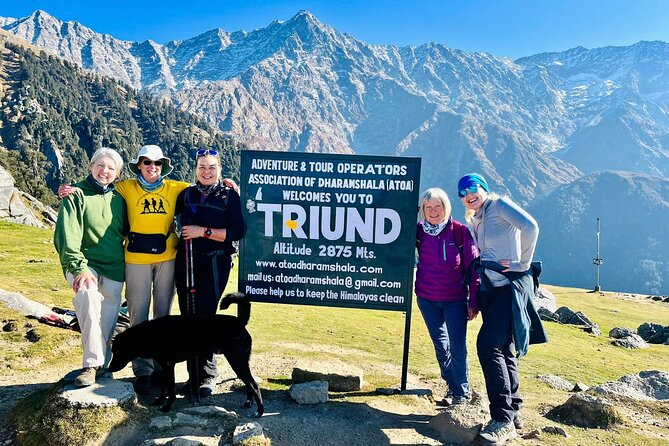
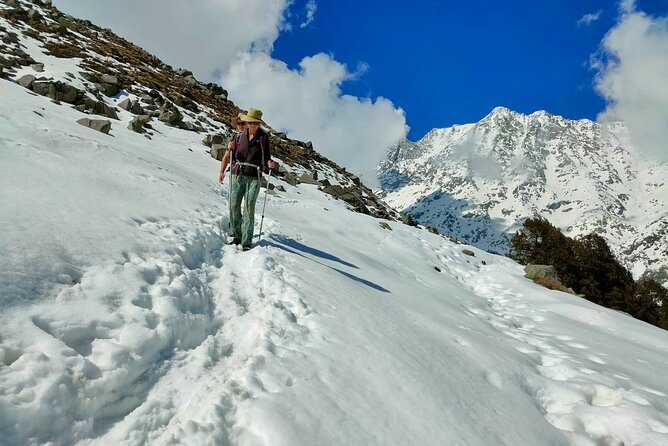
Day seven is the high point of the trekking section. The route reaches Triund Hill, where the snowy Himalayan peaks appear much larger than anything around you.
This is the day that demands the most from your legs. The walking lasts about five hours, and the trail can be steep and rocky. The reward is not just a photo stop. The scale of the peaks and the quiet around the snow line create a strong sense of distance from Delhi and ordinary routines.
You should take the fitness warning seriously. The tour information says participants should have a strong physical fitness level. That does not tell you every technical detail of the trail, but it does make one point clear: you need to be comfortable walking for several hours on uneven ground.
The mountain silence is part of the appeal. At high points, the absence of traffic and city noise can feel almost strange. If you want a Himalayan experience without carrying your own full camping load, this support system gives you a practical way to reach the views.
Descending to McLeod Ganj gives you time to recover
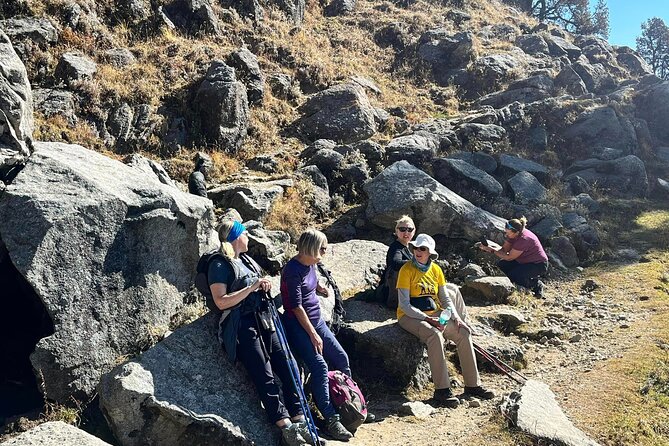
Day eight reverses the direction. After breakfast with a view, you descend toward McLeod Ganj and then return to Dharamsala for a shower and rest.
Descending is often easier on the lungs but harder on tired knees. You can go at your own pace, which is helpful, but do not treat the downhill as effortless. Trekking poles are not listed among the included equipment, so you may want to ask the operator about available gear before departure.
The evening includes a Tibetan-style feast. That meal gives the mountain section a fitting close and lets you experience the Tibetan influence that shapes McLeod Ganj and Dharamsala.
This part of the itinerary also puts comfort back in focus. After several nights in tents, a hotel shower and a proper bed are more than minor luxuries. They reset you for the final sightseeing days.
Cable cars, tea, and cricket finish the mountain visit
On day nine, you take the new cable car from McLeod Ganj to Dharamshala. You then visit a tea plantation and the famous cricket stadium before transferring to Pathankot railway station for the return journey.
The cable car gives you a different view of the area after seeing it on foot. The tea plantation adds another local industry to the itinerary, while the stadium connects the region to one of India’s great sporting passions.
The timing is again around four hours for the listed activities, but the transfer to the railway station and onward train make this a full travel day. Keep essentials in your day bag and expect the evening to be shaped by transport rather than sightseeing.
This day is a good example of the tour’s broad reach. In a short period, you move from Buddhist and Tibetan culture to tea production, cricket, rail travel, and the return route to northern India.
The Taj Mahal gives the journey a memorable final scene
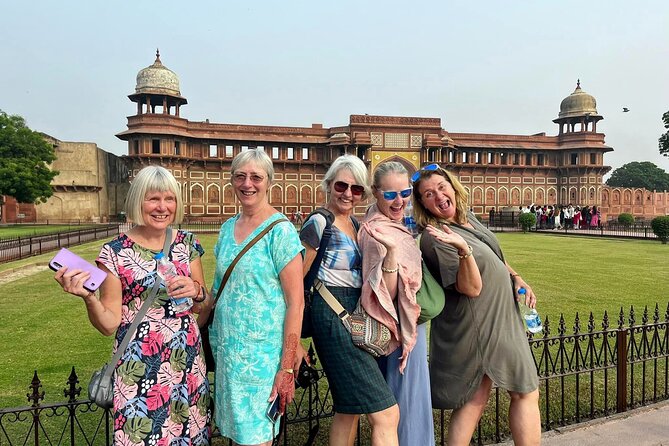
Day ten takes you to Agra for the Taj Mahal. No first visit to India feels complete without seeing it, and its inclusion gives the trip an iconic ending after the more personal mountain experience.
The Taj Mahal is not a quiet discovery, but it is famous for good reason. The white marble monument, its setting, and the story attached to it create a powerful final sightseeing stop. You also get a celebration meal at a rooftop location with views toward the Taj, according to the trip details.
That rooftop setting is a smart choice. It lets you reflect on the whole route while looking at one of India’s most recognizable buildings. The day lasts around four hours with admission included, so the Taj visit is focused rather than overloaded with extra Agra stops.
On day eleven, you transfer back to New Delhi and have the last afternoon free. You can shop in Connaught Place or visit preserved Delhi buildings before departure. Admission is not listed for the final afternoon, so any optional sightseeing or shopping costs would be your own.
What the $1,463.90 price includes
At $1,463.90 per person, this is not a budget rail-and-hostel trip. The price makes more sense when you count what is bundled into an 11-day route.
Included items are:
- Train tickets
- Air-conditioned vehicle transport
- Eleven dinners
- Ten breakfasts
- Five lunches
- Camping equipment and support for the trek, including the gear described by the operator
The value is strongest for you if you want one booking to coordinate Delhi, Pathankot, Dharamsala, the Himalayan trek, Agra, and the return to New Delhi. The donkey support, cooked camp meals, tents, sleeping bags, transfers, and organized train travel remove much of the work that can be difficult to arrange independently.
The package is less compelling if you prefer to choose your own hotels, trains, restaurants, and walking schedule. Tips are not included, and airport or departure taxes are also excluded. Build those extra costs into your budget.
The 11-day duration is approximate, and the group can reach 35 people. That is not a tiny private expedition, but the presence of Manu, his family, guides, and colleagues appears to give the operation a strong support network.
Who should book this Himalayan trek
I would recommend this experience to you if you want a physical challenge tied to culture and major sights. It suits people who are happy to sleep in tents, walk on uneven paths, share transport, and accept that India rarely runs at the same tidy pace as a European tour.
It is especially well suited to:
- Hikers who want support animals to carry camping equipment
- First-time visitors who want Delhi, the Himalayas, and the Taj Mahal in one route
- People interested in Tibetan culture and the Dalai Lama’s exiled home in McLeod Ganj
- Couples, friends, or small groups who enjoy active days and shared meals
- Visitors who value a guide-led trip rather than arranging every transfer alone
I would think twice if you have limited mobility, dislike camping, or want plenty of free time in each city. The physical requirement is explicit, and the schedule leaves little room for a missed train, a slow recovery day, or an unplanned detour.
The cancellation policy is strict: the experience is non-refundable and cannot be changed for any reason. Read the conditions carefully before paying.
Should you book the Dalai Lama Himalayan Trek?
Book it if you want India in several distinct forms: Delhi temples, an overnight train, Tibetan mountain culture, village walking, supported camping, and the Taj Mahal. The strongest reason to choose it is the five-day trek, where donkeys carry the heavy gear and the team provides warm bedding and cooked food.
Skip it if the Himalayan walking is only a side interest. The trek is the heart of the trip, not a decorative add-on. For the right person, the price buys a well-supported route with a rare mix of city sights and mountain life. For someone seeking a gentle sightseeing holiday, it will feel too demanding.
FAQ
Where does the Dalai Lama Himalayan Trek begin?
The experience begins at Indira Gandhi International Airport in New Delhi, India.
What time does the tour start?
The listed start time is 9:00 am.
How long does the experience last?
The trip lasts approximately 11 days.
Is airport pickup available?
Yes. Pickup is offered, and the first day includes a transfer from the airport to the hotel.
What meals are included?
The package includes 11 dinners, 10 breakfasts, and five lunches.
Is transportation included?
Yes. Train tickets and air-conditioned vehicle transport are included.
How physically demanding is the trek?
Participants should have a strong physical fitness level. The walking portion lasts five days, with steep and rocky sections near Triund Hill.
How many people can join the group?
The maximum group size is 35 people.
Is the experience refundable if I cancel?
No. The experience is non-refundable and cannot be changed for any reason.
Just added around New Delhi
- Delhi: All-Inclusive Full or Half Day Tour With Hotel Pickup★ 5.0 · 3 reviews
- From Delhi : All Inclusive Taj Mahal Tour by Gatimaan Express★ 5.0 · 3 reviews
- Skip the line: Taj Mahal Agra Private Day Trip From Delhi By Car★ 5.0 · 3 reviews
- New Delhi Night City Tour★ 5.0 · 3 reviews
- Old Delhi Half day private city tour★ 5.0 · 3 reviews
- Delhi: Old and New Delhi One Day Private Guided City Tour★ 5.0 · 3 reviews
- A full-day tour of Old & New Delhi Monument Express Entry★ 5.0 · 3 reviews
- Sultanpur Bird Sanctuary Tour Near Delhi★ 5.0 · 3 reviews