
Reviewed · MUSEUMS
Delhi: National Museum Tour
India’s story comes into focus one gallery at a time at Delhi’s National Museum. You’ll move from Harappan seals and pottery to Buddhist statues, miniature paintings, jewelry, textiles, and ceremonial arms, with a private guide to connect the objects.
I like the hotel pickup and private car, especially in a city where getting across Delhi can eat up a morning. I also like the clear gallery route: ancient civilization first, then sculpture, religion, painting, craft, and military art. The main caution is timing. The advertised visit can last 1.5 to 2.5 hours, while the planned museum visit is sometimes listed at about three hours, and not every gallery may be open.
- Harappan objects begin the story: See pottery, seals, and sculptures linked to the Indus Valley Civilization.
- One private guide keeps the visit focused: English-language guidance helps turn a large museum into a manageable route.
- Miniature paintings reward close attention: Learn about their small scale, color, subjects, and methods.
- Decorative arts show daily skill and luxury: Jewelry, textiles, and crafted objects bring Indian design off the history-book page.
- Private transport covers Delhi’s broad reach: Pickup and return are available in Delhi, Noida, and Gurugram.
- A flexible ending may include India Gate: If some galleries are unavailable or the visit ends early, the guide may adjust the plan.
In This Review
- Why the National Museum makes a good Delhi morning
- Private pickup from Delhi, Noida, or Gurugram
- Harappan Civilization Gallery: seals, pottery, and early city life
- Maurya and Gupta art: sculpture across influential eras
- Buddhist Art Gallery: relics, statues, and the spread of an idea
- Miniature Paintings Gallery: art made for close viewing
- Decorative Arts Gallery: jewelry, textiles, and crafted objects
- Arms and Armour Gallery: military technology with artistic flair
- Temporary displays, the museum shop, and café
- What the $17 price gives you
- Who should book this National Museum visit
- Final verdict: a smart, focused museum introduction
- FAQ
- Where does the tour begin?
- How long does the National Museum visit last?
- Is the tour private?
- What language does the guide speak?
- Are National Museum entrance tickets included?
- What galleries are included in the planned route?
- Is transportation included?
- Are meals included?
Why the National Museum makes a good Delhi morning
The National Museum gives you a useful starting point for understanding India. Instead of seeing one monument from one period, you trace several eras through objects made for worship, trade, court life, household use, and war.
That range matters. A sculpture can explain religious ideas, while a seal hints at trade and administration. A miniature painting shows how artists worked within court traditions, and a piece of jewelry reveals the care given to personal display. You get a broad look at India without spending the day moving between distant monuments.
The route is also practical for a first visit. Your guide takes you through selected galleries rather than leaving you to guess which rooms deserve your limited time. That is valuable in a museum with more material than you can absorb in one short session.
The museum visit is described as lasting between 1.5 and 2.5 hours, but the detailed plan allows around three hours. Treat that as a range, not a promise. Gallery access, your pickup point, and your own pace can affect the day. If you care most about the museum, ask at the start how much time is available inside.
Private pickup from Delhi, Noida, or Gurugram
The tour begins with pickup from your hotel, Delhi airport, Delhi train station, or another requested location in Delhi. Pickup is also offered in Noida and Gurugram. You then travel in a private, air-conditioned car with bottled mineral water included.
This arrangement is worth more than it may first appear. Delhi is spread out, and an airport or hotel pickup saves you from arranging a separate ride to the museum. It also gives you a fixed plan if you have only a morning free between other activities.
The car is private, not shared. That means you can keep the pace suited to your group, spend longer with a favorite gallery, or move along when your attention starts to fade. The guide and driver are described as professional and kind, which is useful when the car ride and museum visit form one connected experience.
You should allow extra time around the museum visit itself. The stated duration covers the activity, but Delhi traffic can affect the overall morning, especially when you are being collected from a distant part of the city. If you are catching a flight or train, give yourself a generous buffer.
More museums and sites in New Delhi:
- Akshardham Evening & Morning tour exhibition water fountain Show
★ 5.0 · 49 reviews - From Delhi: Akshardham Exhibition and Sahaj Anand Water Show
★ 4.9 · 30 reviews - Akshardham Temple Tour Exhibition, Light & Water Show with Transfers
★ 4.5 · 29 reviews
Harappan Civilization Gallery: seals, pottery, and early city life
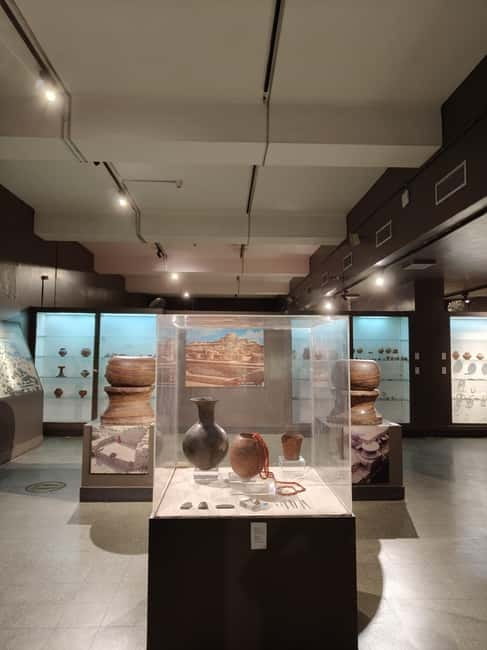
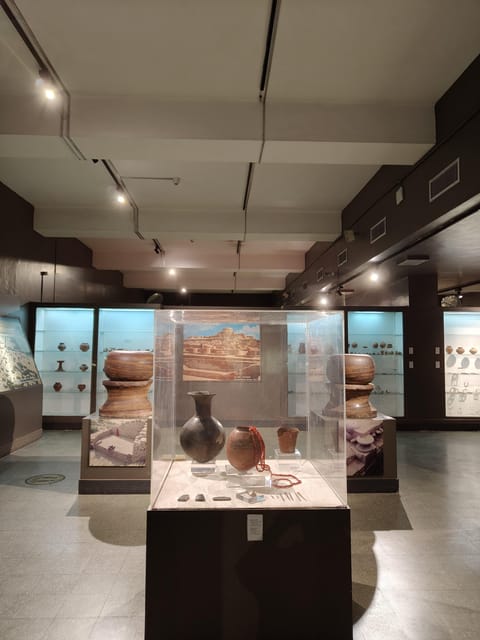
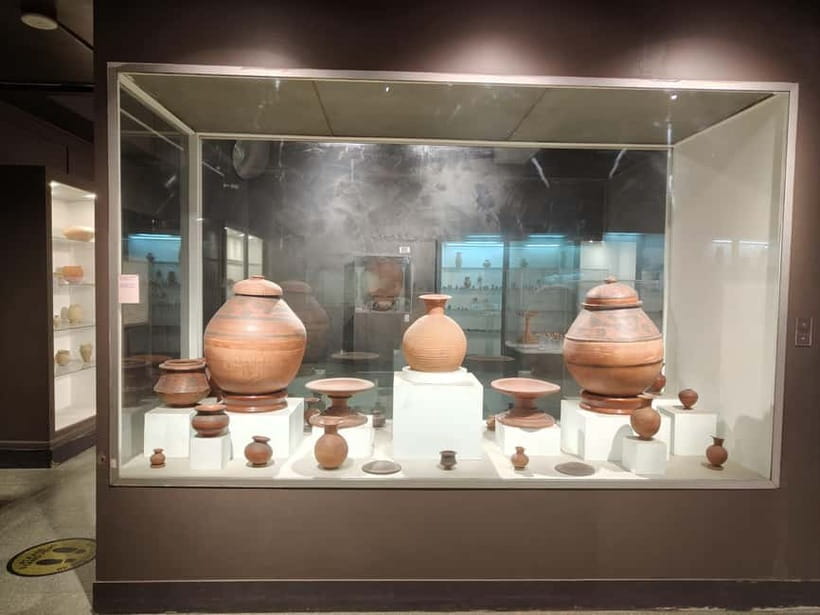
The first major stop is the Harappan Civilization Gallery. Here you see pottery, seals, and sculptures from the Indus Valley Civilization, one of the world’s oldest urban cultures.
This is a strong opening because the objects are small, practical, and surprisingly direct. A seal may be only a compact carved piece, but it raises questions about trade, identity, and record keeping. Pottery gives you a more everyday view, while sculptures show how people expressed ideas through form.
Your guide can help place these objects within the period’s larger achievements, including planned cities and organized urban life. The gallery is not only about old things. It is about how people managed homes, streets, craft production, and exchange long before modern cities existed.
Pay attention to the scale of the objects. Museum displays can make ancient cultures feel remote, but pottery and seals bring the subject closer to ordinary activity. You may find this gallery especially useful if you have not studied the Indus Valley before, since a guide can explain what each object suggests without forcing you to read every label.
Maurya and Gupta art: sculpture across influential eras
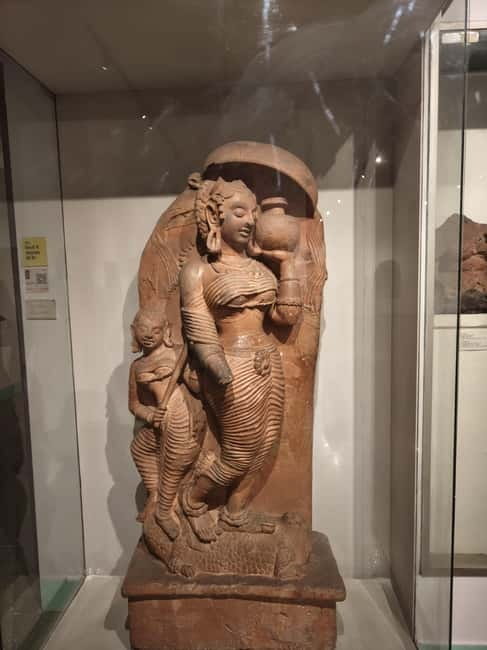
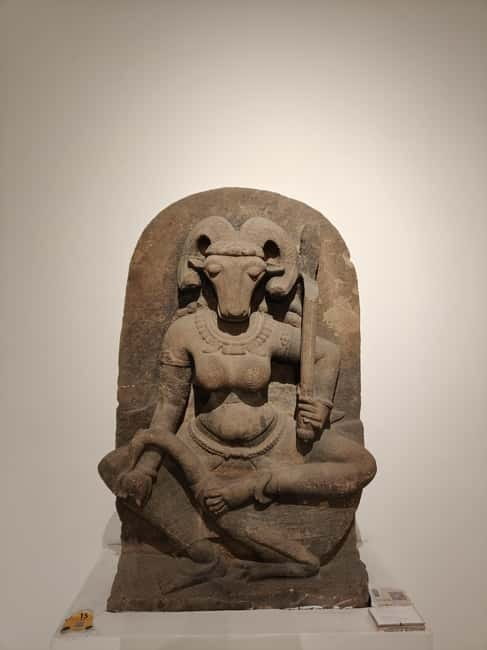
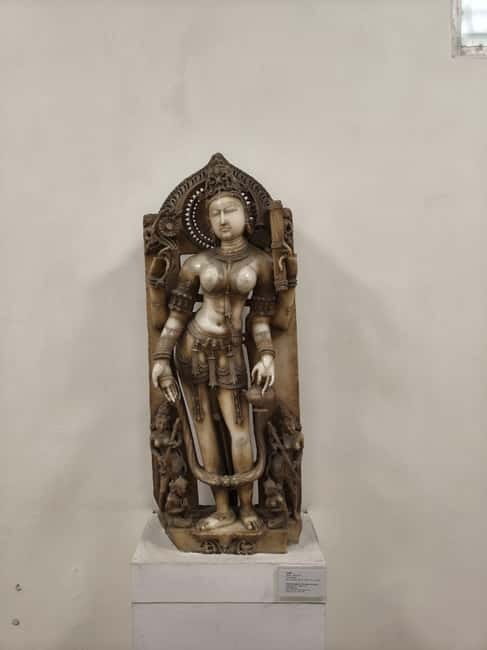
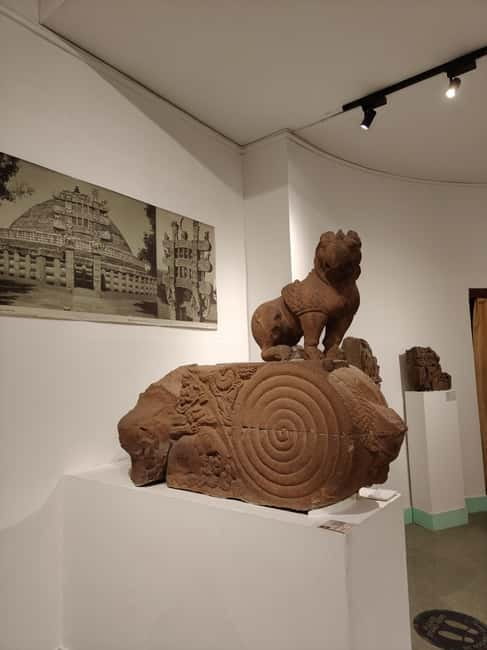
The next section presents Maurya and Gupta art. This part of the route shifts from early urban artifacts toward sculpture and objects connected with major periods in Indian history.
The value here is comparison. You are not looking at a single style in isolation. You can consider how sculpture and architecture changed over time, and how artists handled the human figure, religious subjects, and formal design.
A guide is particularly helpful in this gallery because the significance of a sculpture is not always obvious at first glance. The material, posture, expression, and setting can all carry meaning. Without context, you may simply see an old statue. With explanation, you begin to notice how artistic ideas developed.
This section also helps you connect the museum to places elsewhere in India. The tour cannot reproduce the experience of visiting every temple or historic site, but it gives you a visual framework for understanding sculpture when you encounter it later.
Buddhist Art Gallery: relics, statues, and the spread of an idea
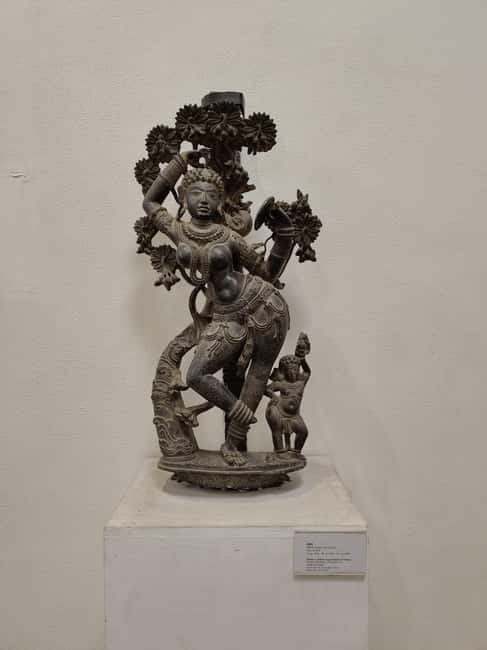
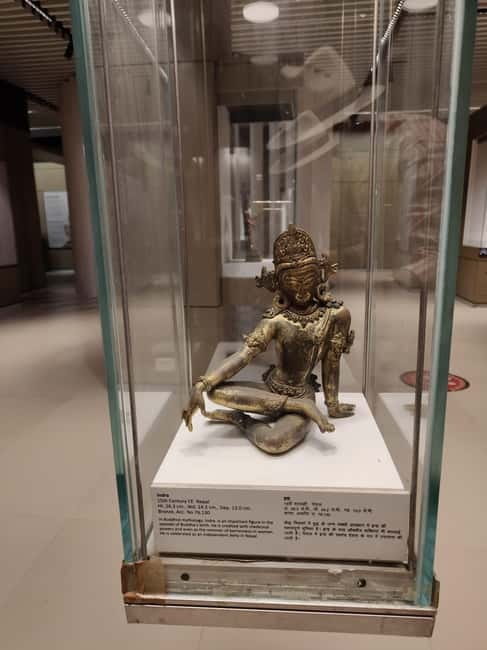
The Buddhist Art Gallery takes you from individual works into a wider story of movement and exchange. It includes relics, statues, and murals from different regions, showing how Buddhism spread across Asia and changed as it moved.
I like this stop because it places religious art in a cross-border setting. The gallery is not limited to one local tradition. It points to connections between regions, artists, worshippers, and communities.
Look for differences in the way Buddhist figures are presented. The tour description does not promise a particular object or display in every visit, so your guide will determine which works are available to see. Still, the stated collection gives you a chance to consider how one belief system could take on different artistic forms in different places.
This is another gallery where a private guide earns the admission price. Religious imagery can be hard to read if you do not know the basic symbols or the story behind a figure. Clear explanation makes the collection less like a row of statues and more like a record of ideas traveling across Asia.
Same city, a completely different day out:
- Old & New Delhi City Tour – Half or Full Day Options Available
★ 5.0 · 4,811 reviews - Old & New Delhi City Tour – Choose Half or Full Day Experience
★ 5.0 · 4,513 reviews - Same Day Taj Mahal, Agra Fort & Baby Taj Tour from Delhi by Car
★ 5.0 · 4,304 reviews - Taj Mahal Day Tour from Delhi by Superfast Train – TOP RATED TOUR
★ 5.0 · 4,166 reviews
Miniature Paintings Gallery: art made for close viewing
The Miniature Paintings Gallery is likely to be one of the most rewarding stops for anyone who enjoys painting, color, or fine detail. You see small, carefully made works from different parts of India, along with an explanation of their subjects, techniques, and historical setting.
Miniature painting demands a slower look. These are not large scenes designed to fill a wall from a distance. Their interest lies in the detail packed into a small area, from figures and clothing to architecture, landscape, and decorative borders.
Your guide can point out how the paintings relate to court life, storytelling, and regional traditions. The exact examples may vary with gallery access, so ask which works deserve the closest look if your time is short.
This section is a good reminder that size does not equal importance. You may be tempted to hurry because the paintings are small, but doing so defeats the point. Stand close enough to see the fine work, then step back to take in the complete composition.
Decorative Arts Gallery: jewelry, textiles, and crafted objects
The Decorative Arts Gallery changes the mood again. It brings together jewelry, textiles, and decorative objects, giving you a look at craftsmanship and design beyond monumental buildings and famous statues.
I like this section because it connects art to use. A necklace, fabric, or household object can tell you about taste, wealth, ceremony, and skilled labor. These pieces also make Indian design easier to remember because they relate to objects people could wear, handle, display, or pass through a family.
The guide can help explain the work behind the finished item. You may find that a simple-looking piece requires careful shaping, weaving, ornament, or surface decoration. The gallery is not only for shoppers or design fans. It gives useful context for the colors, patterns, and materials you will see elsewhere in India.
If you have limited time, ask your guide to choose a few representative objects rather than trying to inspect everything. A focused explanation is more useful than a hurried walk past a long series of cases.
Arms and Armour Gallery: military technology with artistic flair
The Arms and Armour Gallery adds a practical and dramatic final chapter. It includes weaponry and armor from different periods, allowing you to follow changes in military technology and the craftsmanship used to make these objects.
This gallery works well at the end because it offers a clear contrast with the delicate paintings and textiles. Weapons were made for use, yet they could also carry status and decoration. Armor could protect the body while signaling rank or identity.
Your guide can help you look beyond the obvious question of how a weapon worked. Consider its shape, materials, decoration, and place in society. The collection shows that technical objects can also be works of design.
The gallery may appeal to families and visitors who need a change of pace after several rooms of sculpture and painting. It is also a useful stop for anyone interested in how political power appeared in physical form.
Temporary displays, the museum shop, and café
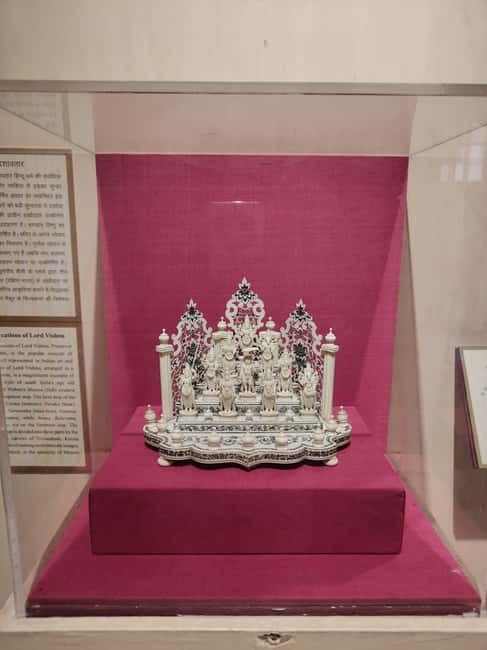
If time allows, the route may include a special exhibit or temporary gallery. Its subject can change, ranging from contemporary art to a focused group of cultural objects. Because temporary displays change, you should treat this as an extra rather than the main reason to book.
The planned ending is at the museum shop. You can browse books, souvenirs, and replicas of artifacts. This is a sensible place to buy something connected to what you have just seen, especially if you prefer a book or reproduction to a generic souvenir.
A museum café offers a chance to pause for a light snack or refreshment before departure. Meals are not included, so plan to pay separately if you use the café. The stop is useful after a concentrated museum visit, but it is not presented as a full meal break.
If galleries are closed or the tour finishes earlier than expected, the guide may adjust the outing. One reported adjustment included a visit to India Gate. Do not treat that as a guaranteed part of the route, but it is worth asking your guide what can be added if museum access is limited.
What the $17 price gives you
At $17 per person, this tour is priced attractively for a private museum visit. The fee includes museum admission, a government-approved local guide, private air-conditioned transport, bottled water during the car journey, taxes, and handling charges.
The important value is the combination. You are not paying only to enter the museum. You are also paying for a guide who can select key galleries and for transport that can collect and return you across Delhi, Noida, or Gurugram.
The value is strongest for first-time visitors, short-stay visitors, and anyone who prefers explanation over wandering. If you already know the National Museum well and want to study every gallery at your own pace, a private guided route may feel too directed.
The price does not include meals. That is a minor cost, but remember it if you plan to use the café. The flexible cancellation policy allows a full refund when you cancel at least 24 hours ahead, and you can reserve now while paying later. Those terms help if your Delhi schedule is still changing.
Who should book this National Museum visit
I would recommend this tour to you if you have a limited amount of time in Delhi and want a clear introduction to Indian art and history. It also suits couples, families, and small private groups who want to avoid a shared vehicle and set their own pace.
It is a good match for visitors who enjoy several subjects in one place: archaeology, sculpture, religion, painting, textiles, jewelry, and arms. The route gives you variety without requiring additional city transfers.
You may want to think twice if your main goal is a long, detailed museum study session. The available time can be short, and gallery access may change. Tell the guide early if you care most about Harappan objects, Buddhist art, miniatures, or decorative arts, so the visit can give those rooms priority.
The English-language service is the stated option. If you need another language, this experience may not fit, since only English is specified.
Final verdict: a smart, focused museum introduction
Book this tour if you want the National Museum made manageable, with transport and admission handled in one private outing. The best features are the focused gallery sequence and personal guide, especially for a first visit.
Keep your expectations realistic about duration and access. You may not see every planned room, and the visit can finish sooner than expected. Ask how much museum time you have, name your priority galleries, and treat any India Gate detour as a possible bonus rather than a promise.
For $17 per person, the package offers solid value: private car, guide, entry ticket, water, and return transport. It is not a substitute for a full day of independent study, but it is an efficient way to give Delhi’s museum collection a clear shape.
FAQ
Where does the tour begin?
Pickup is available from your hotel, Delhi airport, Delhi train station, or another requested location in Delhi. Pickup is also offered from locations in Noida and Gurugram.
How long does the National Museum visit last?
The activity is listed as lasting 1.5 to 2.5 hours. The detailed museum plan allows about three hours, so the exact time can vary.
Is the tour private?
Yes. The experience is arranged for a private group rather than a shared group.
What language does the guide speak?
The live guide service is offered in English.
Are National Museum entrance tickets included?
Yes. Entrance tickets for the National Museum are included in the price.
What galleries are included in the planned route?
The route includes the Harappan Civilization Gallery, Maurya and Gupta Art sections, Buddhist Art Gallery, Miniature Paintings Gallery, Decorative Arts Gallery, and Arms and Armour Gallery. A temporary or special exhibit may be added if time allows.
Is transportation included?
Yes. Transport is provided by a private, air-conditioned car, with pickup and drop-off available in Delhi, Noida, and Gurugram. Bottles of mineral water are also provided during the journey.
Are meals included?
No. Meals are not included, though the planned ending includes the option to stop at the museum café for a light snack or refreshment.
Just added around New Delhi
- Delhi: All-Inclusive Full or Half Day Tour With Hotel Pickup★ 5.0 · 3 reviews
- From Delhi : All Inclusive Taj Mahal Tour by Gatimaan Express★ 5.0 · 3 reviews
- Skip the line: Taj Mahal Agra Private Day Trip From Delhi By Car★ 5.0 · 3 reviews
- Delhi: Old and New Delhi One Day Private Guided City Tour★ 5.0 · 3 reviews
- New Delhi Night City Tour★ 5.0 · 3 reviews
- Old Delhi Half day private city tour★ 5.0 · 3 reviews
- A full-day tour of Old & New Delhi Monument Express Entry★ 5.0 · 3 reviews
- Sultanpur Bird Sanctuary Tour Near Delhi★ 5.0 · 3 reviews
Museums, compared.
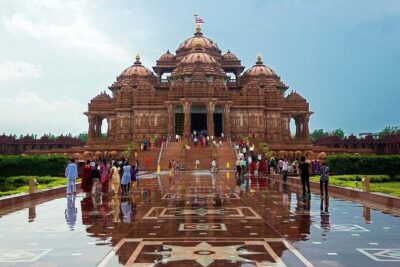
Akshardham Evening & Morning tour exhibition water fountain Show
Read our review →
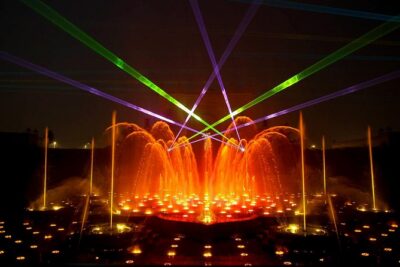
Akshardham Temple Tour Exhibition, Light & Water Show with Transfers
Read our review →
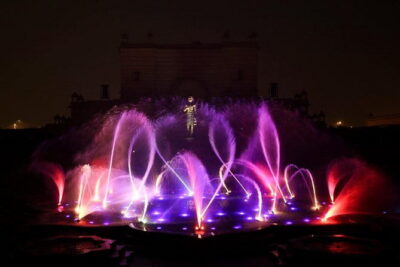
Akshardham Temple Exhibition, light and Water show With Transfers
Read our review →
Browse the lists this tour appears in