
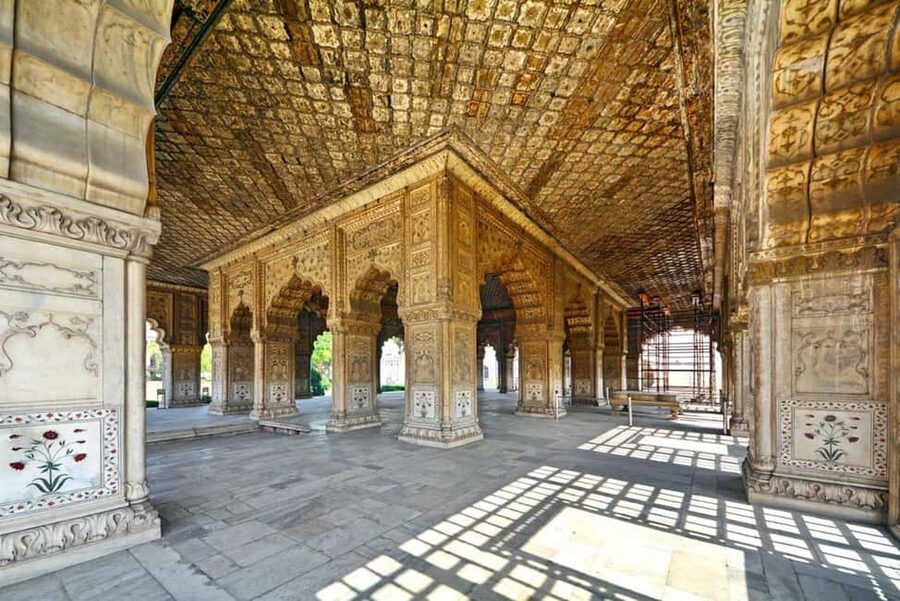
Reviewed · RED FORT TOURS
New Delhi: Red Fort Entry Ticket with Optional Add-Ons
Delhi’s Red Fort is more than a grand red sandstone wall. Inside, you move from the Lahore Gate through royal courts, drum halls, audience chambers, and former palace rooms that show how Mughal power worked. A private guide helps turn a collection of beautiful ruins into a story with people, politics, and ceremony.
I like the choice of routes, especially the option that pairs the fort with Jama Masjid and Chandni Chowk. I also like the private format, since guides such as Gopal, Ali, Priyam, and Mohammed have been praised for clear explanations and for adjusting the pace to families and late arrivals.
The main drawback is finding the meeting point. Lahori Gate can be confusing from the outside, and one visitor had to enter from the south side and walk inside to reach it. The wider add-on routes also make the advertised 1.5 to 2.5 hours feel more like a basic fort visit than a full day out.
In This Review
- Key points at a glance
- Why the Red Fort visit works so well
- Meeting at Lahore Gate without confusion
- Lahore Gate and the Naubat Khana
- Diwan-i-Aam and the public court
- Diwan-i-Khas and the palace quarters
- Museums and the 1857 rebellion
- Add-on route: Jama Masjid and Chandni Chowk
- Longer route: four major Delhi sights
- What the guides add
- Value, pace, and who should book
- Booking and timing advice
- Should you book this Red Fort tour?
- FAQ
- Where does the Red Fort tour begin?
- How long does the Red Fort visit take?
- What languages do the guides speak?
- Is this a private tour?
- Can I add Jama Masjid and Chandni Chowk?
- What other sights are included in the longer option?
- What should I bring?
- When is the Red Fort closed?
Key points at a glance

- Lahore Gate begins the story: Meet your guide at the Red Fort’s famous ceremonial entrance.
- Private guiding adds context: English and Hindi-speaking guides explain Mughal buildings, the 1857 rebellion, and Delhi life.
- The $9 base price is good value: It suits a focused Red Fort visit, though transport and extra stops depend on your selected option.
- Jama Masjid and Chandni Chowk add local color: The second route combines a major mosque, a rickshaw or pedicab ride, shopping, and street food.
- The longer route covers four major sights: Choose the third option for Humayun’s Tomb, Lotus Temple, and Qutub Minar.
- Security dates matter: The fort generally closes around Republic Day and may close near Independence Day.
Why the Red Fort visit works so well

The Red Fort gives you a strong first look at Delhi’s Mughal past without requiring a full day of sightseeing. Its broad courtyards and formal halls make the scale of imperial life easy to grasp, while the remaining palace buildings supply the finer details.
I would choose this tour if you want help reading the site rather than simply walking through it. The fort contains several named structures, museums, and open spaces, but much of the meaning is not obvious from the stonework alone. A guide can explain who used each room, how the court operated, and how the fort connects to later events in Indian history.
The private-group format is another plus. You can ask about architecture, Mughal rulers, the 1857 rebellion, or modern Delhi without waiting for a large group to catch up. Several guides have also been praised for taking their time, helping with directions, and working well with both adults and children.
The basic price is listed at $9 per person. That is a sensible cost for a guided introduction to one of Delhi’s major sights, particularly if entry and guiding are included in the option you select. Check the exact package carefully, since transfer, entry tickets, and additional stops may vary.
More Red Fort visits:
- Red Fort Delhi Entry tickets with Licensed Tour Guide
★ 4.5 · 78 reviews - Red Fort Skip-the-Line E-tickets & guide Delhi transfers
★ 4.6 · 49 reviews - Delhi: Red Fort Light and Sound Show Guided Tour
★ 4.8 · 44 reviews
Meeting at Lahore Gate without confusion
Your guide is due at Lahori Gate, the main entrance, and will contact you on WhatsApp before the start. That message is useful, so make sure the phone number attached to your booking can receive messages.
Here is the practical wrinkle: the outside area around Lahore Gate can be chaotic, and the direct approach shown on map apps may not be usable. One visitor found that the area was blocked and that the correct route involved entering from the southern side, then walking inside the fort to Lahore Gate.
I would not arrive at the last minute. Give yourself extra time to reach Old Delhi, find the proper entrance, and get through security. If you are lost, contact the guide rather than wandering around the traffic and crowds. A guide named Pri was specifically praised for sharing a live location and finding a delayed group.
Wear comfortable shoes. You will walk across open courtyards and between several buildings, and the sun can be strong. Bring water, a hat, sunscreen, and a camera. Plastic bags, food, smoking materials, drones, alcohol, drugs, and fireworks are not allowed.
Lahore Gate and the Naubat Khana

Lahore Gate is the natural place to begin. It is not just an entrance but a carefully staged approach to royal power, with its height and red sandstone making a clear first impression.
From here, the route continues toward the Naubat Khana, or Drum House. Royal musicians once performed here, using sound as part of the court’s daily ritual. Your guide can help you picture how visitors and officials moved through the fort, passing from public areas toward more private royal spaces.
This early section is useful because it establishes the order of the complex. The fort was not designed as a random group of buildings. Gates, music, courtyards, halls, and palace rooms each had a role in controlling access and displaying authority.
Diwan-i-Aam and the public court

The Diwan-i-Aam, or Hall of Public Audiences, is one of the best places to understand the emperor’s public role. This was where petitions were heard and formal appearances took place.
The open setting helps you see the difference between public business and private court life. You can expect time to walk around, listen to the explanation, and take photographs rather than simply stop for a quick look.
The guide is especially valuable here. Without context, the Diwan-i-Aam may look like another large courtyard with columns. With a clear explanation, it becomes a place built for ceremony, visibility, and the relationship between ruler and subjects.
The fort visit is often described as taking about 1.5 hours, though the advertised activity range is 1.5 to 2.5 hours. Your actual time will depend on the selected route, walking pace, and how much time you spend in the museums and buildings.
A few more New Delhi departures worth comparing
- Taj Mahal Tour From Delhi By Car-Skip The Line Tickets With Lunch
★ 5.0 · 113 reviews - Taj Mahal Tour From Delhi with Tickets : Private Tour
★ 5.0 · 89 reviews - Taj Mahal Private Guided Tour from Delhi with Tickets + Food
★ 5.0 · 32 reviews - Private Taj Mahal Day Tour by Car with Lunch and Tickets
★ 5.0 · 17 reviews
Diwan-i-Khas and the palace quarters

The Diwan-i-Khas, or Hall of Private Audiences, offers a sharper contrast. This was the refined setting for meetings with officials and dignitaries, away from the broad public court.
The building’s decoration and more intimate scale show another side of Mughal rule. Here, the message was not only power but refinement. Your guide can point out the architectural details and explain how private access reflected rank.
Mumtaz Mahal and Zafar Mahal add another layer to the visit. They help show the difference between the original Mughal period and later additions connected with the final phase of the fort’s long history. The mix of styles is part of the appeal, though not every structure is equally preserved.
I would keep your expectations realistic. The Red Fort is a historic site with surviving sections, museums, and open spaces, not a perfectly intact palace. Some visitors may find the remains less lavish than they expected from pictures. The guide’s explanation helps you appreciate what is still visible.
Museums and the 1857 rebellion
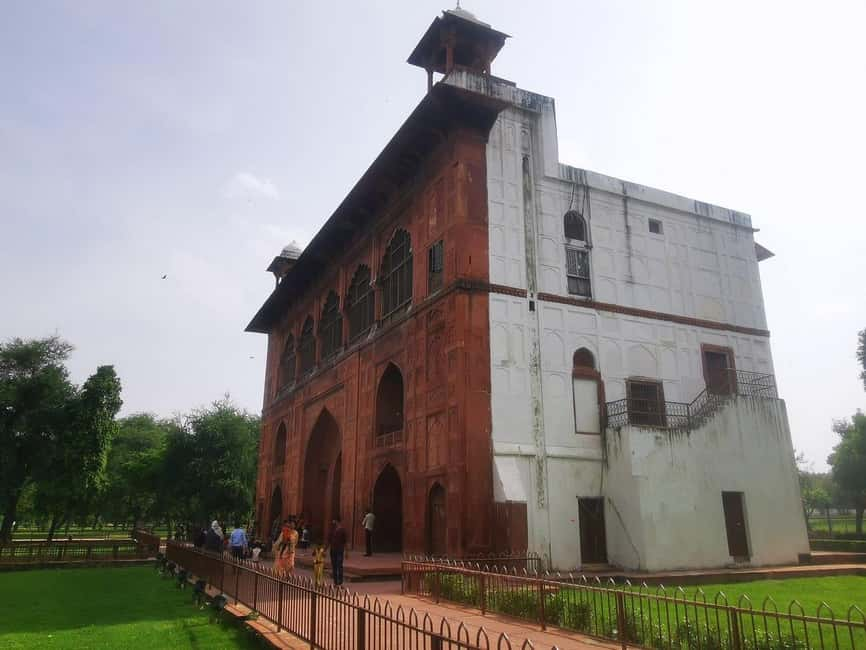
The fort’s museums display objects connected with the Mughal period and the 1857 rebellion. They give the visit a more human scale after the large courtyards and formal halls.
Allow time to look at the displays rather than treating them as a quick indoor stop. The objects can help connect the fort’s architecture to the people who lived, worked, ruled, and fought around it.
This is also where the story moves beyond the Mughal court. The fort was not frozen in one era. Its meaning changed as Delhi passed through later political upheavals, including the rebellion of 1857.
If you have only an hour, you may need to choose between a longer museum visit and a slower walk through the main buildings. Tell your guide what interests you most at the start. A private tour gives you more room to make that choice.
Add-on route: Jama Masjid and Chandni Chowk

The second option adds Jama Masjid and Chandni Chowk after the Red Fort. This is the strongest choice if you want history paired with everyday Old Delhi.
Jama Masjid is one of India’s largest and most impressive mosques. Its grand courtyard and detailed design provide a useful contrast with the Red Fort’s royal halls. The stop includes a visit, sightseeing, and a guided walk.
The route then continues through Chandni Chowk, one of Delhi’s oldest market areas. You can expect lively lanes, traditional goods, local food, and a much more street-level view of the city than you get inside the fort.
A pedicab or rickshaw ride is listed for the connection to Jama Masjid. That can save your energy and make sense in Old Delhi’s tight streets, though the pace and traffic may not suit someone hoping for a quiet transfer.
The scheduled portions suggest a substantial outing: about 1.5 hours at the Red Fort, 75 minutes for the pedicab or rickshaw segment, 1.5 hours at Jama Masjid, and around 30 minutes in Chandni Chowk. Confirm the timing when you book, since the overall activity duration is also given as 1.5 to 2.5 hours.
This option suits first-time visitors who want a compact introduction to Old Delhi. You get imperial architecture, religious history, transport through the old lanes, and time to see how the area functions today. Street food is part of the appeal, but food is not listed among the included items, so plan to pay separately if you choose to eat.
Longer route: four major Delhi sights
The third option is much broader. It begins at the Red Fort and continues to Humayun’s Tomb, the Lotus Temple, and Qutub Minar.
Humayun’s Tomb is presented as the first garden-tomb of the Mughal era, and its design later influenced the Taj Mahal. This stop gives you a different view of Mughal architecture, with a focus on the relationship between the tomb, formal gardens, and symmetry.
The Lotus Temple changes the mood again. Its lotus-shaped design and quiet atmosphere welcome people of all faiths. It is less about royal power and more about architecture and peaceful reflection.
Qutub Minar completes the route with an earlier chapter of Delhi’s history. The tall brick minaret is surrounded by older ruins connected with the city’s early sultanate period. It is a useful counterpoint to the Mughal buildings at the beginning of the day.
Choose this option only if you want a full sightseeing day and are comfortable with a packed schedule. The supplied timing for the base activity does not spell out the full duration of this longer route, so confirm departure and return times before paying. It may be excellent for someone with limited time in Delhi, but it will leave less room for a relaxed meal or unplanned wandering.
What the guides add
The strongest part of this tour is the human guidance. The most frequently praised qualities are clear English, patience, historical explanation, and personal attention.
Names that appear repeatedly in positive experiences include Gopal or Gopaal Jat, Rambabu, Anas, Javed Khan, Raj, Mohammed, Adel, Gyanendra, Gourav, Adil, Priyam, Ali, and Tabrej. You cannot choose a particular guide unless the company confirms it, but these examples give you a sense of the service style available.
Gopal was praised for making the fort easy to understand. Rambabu was described as friendly and relaxed. Adel reportedly stayed more than an hour beyond the expected time after a group arrived late. Gyanendra took time to let a visitor explore without rushing, while Priyam paid close attention to comfort and enjoyment.
The guides also help beyond the monument itself. Javed assisted with other Delhi questions, and Pri helped a visitor find the metro afterward. These small acts matter in Old Delhi, where getting to the next stop can be as confusing as understanding the last one.
Communication before the tour is generally important. Ajid contacted a group well ahead of time, and Pri used live location when the meeting point caused trouble. Still, the meeting instructions could be clearer, so ask for precise entrance directions before you leave.
Value, pace, and who should book
At $9 per person, the Red Fort visit offers good value for a short, focused introduction. You are paying for more than entry if the selected package includes a live guide and ticket, since the explanations help you notice details you might otherwise pass without understanding.
The value changes with the add-ons. A transfer, Jama Masjid visit, rickshaw ride, or longer Delhi route can make the package more useful, but you should compare what is included in your chosen option. Do not assume that every attraction, transport segment, or ticket comes with the base price.
I would recommend the basic option for anyone with limited time, a strong interest in Mughal buildings, or a preference for a private pace. Families may also like it, since one guide was specifically praised for working well with children and adults.
Choose Jama Masjid and Chandni Chowk if you want a more varied Old Delhi outing. It is the better match for shoppers, food lovers, and anyone who wants to see daily city life alongside monuments.
Choose the longer route if this is your main day for Delhi sightseeing and you want to cover several famous sites at once. It is less suitable if you dislike long transfers or prefer to spend a relaxed half-day at one place.
Booking and timing advice
Free cancellation is available up to 24 hours before the activity for a full refund, and you can reserve now and pay later. Those terms are useful when your Delhi plans may shift.
The Red Fort is generally closed around Republic Day on January 26, with closure listed from January 20 through January 30. It may also close for several days before and after Independence Day on August 15 because of security arrangements.
Check availability for starting times, then allow extra time for Old Delhi traffic and the confusing approach to the entrance. Your guide will contact you on WhatsApp, so keep your phone active and reply if you need help locating the correct gate.
Should you book this Red Fort tour?
Book it if you want the Red Fort explained by a private English or Hindi-speaking guide rather than viewed as a series of impressive but silent buildings. The low base price, flexible cancellation, and strong record of patient guides make it an easy choice for a first visit.
The Jama Masjid and Chandni Chowk route is my preferred add-on for a balanced Old Delhi day. Pick the longer four-sight route only after confirming its timing and inclusions. If you plan carefully around the entrance and national holiday closures, Taj Expo’s Red Fort tour offers a practical way to connect Mughal architecture with Delhi’s living streets.
FAQ
Where does the Red Fort tour begin?
The meeting point is Lahori Gate, the main entrance of the Red Fort. Your guide contacts you on WhatsApp before the tour.
How long does the Red Fort visit take?
The activity duration is listed as 1.5 to 2.5 hours. The Red Fort visit itself is scheduled for about 1.5 hours, though the description also refers to a visit of about one hour.
What languages do the guides speak?
Live guiding is available in English and Hindi.
Is this a private tour?
Yes. The activity is offered for a private group.
Can I add Jama Masjid and Chandni Chowk?
Yes. The second option adds Jama Masjid and Chandni Chowk, with a pedicab or rickshaw segment included in that route.
What other sights are included in the longer option?
The third option includes the Red Fort, Humayun’s Tomb, Lotus Temple, and Qutub Minar.
What should I bring?
Bring comfortable shoes, a hat, a camera, sunscreen, and water.
When is the Red Fort closed?
The fort generally closes around Republic Day, January 26, with closure listed from January 20 to January 30. It may also close for several days before and after Independence Day on August 15.
Just added around New Delhi
- Delhi: All-Inclusive Full or Half Day Tour With Hotel Pickup★ 5.0 · 3 reviews
- From Delhi : All Inclusive Taj Mahal Tour by Gatimaan Express★ 5.0 · 3 reviews
- Skip the line: Taj Mahal Agra Private Day Trip From Delhi By Car★ 5.0 · 3 reviews
- Delhi: Old and New Delhi One Day Private Guided City Tour★ 5.0 · 3 reviews
- New Delhi Night City Tour★ 5.0 · 3 reviews
- Old Delhi Half day private city tour★ 5.0 · 3 reviews
- Sultanpur Bird Sanctuary Tour Near Delhi★ 5.0 · 3 reviews
- A full-day tour of Old & New Delhi Monument Express Entry★ 5.0 · 3 reviews
Red Fort Tours, compared.

Red Fort Delhi Entry tickets with Licensed Tour Guide
Read our review →
Red Fort Skip-the-Line E-tickets & guide Delhi transfers
Read our review →

Skip-the-Line Guided Tour of Delhi’s Iconic Red Fort
Read our review →
(Vip entry)All Inclusive Taj Mahal & Red Fort day trip
Read our review →
Red Fort 2 Hour Light & Sound Show with Private Guide
Read our review →
Browse the lists this tour appears in