Reviewed · OLD DELHI TOURS
Old And New Delhi Private Guided Tour With Entrances- 8 Hours
Delhi’s biggest challenge is not finding remarkable sights. It is reaching them across a city of wide avenues, packed lanes, political districts, old bazaars, and long stretches of traffic. This private eight-hour tour tackles that problem head-on, moving you from New Delhi’s grand government buildings to Old Delhi’s spice market, then on to major religious and historic sites.
I like the private car and flexible pickup, which let you begin as early as 6 a.m. from a hotel, airport, or train station in Delhi, Noida, Gurugram, Ghaziabad, or Faridabad. I also like the Old Delhi tuk-tuk ride, a practical way to see Chandni Chowk without trying to walk every crowded lane. The main drawback is ambition: ten stops in one day can mean short visits, and Qutub Minar is listed as optional if it is open.
In This Review
- Key points to know before booking
- Why this route works for a first day in Delhi
- Starting at Gurudwara Bangla Sahib
- New Delhi’s ceremonial core: Rashtrapati Bhavan and Parliament
- Red Fort and the Mughal story
- Chandni Chowk by tuk-tuk
- Khari Baoli, Asia’s largest spice market
- Jama Masjid and the religious side of Old Delhi
- Akshardham’s large-scale Hindu design
- Lotus Temple’s calm change of pace
- Qutub Minar, if the timing allows
- What the private format adds
- Is $3.97 good value?
- Who should book this Delhi tour?
- Final recommendation
- FAQ
- How long does the private Delhi tour last?
- Where can pickup and drop-off take place?
- What time can the tour begin?
- Is this a private activity?
- Is transportation included?
- Are meals and drinks included?
Key points to know before booking
- Old and New Delhi in one day: Cover government avenues, Mughal monuments, Sikh and Muslim religious sites, Hindu and Bahai houses of worship, and a major market.
- Pickup across the Delhi region: Start from a Delhi, Noida, Gurugram, Ghaziabad, or Faridabad address, airport, or train station.
- A private guide and vehicle: Only your group takes part, with an air-conditioned vehicle, bottled water, and personalized attention.
- Old Delhi by tuk-tuk: Ride through Chandni Chowk’s busy bazaars instead of spending the entire market visit on foot.
- Strong guide reports: Vasu, Shipra, Shivam, and Saru are specifically praised for clear English, historical explanation, flexibility, and helpful local advice.
- Very low advertised fare: At $3.97 per person, the price appears unusually low for private transport and admissions, so check exactly which tickets and charges are included when booking.
Why this route works for a first day in Delhi
Delhi can feel like several cities stitched together. New Delhi has broad ceremonial roads and government buildings from the British period. Old Delhi is denser, older, and full of markets connected to Mughal-era streets. The southern part of the city adds modern religious architecture and the medieval Qutub Minar complex.
This tour gives you a useful first look at all three sides. You are not simply visiting monuments in a row. You are seeing how Delhi shifts from Sikh worship at Bangla Sahib to imperial architecture, Mughal power, spice trading, Islamic prayer, modern Hindu temple design, Bahai worship, and medieval Islamic architecture.
The route is especially useful if you have only one free day, are changing trains or flights, or do not want to work out Delhi’s distances yourself. Your driver handles the city’s long transfers while your guide supplies the explanation. Since this is a private activity, you can ask questions and request adjustments rather than follow a fixed group pace.
Still, you should set realistic expectations. The advertised schedule gives some places only 10 to 20 minutes. That is enough for an exterior view, a quick explanation, and photographs, but not a slow museum-style visit. The tour is best understood as a broad introduction, not a detailed study of every monument.
More Old Delhi walks and rides:
- Old & New Delhi City Tour – Half or Full Day Options Available
★ 5.0 · 4,811 reviews - Old & New Delhi City Tour – Choose Half or Full Day Experience
★ 5.0 · 4,513 reviews - Delhi: Old and New Delhi Private Full or Half-Day Tour
★ 4.9 · 3,776 reviews
Starting at Gurudwara Bangla Sahib
The first scheduled sight is Gurudwara Bangla Sahib, one of Delhi’s most important Sikh places of worship. The site is linked with the eighth Sikh Guru, who stayed here in 1664 and helped people during a cholera epidemic. A holy pond called the Sarovar adds a calm visual center to the complex.
You receive about 30 minutes here, with no admission charge listed. That makes it a good opening stop. You can see a working religious site rather than only a monument built for sightseeing. Your guide can also help explain what you are seeing and how the site connects to Sikh tradition.
Dress and behavior matter at religious places. The tour data does not specify clothing rules, so ask your guide before entering and follow the site’s instructions. Keep this visit respectful and avoid treating worshippers as part of the scenery.
New Delhi’s ceremonial core: Rashtrapati Bhavan and Parliament
The next stops shift sharply in tone. Rashtrapati Bhavan was originally built as the Viceroy’s residence and is now the President of India’s official house. The tour allows about 10 minutes, so expect an exterior-focused stop rather than a full interior visit.
Parliament House follows, also with about 10 minutes. It houses India’s Lok Sabha and Rajya Sabha, the lower and upper houses of the bicameral Parliament. This part of the route helps explain the layout and political importance of New Delhi, though it will feel brief if you want detailed architectural study.
The itinerary also refers to the 1921 Tomb of the Unknown Soldier and the names of 13,300 Indian army servicemen who died in the First World War. This stop appears folded into the government district portion rather than given a separate time slot. Ask your guide where it fits on the day’s route.
These short stops are valuable for orientation. You see the formal face of the capital before entering the crowded lanes of Old Delhi. The trade-off is simple: you get breadth, but not much time to linger.
Red Fort and the Mughal story

Red Fort is one of Old Delhi’s essential sights. Shah Jahan built the massive complex between 1639 and 1648, and it served as the main residence of Mughal emperors. Its design combines Indo-Islamic and Mughal elements.
The listed visit is only 15 minutes, which likely means a look at the exterior or a tightly managed visit. If entering the fort is a major goal for you, confirm the admission plan and available time before the day begins. The tour information lists Red Fort admission as free at the stop, while the inclusions refer to entry tickets if purchased, so the exact ticket arrangement deserves a quick check.
Even a short stop helps connect the next part of the tour to the city’s past. Red Fort was not an isolated palace. It was tied to the markets, mosques, streets, and court life of Old Delhi. Your guide’s explanation can make the fort more meaningful than a quick photograph alone.
A few more New Delhi departures worth comparing
- From Delhi: Taj Mahal & Agra Private Day Trip with Transfers
★ 4.9 · 3,181 reviews - All Inclusive Private Taj Mahal Luxury Tour from Delhi by Car
★ 5.0 · 2,564 reviews - Delhi: Private Old & New Delhi Guided Half- or Full-Day Tour
★ 4.9 · 2,309 reviews - From Delhi: Taj Mahal and Agra Fort Private Sunrise Tour
★ 4.9 · 2,270 reviews
Chandni Chowk by tuk-tuk

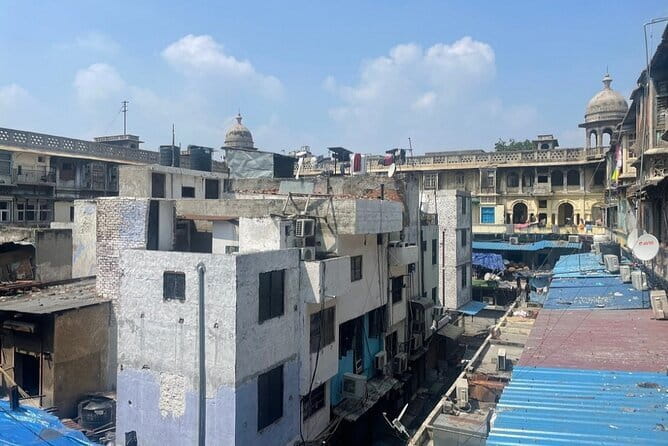
The tuk-tuk ride through Chandni Chowk is one of the most useful features of the day. Instead of asking you to cover Old Delhi’s crowded lanes on foot, the tour places you in a small local vehicle and lets you watch the bazaars pass by.
You receive about 30 minutes for this section. Your guide explains the role of the markets for local life as you ride through the colorful streets. This is not a polished sightseeing boulevard. It is a working commercial district, and the appeal comes from its movement, trade, narrow lanes, and everyday activity.
A tuk-tuk also gives you a better sense of scale. Old Delhi can be tiring when you are trying to navigate it alone, especially during a packed itinerary. The ride saves energy and adds a distinctly local form of transport. It is also one of the few parts of the tour where the journey itself is as important as the destination.
The limit is that you may not have much time to stop and browse. If shopping is your priority, tell your guide early. The supplied tour details mention shops and markets as part of some guide-led experiences, but they do not promise dedicated shopping time or specific stores.
Khari Baoli, Asia’s largest spice market

Khari Baoli is presented as Asia’s largest spice market, located in the Chandni Chowk area. You have about 30 minutes to see the sacks, colors, and trade that give this part of Old Delhi its character.
This is a sensory stop, but it also has practical value. Your guide can explain the uses of Indian spices and share facts about the market. That context helps you understand what you are seeing instead of reducing the visit to a collection of colorful piles.
Thirty minutes is enough for a guided introduction. It is not enough for a relaxed market crawl, extensive shopping, or a detailed look at every lane. If you buy anything, ask about prices, packing, and transport rules before committing. Meals and drinks are not included, and the tour does not promise a market tasting.
Jama Masjid and the religious side of Old Delhi

Jama Masjid provides the day’s main look at historic Muslim worship in Old Delhi. The planned visit lasts about 20 minutes, and admission is included.
The stop fits well after Chandni Chowk and Khari Baoli because it shows how commerce and religion share the same dense part of the city. You move from market noise to a place of worship, then continue toward Delhi’s newer religious architecture.
This is another stop where respectful conduct matters. Follow your guide’s directions and any local entry requirements. The tour details do not spell out clothing rules, photography restrictions, or footwear arrangements, so ask on arrival rather than assume.
Akshardham’s large-scale Hindu design

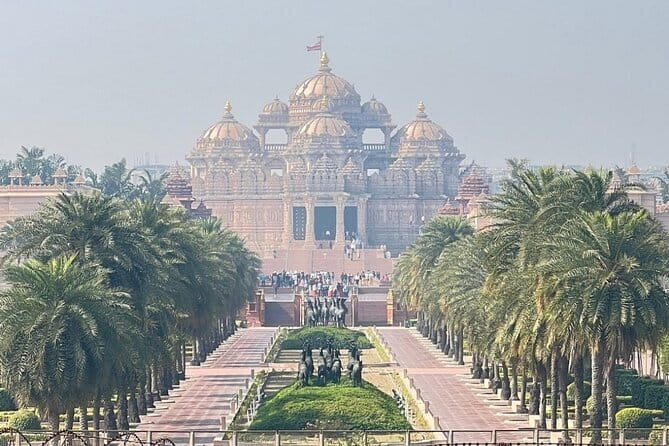
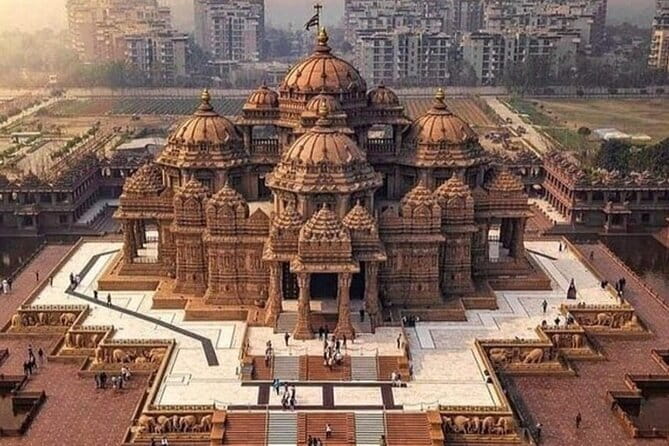
Swaminarayan Akshardham receives the longest scheduled visit, about one hour. It is described as the largest Hindu temple in the world and as one of Delhi’s most striking sights. Admission is included.
The contrast with Jama Masjid and Bangla Sahib is part of the appeal. The tour shows three different religious traditions in one day, each with its own style, setting, and customs. Akshardham is also a more recent expression of Hindu temple design, giving the itinerary a modern counterpart to the Mughal and colonial sites.
One hour lets you see the complex at a reasonable pace, though the tour does not specify which interior areas, exhibitions, or performances are part of the visit. Confirm the exact entry details if Akshardham is high on your list. The stop is worth protecting from delays because it has more time than most earlier sights.
Lotus Temple’s calm change of pace
Lotus Temple is a Bahai house of worship dedicated in December 1986. Its flower-shaped design has made it one of Delhi’s best-known modern buildings. The scheduled visit lasts about 30 minutes, with no admission charge listed.
After the crowded Old Delhi markets and the grand scale of Akshardham, Lotus Temple offers a visual reset. Its appeal is architectural as much as religious. You get a chance to pause and see how a place of worship can use a simple, recognizable form to draw people in.
The itinerary says the journey ends in the evening after this stop, but it also places Qutub Minar later in the list. That timing is not fully clear. Ask your guide at the start whether Lotus Temple or Qutub Minar will be the final stop and how opening hours affect the order.
Qutub Minar, if the timing allows
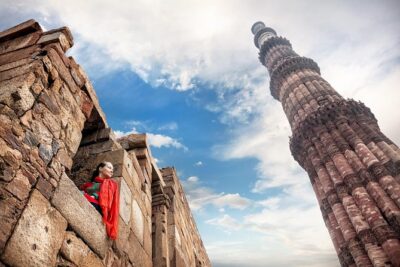
Qutub Minar is described as Delhi’s tallest minaret, with about one hour allocated and admission included. The important qualification is that this stop is optional if it is open.
That wording matters. Do not book this tour assuming Qutub Minar is guaranteed at the end of the day. Opening conditions, traffic, and the earlier stops may affect the route. Ask for a firm plan when your guide arrives, especially if seeing Qutub Minar is one of your main reasons for booking.
If included, the hour gives you more breathing room than the short government-district stops. It also adds a medieval monument to a day otherwise split between Mughal, colonial, and modern sites.
What the private format adds
The private setup is not just a label. It changes how you use the day. Pickup is available anywhere in Delhi, Noida, Gurugram, Ghaziabad, and Faridabad, and you can choose a start time from 6 a.m. That flexibility matters if you are arriving at an airport, leaving from a train station, or trying to avoid the worst part of the city’s traffic.
An air-conditioned vehicle is included, along with round-trip drop-off, bottled mineral water, fuel surcharge, GST, local taxes, and other listed handling charges. You are not left to piece together separate rides between Old and New Delhi.
The guide assignment can vary. Specific guides associated with this experience include Vasu, Shipra, Shivam, and Saru. Vasu is praised for clear English, historical explanation, local food and drink advice, and practical help getting around. Shipra is described as explaining architectural styles and taking care of the Old Delhi rickshaw experience. Saru is noted for fluent English and detailed explanations, while Shivam is praised for handling specific questions and adapting to requests.
That pattern suggests the guide is a major part of the experience. When you meet, tell the guide what matters most: religious sites, architecture, markets, political history, photographs, or keeping a gentle pace. The private format gives you room to make that request.
Is $3.97 good value?
At $3.97 per person, the advertised price is remarkably low for an eight-hour private tour with a driver, air-conditioned vehicle, pickup, drop-off, bottled water, and several listed admissions. If the price applies to your booking date and group, it could be one of the most economical ways to cover this much ground.
But check the fine print before treating that figure as final. The inclusions say entry tickets are covered if purchased, while individual stops identify Jama Masjid, Akshardham, and Qutub Minar as included and list other admissions as free. Confirm which tickets are supplied, whether the price changes with group size, and whether any site is replaced if it is closed.
Meals, drinks, tips, and gratuities are not included. The tour does not promise lunch, so plan for your own food and water beyond the bottled water provided. Group discounts are available, which may make the price more attractive for families or small parties.
Who should book this Delhi tour?
I would choose this experience if you have one day and want a broad introduction without managing Delhi’s transport yourself. It suits first-time visitors, families, small groups, and people arriving through a Delhi airport or train station who want a private route built around their schedule.
It also works well if you want an English-speaking guide who can answer questions about history, architecture, healthcare, food, and getting around. The guide reports point to a flexible style, but you should still state your priorities clearly because the itinerary covers a lot.
I would hesitate if you want long, quiet visits inside monuments, extensive market shopping, or a slow photography day. Ten stops in eight hours is a lot. The route is strongest for variety and orientation, not for studying one site in depth.
Final recommendation
Book it if your priority is seeing the major contrasts of Delhi in one privately managed day: Sikh worship, colonial government buildings, Mughal power, Old Delhi markets, Islamic architecture, modern Hindu design, Bahai architecture, and Qutub Minar if conditions allow.
Before paying, confirm the exact price, ticket coverage, guide assignment, and Qutub Minar plan. If those details suit you, the private vehicle, tuk-tuk ride, flexible pickup, and strong guide support make this a useful first-day introduction to Delhi.
FAQ
How long does the private Delhi tour last?
The tour lasts approximately eight hours.
Where can pickup and drop-off take place?
Pickup and drop-off are offered from locations in Delhi, Noida, Gurugram, Ghaziabad, and Faridabad. Pickup can also be arranged from a Delhi airport or train station.
What time can the tour begin?
You can choose a pickup time starting from 6 a.m.
Is this a private activity?
Yes. Only your group participates in the tour.
Is transportation included?
Yes. An air-conditioned vehicle, round-trip pickup and drop-off, bottled mineral water, and a tuk-tuk ride in Old Delhi are included.
Are meals and drinks included?
No. Meals and drinks are not included, although bottled mineral water is provided.
Just added around New Delhi
- Delhi: All-Inclusive Full or Half Day Tour With Hotel Pickup★ 5.0 · 3 reviews
- From Delhi : All Inclusive Taj Mahal Tour by Gatimaan Express★ 5.0 · 3 reviews
- Skip the line: Taj Mahal Agra Private Day Trip From Delhi By Car★ 5.0 · 3 reviews
- Delhi: Old and New Delhi One Day Private Guided City Tour★ 5.0 · 3 reviews
- New Delhi Night City Tour★ 5.0 · 3 reviews
- Old Delhi Half day private city tour★ 5.0 · 3 reviews
- A full-day tour of Old & New Delhi Monument Express Entry★ 5.0 · 3 reviews
- Sultanpur Bird Sanctuary Tour Near Delhi★ 5.0 · 3 reviews
Old Delhi Tours, compared.
Old & New Delhi City Tour – Half or Full Day Options Available
Read our review →
Old & New Delhi City Tour – Choose Half or Full Day Experience
Read our review →
Old and New Delhi Private Full or Half-Day Tour
Read our review →
Private Old & New Delhi Guided Half- or Full-Day Tour
Read our review →
Old & New Delhi Private Tour – Half or Full Day (Rated Excellent)
Read our review →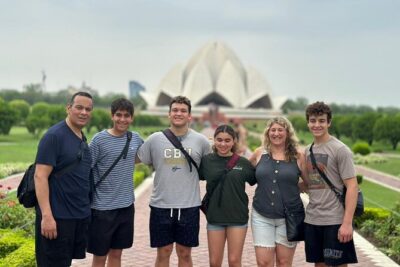
Old & New Delhi Full or Half Day Sightseeing Tour
Read our review →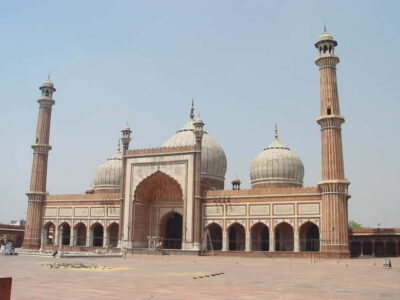
Private Full-Day City Tour of Old and New Delhi
Read our review →