
Reviewed · OLD DELHI TOURS
Private City Tour to Old and New Delhi
Delhi makes more sense when you see its many eras side by side. This private tour links the Mughal Red Fort and Jama Masjid with New Delhi’s India Gate, the modern Lotus Temple, and the finely planned grounds of Lodhi Garden. You get a private air-conditioned vehicle for up to five people, which is a useful break from Delhi’s noisy streets and heavy traffic.
I like the broad mix of sights, from a 13th-century tower to a 21st-century Hindu temple. I also like the flexibility of a private outing, especially since the route can take about four to eight hours rather than locking you into a fixed group schedule.
The main catch is that the advertised sights can fill a full day once driving, security checks, and entrance lines are counted. Admission is not included, with an estimated $50 charge for two people, so your final cost can be much higher than the $65 vehicle price.
In This Review
- Key points to know before booking
- Why this route gives you a useful first look at Delhi
- Qutub Minar: Delhi’s 73-meter opening statement
- Humayun’s Tomb: the Mughal design that points toward the Taj Mahal
- Lotus Temple: a short, quiet pause
- India Gate: New Delhi’s formal center
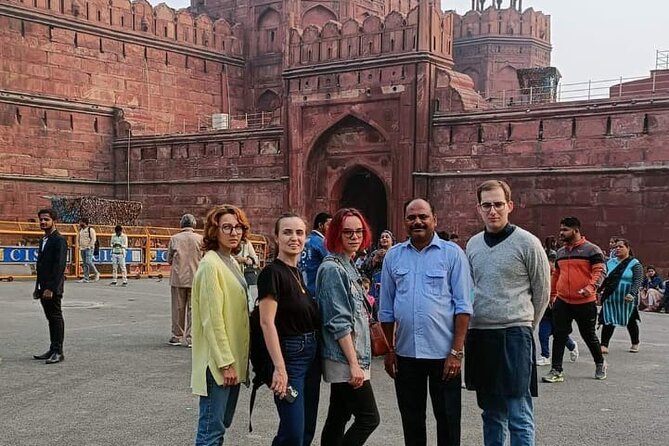
- Red Fort: the Mughal emperor’s city within a city
- Jama Masjid: Shah Jahan’s grand mosque
- Swaminarayan Akshardham: extraordinary detail, strict security
- Lodhi Garden: monuments among trees and lawns
- What the $65 price really covers
- Service, flexibility, and what to confirm
- Who should book this Delhi tour
- Final call: good value for a private highlights day
- FAQ
- How much does the private Delhi tour cost?
- How long does the tour last?
- Where does the tour start and finish?
- Which attractions are included in the route?
- Is transportation included?
- Are entrance tickets included?
Key points to know before booking
- Eight major Delhi sights: The route covers Qutub Minar, Humayun’s Tomb, Lotus Temple, India Gate, Red Fort, Jama Masjid, Akshardham, and Lodhi Garden.
- Private transport for up to five: Your group rides together in an air-conditioned vehicle with bottled water.
- Old and New Delhi in one day: The plan moves from Mughal monuments and crowded Old Delhi to broad avenues, gardens, and modern religious architecture.
- Admission fees are extra: The tour price is $65 per group, but entry charges are separate and listed at about $50 for two people.
- A flexible four to eight hours: The actual length depends on how many stops you visit and how much time you spend at each one.
- Strong service focus: Ashok is the named operator. Past arrangements also refer to drivers including Harish, Raj, and Anants, though your assigned driver is not specified in advance.
Why this route gives you a useful first look at Delhi
Delhi is not one tidy historic center. It is a city built in layers, with the remains of sultanates, Mughal rule, British planning, independent India, and several religious traditions all sharing the same broad urban area.
That is the great strength of this outing. You are not simply taken from one famous photo stop to another. You can compare the red sandstone and marble of Mughal architecture, the formal memorial style of India Gate, the quiet interior of the Lotus Temple, and the detailed Hindu carving at Akshardham.
I would think of this as a highlights tour, not a slow neighborhood walk. The vehicle lets you cover ground that would be tiring and time-consuming on your own. It also gives you a private setting, so you can ask for extra time at a favorite site or shorten a stop that does not interest you.
The route begins and ends at Connaught Place. Pickup is offered, but the listed meeting point is Connaught Place, so confirm the exact pickup arrangement when you book. The tour operates on Mondays from 10 a.m. to 4 p.m. during the stated operating period.
More Old Delhi walks and rides:
- Old & New Delhi City Tour – Half or Full Day Options Available
★ 5.0 · 4,811 reviews - Old & New Delhi City Tour – Choose Half or Full Day Experience
★ 5.0 · 4,513 reviews - Delhi: Old and New Delhi Private Full or Half-Day Tour
★ 4.9 · 3,776 reviews
Qutub Minar: Delhi’s 73-meter opening statement
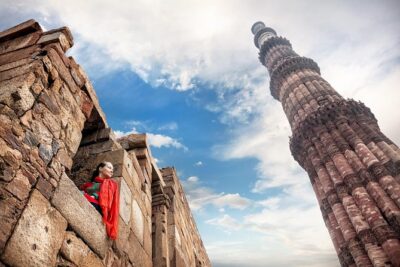
Qutub Minar is one of the strongest starts to the day. The red sandstone and marble tower rises 73 meters, or about 240 feet, from a broad base to a narrow top. Its fluted exterior and stacked balconies make it easy to understand why this is one of Delhi’s best-known monuments.
Construction began in the early 13th century under Qutub-ud-din Aibak, founder of the Delhi Sultanate. His successor, Iltutmish, completed much of the work, while later rulers made further changes. The result is a monument shaped by several generations rather than one single builder.
Allow about an hour here. The complex is more than the tower itself, with architectural remains that help explain the early Indo-Islamic style of the Delhi Sultanate. The Iron Pillar is another key feature. Its reputation rests partly on its remarkable resistance to rust, though the most useful part of seeing it is the way it sits within a much older architectural setting.
Admission is extra. Wear comfortable shoes and expect outdoor walking, since the main value of the stop comes from seeing the tower and surrounding ruins together. If you have limited time, this is one of the stops I would protect.
Humayun’s Tomb: the Mughal design that points toward the Taj Mahal
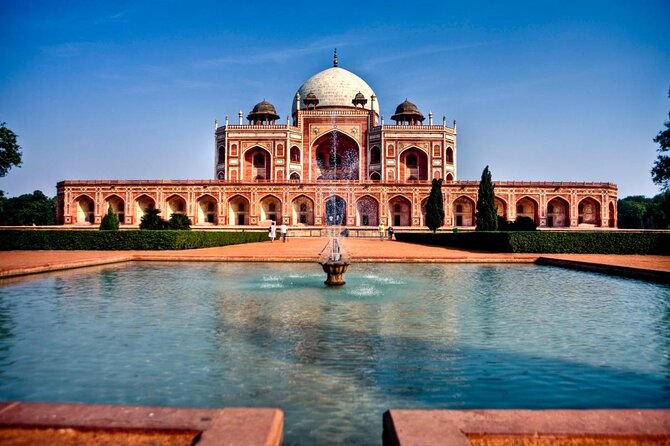
Humayun’s Tomb gives you a calmer, more ordered view of Mughal architecture. Built for Emperor Humayun and commissioned by his widow, Empress Bega Begum, the tomb was completed in 1572.
The building was designed by the Persian architect Mirak Mirza Ghiyas. Its forms combine Persian ideas with Indian materials and details, creating the style that later developed into some of the Mughal period’s most famous buildings. It is often described as a forerunner to the Taj Mahal, and you can see why in the symmetry, central dome, and formal garden setting.
The planned one-hour stop is sensible. Take time to look at the building from different angles rather than rushing directly to the entrance. The setting helps you understand the monument, since the garden, raised platform, arches, and dome were designed as one composition.
Admission is not included. This is another site where an explanation from your driver or guide can add value, particularly if you want to understand how Humayun’s Tomb differs from later Mughal buildings.
Lotus Temple: a short, quiet pause
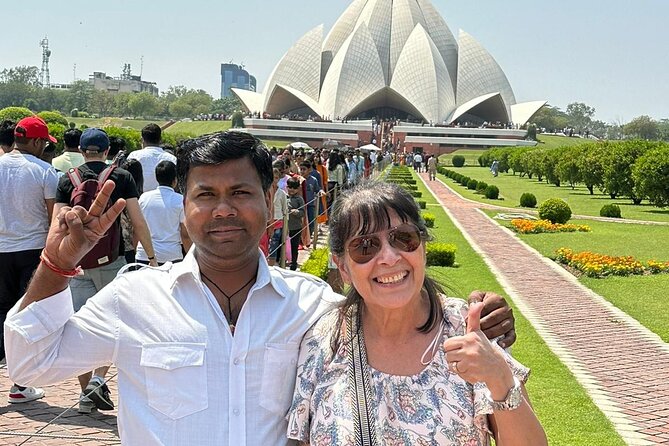
The Lotus Temple changes the tone of the tour. Completed in 1986, this Bahá’í House of Worship is shaped like a white marble lotus, with landscaped gardens around it. The design came from Iranian architect Fariborz Sahba.
The temple is open to people of all faiths. Inside, silence is expected, and the building is used for prayer and meditation rather than for a display of religious objects. That makes this a different kind of stop from the forts and tombs.
The planned visit is about 30 minutes, and admission is free. That time is enough for a look at the exterior, a quiet moment inside if conditions allow, and a short walk through the grounds.
Opening conditions and queues can affect the visit, so treat this as a flexible part of the day. It is also worth remembering that the Lotus Temple is about atmosphere and design, not a long guided tour. If you prefer monuments packed with inscriptions and rooms, you may find this stop brief.
A few more New Delhi departures worth comparing
- From Delhi: Taj Mahal & Agra Private Day Trip with Transfers
★ 4.9 · 3,181 reviews - All Inclusive Private Taj Mahal Luxury Tour from Delhi by Car
★ 5.0 · 2,564 reviews - Delhi: Private Old & New Delhi Guided Half- or Full-Day Tour
★ 4.9 · 2,309 reviews - From Delhi: Taj Mahal and Agra Fort Private Sunrise Tour
★ 4.9 · 2,270 reviews
India Gate: New Delhi’s formal center
India Gate brings you into the planned part of the capital. Built between 1921 and 1931, the 42-meter memorial honors Indian Army soldiers who died in World War I. Its design was inspired by the Arc de Triomphe in Paris.
The arch is made of red and yellow sandstone, and the names of more than 13,516 soldiers killed in the Northwestern Frontier and the Afghan war of 1919 are inscribed on it. The Amar Jawan Jyoti, an eternal flame at the base, adds a solemn note to the memorial.
This is a 30-minute stop, and that is usually enough for photographs and a look at the monument. You do not need a long visit to grasp its scale. The wider setting is also important, since India Gate reflects the ceremonial planning of New Delhi rather than the tight lanes of Old Delhi.
Admission is free. Traffic can affect how long it takes to reach the area, so do not judge the tour by the short time listed for the monument itself. Much of the experience here is seeing how the memorial fits into the capital’s broad avenues.
Red Fort: the Mughal emperor’s city within a city
The Red Fort is the major Old Delhi stop. Emperor Shah Jahan began construction in 1638, and the fort was completed in 1648. It served as the main residence of Mughal emperors for nearly two centuries.
The red sandstone walls are impressive from the outside, but the interiors explain why this was more than a military stronghold. Mughal design here mixes Persian, Timurid, and Indian elements, with red sandstone structures set against white marble decoration.
Look for the Diwan-i-Aam, or Hall of Public Audience, where the emperor addressed ordinary petitioners. The Diwan-i-Khas, or Hall of Private Audience, was used for more private meetings and court business. These spaces show the difference between public rule and royal ceremony.
Plan on about an hour, with admission extra. The fort is large enough that you should ask how much time is available before wandering too far. If you try to see every corner while also visiting the other seven stops, the day can become rushed.
Jama Masjid: Shah Jahan’s grand mosque
Jama Masjid is close to the Red Fort and continues the Shah Jahan story. Construction began in 1650, and the mosque opened in 1656 after six years of work.
Its red sandstone and white marble create the classic Mughal contrast. The design also reflects Persian, Timurid, and Indian influences. The main entrance is the Buland Darwaza, a grand gateway facing east and decorated with white marble.
The planned stop is 30 minutes, and admission is extra. Dress respectfully for a mosque, and be ready for rules that may affect entry or photography. The short timing works best if you want to see the courtyard, gateways, and overall design rather than linger.
This stop is especially useful after the Red Fort because the two sites explain how Mughal power shaped Old Delhi. The fort shows the emperor’s residence and court. Jama Masjid shows the religious architecture of the same period.
Swaminarayan Akshardham: extraordinary detail, strict security
Akshardham is the newest and most time-consuming stop on the route. It opened on November 6, 2005, and was built by the Bochasanwasi Akshar Purushottam Swaminarayan Sanstha, known as BAPS.
The central mandir is dedicated to Bhagwan Swaminarayan and contains the main deity, Akshar Purushottam Maharaj. Its carving is the main attraction, with 234 carved pillars, nine domes, and more than 20,000 statues of Hindu divine figures.
Allow about 90 minutes. That is the longest planned stop, and rightly so. The scale and detail need time to take in, even if you are not familiar with the religious tradition.
Security rules are important here. Bags, cameras, and electronic devices are not allowed inside the temple complex, and a secure facility is provided for belongings. Bring only what you need and expect the entry process to take time.
Admission is extra. Because this stop has the strictest security arrangements and the route gives it the most time, it may affect the order of the day. Ask your driver or tour organizer about current entry conditions before setting out.
Lodhi Garden: monuments among trees and lawns
Lodhi Garden is a welcome change after the heavier monuments. The 90-acre garden lies between Khan Market and Safdarjung’s Tomb and contains tombs and other remains from the Lodhi Dynasty, which ruled parts of northern India during the 15th and 16th centuries.
You can walk among lawns, trees, flower beds, and historic structures. The garden is used by local people for walking and jogging, so it gives you a small look at daily city life as well as a collection of older buildings.
The planned visit is 30 minutes, and admission is free. That is enough for a short walk and a look at the main monuments, but you will not cover every corner of a 90-acre park. I like this stop as a buffer in the route. It gives your eyes and feet a break from enclosed courtyards, stone walls, and temple security.
What the $65 price really covers
The listed price is $65 per group, with up to five people included. That is attractive if you are traveling as a family or small group, since the vehicle cost is shared rather than charged separately for each person.
The price includes an air-conditioned vehicle and bottled water. Those are practical inclusions in Delhi, where traffic, heat, and long road transfers can make a day tiring. A private car also lets your group travel together instead of coordinating several rides.
The important extra is admission. Entrance fees are not included, and the stated estimate is $50 for two people. That means two people could pay roughly $115 before food or any other personal spending. For five people, the per-person vehicle cost becomes excellent, but admission remains a separate part of the budget.
The route also lists eight stops whose planned times add up to about six and a half hours before driving. Since the total duration is given as four to eight hours, you should not assume that every stop will receive its full listed time in one short outing. Confirm the intended schedule and decide which sites matter most to you.
Service, flexibility, and what to confirm
Ashok Tour is the named provider. The service details emphasize private transport, polite English-speaking drivers, and help with city touring and wider North India arrangements. Names connected with past bookings include Ashok, Harish, Raj, and Anants, but the information does not promise that one of those people will lead your particular tour.
That distinction matters. If you want detailed explanations inside each monument, ask whether a licensed guide is included or whether you will mainly have a driver. A driver who knows the city can be very helpful with timing and roads, but that is not always the same as a guide who accompanies you through every site.
The strongest practical point is flexibility. Past arrangements describe drivers who were on time, offered local suggestions, and helped with food and shopping stops. Treat those as possible service strengths, not guaranteed parts of this specific booking.
You can cancel for a full refund if you do so at least 24 hours before the start time. Changes or cancellations made inside that window are not accepted for a refund.
Who should book this Delhi tour
I would choose this outing if you have one day in Delhi and want the major monuments handled by private transport. It fits couples, families, and small groups who value convenience and want to share one vehicle.
It also suits first-time visitors who find Delhi’s scale intimidating. The route gives you a clear framework: Sultanate architecture at Qutub Minar, Mughal power at Humayun’s Tomb, the Red Fort, and Jama Masjid, modern India at India Gate and Lotus Temple, and contemporary Hindu craftsmanship at Akshardham.
I would be more cautious if you want an unhurried Old Delhi food walk, long time inside museums, or a specialist history tour. Eight major stops are ambitious, and the broad coverage comes at the cost of lingering.
Final call: good value for a private highlights day
Book this tour if your priority is seeing a lot of Delhi in one private, air-conditioned vehicle. The $65 group price is fair, especially for up to five people, and the route gives you an unusually wide view of the city’s architecture and faith traditions.
Before paying, confirm the pickup point, the exact duration, the entrance-fee estimate, and whether a separate guide will accompany you inside the monuments. If those details are clear, this is a practical way to get your bearings and see Delhi’s major sights without spending the day negotiating transport.
FAQ
How much does the private Delhi tour cost?
The tour costs $65 per group for up to five people. Entrance fees are not included, and the stated estimate is $50 for two people.
How long does the tour last?
The experience lasts approximately four to eight hours. The timing depends on the route, traffic, and how long you spend at each stop.
Where does the tour start and finish?
The listed starting point is Connaught Place in New Delhi. The activity ends back at the meeting point.
Which attractions are included in the route?
The route includes Qutub Minar, Humayun’s Tomb, Lotus Temple, India Gate, Red Fort, Jama Masjid, Swaminarayan Akshardham, and Lodhi Garden.
Is transportation included?
Yes. An air-conditioned vehicle and bottled water are included. The tour is private, so only your group participates.
Are entrance tickets included?
No. Admission tickets are separate. Lotus Temple, India Gate, and Lodhi Garden are listed as free, while admission is not included for Qutub Minar, Humayun’s Tomb, Red Fort, Jama Masjid, or Akshardham.
Just added around New Delhi
- Delhi: All-Inclusive Full or Half Day Tour With Hotel Pickup★ 5.0 · 3 reviews
- From Delhi : All Inclusive Taj Mahal Tour by Gatimaan Express★ 5.0 · 3 reviews
- Skip the line: Taj Mahal Agra Private Day Trip From Delhi By Car★ 5.0 · 3 reviews
- Old Delhi Half day private city tour★ 5.0 · 3 reviews
- Delhi: Old and New Delhi One Day Private Guided City Tour★ 5.0 · 3 reviews
- New Delhi Night City Tour★ 5.0 · 3 reviews
- A full-day tour of Old & New Delhi Monument Express Entry★ 5.0 · 3 reviews
- Sultanpur Bird Sanctuary Tour Near Delhi★ 5.0 · 3 reviews
Old Delhi Tours, compared.
Old & New Delhi City Tour – Half or Full Day Options Available
Read our review →
Old & New Delhi City Tour – Choose Half or Full Day Experience
Read our review →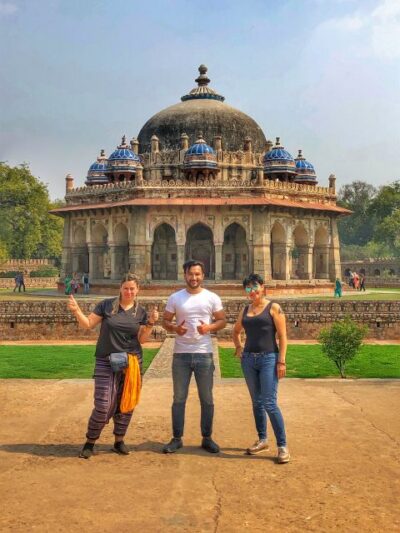
Old and New Delhi Private Full or Half-Day Tour
Read our review →
Private Old & New Delhi Guided Half- or Full-Day Tour
Read our review →
Old & New Delhi Private Tour – Half or Full Day (Rated Excellent)
Read our review →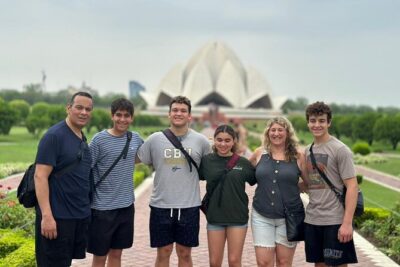
Old & New Delhi Full or Half Day Sightseeing Tour
Read our review →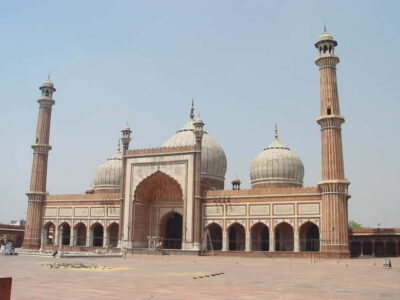
Private Full-Day City Tour of Old and New Delhi
Read our review →
The Great Indian Food Tour: Old Delhi Food and Heritage Walk
Read our review →Browse the lists this tour appears in