Reviewed · GOLDEN TRIANGLE TOURS
12 Days Golden Triangle With Udaipur Jodhpur Jaisalmer Pushkar
India’s big surprise is how quickly this trip changes character. In 12 days, you move from Delhi’s Sikh shrine and Mughal monuments to the Taj Mahal, Jaipur’s pink-stone palaces, Udaipur’s lakes, Jodhpur’s blue lanes, Jaisalmer’s desert, and Pushkar’s sacred ghats. I like the private car and local guides, which give you control over the pace and help explain what you are seeing. I also like that the route includes both famous sights and smaller places such as Chand Baori and Agrasen Ki Baoli.
The catch is the amount of road time. This is a broad Rajasthan circuit, not a relaxed stay in one region, and several days involve long drives. The $720 price can be good value if your booking includes the listed hotels and breakfasts, but monument tickets, meals, tips, insurance, and transport to or from India are extra.
In This Review
- Key points at a glance
- Why this route works for a first visit
- Delhi: shrines, emperors, and crowded old lanes
- Agra and the Taj Mahal at two different hours
- Jaipur: forts, palaces, and clever astronomy
- Udaipur changes the rhythm
- Jodhpur and the blue city
- Jaisalmer: a living fort and the Thar Desert
- Pushkar’s temples and sacred water
- What the $720 price really covers
- Who should book this private circuit?
- Should you book it?
- FAQ
- Where does the tour start?
- How long does the experience last?
- Is this a private tour?
- What type of transport is provided?
- Are hotels included?
- Are breakfasts included?
- Are monument entrance fees included?
- Are meals other than breakfast included?
- Can I cancel for a full refund?
Key points at a glance

- The Taj Mahal gets two different visits: a sunset viewpoint on Day 3 and an early visit to the monument on Day 4.
- You travel privately: a sedan serves one or two people, a six-seat wagon serves three or four, and a minivan serves five to ten.
- The route covers six major destinations: Delhi, Agra, Jaipur, Udaipur, Jodhpur, and Jaisalmer, with Pushkar added near the end.
- Local guides change by city: this is useful for monuments, though the quality and style may vary from one guide to the next.
- Jaisalmer adds desert time: the plan includes a visit to Sam for a desert safari and an overnight stay.
- Extra costs matter: entrance fees are not included, and lunch and dinner are left to you.
Why this route works for a first visit
The Golden Triangle usually means Delhi, Agra, and Jaipur. This version keeps those three classic stops, then continues into Rajasthan for lakes, forts, havelis, desert scenery, and Hindu pilgrimage sites.
I like the order. Delhi gives you a strong introduction to India’s capitals, religions, and architectural eras. Agra then focuses the trip on Mughal monuments, while Jaipur shifts the mood toward Rajput palaces and planned streets. Udaipur slows things down beside Lake Pichola before Jodhpur and Jaisalmer bring in the dry western desert.
The private format is important here. You are not tied to a large group’s timetable, and the driver can take you from hotel to sight without asking you to manage India’s complex intercity transport. Still, you should not confuse private transport with short travel days. The itinerary includes a four-hour drive from Delhi to Agra, about eight hours from Jaipur to Udaipur, six hours from Udaipur to Jodhpur, and a roughly seven-hour return drive from Pushkar to Delhi.
More Golden Triangle itineraries from New Delhi:
- 3-Days Private Golden Triangle Tour: Delhi, Agra & Jaipur by Car
★ 5.0 · 1,107 reviews - 3-Days Private Golden Triangle Tour: Delhi, Agra & Jaipur by Car
★ 5.0 · 1,098 reviews - 3-Day Delhi, Agra and Jaipur Private Tour – India Golden Triangle
★ 5.0 · 812 reviews
Delhi: shrines, emperors, and crowded old lanes

Day 1 starts at Gurudwara Bangla Sahib, one of Delhi’s best places to see Sikh devotion in practice. The visit is short, about 30 minutes, but the story of the eighth Sikh Guru and the healing water tank gives the stop real meaning. Dress respectfully and follow the site’s instructions.
Day 2 is much fuller. Qutub Minar is the major early stop, with its 73-meter tower and UNESCO designation. Give yourself time to look beyond the height. The carved stone, surrounding ruins, and changing architectural details make this more than a quick photo stop.
The Lotus Temple offers a sharp contrast. Its flower-like form was completed in 1986, and the temple welcomes people of all religions. The visit is brief, so treat it as an architectural pause rather than a long museum visit.
India Gate and Parliament House provide a look at modern national Delhi. India Gate honors soldiers of British India who died in war, while Parliament House represents the country’s present political life. The itinerary lists Parliament House as a stop but does not give it a set duration, so ask your guide how much time is practical.
Jama Masjid brings you back to the Mughal period. Built by Shah Jahan between 1650 and 1656, it is one of India’s largest mosques. Agrasen Ki Baoli is a much smaller stop, only about 15 minutes, but its steep stairwell is a memorable piece of old Delhi engineering.
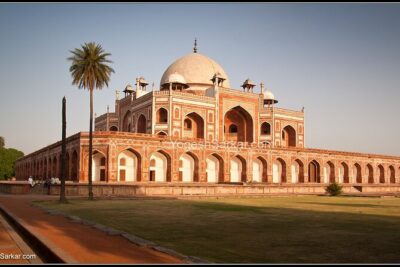
Humayun’s Tomb deserves the full hour listed for it. Commissioned by Empress Bega Begum in 1558, it helps you understand the design ideas that later appeared in Mughal architecture. Chandni Chowk finishes the day with spice shops, dried fruit, jewelry, saris, and narrow lanes packed with small businesses.
This is a lot for one day. I would expect the final hours to feel tiring, especially after Chandni Chowk. The benefit is variety; the cost is that some visits will feel like introductions rather than unhurried explorations.
Agra and the Taj Mahal at two different hours
On Day 3, the four-hour ride from Delhi to Agra uses the Yamuna Expressway. The road transfer is straightforward in the plan, but you should think of this as a travel day with sightseeing attached.
The sunset view of the Taj Mahal takes place away from the main crowd, across the river. This is a smart addition because the monument looks different in softer evening light, and the viewpoint gives you space to appreciate its shape rather than only its details.
Itmad-ud-Daula, often called the Baby Taj, is a smaller Mughal mausoleum built between 1622 and 1628. Its delicate work makes it a useful companion to the grander Taj Mahal. Mehtab Bagh, a garden beside the Yamuna, completes the afternoon with another angle toward the monument.
Day 4 begins early at the Taj Mahal itself. Sunrise is the right choice for anyone who wants cooler conditions and a different quality of light. The visit is planned for about two hours, including the required battery bus ride between the parking area and the monument.
Agra Fort follows. Akbar built this huge red sandstone complex, which contains halls such as the Diwan-i-Aam and private royal apartments. I like the pairing: the Taj Mahal is a monument of refined symmetry, while Agra Fort shows the power and daily workings of the Mughal court.
Fatehpur Sikri adds another major Mughal site. Emperor Akbar built it in the late 16th century, and it served as the empire’s capital for about a decade. Chand Baori, the remarkable stepwell at Abhaneri, comes next before arrival in Jaipur.
The schedule gives Chand Baori an oddly long duration, listed as one day and six hours. Read that as a schedule error or a broad transfer entry, not as a promise of an overnight visit. Confirm the actual timing before departure.
Jaipur: forts, palaces, and clever astronomy
Jaipur is the busiest sightseeing day of the trip. Panna Meena ka Kund is a short stop near Amber Fort, with steep geometric steps that make it ideal for photographs.
Amber Palace receives about two hours, enough to see its squares, rooms, and decorative work with a guide. It was the capital of Rajasthan until 1728 and was built by Raja Man Singh I. The fort’s hill setting also gives you a strong sense of how royal sites were positioned for defense and display.
Jal Mahal is mainly a photo stop. The palace appears to float on Man Sagar Lake, though the plan allows only about 15 minutes. The City Palace then gives you an hour with royal collections and former administrative spaces.
Jantar Mantar is one of Jaipur’s most interesting stops. The UNESCO-listed site contains 19 large astronomical instruments built in 1734 by Sawai Jai Singh II. I would pay attention here rather than treating it as another palace. The instruments show how scientific observation worked before modern electronic tools.
Hawa Mahal, the Palace of Winds, is a five-story pink and red sandstone façade. The visit is listed at 30 minutes, which is enough to see the outside but not enough for a slow architectural study. Albert Hall Museum receives only 15 minutes, so it is best viewed as a short final stop, not a full museum visit.
The main drawback is pace. Jaipur has enough sights for two days, yet this plan fits them into one. Your guide can help you decide which interiors deserve your attention if energy or opening hours force a choice.
Same city, a completely different day out:
- Old & New Delhi City Tour – Half or Full Day Options Available
★ 5.0 · 4,811 reviews - Old & New Delhi City Tour – Choose Half or Full Day Experience
★ 5.0 · 4,513 reviews - Same Day Taj Mahal, Agra Fort & Baby Taj Tour from Delhi by Car
★ 5.0 · 4,304 reviews - Taj Mahal Day Tour from Delhi by Superfast Train – TOP RATED TOUR
★ 5.0 · 4,166 reviews
Udaipur changes the rhythm

The drive from Jaipur to Udaipur is listed at about eight hours. That is one of the trip’s longest transfers, so keep the day simple. After checking in, the plan includes local markets and dinner at a restaurant of your choice.
Udaipur’s main sightseeing arrives on Day 7. Lake Pichola is the centerpiece, and a boat ride can include views of Jagmandir Palace island. The boat ticket is not included, so ask about the cost before setting out.
The City Palace sits beside the lake and receives about two hours. Its collections include weapons, guns, sedan chairs, tiger cages, and pictures, while its position gives you broad views across the water and city.
Jagdish Temple is a 45-minute visit within the City Palace area. Its Indo-Aryan design and active religious setting make it different from the royal buildings. Bagore Ki Haveli Museum adds another hour, though the schedule says you can skip it if you prefer to move on.
I like Udaipur’s place in the route because it gives you a visual break after Jaipur’s fort-and-palace circuit. The long drive is the price for getting there by road.
Jodhpur and the blue city

The drive to Jodhpur takes about six hours. After hotel check-in, the plan includes the Clock Tower and local markets. The Clock Tower dates from the reign of Maharaja Sardar Singh, between the late 19th and early 20th centuries, and serves as a useful starting point for the old city.
Day 9 centers on Mehrangarh Fort. Allow the full two hours. Built in the 15th century on a rocky outcrop, it now displays weapons, paintings, and royal palanquins. The views over Jodhpur’s walled city are a major part of the visit.
Umaid Bhawan Museum follows with its royal rooms and golden-yellow sandstone. Jaswant Thada is a quieter stop, a marble memorial to the rulers of Marwar. Its pale stone makes a gentle contrast with Mehrangarh’s heavy fort walls.
The same day then pushes toward Jaisalmer and Sam. That is ambitious. You will see two very different desert cities, but the transfer can leave little room for a slow afternoon.
Jaisalmer: a living fort and the Thar Desert
Jaisalmer gives the tour its strongest change of scenery. After arrival, the plan sends you to Sam for a desert safari and an overnight stay in a hotel. The supplied details do not specify the exact safari vehicle, camp style, or activity length beyond about two hours, so confirm those points before booking if the desert portion is central to your plans.
The next day begins inside Jaisalmer Fort, one of the few forts where local people still live. That fact changes how you should approach it. It is not only a preserved royal monument, but also a functioning community, so keep your pace respectful and follow local guidance.
The city’s havelis are the other highlight. Patwon Ki Haveli is known for sandstone façades and finely cut screens. Salim Singh Ki Haveli dates from 1815, when Salim Singh served as prime minister. Nathmal Ji Ki Haveli, also linked to a former prime minister, is noted for its unusual late 19th-century design.
Gadisar Lake ends the day with a 45-minute stop. The lake was first constructed by Raja Rawal Jaisal and later rebuilt by Maharawal Gadsi Singh in 1367. After the dry fort city, the water and surrounding structures offer a welcome change.
Pushkar’s temples and sacred water
Day 11 brings you to Pushkar and your hotel. The schedule then focuses on Brahma Temple, famous for its architecture and its place in Hindu mythology. The visit is short, about 30 minutes, so your guide’s explanation will matter.
On Day 12, Pushkar Lake and Brahma Ghat provide the final cultural stop. Families come here for prayers, blessings, and ceremonies honoring deceased relatives. You can take photographs, but be thoughtful around rituals and ask before photographing people.
The return to New Delhi is listed at about seven hours. It is a long final day, not a casual morning transfer. If you have a flight that evening, leave plenty of margin, since the tour does not include flights or trains.
What the $720 price really covers
At $720 per person, the package has good potential value for a private 12-day route, especially if you book the option that includes nine nights of accommodation and daily hotel breakfast. You also get a private air-conditioned vehicle, hotel or airport pickup and drop-off, local guides in the sightseeing cities, mineral water during journeys, and the battery bus transfer at the Taj Mahal.
The important phrase is if booked with hotels. Confirm exactly what your selected price includes. Nine nights are listed, while the experience lasts about 12 days, so ask how the remaining nights and hotel arrangements are handled.
Budget separately for:
- Monument entrance tickets
- Lunch and dinner
- Tips for the driver and guides
- Laundry and personal expenses
- Travel insurance
- Flights and train tickets
The vehicle size depends on your party. One or two people use a four-seat sedan, three or four use a six-seat wagon, and five to ten use a 10-seat minivan. A group of seven was assigned a minivan in the supplied details, which is the sensible choice for luggage and comfort.
Rooms are normally twin-sharing. Three people are placed in a triple room unless they pay extra for two rooms. Clarify this before payment if sleeping arrangements matter.
Who should book this private circuit?
I would choose this tour if you want the famous North Indian sights but also want Jaisalmer’s desert, Udaipur’s lake, Jodhpur’s fort, and Pushkar’s religious setting. It suits first-time visitors who value a driver and city-by-city guides more than independent train planning.
It also works well for families and small groups. The private vehicle keeps your party together, and the schedule can be adjusted in spirit, though the long distances still control much of the trip.
I would hesitate if you dislike early starts, long drives, or fast sightseeing days. Jaipur is packed, the Jaipur to Udaipur transfer is lengthy, and the final Pushkar to Delhi drive can be tiring. A slower trip would require dropping one or two cities.
The operator is Golden Triangle Tours India, with Gopal identified as the owner in the supplied information. Names connected with the driving service include Surendra, Vinod, and Maan, though the driver assigned to your booking should be confirmed directly.
Should you book it?
Book it if your priority is maximum variety with private transport and guides. The route delivers India’s headline monument, major Mughal and Rajput sites, desert scenery, market time, temples, and several UNESCO-listed places in one trip.
Skip it if you want long stays in each city or prefer to arrange meals and entry tickets in advance with a fixed total price. The strongest value comes when hotels are included and you are comfortable paying the entrance fees and meals separately. Free cancellation is available up to 24 hours before the start time, but changes or cancellations inside that window are not refunded.
FAQ
Where does the tour start?
The meeting point is Indira Gandhi International Airport in New Delhi, at New Delhi, 110037, India.
How long does the experience last?
The tour lasts approximately 12 days.
Is this a private tour?
Yes. Only your group participates in the private tour or activity.
What type of transport is provided?
Transport is by private, air-conditioned vehicle with a driver. Groups of one or two use a four-seat sedan, groups of three or four use a six-seat wagon, and groups of five to ten use a 10-seat minivan.
Are hotels included?
Nine nights of accommodation are included only when you book the option that includes hotels. Confirm the exact hotel arrangement and remaining nights before booking.
Are breakfasts included?
Daily hotel breakfast is included with the hotel option. The supplied details also list nine breakfasts.
Are monument entrance fees included?
No. Monument entrance fees are excluded and must be paid separately.
Are meals other than breakfast included?
No. Lunch and dinner are not included. Personal expenses, laundry, insurance, tips, flights, and train tickets are also excluded.
Can I cancel for a full refund?
You can cancel at least 24 hours before the experience start time for a full refund. Cancellations or changes made less than 24 hours before the start time are not accepted for a refund.
Just added around New Delhi
- Delhi: All-Inclusive Full or Half Day Tour With Hotel Pickup★ 5.0 · 3 reviews
- From Delhi : All Inclusive Taj Mahal Tour by Gatimaan Express★ 5.0 · 3 reviews
- Skip the line: Taj Mahal Agra Private Day Trip From Delhi By Car★ 5.0 · 3 reviews
- Delhi: Old and New Delhi One Day Private Guided City Tour★ 5.0 · 3 reviews
- New Delhi Night City Tour★ 5.0 · 3 reviews
- Old Delhi Half day private city tour★ 5.0 · 3 reviews
- A full-day tour of Old & New Delhi Monument Express Entry★ 5.0 · 3 reviews
- Sultanpur Bird Sanctuary Tour Near Delhi★ 5.0 · 3 reviews
Golden Triangle Tours, compared.
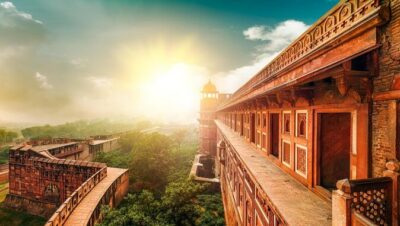
3-Days Private Golden Triangle Tour: Delhi, Agra & Jaipur by Car
Read our review →3-Days Private Golden Triangle Tour: Delhi, Agra & Jaipur by Car
Read our review →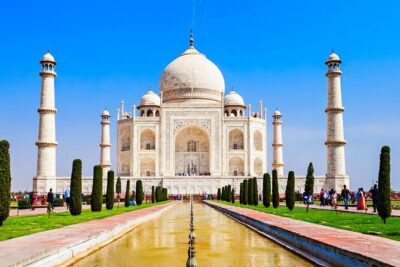
3-Day Delhi, Agra and Jaipur Private Tour – India Golden Triangle
Read our review →
Four-Day Private Luxury Golden Triangle Tour to Agra and Jaipur From New Delhi
Read our review →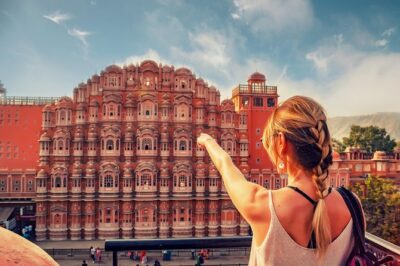
Jaipur Day Trip from Delhi by Car or Train – All Inclusive
Read our review →
Jaipur City Private Day Tour from Delhi by Car – All Inclusive
Read our review →
5 Nights 6 Days Private Golden Triangle Tour – Delhi Agra Jaipur
Read our review →