
Reviewed · GOLDEN TRIANGLE TOURS
5 Nights 6 Days Private Golden Triangle Tour – Delhi Agra Jaipur
The Taj Mahal is the star, but this six-day Golden Triangle tour gives you time to see far more than one famous monument. You move by private car between Delhi, Agra, and Jaipur, with local guides in each city and useful stops such as Fatehpur Sikri and Chand Baori along the way.
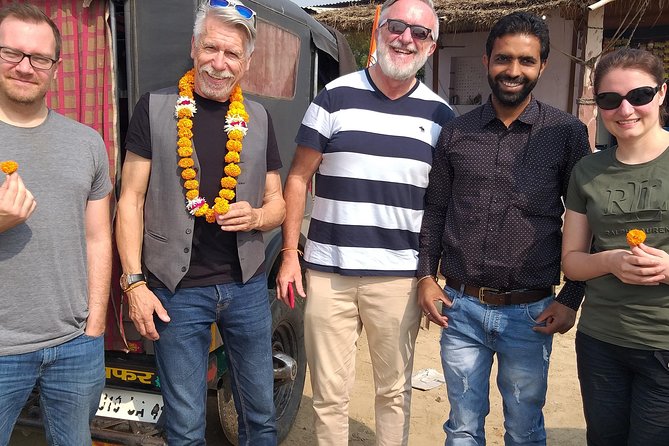
I like the private, adjustable schedule, especially for first-time visitors who want to pause for photos or change the pace. I also like the driver support: names connected with this service include Abhi, Pintu, Manoj, and Amit, and personal attention from the driver is one of the experience’s strongest features.
The main catch is cost clarity. The advertised price is $240 per person, but monument tickets add about $95 per person across Delhi, Jaipur, and Agra, and the hotel standard may not feel like five-star quality to guests used to American or European hotel ratings.
In This Review
- Key points to know before booking
- Why six days works well for Delhi, Agra, and Jaipur
- Day 1: A simple arrival in New Delhi
- Day 2: Old Delhi, Lutyens Delhi, and the Qutb complex
- Day 3: The Taj Mahal and Agra’s Mughal masterpieces
- Day 4: Fatehpur Sikri and Chand Baori on the road to Jaipur
- Day 5: Jaipur’s forts, palaces, and grand observatory
- Private transport, guides, and the real cost
- Who should book this Golden Triangle tour?
- FAQ
- What cities does the six-day tour visit?
- Is airport pickup included?
- Are hotels included in the price?
- Are monument entry tickets included?
- How many breakfasts are included?
- What vehicle is used for different group sizes?
- Can I cancel for a full refund?
- Should you book it?
Key points to know before booking
- Six days gives the Golden Triangle room to breathe: You get a full Delhi sightseeing day, two major Agra visits, and a substantial Jaipur touring day.
- The Taj Mahal is paired with Agra Fort and Baby Taj: That makes Agra more rewarding than a quick sunrise stop and departure.
- A private car keeps the route practical: Pickup is available from airports, railway stations, hotels, and other locations in Delhi, Noida, and Gurugram.
- The driver can shape the experience: Ask whether Abhi, Pintu, Manoj, or Amit is available if a particular driver has been recommended to you.
- Entry fees are separate: Budget approximately $30 for Delhi, $30 for Jaipur, and $35 for Agra monument admission.
- The hotel option needs checking: Five nights are included only when you choose the package with hotels, and the standard can vary.
Why six days works well for Delhi, Agra, and Jaipur
The Golden Triangle covers three very different sides of North India. Delhi brings Mughal monuments, colonial-era government buildings, and modern city life. Agra is the emotional center, with the Taj Mahal and the Mughal fort where Shah Jahan spent his final years. Jaipur shifts the mood to Rajasthan, with hilltop defenses, royal residences, stepwells, and pink-painted city streets.
A shorter trip can cover the same places, but it often turns into a string of early starts and long drives. Here, Delhi gets a dedicated sightseeing day, Agra receives a full afternoon and several major sites, and Jaipur gets most of a day. You still spend plenty of time in the car, but the schedule is not built around constant rushing.
This is a private activity, so only your own group participates. That matters when someone wants more time at the Taj Mahal, needs a break from sightseeing, or prefers to skip one stop. The vehicle depends on group size: one to three people travel in a four-seat sedan, four to six use a seven-seat SUV, and seven to ten use a 12-seat minivan or tempo traveller.
More Agra and Fatehpur Sikri days:
- Same Day Taj Mahal, Agra Fort & Baby Taj Tour from Delhi by Car
★ 5.0 · 4,304 reviews - Full Day Taj Mahal, Agra Fort & Baby Taj Tour from Delhi by Car
★ 5.0 · 3,647 reviews - From Delhi: Taj Mahal & Agra Private Day Trip with Transfers
★ 4.9 · 3,181 reviews
Day 1: A simple arrival in New Delhi
The first day is deliberately light. Your representative meets you at New Delhi airport and transfers you to the hotel. After check-in, you can rest or explore nearby sights on your own.
That gentle start is useful after a long international flight. You are not forced into a packed museum schedule while tired and adjusting to Delhi traffic. If you arrive early, ask about nearby sightseeing, but the supplied plan does not promise a formal guided tour on arrival day.
Five hotel nights come with the package option that includes accommodation. Since one past booking described the hotels as closer to three-star quality by United States standards despite a five-star description, I would ask for the exact hotel names before paying. This is the clearest way to judge the real value.
Day 2: Old Delhi, Lutyens Delhi, and the Qutb complex
Delhi’s sightseeing day covers a lot of ground. At Jama Masjid, Shah Jahan’s vast 17th-century mosque, you see red sandstone, marble, and the scale of Mughal religious architecture. The scheduled visit is about an hour, and admission is listed as free.
The drive through Chandni Chowk gives you a look at Old Delhi’s commercial energy, with shops, vendors, and food stalls close to the road. It is a passing view rather than a dedicated food tour, so do not expect a long tasting session. Still, it helps connect the grand monuments with the daily life around them.
Next comes the Red Fort, another Shah Jahan project and one of Delhi’s defining sights. Allow about an hour. Admission costs extra, and this is one of the places where a local guide can help you understand how the fort served Mughal rulers rather than simply seeing another set of red walls.
India Gate and the drive past Rashtrapati Bhawan and Parliament House show a different Delhi. India Gate is a war memorial, while the government buildings reflect the formal design of Lutyens Delhi. The schedule gives India Gate about 30 minutes and treats the other buildings as drive-by sights, so your time there depends on traffic and access.
Humayun’s Tomb is one of the day’s most important stops. Built in 1570, it was the first major garden tomb on the Indian subcontinent and helped set the pattern for later Mughal architecture. The one-hour visit is worthwhile, though admission is extra.
The Lotus Temple adds a modern, non-Mughal note. Its white, flower-like form belongs to the Bahai faith and reflects an inclusive connection with several major religions. The planned stop is 30 minutes, and entry is not included.
Qutub Minar closes the main sightseeing list. The tall minaret and surrounding Qutb complex reach back to the early Delhi Sultanate and offer a sharp contrast with the Mughal monuments seen earlier. The visit lasts about an hour, with admission extra.
Raj Ghat, the memorial marking Mahatma Gandhi’s cremation site, is a quieter final stop. Its simple form suits Gandhi’s philosophy, and the visit takes about 30 minutes. Delhi’s full day can feel packed, especially with traffic between distant areas, but the private vehicle makes the route easier to manage than arranging separate taxis.
Day 3: The Taj Mahal and Agra’s Mughal masterpieces

The drive from Delhi to Agra covers about 222 kilometers and takes roughly four hours. After arrival and hotel check-in, the main focus is the Taj Mahal, with about two hours scheduled at the monument.
The Taj is not just a quick photo stop here. You have time to approach the marble mausoleum, study its symmetry, and hear the story of Shah Jahan and Mumtaz Mahal from your local guide. Entry is not included, so plan for the separate Agra monument charge. The experience also requires walking and a moderate level of fitness.
Agra Fort follows, with about 90 minutes. Its massive walls and royal apartments explain the political side of Mughal power. The fort is especially important because it links the reigns of Akbar, Shah Jahan, and Aurangzeb. From some sections, you can see toward the Taj Mahal, adding context to the story of Shah Jahan’s later years.
The Tomb of I’timad-ud-Daulah, often called the Baby Taj, is smaller and more delicate. Its stone inlay and lighter design make it a useful companion to the Taj Mahal. You see how Mughal decorative ideas developed before reaching their most famous form. Allow about an hour, with admission extra.
Agra works well as more than an overnight bridge between Delhi and Jaipur. The combination of Taj Mahal, Agra Fort, and Baby Taj gives you three distinct views of Mughal architecture. The drawback is that Day 3 follows a four-hour road journey, so an early start and sensible pacing matter.
More Golden Triangle itineraries from New Delhi:
- 3-Days Private Golden Triangle Tour: Delhi, Agra & Jaipur by Car
★ 5.0 · 1,107 reviews - 3-Days Private Golden Triangle Tour: Delhi, Agra & Jaipur by Car
★ 5.0 · 1,098 reviews - 3-Day Delhi, Agra and Jaipur Private Tour – India Golden Triangle
★ 5.0 · 812 reviews - Four-Day Private Luxury Golden Triangle Tour to Agra and Jaipur From New Delhi
★ 5.0 · 807 reviews
Day 4: Fatehpur Sikri and Chand Baori on the road to Jaipur
The journey to Jaipur includes two excellent stops. Fatehpur Sikri was built by Emperor Akbar in the late 16th century and served as the Mughal capital for roughly a decade. Its courtyards, gates, and red sandstone buildings feel more open and planned than the crowded quarters of Delhi.
About an hour is assigned to the site. The listed admission is free, though you should still confirm current arrangements with your operator because monument access can change.
Chand Baori, near Abhaneri, is one of the route’s most memorable additions. This enormous stepwell drops about 30 meters into the ground through repeated flights of stairs. It is a piece of practical water engineering as well as an unusual architectural sight, and the one-hour stop breaks up the drive in a useful way.
The full transfer and sightseeing block is listed at about six hours. That is a long day, but the stops are not filler. If you enjoy architecture and photography, this may be one of the tour’s best days because both sites offer something different from the headline monuments.
Day 5: Jaipur’s forts, palaces, and grand observatory
Jaipur’s touring day begins at Amer, formerly the capital before Jaipur was founded. Amer Fort dates to 1592 and combines defensive walls, palace courtyards, and decorative details. The planned two-hour visit gives you enough time to see the main complex without turning the fort into a rushed photo stop.
Jal Mahal is a short viewing stop, about 30 minutes. The palace sits in Man Sagar Lake, and the appeal is the unusual view of a building surrounded by water. You should treat this as a scenic pause rather than a full palace visit.
The Royal Gaitor cenotaphs honor Jaipur’s Kachhwaha rulers. Their carved marble structures are calmer and more intimate than the large forts, and the stop takes about 30 minutes. Admission is not included.
The City Palace receives about two hours. Built for Jaipur’s ruling family, it mixes Mughal and Rajput design within the old walled city. This is one place where a guide can make a real difference, since the courtyards and royal buildings are more meaningful when you know which parts served ceremonial, residential, or administrative purposes.
Jantar Mantar is an astronomical observatory with enormous stone instruments, including the world’s largest stone sundial. The schedule lists only one minute, which is plainly too little for a meaningful visit. Ask your guide to confirm the actual time available and consider prioritizing it over a less important stop if the day is running late. Admission costs extra.
Hawa Mahal, the Palace of Breeze, is Jaipur’s best-known facade. Its five levels and rows of small windows were designed for royal women to observe street life without being seen. The schedule allows an hour, but the building is often most useful as both an exterior photo stop and a short guided explanation.
Albert Hall Museum rounds out the day with a one-hour visit. Opened in 1887 and named after Prince Albert Edward, it contains a broad collection of objects. Admission is extra, and the museum is a good choice if you want indoor time after a day of forts and courtyards.
Jaipur’s day contains seven stops, so flexibility is valuable. A private guide and car let you spend longer at Amer or the City Palace, but the number of planned sights means you should not assume every stop will receive equal attention.
Private transport, guides, and the real cost
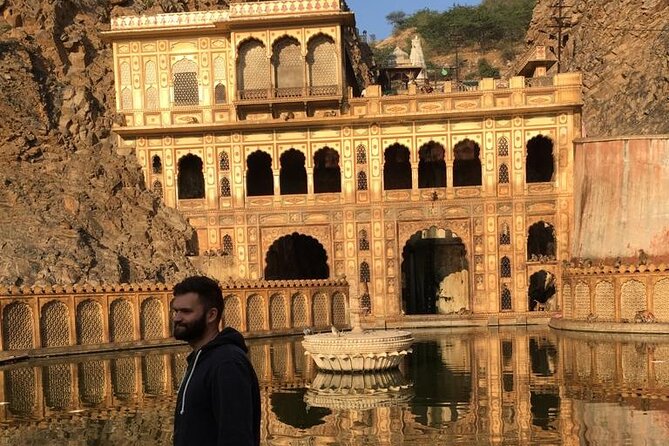
At $240 per person, the base price is attractive for a private six-day route with airport pickup, a dedicated vehicle, local guides in each city, and five hotel nights when that package is selected. The value is strongest for small groups, since the car and guide arrangement is shared only by your party.
The extra monument charges change the calculation. Delhi is listed at about $30 per person, Jaipur at $30, and Agra at $35, bringing the stated admission total to roughly $95 per person. Meals beyond the three included breakfasts are also separate. Add those costs before comparing this tour with a package that appears more expensive at first glance.
The driver is a major part of the experience. Abhi has been singled out for careful service and flexibility, while Pintu has been praised for staying involved from start to finish. Manoj has helped adjust longer routes, and Amit has driven extended trips beyond the three core cities. Ask who is available, and confirm whether the same person will handle your group throughout.
The tour requires moderate physical fitness. Expect walking at large forts, tombs, mosques, and palace complexes, along with road time between cities. Children must travel with an adult.
Who should book this Golden Triangle tour?
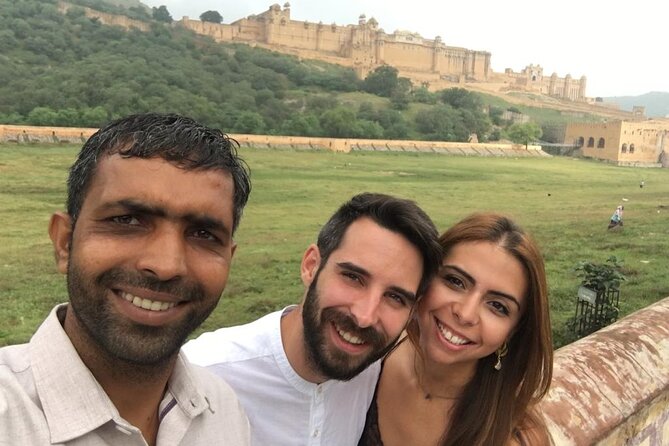
I would choose this trip if you are visiting India for the first time, want the major sights in one organized route, and value a private vehicle more than independent train travel. It also suits families and small groups who want control over breaks and sightseeing time.
I would be cautious if hotel quality is your top concern. Ask for specific properties and room standards before booking the hotel-inclusive option. I would also question the schedule if you prefer slow museum visits, since Delhi and Jaipur contain many stops and traffic can reduce time on site.
The cancellation terms are straightforward: cancel at least 24 hours before the start for a full refund. Changes made within 24 hours are not accepted, and poor weather or failure to meet the minimum number of participants can lead to an alternate date or refund.
FAQ
What cities does the six-day tour visit?
The tour visits New Delhi, Agra, and Jaipur. It also includes route stops at Fatehpur Sikri and Chand Baori.
Is airport pickup included?
Yes. Pickup is offered from the airport, railway station, hotel, or another pickup location in Delhi, Noida, or Gurugram.
Are hotels included in the price?
Five hotel nights are included only when you book the option that includes hotels. The supplied information does not identify the hotel properties.
Are monument entry tickets included?
No. Delhi, Jaipur, and Agra entry fees are separate. The stated combined charges are about $30 for Delhi, $30 for Jaipur, and $35 for Agra per person.
How many breakfasts are included?
Three breakfasts are included. Other meals are not included.
What vehicle is used for different group sizes?
One to three people use a four-seat sedan. Four to six people use a seven-seat SUV. Groups of seven to ten use a 12-seat minivan or tempo traveller.
Can I cancel for a full refund?
Yes, if you cancel at least 24 hours before the experience start time. Cancellations made less than 24 hours before the start are not refunded.
Should you book it?
Book this tour if you want the classic Delhi, Agra, and Jaipur route handled in one private package, with the Taj Mahal, major forts, local guides, and useful stops between cities. The strongest reasons are the flexible car service, the driver support, and the generous six-day pace.
Before paying, confirm the hotel names, the exact monument-ticket total, and the driver assigned to your group. If those details suit your budget, this is a practical way to see North India’s major sights without trying to solve every transfer yourself.
More 6-Day Experiences in New Delhi
- Delhi: 6-Day Golden Triangle Delhi, Agra, and Jaipur Tour
★ 4.9 · 189 reviews - 6-Day Private Tour of the Golden Triangle
★ 5.0 · 184 reviews - Golden Triangle Tour: Private Delhi Agra Jaipur 5 Nights 6 Days
★ 5.0 · 157 reviews - From Delhi : 6 Days Delhi, Jaipur, Agra & Ranthambore By Car
★ 5.0 · 73 reviews
Just added around New Delhi
- Delhi: All-Inclusive Full or Half Day Tour With Hotel Pickup★ 5.0 · 3 reviews
- From Delhi : All Inclusive Taj Mahal Tour by Gatimaan Express★ 5.0 · 3 reviews
- Skip the line: Taj Mahal Agra Private Day Trip From Delhi By Car★ 5.0 · 3 reviews
- Delhi: Old and New Delhi One Day Private Guided City Tour★ 5.0 · 3 reviews
- New Delhi Night City Tour★ 5.0 · 3 reviews
- Old Delhi Half day private city tour★ 5.0 · 3 reviews
- A full-day tour of Old & New Delhi Monument Express Entry★ 5.0 · 3 reviews
- Sultanpur Bird Sanctuary Tour Near Delhi★ 5.0 · 3 reviews
Golden Triangle Tours, compared.
3-Days Private Golden Triangle Tour: Delhi, Agra & Jaipur by Car
Read our review →3-Days Private Golden Triangle Tour: Delhi, Agra & Jaipur by Car
Read our review →
3-Day Delhi, Agra and Jaipur Private Tour – India Golden Triangle
Read our review →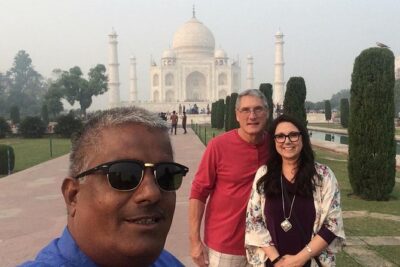
Four-Day Private Luxury Golden Triangle Tour to Agra and Jaipur From New Delhi
Read our review →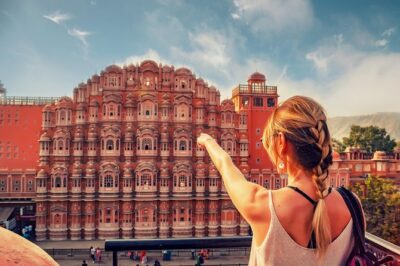
Jaipur Day Trip from Delhi by Car or Train – All Inclusive
Read our review →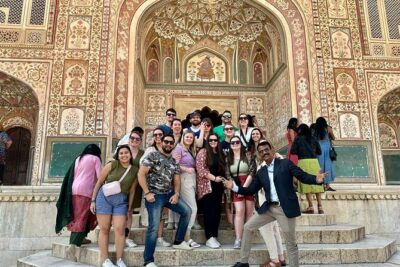
Jaipur City Private Day Tour from Delhi by Car – All Inclusive
Read our review →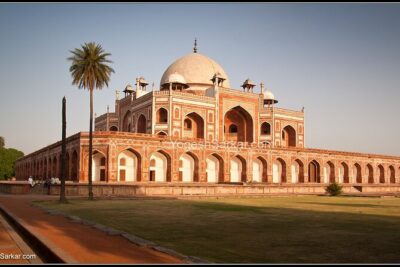

Private Car and Drive for Golden Triangle (4N/5D)
Read our review →Browse the lists this tour appears in