Reviewed · GOLDEN TRIANGLE TOURS
3-Days Luxury Golden Triangle Tour to Agra and Jaipur from Delhi
The Taj Mahal at sunrise is the heart of this fast-moving Golden Triangle tour, but the real appeal is how much ground you cover without having to arrange every driver, hotel, guide, and monument ticket yourself. You begin in Delhi, sleep in Agra, continue to Jaipur, and return to Delhi or Jaipur Airport on the third day.
I like the private car and driver, which gives your group a reliable link between four different local guides and three major cities. I also like the chance to visit Old Delhi by tuk-tuk, see Fatehpur Sikri between Agra and Jaipur, and reach the Taj Mahal before the day heats up. The tradeoff is simple: this is a packed schedule with long road journeys, not a slow cultural holiday.
In This Review
- Key points to know before booking
- Is three days enough for India’s Golden Triangle?
- Delhi begins with Old Delhi’s sharp edges
- New Delhi’s grand avenues and choice of monuments
- Agra puts the Taj Mahal first
- Fatehpur Sikri breaks up the road to Jaipur
- Jaipur brings Rajput architecture to the final day
- The private car and guide setup
- What the $206 price really means
- Who should book this fast Golden Triangle route?
- Should you book it?
- FAQ
- How long is the Golden Triangle tour?
- Where can pickup and drop-off take place?
- Is this a private tour?
- What type of vehicle is used?
- Are hotel stays included?
- Are meals included?
- Are monument entrance fees included?
- Is the Taj Mahal open every day?
- Can the tour be customized?
Key points to know before booking
- Sunrise at the Taj Mahal: You visit the monument early, then return to the hotel for breakfast.
- Three cities in three days: Delhi, Agra, and Jaipur are covered by private air-conditioned vehicle.
- Four local guides may be used: Delhi, Agra, the route between Agra and Jaipur, and Jaipur each have separate guiding arrangements.
- Accommodation options vary: The booking information refers to both 3-star and 5-star stays, so check exactly which hotel category and meal plan you are selecting.
- A private tour for your group: Vehicle size depends on group size, from a sedan for one or two people to a van for larger parties.
- The route can be adjusted: The operator says the trip can be customized, and an added stop or extra day may be possible if arranged in advance.
Is three days enough for India’s Golden Triangle?
Three days is enough to see the headline sights, but only if you accept a brisk pace. Delhi alone has enough monuments and neighborhoods for several days. Agra needs at least a full day for its Mughal landmarks, and Jaipur rewards a second day if you want time for markets, museums, and a less hurried look at the old city.
This tour is built for someone with limited time. Your driver handles the major road connections, your guides meet you at the sights, and hotel pickup keeps you from spending part of the day finding taxis. That organization has real value in India, where traffic can make even short city transfers unpredictable.
The schedule also asks a lot from you. Day 1 begins with Delhi sightseeing and ends with a roughly three-hour drive to Agra. Day 2 includes an early Taj Mahal visit, more Agra monuments, Fatehpur Sikri, and another roughly three-hour drive to Jaipur. Day 3 covers Jaipur before a drive of about four hours back to Delhi.
The published details contain a small but important inconsistency. The summary refers to three nights, while the itinerary covers three days and the accommodation details refer to two nights. Ask the operator to confirm the exact number of nights, hotel names, room type, and meal plan before paying.
More Agra and Fatehpur Sikri days:
- Same Day Taj Mahal, Agra Fort & Baby Taj Tour from Delhi by Car
★ 5.0 · 4,304 reviews - Full Day Taj Mahal, Agra Fort & Baby Taj Tour from Delhi by Car
★ 5.0 · 3,647 reviews - From Delhi: Taj Mahal & Agra Private Day Trip with Transfers
★ 4.9 · 3,181 reviews
Delhi begins with Old Delhi’s sharp edges
Pickup is available from Delhi, Noida, Gurugram, Ghaziabad, and Faridabad, generally with a start time between 9 and 11 a.m. If you are arriving by air, provide your flight details when booking. A private pickup is useful here because Delhi traffic can turn a simple transfer into a slow one.
Your Old Delhi visit begins near Sunheri Masjid, where you meet the guide and take a tuk-tuk through the Chandni Chowk area. This is one of the most atmospheric parts of the day. The lanes, bazaars, shops, and passing traffic give you a quick sense of how older Delhi works as a living commercial district, not just a collection of monuments.
The tuk-tuk ride is short, but it adds movement and character to the visit. You are not simply walking from gate to gate with a camera. You are seeing the market area at street level, with the guide explaining why these bazaars matter to local life.
Jama Masjid follows. Built in 1656, the mosque has a large red sandstone courtyard and a strong visual connection to the Red Fort across the Old Delhi area. Allow about an hour here. Dress modestly, and remember that religious sites require a respectful approach. The tour notes specifically advise against revealing clothing.
Next comes Gurudwara Bangla Sahib, with about 30 minutes set aside. The Sikh shrine is linked to the eighth Sikh Guru and a historic water tank associated with healing. You can expect a calmer, more reflective stop after the noise of Chandni Chowk. Keep your clothing appropriate and follow the site’s instructions.
New Delhi’s grand avenues and choice of monuments
India Gate is a brief stop of about 15 minutes. The memorial honors Indian soldiers who died in the First World War, with names inscribed on its walls. This is a photo and orientation stop rather than a long museum visit.
The surrounding New Delhi district reflects the planning and architecture of the early twentieth century, including work by Edwin Lutyens and Herbert Baker. You will see broad avenues and formal government architecture, a sharp contrast to Old Delhi’s narrow lanes.
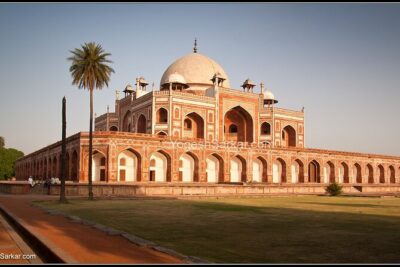
The itinerary then gives you a choice between Humayun’s Tomb and Akshardham Temple, depending on the schedule and operating days. Humayun’s Tomb is a UNESCO World Heritage Site and an important early garden tomb built for the Mughal emperor Humayun. Its formal gardens and Mughal design make it a strong choice if you want older architecture and historical context.
Akshardham Temple is much newer, completed in 2005, but built in a style that recalls older Hindu temple architecture. The visit is shorter in the listed schedule, and you should note that Akshardham is closed on Mondays. On that day, the replacement stops are Gurudwara Bangla Sahib and Birla Temple.
Qutub Minar closes the Delhi sightseeing portion. The 72.5-meter brick minaret rises within the Qutub Complex, a UNESCO World Heritage area in Mehrauli. The scheduled visit lasts about 45 minutes, enough for a guided look at the tower and surrounding ruins, though not enough for an unhurried archaeological study.
After Delhi, the driver takes you to Agra. The trip is listed at about three hours, but the exact time depends on traffic. This is where a private vehicle matters most. You can settle into the car rather than arranging a new transfer after a full day of city sightseeing.
Agra puts the Taj Mahal first
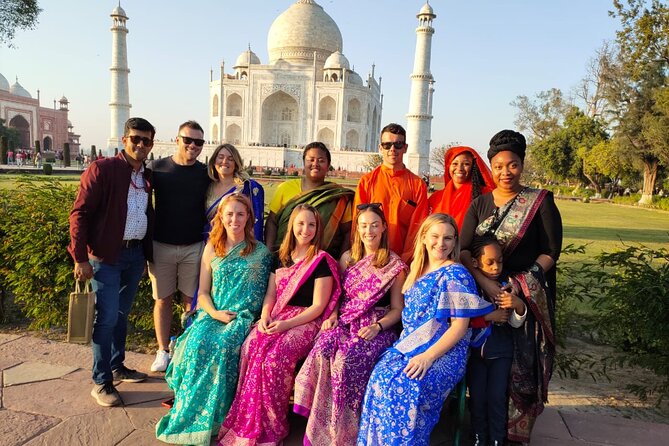
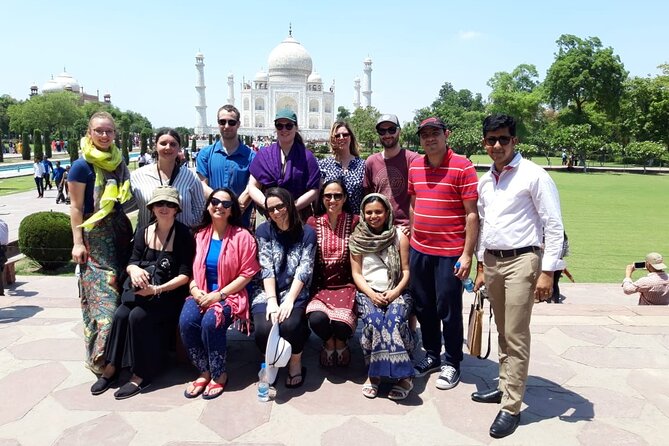
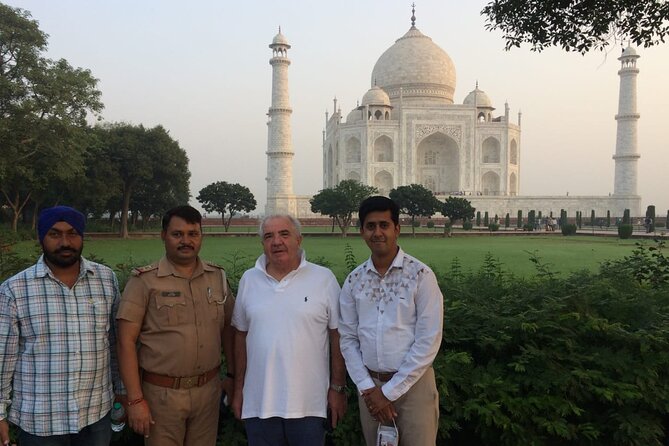
The second day begins before breakfast with the Taj Mahal at sunrise. This is the right order. The early light gives the marble a softer appearance, and the cooler air is easier on you than a midday visit. After about three hours at the complex, you return to the hotel for breakfast.
The Taj Mahal was commissioned by Shah Jahan in 1630 as a mausoleum for his wife. Your guide can help place the building in its Mughal setting, explain the design, and point out details that are easy to miss when you are focused only on the famous front view.
A battery bus carries you between the Taj Mahal parking area and the monument. That cuts out a transfer on foot and helps keep the morning moving. Bring your passport or another valid photo ID, since identification may be checked at monuments.
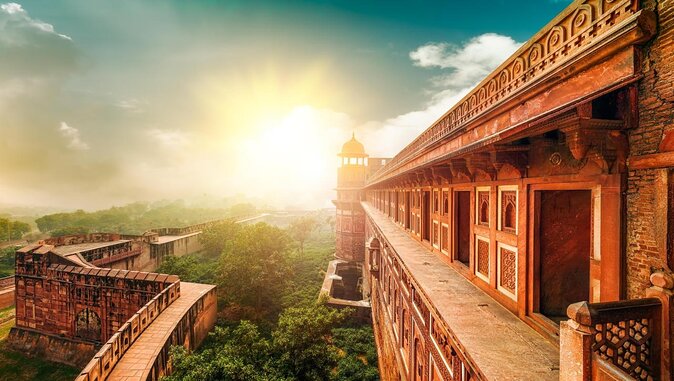
Agra Fort is next, with about an hour scheduled. This UNESCO World Heritage Site is not just another red sandstone photo stop. It helps explain the power of the Mughal court, with enclosed spaces, grand gateways, and a mix of Indian and Islamic design.
Itmad-ud-Daula provides a smaller-scale contrast. Built entirely from marble, it is associated with early use of pietra dura, the inlaid stonework later seen at the Taj Mahal. You get about an hour here, which gives the guide time to explain why this tomb matters beyond its size.
Lunch is not clearly included in the package details. One section says breakfasts and dinners are included, while the inclusion and exclusion notes say meals may not be included and specifically list dinner among excluded items. Confirm this before you travel, and budget for lunch and any meals not covered by your chosen option.
More Golden Triangle itineraries from New Delhi:
- 3-Days Private Golden Triangle Tour: Delhi, Agra & Jaipur by Car
★ 5.0 · 1,107 reviews - 3-Days Private Golden Triangle Tour: Delhi, Agra & Jaipur by Car
★ 5.0 · 1,098 reviews - 3-Day Delhi, Agra and Jaipur Private Tour – India Golden Triangle
★ 5.0 · 812 reviews - Four-Day Private Luxury Golden Triangle Tour to Agra and Jaipur From New Delhi
★ 5.0 · 807 reviews
Fatehpur Sikri breaks up the road to Jaipur
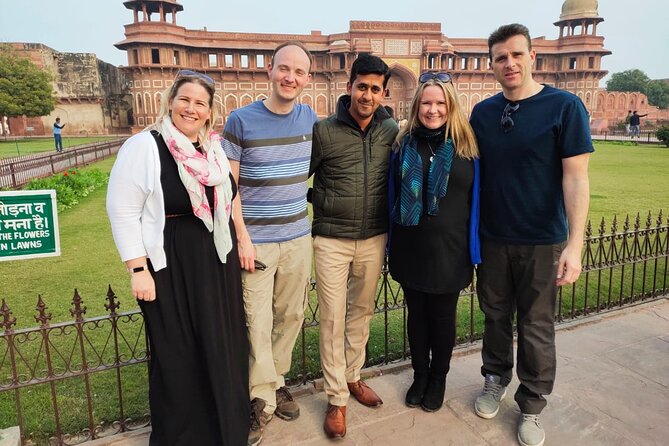
After Agra, the route turns toward Jaipur, with a stop at Fatehpur Sikri about 40 kilometers west of Agra. This fortified former capital was built under the Mughal emperor Akbar and gives you a chance to walk through a planned imperial city rather than see only a single monument.
The listed visit lasts about an hour. That is enough for the main structures with a guide, but the site can feel rushed if you want to examine every courtyard and building. Wear comfortable shoes and carry water, especially in warmer months.
The drive onward to Jaipur takes about three hours. By the time you reach the hotel, you will have spent much of the day moving between sites and cities. The benefit is that Fatehpur Sikri fits naturally into the route. The cost is that there is little spare time for Agra markets or a relaxed evening in Jaipur.
Jaipur brings Rajput architecture to the final day
Jaipur sightseeing begins after breakfast with Amer Fort, about a 30-minute drive from the central city area in normal conditions, though the schedule only gives the total visit time. The fort is roughly 600 years old and known for Hindu-style design in marble and red sandstone.
Amer is one of the tour’s larger stops, with about two hours planned. That matters because the complex has enough courtyards, gates, halls, and views to reward a proper guided walk. Ask your guide to explain the relationship between the fort, the royal court, and the surrounding hills rather than treating it as a quick photo stop.
Back in Jaipur, Hawa Mahal receives about an hour. The Palace of Breeze was built in 1799 for the royal women and has 953 small windows in its pink and red sandstone facade. The building is best known from the street-facing view, but a guide can help you understand how the windows allowed royal observers to look out without being easily seen.
The City Palace follows, with about two hours scheduled. It was the seat of Jaipur’s Maharaja, and parts of the complex now serve as a museum. This is a useful stop after Amer because it shifts the focus from fortified hilltop power to the daily and ceremonial world of the royal city.
Jantar Mantar is a short visit of about 30 minutes. The eighteenth-century observatory contains large architectural instruments used to measure time and track celestial bodies. The structures make more sense with a guide, since their purpose is not always obvious from their shape.
Jal Mahal is the final Jaipur stop, with about 30 minutes. The palace sits in Man Sagar Lake and is generally viewed from the shore. Treat this as a brief scenic pause, not a full palace tour. The building’s location in the lake makes the view different from the courtyards and forts earlier in the day.
At the end of the route, you can return to Delhi, a drive listed at about four hours, or request drop-off at Jaipur Airport. Make sure your flight time allows for road delays. The tour data gives approximate transfer times, not guarantees.
The private car and guide setup
This is a private activity, so only your own group participates. Vehicle type depends on group size:
- One or two people: four-seat sedan
- Three to five people: six-seat wagon
- Six to nine people: nine-seat tempo traveler or van
- Ten to twelve people: twelve-seat van
The driver provides continuity across the route, while local English-speaking guides handle the sightseeing in each city. One especially useful arrangement is having separate guides for Delhi, Agra, the route between Agra and Jaipur, and Jaipur. Local guiding can make the monuments easier to understand, though it also means you may need to repeat your preferences and questions as each guide changes.
Sanjiv is identified as a driver who provided continuity and attentive service across the trip. If he is assigned to your booking, that steady driver relationship can make the long road sections easier. Driver assignment is not guaranteed in the supplied details, so ask when confirming.
The tour can be customized. An extension was arranged for one booking to fit a different schedule, and a Pushkar Camel Fair addition was also accommodated. Do not assume an add-on is included in the advertised price, but it is worth asking if you need extra nights, another airport, or a different final destination.
What the $206 price really means
At $206, the advertised rate can be attractive for a private three-day route through three cities, especially if your selected package includes the car, driver, guides, hotel, transfers, and monument tickets. The value comes from reducing the number of separate bookings you would otherwise need to make.
That price needs careful checking because the package choices affect the final value. The details refer to both 3-star and 5-star accommodation, and to different ticket and meal options. Some sections say two nights with breakfast and dinner, while another says meals and monument entrance fees are not included.
Before booking, confirm these points in writing:
- Whether the price is for 3-star or 5-star hotels
- Whether the stay is for two nights or three
- Whether breakfast and dinner are included
- Whether monument entrance fees are included in your selected option
- Whether the room is twin, double, or triple sharing
- Whether airport pickup and drop-off are included for your flight
Rooms are generally arranged on a twin-sharing basis. Three-person bookings normally use a triple room, and two rooms for three people cost extra. That detail can change the price for families or friends who do not want to share.
The package includes fuel charges, taxes, hotel taxes, water bottles, soft drinks during journeys, and the battery bus near the Taj Mahal, subject to the selected option. Lunch should be treated as your own expense unless the operator confirms otherwise.
Who should book this fast Golden Triangle route?
I would choose this tour if you have only a few days in India and want the classic sights with private transport. It suits first-time visitors who prefer a planned route, families who want hotel pickup, and small groups that can share a vehicle and room costs.
It also works well if you value the early Taj Mahal visit and want to avoid arranging separate Delhi to Agra and Agra to Jaipur transfers. The private format gives you more control than a large coach tour, even though the overall route remains tightly scheduled.
I would not choose it for a slow, neighborhood-focused trip. You will have little free time, and the long drives can be tiring. If you want several hours in Delhi’s markets, extended time at each fort, or relaxed evenings in Jaipur, add days rather than trying to stretch this schedule.
Check the calendar before confirming. The Taj Mahal is closed on Fridays. Akshardham and Gandhi Smriti are closed on Mondays, with alternative Delhi stops offered. Carry a valid passport or photo ID for monument checks, dress modestly at religious sites, and request another guide language at booking if English is not suitable.
Should you book it?
Book this tour if your priority is maximum sightseeing with minimum planning. The Taj Mahal, Agra Fort, Fatehpur Sikri, Amer Fort, Hawa Mahal, City Palace, Jantar Mantar, Qutub Minar, and key Delhi sights form a strong first visit to northern India.
The main decision is not the route. It is the pace and the exact package. Confirm the number of hotel nights, meal coverage, ticket coverage, and hotel category before booking. If those terms are clear and you can manage early mornings and long drives, $206 may offer solid value for a private three-city trip. If you want more time to look, eat, and wander, add at least one or two nights.
FAQ
How long is the Golden Triangle tour?
The tour is described as a three-day experience, with approximate drives of three hours from Delhi to Agra, three hours from Agra to Jaipur, and four hours from Jaipur to Delhi. The accommodation details refer to two nights, while another description mentions three nights, so confirm the exact duration before booking.
Where can pickup and drop-off take place?
Pickup is offered from locations in Delhi, Noida, Gurugram, Ghaziabad, and Faridabad. Hotel or airport pickup and drop-off are available, and Jaipur Airport drop-off can be requested at the end.
Is this a private tour?
Yes. Only your own group participates. The vehicle size depends on the number of people in your booking.
What type of vehicle is used?
One or two people travel in a four-seat sedan. Three to five people use a six-seat wagon. Groups of six to nine use a nine-seat tempo traveler or van, and groups of ten to twelve use a twelve-seat van.
Are hotel stays included?
Hotel stays are offered in different categories, including 3-star and 5-star options. The supplied details refer to two nights, but another section mentions three nights. Confirm the hotel category, hotel names, and number of nights selected.
Are meals included?
Some package details say breakfast and dinner are included, while other details exclude meals. Meal coverage depends on the option you choose, so confirm this before booking. Lunch is not clearly included.
Are monument entrance fees included?
Monument tickets are included only with the applicable ticket option. Other details say entrance fees are excluded, so check which option you are selecting.
Is the Taj Mahal open every day?
The Taj Mahal is closed every Friday. The tour visits it at sunrise on the second day when the schedule and date allow.
Can the tour be customized?
Yes. The operator says customization is possible, and added days or special additions can be arranged. Ask about any extra nights, alternate routes, language requests, or additional stops before booking.
Just added around New Delhi
- Delhi: All-Inclusive Full or Half Day Tour With Hotel Pickup★ 5.0 · 3 reviews
- From Delhi : All Inclusive Taj Mahal Tour by Gatimaan Express★ 5.0 · 3 reviews
- Skip the line: Taj Mahal Agra Private Day Trip From Delhi By Car★ 5.0 · 3 reviews
- Delhi: Old and New Delhi One Day Private Guided City Tour★ 5.0 · 3 reviews
- New Delhi Night City Tour★ 5.0 · 3 reviews
- Old Delhi Half day private city tour★ 5.0 · 3 reviews
- A full-day tour of Old & New Delhi Monument Express Entry★ 5.0 · 3 reviews
- Sultanpur Bird Sanctuary Tour Near Delhi★ 5.0 · 3 reviews
Golden Triangle Tours, compared.
3-Days Private Golden Triangle Tour: Delhi, Agra & Jaipur by Car
Read our review →3-Days Private Golden Triangle Tour: Delhi, Agra & Jaipur by Car
Read our review →
3-Day Delhi, Agra and Jaipur Private Tour – India Golden Triangle
Read our review →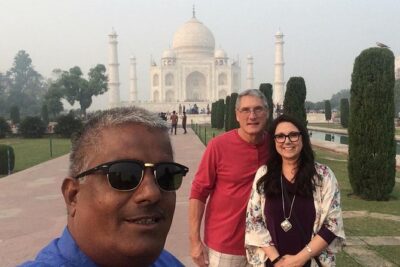
Four-Day Private Luxury Golden Triangle Tour to Agra and Jaipur From New Delhi
Read our review →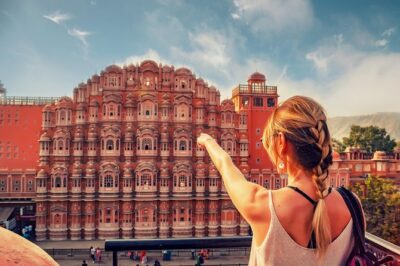
Jaipur Day Trip from Delhi by Car or Train – All Inclusive
Read our review →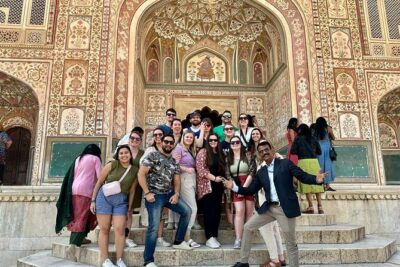
Jaipur City Private Day Tour from Delhi by Car – All Inclusive
Read our review →
5 Nights 6 Days Private Golden Triangle Tour – Delhi Agra Jaipur
Read our review →