Reviewed · GOLDEN TRIANGLE TOURS
3-Days Private Luxury Golden Triangle Tour to Agra and Jaipur From New Delhi
The Taj Mahal at sunrise is the centerpiece here, but this three-day route gives you much more: Mughal tombs and forts, Jaipur’s royal palaces, Delhi’s grand avenues, and the wonderfully chaotic lanes of Old Delhi. Your private driver handles the long road miles while local guides explain what you are seeing.
I like the door-to-door service, especially for a first visit to India, and I like having a private car rather than trying to coordinate trains, taxis, and hotel transfers. I also like the chance to see Chandni Chowk, Agrasen Ki Baoli, and Itmad-ud-Daula, not just the famous postcard sights. The main drawback is pace: three days covers a lot of ground, with roughly five hours on the road from Jaipur back to Delhi.
In This Review
- Key points to know before booking
- What this Golden Triangle tour is really like
- Delhi begins with towers, tombs, and imperial avenues
- Old Delhi adds the human scale
- The Taj Mahal at sunrise is worth the early start
- Agra Fort and Baby Taj fill out the Mughal story
- Chand Baori makes the Agra to Jaipur transfer worthwhile
- Jaipur packs royal Rajasthan into one morning
- The five-hour return to Delhi is the tradeoff
- Guides, drivers, hotels, and extra costs
- Who should book this three-day route
- Should you book it?
- FAQ
- How long is the Golden Triangle tour?
- Where does the tour begin?
- Where does the tour end?
- Is the tour private?
- Is transportation included?
- Are local guides included?
- Are hotel stays included?
- Are monument entrance fees included?
- What is the cancellation policy?
Key points to know before booking
- Sunrise at the Taj Mahal: Day two begins early, giving you the best chance at cooler temperatures and softer light.
- Three major cities in three days: Delhi, Agra, and Jaipur are linked by private road transfers, but the schedule is full.
- Private driver and guides: Only your group participates, with pickup from Delhi, Noida, Gurugram, or the airport.
- Monument tickets cost extra: Entrance fees for the main sites are listed at about $90 per person across the tour.
- Hotels are an option: The price changes according to whether you choose accommodation and breakfasts.
- A well-regarded driving team: Mahaveer is specifically praised for safe, considerate driving, while Gopal Khatik handled pre-trip arrangements for one booking.
What this Golden Triangle tour is really like
This is a sightseeing-heavy road trip, not a relaxed three-day break. You move from Delhi to Agra, then Agra to Jaipur, and finally back to Delhi or Jaipur Airport. The private format makes the schedule easier to manage, but it does not remove the distances.
The advertised price of $138.46 per person needs a careful look. Hotels, breakfasts, and monument tickets may depend on the package you select. The listed inclusions specify two nights of accommodation and two breakfasts when the hotel option is booked, while monument entrance fees are not included and are listed at about $90 per person. Add tips, personal expenses, insurance, and transport to Delhi if needed.
That can still be good value for a private car, driver, local guides, and a carefully linked route. Compare the full price, not just the headline figure. A lower basic fare may become much higher once you add hotels and admission tickets.
The tour has a 4.9 rating from 32 reviews, with a 100 percent recommendation figure shown in the supplied details. The strongest praise centers on reliable arrangements, friendly guides, and careful driving. One specific driver, Mahaveer, is praised for helping make the trip feel safe and comfortable. That matters on a road trip where you spend many hours in the car.
More Agra and Fatehpur Sikri days:
- Same Day Taj Mahal, Agra Fort & Baby Taj Tour from Delhi by Car
★ 5.0 · 4,304 reviews - Full Day Taj Mahal, Agra Fort & Baby Taj Tour from Delhi by Car
★ 5.0 · 3,647 reviews - From Delhi: Taj Mahal & Agra Private Day Trip with Transfers
★ 4.9 · 3,181 reviews
Delhi begins with towers, tombs, and imperial avenues
Your first day starts with pickup at Indira Gandhi International Airport or another agreed location in Delhi, Noida, or Gurugram. The private, air-conditioned car is useful from the first hour, especially if you have luggage or have just arrived on a long flight.
Qutub Minar is the first major stop. The tall medieval minaret is part of a UNESCO World Heritage site, and you have about an hour there. The admission ticket is extra. Your guide can give the monument a sense of place and explain how the complex developed, which is much more useful than simply taking a photo of the tower and leaving.
Next comes the Lotus Temple, with about 30 minutes allotted. Its white, flower-shaped design is the attraction, and entry is free. This is a short, visual stop rather than a long historical visit, so keep your expectations in line with the schedule.
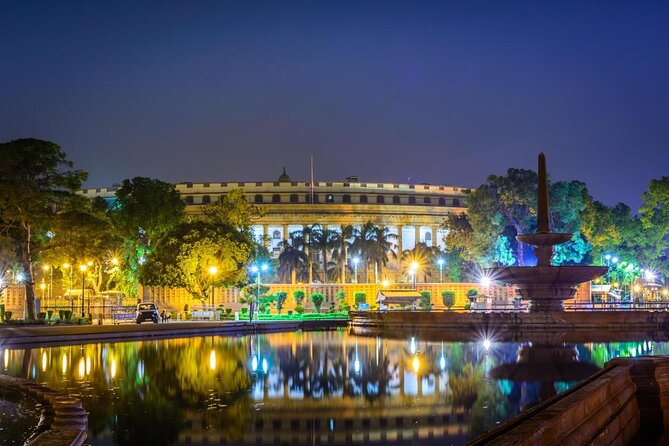
India Gate and the government district follow. India Gate is a war memorial for soldiers of British India, while Parliament House and Rashtrapati Bhavan introduce the ceremonial side of modern Delhi. The itinerary gives an unusually long block to Parliament House, but the practical sightseeing time may depend on traffic, security, and what can be viewed from outside.
Agrasen Ki Baoli is a much more intimate stop. This protected stepwell is planned for only 15 minutes, yet it gives you a quick look at a very different kind of Delhi monument. The geometric steps descend below street level, and the confined space feels far removed from the formal boulevards nearby. Entry is free.
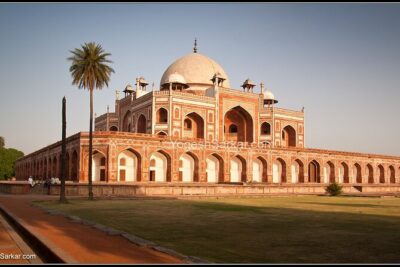
Humayun’s Tomb deserves its hour. Commissioned in 1558 by Empress Bega Begum for the Mughal emperor Humayun, it is an important forerunner to later Mughal garden tombs. Admission is extra. I would pay attention here to the symmetry, raised platform, gardens, and use of red sandstone and pale stone. The visit helps you understand the architectural ideas that eventually reached their grandest form at the Taj Mahal.
Old Delhi adds the human scale
The afternoon moves into Old Delhi, where the organized sightseeing gives way to a more crowded city experience. Chandni Chowk is a shopping district filled with spices, dried fruit, silver jewelry, saris, and narrow side streets. You have about an hour, enough for a guided look but not enough to explore every lane.
Jama Masjid, built by Shah Jahan between 1650 and 1656, is another paid-entry stop. Dress and local rules matter at religious sites, and your guide can help you understand the visit. The Red Fort, once the main residence of Mughal emperors for nearly two centuries, gets only about 30 minutes in the plan. That is enough for an exterior look or a quick visit, but not a full exploration of its museums and courtyards.
Lunch is planned at a local restaurant before the drive to Agra. The supplied details do not promise a specific restaurant or fully included lunch, so budget for this meal unless your package says otherwise.
The Yamuna Expressway makes the Agra transfer more direct, but it still takes about three hours. After arrival, you check into the hotel if accommodation is included and have the remainder of the evening at leisure. This quiet period is welcome after a very full Delhi day.
The Taj Mahal at sunrise is worth the early start
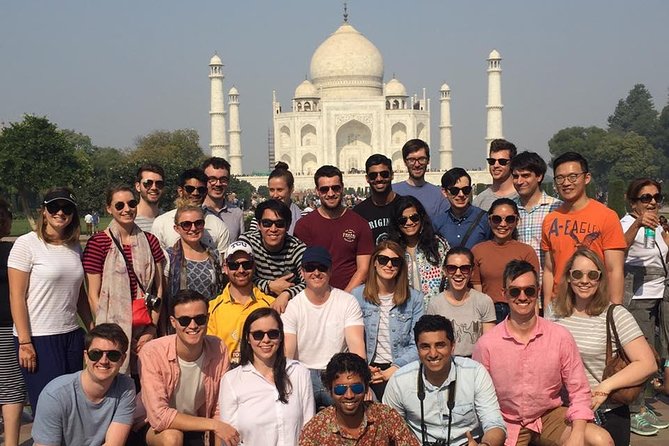
Day two begins with the Taj Mahal. The planned visit lasts about three hours, including a guided tour of the interior for roughly two hours. The monument ticket is extra.
The early timing is one of the tour’s best choices. Morning light gives the white marble a softer appearance, and starting early can help you avoid the worst heat. The exact atmosphere depends on the day, but the sunrise plan gives you a better photographic opportunity than a late-morning arrival.
Your guide can also help you understand the building as a mausoleum rather than treating it as a simple symbol of romance. The surrounding gardens, reflecting pools, marble inlay, and carefully controlled symmetry deserve attention. The interior visit is shorter in scale than the outside grounds, so use the garden time to take in the whole design.
The Taj Mahal can be the busiest part of the route, and the schedule is not designed for lingering all morning. If this is the main reason you came to India, tell your guide that you want enough time for the gardens and the building’s exterior, not only a fast walk through the central area.
More Golden Triangle itineraries from New Delhi:
- 3-Days Private Golden Triangle Tour: Delhi, Agra & Jaipur by Car
★ 5.0 · 1,107 reviews - 3-Days Private Golden Triangle Tour: Delhi, Agra & Jaipur by Car
★ 5.0 · 1,098 reviews - 3-Day Delhi, Agra and Jaipur Private Tour – India Golden Triangle
★ 5.0 · 812 reviews - Four-Day Private Luxury Golden Triangle Tour to Agra and Jaipur From New Delhi
★ 5.0 · 807 reviews
Agra Fort and Baby Taj fill out the Mughal story
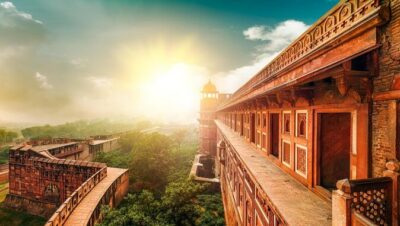
Agra Fort comes next, with about an hour and a separate admission charge. This massive red sandstone complex was both a defensive stronghold and a royal residence. Inside, you see a mix of courtyards, apartments, and architectural details tied to Mughal rulers.
The fort also gives you a useful contrast with the Taj Mahal. The Taj is carefully balanced and luminous; Agra Fort feels heavier, more defensive, and more connected to daily court life. An hour is enough for a focused guided route, though not every corner.
Itmad-ud-Daula is often called the Baby Taj. The smaller mausoleum has gardens and additional structures, and its delicate decoration makes it a pleasant counterpoint to Agra Fort. The allotted time is only 30 minutes, and the admission ticket is extra. I would treat this as a compact architectural stop rather than a full garden visit.
Chand Baori makes the Agra to Jaipur transfer worthwhile
After Agra, the car heads toward Jaipur, with a stop at Chand Baori. This enormous stepwell is described as having about 3,500 steps leading down to its water. You have about an hour, and admission is extra.
Chand Baori is one of the most unusual sights on the route. Its repeated flights of steps form a precise pattern that is easy to appreciate from the upper edge. The visit breaks up the long drive and adds a piece of historic water engineering to a trip otherwise dominated by palaces, tombs, and forts.
The schedule then allows about five hours for arrival in Jaipur and hotel check-in. That time block reflects the road distance and traffic rather than sightseeing. Once you reach the hotel, the evening is free.
Jaipur packs royal Rajasthan into one morning
Day three begins after breakfast at Panna Meena ka Kund, a stepwell near Amber Fort. The stop is short, about 15 minutes, but it works as a quick introduction before the larger palace visit.
Amber Palace receives two hours and is the main attraction of the morning. It was the capital of Rajasthan until 1728 and was built by Raja Man Singh I. The complex includes palaces, squares, and monuments spread across a hill setting.
Two hours gives your guide room to explain the royal spaces without turning the visit into a rushed photo stop. The admission ticket is extra. You should expect walking across palace areas and between courtyards, so comfortable shoes are sensible.
Jal Mahal follows with about 30 minutes. The palace sits in the middle of Man Sagar Lake, and the usual appeal is the view from the lakeside rather than an extended interior visit. Entry is free according to the supplied details.
The City Palace receives an hour. Built in 1721 as the administrative and ceremonial seat of Jaipur’s maharaja, it now presents the city’s royal identity through its courtyards and palace buildings. Admission is extra. An hour allows a guided overview, though anyone with a strong interest in royal collections may want more time than this schedule offers.
Jantar Mantar is a UNESCO World Heritage site built in 1734. Its 19 large astronomical instruments were commissioned by Sawai Jai Singh II, the founder of Jaipur. The site is far more interesting with a guide because the instruments can look like abstract stone structures until someone explains how they measured time and tracked the skies. Admission is extra, and an hour is a sensible allotment.
Hawa Mahal is the final Jaipur stop. The Palace of Breeze is made of red and pink sandstone and is generally viewed from outside during this 15-minute visit. It is a quick stop, but the honeycomb-like facade makes it one of the city’s most recognizable sights.
The five-hour return to Delhi is the tradeoff
After Jaipur, you have about five hours to return to Delhi, or you can be dropped at Jaipur Airport. This flexibility is useful if Jaipur is the end of your trip or if you have a flight from there.
The return to Delhi is the clearest cost of fitting three major cities into three days. Traffic can affect the exact time, and all transfer durations are approximate. If you have an important flight, leave a generous margin and confirm the drop-off plan before departure.
The car, driver, and private arrangement make the road sections easier than arranging each leg yourself. Still, you should not expect a leisurely afternoon in Jaipur followed by a short transfer. The final day is another full day.
Guides, drivers, hotels, and extra costs
An English-speaking guide is provided, and another language can be requested when booking. The guides are local to each sightseeing area, while the private driver stays with your group for the road sections.
The driver’s role is especially important here. You spend roughly three hours traveling from Delhi to Agra, another substantial stretch from Agra to Jaipur, and about five hours returning to Delhi. A safe, considerate driver makes a real difference. Mahaveer is specifically praised for careful driving and for responding well to requests.
If you book the hotel option, two nights of accommodation and two breakfasts are included, along with two daily breakfasts in the listed inclusions. Rooms are generally twin-sharing. Three people are placed in a triple-sharing room by default, while two rooms for three people cost extra.
The major additional cost is monument admission. The listed estimate is about $90 per person for all cities. You may also need to pay for lunch, tips, laundry, personal purchases, travel insurance, and flights or train tickets. Mineral water is supplied each day.
Your guide helps you buy monument tickets, so you do not have to wait in the ticket line. That is a small but useful service when the day already contains many stops.
Who should book this three-day route
I would choose this tour if you want to see the Golden Triangle efficiently and prefer a private vehicle to public transport. It suits first-time visitors who want airport or hotel pickup, a driver, and guides arranged in one booking.
It also works well for couples, families, and small groups who value flexibility. Group discounts may improve the per-person price, especially when several people share the car and hotel room.
I would be more cautious if you dislike early mornings, long drives, or tightly planned sightseeing. The route gives you an excellent first look at the three cities, but it does not offer much time for wandering, shopping at length, or returning to a favorite monument.
The private format is the main advantage. You avoid joining a large coach group, and only your party participates. That makes it easier to manage luggage, meals, photo stops, and the pace within each scheduled visit.
Should you book it?
Book this tour if your priority is seeing the Taj Mahal, Agra Fort, Amber Palace, Hawa Mahal, and Delhi’s main landmarks in just three days. The combination of private transfers, local guides, airport or hotel pickup, and an optional hotel package offers solid convenience for the price, provided you calculate the added admission and accommodation costs.
Think twice if you want a slow India experience. The schedule is ambitious, and the five-hour return from Jaipur is a real commitment. For a short first visit, though, this is a practical way to connect the Golden Triangle with less planning and fewer transport headaches.
FAQ
How long is the Golden Triangle tour?
The tour lasts approximately three days and includes Delhi, Agra, and Jaipur.
Where does the tour begin?
Pickup is offered from Indira Gandhi International Airport and from hotels or other pickup locations in Delhi, Noida, and Gurugram.
Where does the tour end?
The tour can end back at the Delhi meeting point, or you can be dropped at Jaipur Airport after the Jaipur sightseeing day.
Is the tour private?
Yes. Only your group participates in the private tour or activity.
Is transportation included?
Yes. Transportation is provided in a private, air-conditioned car, with a private driver.
Are local guides included?
Yes. Sightseeing includes private local guides. An English-speaking guide is provided, and another language can be requested when booking.
Are hotel stays included?
Two nights of accommodation are included only when you book the option that includes hotels. Rooms are generally twin-sharing, and three people are placed in a triple-sharing room by default.
Are monument entrance fees included?
No. Entrance fees are not included. The listed estimate for monument tickets across the cities is about $90 per person.
What is the cancellation policy?
You can cancel at least 24 hours before the local start time for a full refund. Changes or cancellations made less than 24 hours before the start time are not accepted for a refund.
Just added around New Delhi
- Delhi: All-Inclusive Full or Half Day Tour With Hotel Pickup★ 5.0 · 3 reviews
- From Delhi : All Inclusive Taj Mahal Tour by Gatimaan Express★ 5.0 · 3 reviews
- Skip the line: Taj Mahal Agra Private Day Trip From Delhi By Car★ 5.0 · 3 reviews
- Delhi: Old and New Delhi One Day Private Guided City Tour★ 5.0 · 3 reviews
- New Delhi Night City Tour★ 5.0 · 3 reviews
- Old Delhi Half day private city tour★ 5.0 · 3 reviews
- A full-day tour of Old & New Delhi Monument Express Entry★ 5.0 · 3 reviews
- Sultanpur Bird Sanctuary Tour Near Delhi★ 5.0 · 3 reviews
Golden Triangle Tours, compared.
3-Days Private Golden Triangle Tour: Delhi, Agra & Jaipur by Car
Read our review →3-Days Private Golden Triangle Tour: Delhi, Agra & Jaipur by Car
Read our review →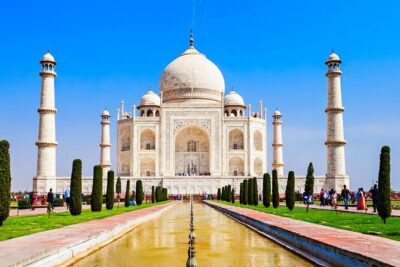
3-Day Delhi, Agra and Jaipur Private Tour – India Golden Triangle
Read our review →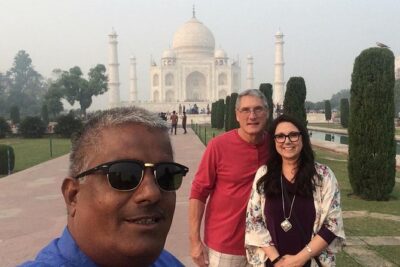
Four-Day Private Luxury Golden Triangle Tour to Agra and Jaipur From New Delhi
Read our review →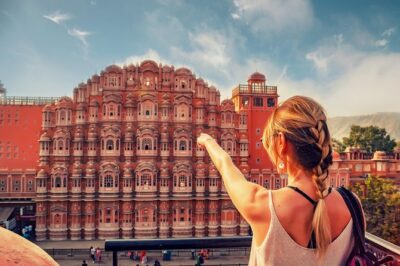
Jaipur Day Trip from Delhi by Car or Train – All Inclusive
Read our review →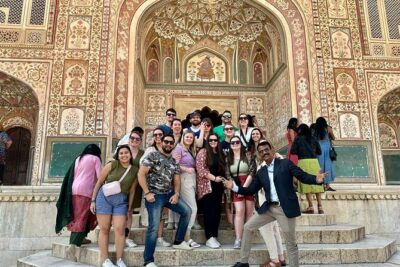
Jaipur City Private Day Tour from Delhi by Car – All Inclusive
Read our review →
5 Nights 6 Days Private Golden Triangle Tour – Delhi Agra Jaipur
Read our review →