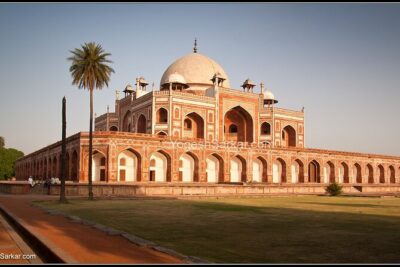
Reviewed · GOLDEN TRIANGLE TOURS
4-Days Private Golden Triangle Tour India – Delhi Agra Jaipur Tour
The sunrise visit to the Taj Mahal is the emotional high point of this fast-moving journey. In four days, you cover Delhi’s grand avenues, Mughal Agra, and Jaipur’s Rajput palaces without having to arrange trains, hotels, drivers, or local guides yourself.
I like the privacy of having a car and guide for only your party, and I like that the route includes more than the famous headline sights, especially Fatehpur Sikri, Itmad-ud-Daulah, and Panna Meena ka Kund. The main caution is the pace: long road transfers and many monuments leave little spare time, while entrance fees are extra.
In This Review
- Key points at a glance
- Why this private Golden Triangle route works
- Day one: Delhi from Qutub Minar to India Gate
- Day two: Taj Mahal at sunrise and Agra’s Mughal monuments
- Day three: Jaipur’s palaces, observatory, and water well
- Day four: a long return or a useful Jaipur departure
- Transport, room setup, and daily comfort
- What the $300 price really covers
- Who should book this tour
- Final call: a strong first taste, with a fast pace
- FAQ
- Is this a three-day or four-day tour?
- What cities does the tour visit?
- Is hotel accommodation included?
- What type of vehicle is provided?
- Are monument entrance fees included?
- Is the Taj Mahal shuttle included?
- Can I be picked up from an airport or railway station?
- Is the tour private?
Key points at a glance
- Taj Mahal at sunrise: The early visit gives you cooler conditions and the softest light for photographs.
- Private car and guides: Choose a sedan for one to three people, an SUV for four to six, or a 12-seat minivan for larger parties.
- Three major cities in four days: Delhi, Agra, and Jaipur are linked by road, with a return to Delhi or Jaipur airport on the final day.
- Hotel option matters: Three nights, breakfasts, and dinners apply when you book the package that includes hotels.
- Several useful extras: Bottled water, air conditioning, hotel or airport pickup, and a battery-powered shuttle at the Taj Mahal are included.
- Extra costs need checking: Monument tickets and gratuities are not included, and the stated entrance-fee information should be clarified before payment.
Why this private Golden Triangle route works
India’s Golden Triangle connects Delhi, Agra, and Jaipur in a rough triangle across northern India. It is one of the easiest ways to get a first taste of the country’s imperial architecture, religious variety, royal courts, and busy modern capital.
The strength of this tour is not simply the list of monuments. It is the practical structure. You are collected from an airport, railway station, hotel, or another agreed location in Delhi, Noida, or Gurugram. A private driver then handles the intercity roads while local guides explain the sights in each city.
That arrangement is valuable in India, where a short trip can become tiring if you must arrange every transfer yourself. You can also ask the driver to take you to a restaurant for dinner or out shopping during the trip. That flexibility is more useful than it may sound after a full day of sightseeing.
The company has arranged trips with people named Raj, Aman, Sandeep, and Param in different roles. Raj is the main contact mentioned in customer accounts, while Aman, Sandeep, and Param have driven some vehicles. Names and assignments can change, so ask for your driver and guide details before departure rather than assuming a particular person will accompany you.
More Agra and Fatehpur Sikri days:
- Same Day Taj Mahal, Agra Fort & Baby Taj Tour from Delhi by Car
★ 5.0 · 4,304 reviews - Full Day Taj Mahal, Agra Fort & Baby Taj Tour from Delhi by Car
★ 5.0 · 3,647 reviews - From Delhi: Taj Mahal & Agra Private Day Trip with Transfers
★ 4.9 · 3,181 reviews
Day one: Delhi from Qutub Minar to India Gate
Your first sightseeing day begins in South Delhi at Qutub Minar, part of the Qutb complex. The tall stone minaret is the obvious focus, but the surrounding ruins help you understand the site as part of Delhi’s oldest fortified settlement, Lal Kot.
You have about an hour here. That is enough for the main buildings and photographs, though not for a slow archaeological study. The entrance ticket is not included, so keep this in mind when calculating the real cost of the trip.
The Lotus Temple follows, with about 30 minutes set aside. Its white, lotus-shaped design gives the stop a completely different character from Qutub Minar. The building was inaugurated in 1986 and is associated with the Bahá’í faith. The visit is brief, but it provides a quiet contrast to Delhi’s monumental political buildings and crowded roads.
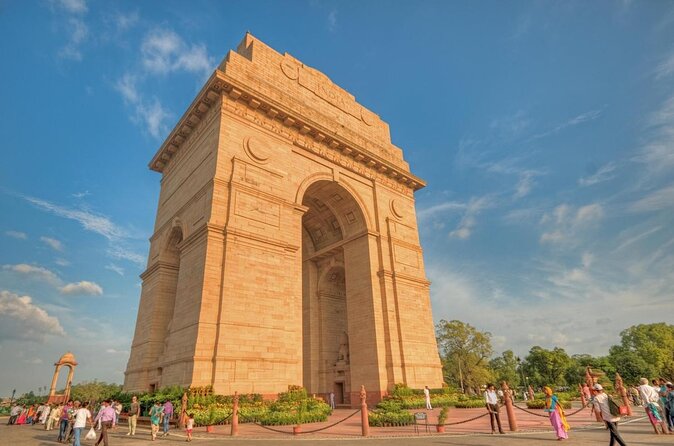
India Gate is next. Completed in 1931 and formerly called Kingsway, this war memorial honors Indian soldiers. You will probably spend around half an hour here, mostly outside, taking in the broad avenues and the monument’s scale.
The itinerary also includes short photo stops at Parliament House and Rashtrapati Bhavan. Five minutes at each is not enough for an interior visit, but it gives you a view of the formal government district designed by Edwin Lutyens and Herbert Baker. Rashtrapati Bhavan is the official home of India’s president, and Parliament House is the circular colonnaded building at the heart of the capital’s administrative quarter.
Lunch is arranged during the Delhi day, though the supplied details do not specify the restaurant or whether the meal is included. You should ask before booking if the lunch bill matters to your budget.
The drive from Delhi to Agra takes about three hours via the Yamuna Expressway. Traffic can change the timing, but the expressway makes this one of the more manageable road legs. Your accommodation in Agra is described as a five-star hotel when the hotel package is selected.
Day two: Taj Mahal at sunrise and Agra’s Mughal monuments
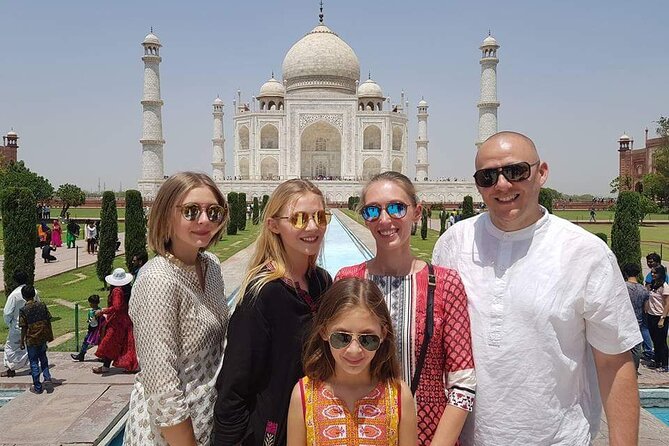
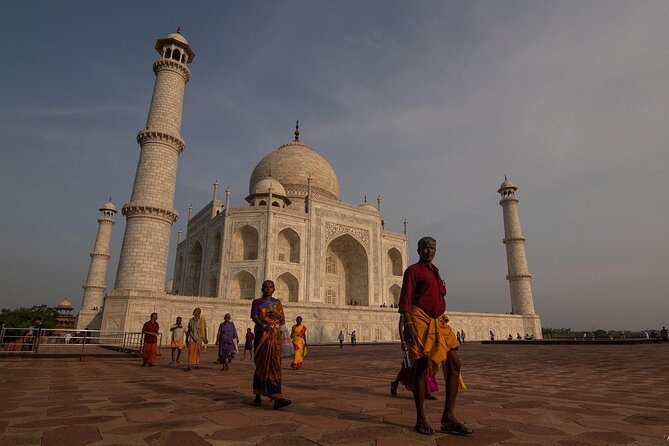
The Taj Mahal visit begins early. That is exactly right. Sunrise means cooler air, softer light, and a better chance of seeing the monument before the hottest part of the day. You receive about two hours at the site, which allows time for the approach, the gardens, the marble mausoleum, and photographs.
A battery-powered bus carries you between the Taj Mahal parking area and the monument itself. This saves energy and avoids part of the traffic around the entrance. The admission ticket remains extra, so do not confuse the included shuttle with included entry.
The Taj Mahal is often reduced to a love story and a photograph, but your guide can help you read the building more carefully. Pay attention to the balance of the main dome, the minarets, the inlaid stonework, and the way the garden frames the white marble. The early light changes quickly, so allow yourself time to look rather than spending the whole visit taking pictures.
Agra Fort gives the morning more historical depth. Built mainly under Mughal emperor Akbar between 1565 and 1573, the red sandstone fort later became a palace complex and a center of imperial power. You have about an hour here.
The fort is large, so a guide is useful for showing you which courtyards, gates, audience halls, and palace spaces matter most. You also gain a better sense of how Mughal rulers governed, lived, and defended themselves. Compared with the Taj Mahal, Agra Fort feels more substantial and less delicate.
Itmad-ud-Daulah takes about 30 minutes. Often called the Baby Taj, this smaller mausoleum is sometimes described as a jewel box because of its detailed decoration and delicate inlay. It is a worthwhile addition because it offers a more intimate look at Mughal funerary design than the Taj Mahal’s grand scale.
After lunch, the route continues toward Jaipur, with a four to five-hour drive listed through NH-21. This is the tour’s most demanding transfer. If traffic is heavy, arrival in Jaipur may be late, so do not plan an important independent activity for that evening.
The route includes Fatehpur Sikri along the way. This former Mughal city lies west of Agra and is one of the most memorable stops on the journey. Its red sandstone buildings and courtyards show the ambition of Emperor Akbar’s court, while its abandoned character gives the visit a different mood from busy Agra.
The supplied schedule does not give a fixed duration for Fatehpur Sikri. Ask your guide how much time is available, especially if you care more about this site than about reaching Jaipur early. It is one of the places where a private tour may offer useful flexibility, but the overall driving time still limits what can be added.
Day three: Jaipur’s palaces, observatory, and water well

Jaipur is known as the Pink City, and the day begins with its most recognizable facade, Hawa Mahal. Built in 1799 by Maharaja Sawai Pratap Singh, the five-storey Palace of Winds is covered with small latticed windows called jharokhas.
You have 30 minutes here. That is enough for the famous street-side view and some photographs. It is not a full palace visit, so if you want to understand the interior, ask whether the guide can explain the building from the outside or whether the schedule allows entry.
The City Palace receives two hours, making it the most substantial Jaipur stop in the central city. This was the seat of the Maharaja and includes Chandra Mahal, Mubarak Mahal, courtyards, halls, and other royal buildings.
I would use the guide here. Without context, the palace can feel like a series of decorated rooms. With an explanation of the royal household and the functions of each courtyard, the complex becomes easier to read. Admission is extra, and the exact areas open to visitors can vary, so confirm what your ticket covers.
Jantar Mantar follows for around 30 minutes. This is an outdoor collection of 13 large astronomical instruments built for measuring the movement of heavenly bodies. The instruments are architectural in scale, not small museum objects, and a guide makes a major difference because their purpose is not always obvious at first glance.
The schedule then moves to Jal Mahal, the palace set in Man Sagar Lake. The stop is listed as 30 minutes and is mainly useful for viewing and photographing the palace from the lakeside. The building was originally constructed in 1699 and later renovated and enlarged. The itinerary does not promise an interior visit, so treat this as an exterior stop.
Panna Meena ka Kund is another half-hour visit. This square stepwell has eight levels of crisscrossing steps leading down toward a green pool. It is a clever piece of water architecture and a welcome change from the formal palace route.
The day finishes at Amer Fort, also called Amber Fort, with about two hours for the fort, palaces, gates, courtyards, and ramparts. Amer was the capital of Rajasthan until 1728, and its position beside Maota Lake gives the complex a memorable setting.
This is one of the tour’s strongest stops. The fort is large enough to reward a proper guided walk, and two hours gives you time to see more than the entrance area. Wear comfortable shoes and expect stairs and uneven surfaces. The information provided describes the fort admission as free, but other Jaipur monument fees are not included, so confirm the current ticket arrangement with the operator.
More Golden Triangle itineraries from New Delhi:
- 3-Days Private Golden Triangle Tour: Delhi, Agra & Jaipur by Car
★ 5.0 · 1,107 reviews - 3-Days Private Golden Triangle Tour: Delhi, Agra & Jaipur by Car
★ 5.0 · 1,098 reviews - 3-Day Delhi, Agra and Jaipur Private Tour – India Golden Triangle
★ 5.0 · 812 reviews - Four-Day Private Luxury Golden Triangle Tour to Agra and Jaipur From New Delhi
★ 5.0 · 807 reviews
Day four: a long return or a useful Jaipur departure
After breakfast, you leave Jaipur for the approximately five-hour journey back to Delhi. You may instead be dropped at Jaipur airport, which can make this tour much more efficient if your onward flight fits the schedule.
The final day is mostly transport. That is not a flaw, but it is important to understand the shape of the trip. You are not receiving four full sightseeing days. You get three sightseeing-heavy days followed by a return transfer.
Because the tour can include three nights of accommodation, the wording is worth checking carefully at booking. The package details say hotel stays, breakfasts, and dinners apply if you choose the hotel-inclusive option. The headline price may therefore depend on the option selected, room type, and party size.
Transport, room setup, and daily comfort
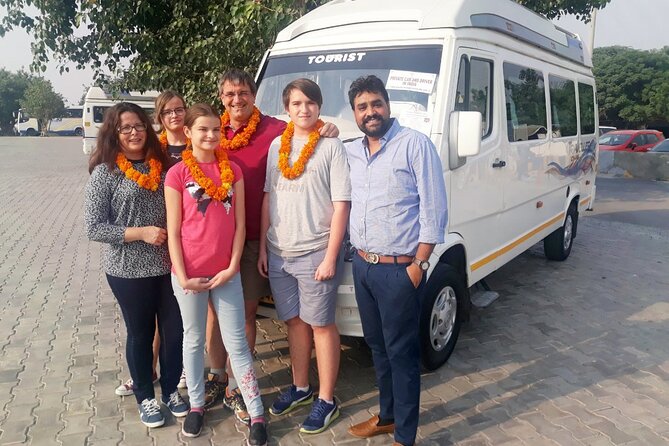
For one to three people, the stated vehicle is a four-seat sedan. Four to six people use a seven-seat SUV, and seven to ten people use a 12-seat minivan or Tempo Traveller. A private vehicle is a major advantage on this route because you can leave luggage in the car and avoid changing between public transport services.
Air conditioning, bottled mineral water, and soft drinks during journeys are included. The driver is also available for restaurant trips or shopping when you need the car outside the sightseeing schedule.
Room arrangements are usually twin-sharing. A party of three normally receives a triple-sharing room. If three people want two rooms, an extra charge applies. This is an easy detail to overlook, so sort it out before arrival.
The vehicle and driver accounts are generally described as clean, comfortable, punctual, and careful. One account also raised a concern about a driver’s attitude, a useful reminder that service quality can vary by individual. If something feels wrong, contact Raj or the company promptly rather than waiting until the end of the trip.
What the $300 price really covers
At about $300, this can be good value for a private four-day route, but only if you understand what is included in your chosen package. Private transport, city guides, pickup and drop-off, hotel taxes, GST, bottled water, and the Taj Mahal shuttle reduce the number of arrangements you must make yourself.
Three nights of accommodation, daily breakfasts, and dinners are included only with the relevant hotel option. The description also lists entrance fees as an extra cost of about $60 per person, while a separate line lists Qutub Minar at $60 per person. That wording is unclear and should be checked directly before booking.
Your guide can help buy monument tickets, so you should not need to stand in the ticket queue yourself. Gratuities are optional, and lunch is not clearly listed among the included meals. Set aside money for entry tickets, lunches, tips, shopping, and any additional room charge.
The value is strongest for first-time visitors who would otherwise have to coordinate a driver, three hotels, local guides, and long-distance road transfers. It is less attractive if you want slow mornings, independent neighborhood walks, or several hours in each monument.
Who should book this tour
I would recommend it to a first-time visitor with only a few days in northern India, especially if you want the Taj Mahal, Amber Fort, and Delhi’s principal sights in one organized trip.
It also suits families and small groups. The private format means you are not waiting for strangers, and the vehicle choices make the price more reasonable when shared by several people. People who prefer a known pickup and drop-off plan will appreciate the airport, railway station, and hotel options.
I would think twice if you dislike early starts or long drives. The Agra to Jaipur transfer alone can take four to five hours, and the return to Delhi can take about five. This is a sightseeing sampler, not a restful holiday.
You should also ask for the exact hotel names, room category, guide language, monument-ticket total, and final drop-off time. English-speaking guides are provided, and another language can be requested in the booking requirements. Confirmation is issued at booking, and free cancellation is available up to 24 hours before the start time.
Final call: a strong first taste, with a fast pace
Book this private Golden Triangle tour if your priority is to see the major sights with minimal planning. The sunrise Taj Mahal visit, private car, local guides, Fatehpur Sikri detour, and two-hour Amer Fort visit give the route real substance beyond a quick photo tour.
Skip it if you want leisurely exploration or a fully transparent all-inclusive price without checking the fine print. Before paying, confirm the hotel option and the confusing monument-fee wording. With those points settled, the $300 starting price can be a practical deal for a tightly organized first visit to Delhi, Agra, and Jaipur.
FAQ
Is this a three-day or four-day tour?
It is described as a four-day tour. The first three days contain sightseeing, while day four is mainly the approximately five-hour return to Delhi or a drop-off at Jaipur airport.
What cities does the tour visit?
The route covers Delhi, Agra, and Jaipur. It also includes Fatehpur Sikri between Agra and Jaipur.
Is hotel accommodation included?
Three nights of accommodation are included when you book the option that includes hotels. The package information also says breakfasts and dinners are included with that hotel option.
What type of vehicle is provided?
One to three people use a four-seat sedan, four to six people use a seven-seat SUV, and seven to ten people use a 12-seat minivan or Tempo Traveller.
Are monument entrance fees included?
No. Monument entrance fees are listed as extra, with an approximate total of $60 per person. A separate Qutub Minar fee is also listed, so you should confirm the exact total before booking.
Is the Taj Mahal shuttle included?
Yes. A battery-powered bus takes you between the Taj Mahal parking area and the monument.
Can I be picked up from an airport or railway station?
Yes. Pickup and drop-off are offered from airports, railway stations, hotels, or other agreed locations in Delhi, Noida, and Gurugram.
Is the tour private?
Yes. Only your own party participates. Private local guides and private transportation are provided, with English-speaking guides included and other languages available on request.
Just added around New Delhi
- Delhi: All-Inclusive Full or Half Day Tour With Hotel Pickup★ 5.0 · 3 reviews
- From Delhi : All Inclusive Taj Mahal Tour by Gatimaan Express★ 5.0 · 3 reviews
- Skip the line: Taj Mahal Agra Private Day Trip From Delhi By Car★ 5.0 · 3 reviews
- Old Delhi Half day private city tour★ 5.0 · 3 reviews
- Delhi: Old and New Delhi One Day Private Guided City Tour★ 5.0 · 3 reviews
- New Delhi Night City Tour★ 5.0 · 3 reviews
- A full-day tour of Old & New Delhi Monument Express Entry★ 5.0 · 3 reviews
- Sultanpur Bird Sanctuary Tour Near Delhi★ 5.0 · 3 reviews
Golden Triangle Tours, compared.
3-Days Private Golden Triangle Tour: Delhi, Agra & Jaipur by Car
Read our review →3-Days Private Golden Triangle Tour: Delhi, Agra & Jaipur by Car
Read our review →
3-Day Delhi, Agra and Jaipur Private Tour – India Golden Triangle
Read our review →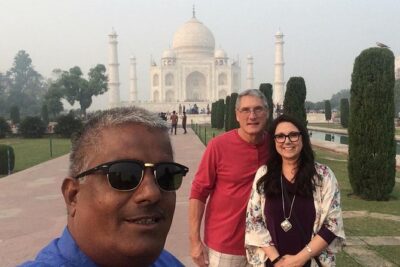
Four-Day Private Luxury Golden Triangle Tour to Agra and Jaipur From New Delhi
Read our review →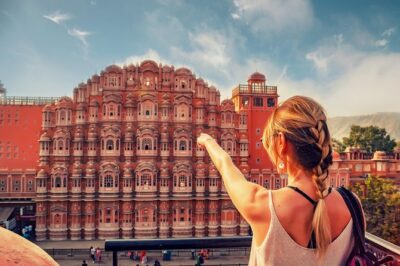
Jaipur Day Trip from Delhi by Car or Train – All Inclusive
Read our review →
Jaipur City Private Day Tour from Delhi by Car – All Inclusive
Read our review →
5 Nights 6 Days Private Golden Triangle Tour – Delhi Agra Jaipur
Read our review →