
Reviewed · GOLDEN TRIANGLE TOURS
6-Day Private Tour of the Golden Triangle
The Taj Mahal is the star, but this six-day route gives you far more than one famous building. You move from Delhi’s Mughal monuments and crowded old markets to Agra’s imperial forts, then on to Jaipur’s pink sandstone palaces and astronomical instruments.
I like the private car and driver, which saves you from dealing with India’s slow, crowded public transport. I also like the freedom to choose your own hotels, and the operator has shown flexibility with itinerary changes, extra sights, and help before or after the main tour.
The main catch is clear: hotels are not included, and the package lists a driver rather than a dedicated sightseeing guide. You get convenient transport and entrance fees to many major sights, but you may need to arrange your own local explanations and hotel transfers.
In This Review
- Key points to know before booking
- Delhi begins with Mughal tombs and towering minarets
- Old Delhi takes three hours, so use them well
- Day three brings Akshardham and the first Taj Mahal visit
- A second Taj visit and Agra Fort put the monument in context
- Jaipur’s palaces explain the Pink City
- Amber Palace closes the six-day route
- What the private car adds at $400
- Timing, comfort, and the shape of each day
- Who should book this Golden Triangle route
- Should you book it?
- FAQ
- Where does the tour start?
- How long does the tour last?
- Which cities are included?
- Is the tour private?
- What transportation is included?
- Are hotels included?
- Is the Taj Mahal included?
- Which entrance fees are included?
- Does the vehicle have a restroom?
- Can I cancel for a full refund?
Key points to know before booking
- Three major cities in six days: Delhi, Agra, and Jaipur are linked in one private route.
- A private air-conditioned car: Your group travels alone, with no shared coach or fixed public transport schedule.
- The Taj Mahal appears twice: The plan includes a two-hour visit and another one-hour visit on the following day.
- Many entrance fees are included: Major sights such as Qutub Minar, the Taj Mahal, Agra Fort, and Amber Palace are covered.
- Hotels are your responsibility: You choose and book accommodation separately, which gives flexibility but adds planning work.
- The route suits first-time visitors: It covers the classic North India sights without asking you to arrange each transfer yourself.
Delhi begins with Mughal tombs and towering minarets

The first day starts at Humayun’s Tomb, an elegant Mughal mausoleum commissioned by Empress Bega Begum for her husband, Emperor Humayun. The site dates from 1569 to 1570 and is included with admission.
The scheduled stop is only 30 minutes, so think of this as a focused introduction rather than a slow architectural study. You can take in the formal garden setting and the tomb’s broad structure, but you will not have much time for lingering.
Jama Masjid brings a different mood. This major mosque in Old Delhi is free to enter, and the half-hour visit gives you a brief look at one of the city’s important Islamic places of worship.
The schedule then moves to Qutub Minar, a UNESCO World Heritage Site in Delhi’s Mehrauli area. Its tall minaret is one of the city’s best-known monuments, and admission is included. Again, the listed 30 minutes is brisk, so your driver’s role in getting you between sites matters.
This first day has a useful rhythm: royal tomb, mosque, and early Islamic monument. It also shows the limitation of trying to cover Delhi in short visits. You see three major places, but the time at each is designed for highlights, photographs, and orientation.
More Golden Triangle itineraries from New Delhi:
- 3-Days Private Golden Triangle Tour: Delhi, Agra & Jaipur by Car
★ 5.0 · 1,107 reviews - 3-Days Private Golden Triangle Tour: Delhi, Agra & Jaipur by Car
★ 5.0 · 1,098 reviews - 3-Day Delhi, Agra and Jaipur Private Tour – India Golden Triangle
★ 5.0 · 812 reviews
Old Delhi takes three hours, so use them well
The second day gives Chandni Chowk the most time, with a scheduled three-hour visit. That is a good choice because this old market district needs time to make sense.
The area is known for spices, dried fruit, silver jewelry, colorful saris, essential oils, stationery, and narrow side streets filled with small shops. The market experience is not a polished sightseeing stop. It is crowded, noisy, and full of movement, which is exactly why you should avoid treating it like a quick photo stop.
Admission is not included because Chandni Chowk is a market area rather than a single paid attraction. Keep that distinction in mind when planning your spending. The package covers the car and listed entrance fees, but purchases, food, and other personal costs are yours.
The National Gandhi Museum follows, with one hour scheduled and admission included. Its collection includes original items, books, artwork, and other objects connected with Mahatma Gandhi.
I like the contrast between the market and the museum. One puts you in the middle of daily commercial life, while the other asks for a quieter look at one of India’s most important modern figures. If you prefer monuments to markets, Chandni Chowk may feel demanding. If you want a more direct sense of Delhi, it may be one of the most useful parts of the route.
Day three brings Akshardham and the first Taj Mahal visit
Swaminarayan Akshardham is scheduled for one hour on day three. The complex is a Hindu temple and spiritual-cultural center that presents traditional Indian design and religious themes.
The visit is included, and the one-hour slot gives you time to see the main setting without turning the stop into an all-day visit. As with several early Delhi stops, the schedule favors broad exposure to important sites.
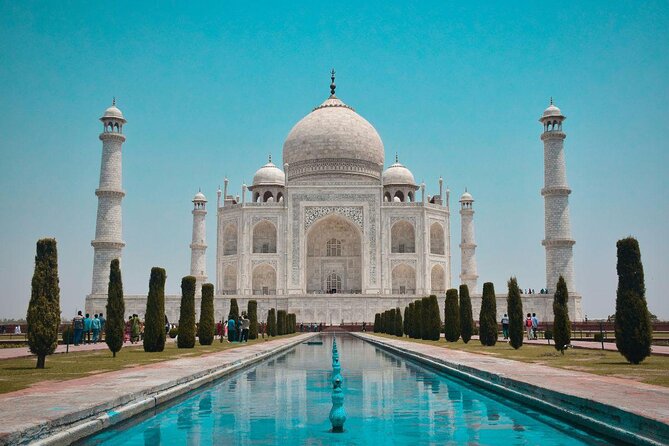
The route then reaches Agra and the Taj Mahal, with two hours set aside and admission included. The white marble mausoleum was commissioned by Mughal emperor Shah Jahan in 1632 as the tomb of Mumtaz Mahal.
Two hours is a sensible amount of time for the main visit. You can appreciate the building, its setting beside the Yamuna River, and the reason it has become one of India’s essential sights without being rushed through in a few minutes.
The tour description refers to watching sunrise at the Taj Mahal, but the listed start time for the experience is 9:00 am, and the supplied schedule does not give an exact sunrise departure. Confirm the timing directly before booking if sunrise is important to you.
The private vehicle is especially useful here. You do not have to manage the transfer from Delhi to Agra by yourself, and your group can keep to its own schedule. Still, the package does not include hotel stays, so you need an Agra hotel arranged separately.
A second Taj visit and Agra Fort put the monument in context
Day four includes another one-hour Taj Mahal visit. The repeated stop is unusual, but it can be useful. A second visit lets you see the monument under different light or return after the first look has had time to settle.
Because the timing is not explained in detail, ask the operator how the two Taj visits are arranged. The first is listed for two hours on day three, and the second for one hour on day four. You should not assume the second visit is automatically a sunrise visit.
Agra Fort follows for 30 minutes, with admission included. This was the main residence of Mughal emperors until the capital moved from Agra to Delhi in 1638.
The short stop gives you only a sample of the fort. Even so, it matters because it adds political and family context to the Taj Mahal. The Taj is a mausoleum built from love and grief, while Agra Fort helps you see the power structure of the empire that produced it.
If you enjoy detailed historical interpretation, the half-hour visit may feel too short. If you want the major outline of Agra without spending a full day inside another large complex, it keeps the route moving.
A few more New Delhi departures worth comparing
- 5 Nights 6 Days Private Golden Triangle Tour – Delhi Agra Jaipur
★ 5.0 · 574 reviews - Delhi: 6-Day Golden Triangle Delhi, Agra, and Jaipur Tour
★ 4.9 · 189 reviews - Golden Triangle Tour: Private Delhi Agra Jaipur 5 Nights 6 Days
★ 5.0 · 157 reviews - From Delhi : 6 Days Delhi, Jaipur, Agra & Ranthambore By Car
★ 5.0 · 73 reviews
Jaipur’s palaces explain the Pink City
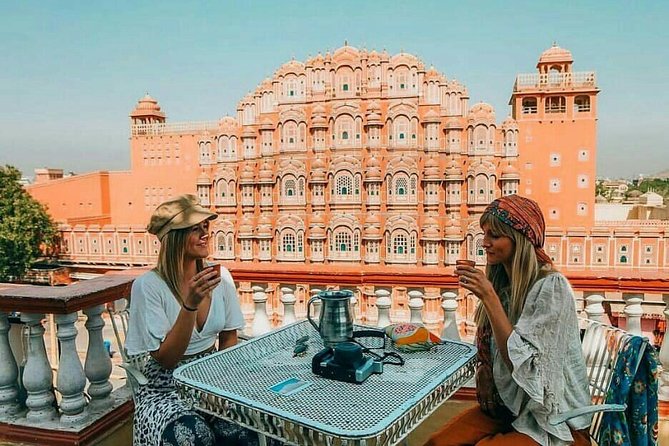
Day five shifts to Jaipur, where the schedule focuses on three famous sites. Hawa Mahal is first, with 15 minutes allotted.
The Palace of Wind was built in 1799 by Maharaja Sawai Pratap Singh from red and pink sandstone. It sits beside the City Palace and extends toward the women’s chambers. Fifteen minutes is enough for an exterior view and photographs, but not a full exploration.
The City Palace receives one hour. Maharaja Sawai Jai Singh II established it when he founded Jaipur in 1727 and moved his court from Amber.
This is a more substantial palace visit, though one hour still calls for selectivity. You can see the central royal setting and gain a sense of Jaipur’s courtly past, but you may want more time if museums and palace details are your main interest.
Jantar Mantar completes the day with a 30-minute visit. Built by Sawai Jai Singh II and completed in 1734, the monument contains 19 architectural astronomical instruments, including the world’s largest stone sundial. It is also a UNESCO World Heritage Site.
This stop is easy to underestimate. The instruments look like large geometric sculptures until you understand that they were designed to measure time and track celestial movements. If you have a guide or arrange explanations locally, this is a place where added context can make a big difference.
Amber Palace closes the six-day route
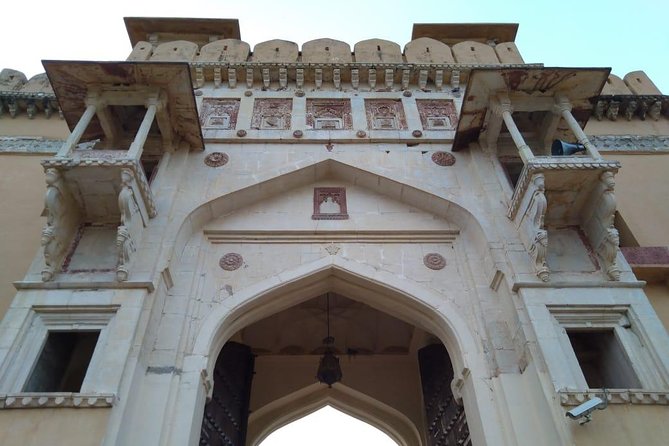
The final day is reserved for Amber Palace, also called Amer Fort, about 11 kilometers from Jaipur. Admission is included, and the scheduled visit lasts one hour.
Amber was a town separate from Jaipur, and its fort is one of the key royal sites in the area. The one-hour visit gives you a final palace experience after the City Palace and Hawa Mahal, but it does not leave much room for an unhurried exploration.
The supplied details do not state the exact ending point, drop-off arrangement, or departure time on day six. Ask about those details before booking, especially if you have a flight, train, or separate hotel reservation afterward.
What the private car adds at $400
At $400 for approximately six days, the price is appealing if you are splitting it among several people. The package includes a private air-conditioned vehicle, private transportation, entrance fees and taxes. Your group does not share the vehicle with other participants.
That private setup is the heart of the value. Delhi, Agra, and Jaipur are spread across a busy route, and arranging each transfer independently can be tiring. A driver who knows the planned sequence lets you focus on the sights instead of negotiating every move.
The value is less obvious for a solo visitor because the full price is not divided among companions. You also need to add hotel costs, meals, shopping, and any services not listed. The package does not include a restroom on board, so plan on using facilities at stops.
The driver is not necessarily a full-time guide. The description specifically promises a private car and driver, not guided commentary at every monument. You may want to arrange local guides independently if detailed explanations are important to you.
The operator, Indike Travels, has also shown a practical willingness to modify the route, add sights when time allows, and offer recommendations or services around the main tour. That flexibility can matter when your plans before or after the six days do not fit a rigid package.
Timing, comfort, and the shape of each day

The stated start time is 9:00 am, but the complete timing for every transfer is not provided. Do not read this as a minute-by-minute schedule. Traffic, monument entry, market conditions, and your own pace can change the day.
The itinerary is full, especially in Delhi and Jaipur. The short stops at Humayun’s Tomb, Jama Masjid, Qutub Minar, Hawa Mahal, Jantar Mantar, and Amber Palace mean you are collecting highlights rather than studying each place in depth.
That approach works well for a first visit. You get a broad introduction to North India’s major sights, and you can decide which cities deserve a longer return visit.
The private format also gives you a better chance to request small changes. Any changes made within 24 hours of the start are not accepted, so speak up early if you need a different emphasis.
Free cancellation is available up to 24 hours before the start time. If poor weather or an insufficient minimum number of participants forces cancellation, you are offered another date or experience, or a full refund.
Who should book this Golden Triangle route
I would recommend this tour to a first-time visitor who wants the classic Delhi, Agra, and Jaipur circuit without arranging intercity transport alone. It is also a good fit for families or small groups that value a private air-conditioned car and the ability to travel together.
It works best if you are comfortable choosing your own hotels and making a few arrangements around the package. You should also be ready for quick visits and ask in advance about local guides, sunrise timing, final drop-off, and any preferred changes.
I would look elsewhere if you want a slow, deeply guided study of each monument or an all-inclusive package with hotels and meals. This is a transport-focused sightseeing route with major admissions covered, not a full-service luxury holiday.
Should you book it?
Book this six-day tour if your priority is efficient private transport through India’s Golden Triangle, especially when two or more people can share the $400 price. The combination of Delhi’s major monuments, two Taj Mahal visits, Agra Fort, Jaipur’s palaces, and included entrance fees gives you a strong first look.
Before paying, confirm your hotel plan, the guide arrangements, the exact Taj Mahal timing, and where the final day ends. If those points suit you, Indike Travels offers a practical and flexible way to cover three demanding cities in one trip.
FAQ
Where does the tour start?
The tour is based in New Delhi, and the listed start time is 9:00 am. Pickup is offered.
How long does the tour last?
The experience lasts approximately six days.
Which cities are included?
The route covers New Delhi, Agra, and Jaipur, the three destinations commonly known as India’s Golden Triangle.
Is the tour private?
Yes. It is a private activity, and only your group participates.
What transportation is included?
You receive private transportation in an air-conditioned vehicle with a driver.
Are hotels included?
No. Hotel stays are not included. You choose and pay for your own accommodation.
Is the Taj Mahal included?
Yes. The schedule includes a two-hour Taj Mahal visit on day three and a one-hour visit on day four. Admission is included.
Which entrance fees are included?
Included admissions listed for the route cover Humayun’s Tomb, Qutub Minar, Swaminarayan Akshardham, the Taj Mahal, Agra Fort, Hawa Mahal, the City Palace of Jaipur, Jantar Mantar, and Amber Palace. Jama Masjid has free admission.
Does the vehicle have a restroom?
No. A restroom on board is not included.
Can I cancel for a full refund?
Yes, if you cancel at least 24 hours before the experience start time. Cancellations within 24 hours are not refunded, and changes within that period are not accepted.
Just added around New Delhi
- Delhi: All-Inclusive Full or Half Day Tour With Hotel Pickup★ 5.0 · 3 reviews
- From Delhi : All Inclusive Taj Mahal Tour by Gatimaan Express★ 5.0 · 3 reviews
- Skip the line: Taj Mahal Agra Private Day Trip From Delhi By Car★ 5.0 · 3 reviews
- Delhi: Old and New Delhi One Day Private Guided City Tour★ 5.0 · 3 reviews
- New Delhi Night City Tour★ 5.0 · 3 reviews
- Old Delhi Half day private city tour★ 5.0 · 3 reviews
- A full-day tour of Old & New Delhi Monument Express Entry★ 5.0 · 3 reviews
- Sultanpur Bird Sanctuary Tour Near Delhi★ 5.0 · 3 reviews
Golden Triangle Tours, compared.
3-Days Private Golden Triangle Tour: Delhi, Agra & Jaipur by Car
Read our review →3-Days Private Golden Triangle Tour: Delhi, Agra & Jaipur by Car
Read our review →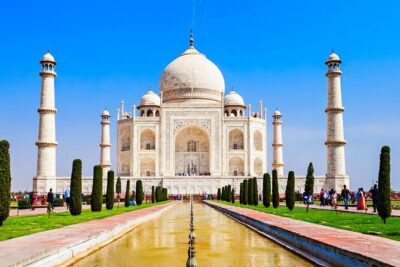
3-Day Delhi, Agra and Jaipur Private Tour – India Golden Triangle
Read our review →
Four-Day Private Luxury Golden Triangle Tour to Agra and Jaipur From New Delhi
Read our review →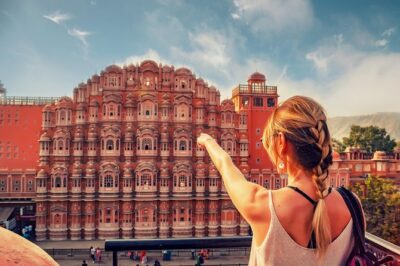
Jaipur Day Trip from Delhi by Car or Train – All Inclusive
Read our review →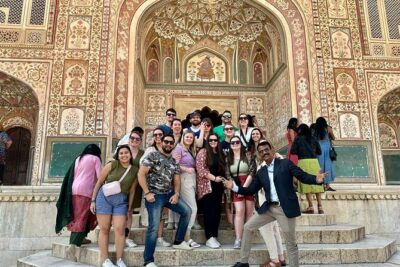
Jaipur City Private Day Tour from Delhi by Car – All Inclusive
Read our review →
5 Nights 6 Days Private Golden Triangle Tour – Delhi Agra Jaipur
Read our review →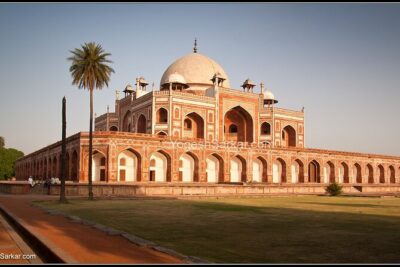
Browse the lists this tour appears in