Reviewed · GOLDEN TRIANGLE TOURS
7 – Days Private Golden Triangle Tour with Pushkar
The best feature here is the private car and flexible schedule. You move from Delhi to Agra, Jaipur, and Pushkar without joining a large coach, while local English-speaking guides take over at each major sight. I like the included rickshaw ride through Chandni Chowk and the battery van at the Taj Mahal, two useful touches in places where traffic and walking can wear you down.
I also like that six hotel nights and breakfast are arranged, leaving less daily planning in your hands. The main catch is cost clarity: the $512 tour price does not include the listed $100 per person in monument fees, tips, personal spending, or most meals. The long return drive from Pushkar to Delhi on Day 7 is another point to weigh carefully.
In This Review
- Key points at a glance
- Four cities and seven days in one private route
- Day 1: A simple arrival in New Delhi
- Day 2: Old Delhi by rickshaw and New Delhi by car
- Day 3: The Taj Mahal and Agra Fort
- Day 4: Fatehpur Sikri on the road to Jaipur
- Day 5: Jaipur’s forts, palaces, and astronomical instruments
- Day 6: Pushkar’s temples and sacred water
- Day 7: The long road back to Delhi
- What the $512 price really covers
- Who should book this private Golden Triangle tour
- Final call: a useful first trip with two clear cautions
- FAQ
- Is this a private tour?
- How many nights of accommodation are included?
- Are monument entrance fees included?
- Which cities are included?
- What transport extras are included?
- Can I cancel for a full refund?
Key points at a glance
- Private travel for your group: An English-speaking chauffeur drives you throughout the seven-day route, with no other group members joining.
- Four major destinations: The route covers Delhi, Agra, Jaipur, and Pushkar, with six nights of hotel accommodation and six breakfasts.
- Strong first-time India coverage: You’ll see the Taj Mahal, Agra Fort, Amber Palace, Delhi’s Mughal sights, Jaipur’s royal center, and Pushkar Lake.
- Useful local transport included: The package covers a Chandni Chowk rickshaw ride, a Taj Mahal battery van, and a jeep ride up to Amber Fort.
- Extra shopping stops are built in: Expect visits to a marble factory in Agra, a handmade jewelry or stone-cutting factory in Jaipur, and local markets.
- Budget for entrance tickets: Monument admission is listed separately at $100 per person, and camera fees may also apply.
Four cities and seven days in one private route
This is a fast but well-known introduction to northern India. Delhi gives you imperial and Mughal monuments, Agra brings the Taj Mahal, Jaipur supplies forts and royal buildings, and Pushkar changes the pace with temples, ghats, and a sacred lake.
You spend six nights in hotels, with breakfast included each morning. The car, fuel, tolls, parking, and government taxes are covered, so the advertised price is not simply a bare transport quote. Still, you should add the $100 monument-fee allowance, tips, camera charges, lunch and dinner, shopping, and personal expenses before deciding what the trip will really cost.
The private setup matters most on the road. India’s traffic can be tiring, and the itinerary includes several transfers. You can ask the company about timing, stops, and minor adjustments more easily than you could on a fixed coach tour. Past arrangements were handled by company staff including Prateek and Pravesh, who were noted for accommodating last-minute changes, but the exact guide and driver assigned to your dates should be confirmed before departure.
More Golden Triangle itineraries from New Delhi:
- 3-Days Private Golden Triangle Tour: Delhi, Agra & Jaipur by Car
★ 5.0 · 1,107 reviews - 3-Days Private Golden Triangle Tour: Delhi, Agra & Jaipur by Car
★ 5.0 · 1,098 reviews - 3-Day Delhi, Agra and Jaipur Private Tour – India Golden Triangle
★ 5.0 · 812 reviews
Day 1: A simple arrival in New Delhi
Your first day is deliberately light. A representative meets you at New Delhi International Airport, then transfers you to your hotel in an air-conditioned vehicle. After check-in, the rest of the day is free.
That open time is useful after an international flight. You can rest, recover from the journey, or begin getting used to Delhi without being pushed straight into a monument schedule. The listed arrival portion takes about three hours, though airport formalities and traffic can affect the actual pace.
The arrival service is one of the practical strengths of a package like this. You do not need to arrange a taxi, find the hotel alone, or work out the first transfer after landing. Confirm your pickup details and hotel name in advance, since the tour covers transfers but does not include international or domestic airfare.
Day 2: Old Delhi by rickshaw and New Delhi by car
Delhi sightseeing begins after breakfast and is planned for about four hours, though the number of stops gives you a fairly full look at the city.
The Red Fort introduces the Mughal story in a direct way. Its red sandstone walls and ceremonial role make it one of Delhi’s essential sights. The fort is close to Chandni Chowk, so the route naturally shifts from grand imperial architecture to the tight streets of one of Old Delhi’s oldest markets.
The included rickshaw ride through Chandni Chowk is more than a novelty. It lets you cover the market without trying to walk every crowded lane, while giving you a close view of shops, food stalls, traffic, and daily business. This is likely to be one of the less polished parts of the tour, but it gives you a stronger sense of Delhi than a drive past the area.
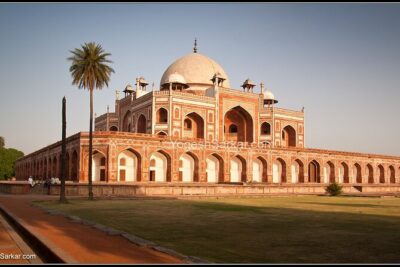
Humayun’s Tomb deserves time. Built in 1565 for the Mughal emperor Humayun, it is an early major example of Mughal garden-tomb design and helps you understand the architectural line that later leads to the Taj Mahal. Admission is not included, so keep part of the separate ticket budget for this stop.
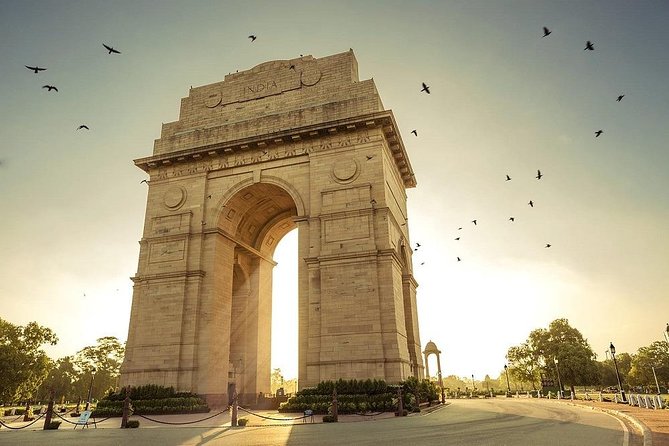
The drive also passes Rashtrapati Bhavan, the presidential residence, and India Gate. These are mainly viewed from outside or on a passing visit according to the schedule. India Gate is a 42-meter memorial arch at the center of New Delhi, while Rashtrapati Bhavan represents the capital’s British-planned government district.
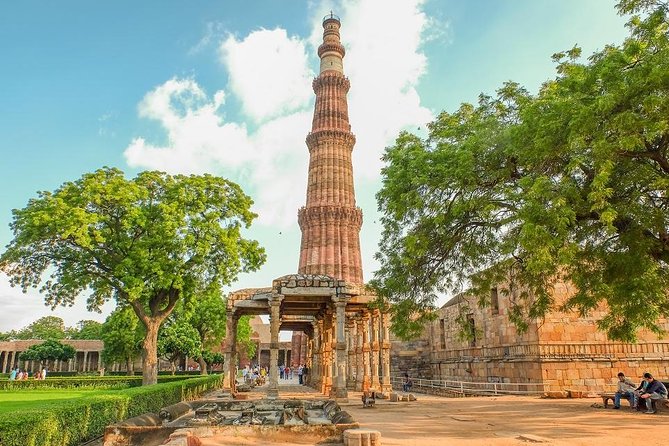
Qutub Minar closes the day’s main sights. The 73-meter victory tower has five distinct levels, each marked by a projecting balcony. Its setting adds an earlier layer to Delhi’s story, before the Mughal monuments you see elsewhere. The visit is listed at about 90 minutes, with admission separate.
The day includes several major sites in a short span. I would treat it as an overview rather than a slow study of Delhi. Your private car makes the sequence easier, but traffic may still shape how much time you have at each place.
Day 3: The Taj Mahal and Agra Fort
After breakfast, you check out and drive to Agra. On arrival, you check into the pre-booked hotel before visiting the city’s main sights. The schedule gives around three hours for Agra sightseeing, with two hours each at the Taj Mahal and Agra Fort.
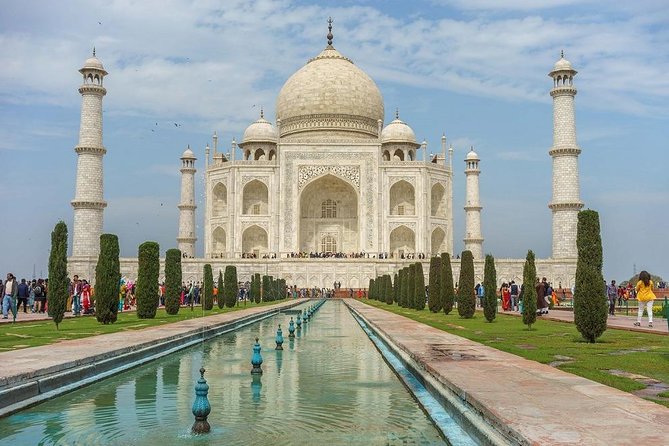
The Taj Mahal is the clear centerpiece. Built by Mughal emperor Shah Jahan as a memorial to his wife Mumtaz Mahal, it is famous for its white marble, formal design, and emotional weight. The visit is not merely a quick roadside photo stop: two hours gives you time to approach the monument, see its setting, and take in the details at a reasonable pace.
A battery van ride to the Taj Mahal is included. That can reduce the effort of moving through the approach area and helps keep the visit focused on the monument itself. Entrance admission is not included, and the separate fee is part of the tour’s stated $100 per person estimate for monument visits.
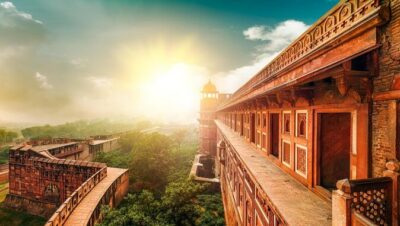
Agra Fort gives you a useful counterpoint. It was built by Emperor Akbar beside the Yamuna River and later shaped by other Mughal rulers. Its massive outer wall surrounds courtyards, halls, and residential areas, so two hours can pass quickly. From its elevated spaces, you gain a different view of Mughal power than the Taj Mahal provides.
The included marble factory visit is worth understanding before you go. It connects with Agra’s marble craft tradition, but it is also a shopping stop. You may look at it as an optional buying opportunity rather than part of the historic core. If you are not interested in purchasing anything, say so politely and keep your focus on the main sights.
Agra is one of the more efficient parts of the route because the Taj Mahal and Agra Fort work well together. The drawback is that the day involves a transfer, hotel check-in, and two major monuments. Wear comfortable shoes, carry water, and keep some flexibility around the schedule.
A few more New Delhi departures worth comparing
- Delhi: Old and New Delhi Private Full or Half-Day Tour
★ 4.9 · 3,776 reviews - From Delhi: Taj Mahal & Agra Private Day Trip with Transfers
★ 4.9 · 3,181 reviews - All Inclusive Private Taj Mahal Luxury Tour from Delhi by Car
★ 5.0 · 2,564 reviews - Delhi: Private Old & New Delhi Guided Half- or Full-Day Tour
★ 4.9 · 2,309 reviews
Day 4: Fatehpur Sikri on the road to Jaipur
You leave Agra after breakfast and drive toward Jaipur. The main stop is Fatehpur Sikri, an abandoned Mughal city built in red sandstone during Emperor Akbar’s reign.
The city was created in honor of the saint Salim Chishti, who was associated with a prophecy about Akbar’s sons. The result is a planned complex of courtyards, palaces, and religious buildings that feels different from both Agra Fort and the Taj Mahal. The visit is scheduled for about two hours.
Fatehpur Sikri works especially well as a road stop because it breaks up the transfer to Jaipur. You are not simply spending the day in the car. At the same time, it is an exposed historic site, and the visit adds another major architectural complex to a week already filled with monuments.
After the stop, you continue to Jaipur and check into your hotel. There is no detailed sightseeing scheduled for the rest of the day, which is sensible. You will have already moved cities, and a free evening gives you a chance to rest or visit a nearby market if your energy allows.
Day 5: Jaipur’s forts, palaces, and astronomical instruments
Jaipur is the fullest sightseeing day. The plan includes Amber Palace, Jal Mahal, Hawa Mahal, the City Palace, and Jantar Mantar.
Amber Palace sits on a hillside outside the central city. Built from the late 16th century onward, it combines Hindu and Muslim design in courtyards, gateways, halls, and decorative details. The included jeep safari to climb Amer Fort is a practical benefit, especially because the fort’s hilltop setting can make the approach tiring.
Allow about two hours at Amber Palace. Your local guide can help separate the main courtyards from the smaller details, since the complex can feel confusing on a first visit. The ride is included, but monument admission is not.
Jal Mahal is a quick roadside viewing stop, listed at about ten minutes. The low palace appears to float in the water, though you should think of it as a photo pause rather than a full visit. It is a welcome change after the larger fort, but do not expect an extended exploration.
Hawa Mahal is another short stop. Its five-story facade, built in 1799, is one of Jaipur’s best-known images. The schedule gives about ten minutes, so you will likely view it from the outside or spend only a brief time nearby. If you want to enter, admission is listed separately.
The City Palace deserves more time, with about two hours planned. This collection of courtyards, gardens, and buildings was once the seat of Jaipur’s rulers. Its design and cultural displays help explain the city’s royal identity better than a quick photograph at Hawa Mahal.
Jantar Mantar finishes the day with a different kind of sight. Built in 1734 by Sawai Jai Singh II, it contains 19 large astronomical instruments, including the world’s largest stone sundial. I like this stop because it shows that Jaipur’s court was interested not only in palaces and warfare but also in measurement, calendars, and the sky.
The day includes a handmade jewelry or stone-cutting factory visit, followed by opportunities to shop in local markets. These stops may suit you if you want Indian craft items, but shopping is not compulsory simply because it appears in the route. Decide before arrival how much time and money you want to give to purchases.
Day 6: Pushkar’s temples and sacred water
Pushkar is the tour’s change of tone. After the palaces and forts of Jaipur, you head to a small temple town about 15 kilometers from Ajmer. The excursion is planned for about two hours, followed by visits to the Brahma Temple and Pushkar Lake.
The Brahma Temple is the key religious stop. It is described as the only Brahma temple in India, making it important to Hindu pilgrims. As with any active place of worship, dress and behavior matter. Follow your guide’s instructions and remember that this is a living religious site, not simply a monument.
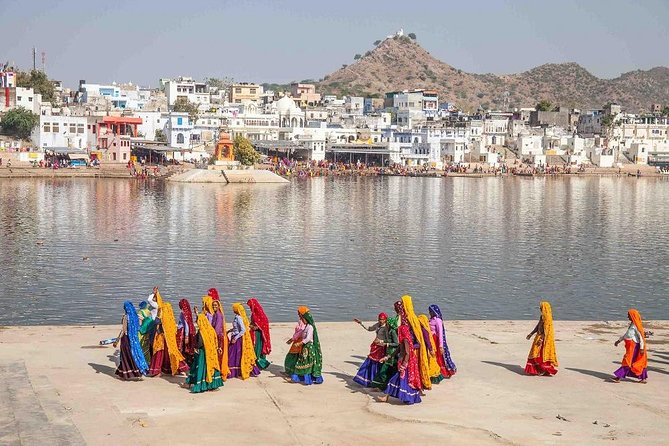
Pushkar Lake is surrounded by 52 bathing ghats and more than 500 temples. The water and surrounding shrines give the town a quieter feel than Delhi or Jaipur, though the area can still be active and commercial. The lake visit is scheduled for about an hour, enough for a look around without turning the excursion into a long pilgrimage walk.
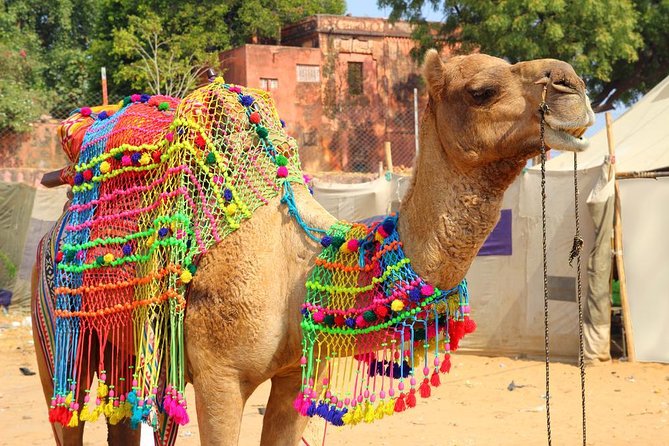
Pushkar is also linked with the annual Pushkar Mela, a major camel fair held every November. This seven-day tour does not state that it includes the fair, so you should not assume those event conditions apply to your dates. The town remains worthwhile outside the festival, but the atmosphere will be different.
The Pushkar day is best for you if sacred places, local customs, and slower sightseeing appeal more than another palace. It is not as monument-heavy as Delhi, Agra, or Jaipur. That contrast is exactly why it earns a place in the route.
Day 7: The long road back to Delhi
After breakfast, you check out and drive to New Delhi International Airport for your onward journey. The package does not give a precise driving duration, so you should avoid booking a tight onward flight.
This final transfer is the tour’s main practical weakness. After visiting Pushkar, you return by road rather than taking a domestic flight, and road conditions can affect the timing. If your international departure is on the same day, leave a generous margin and confirm the plan with the operator before booking flights.
The return transfer is included, along with fuel, tolls, parking, and taxes. That removes several small costs, but it does not remove the need to plan carefully around airport arrival time.
What the $512 price really covers
At $512 per person, the tour can offer good value for a private seven-day route if you want transport, hotels, guides, and planning handled together. The price includes six hotel nights, six breakfasts, an English-speaking chauffeur, local guides in Delhi, Agra, Jaipur, and Pushkar, arrival and departure transfers, drinking water, and the listed road expenses.
It also includes several useful extras:
- Rickshaw travel in Chandni Chowk
- Battery van service at the Taj Mahal
- Jeep transport up to Amber Fort
- Marble craft visit in Agra
- Jewelry or stone-cutting factory visit in Jaipur
- Shopping opportunities in local markets
The important adjustment is the separate $100 per person monument-fee estimate. Add tips for drivers and guides, meals beyond breakfast, camera fees, optional activities, and personal purchases. Airfare, travel insurance, medical expenses, and costs caused by delays or natural events are also outside the package.
The private format improves value for couples, families, or friends who would otherwise pay for several taxis and individual guides. If you are alone, the per-person rate may feel less attractive, although the convenience remains strong.
Who should book this private Golden Triangle tour
I would choose this tour if you are visiting India for the first time and want the classic sights without managing every transfer yourself. It suits you particularly well if you value a private vehicle, hotel arrangements, English-speaking guides, and the ability to request small changes.
It is also a good match for families and small groups. Only your party participates, and group discounts are offered. The air-conditioned car, included water, and arranged transfers reduce some of the friction that comes with a busy multi-city route.
You should think twice if you prefer slow travel. Delhi receives a single main sightseeing day, Jaipur packs five attractions into one day, and Day 7 involves a road transfer back to Delhi. The factory and shopping visits may also feel like interruptions if your priority is only historic monuments.
The tour states that most people can participate and that public transportation is nearby. It does not give detailed accessibility information for every fort, temple, or monument, so ask specific questions if stairs, uneven surfaces, or long walks are a concern.
Cancellation is free up to 24 hours before the local start time. Inside that window, the amount paid is not refunded, and late changes are not accepted.
Final call: a useful first trip with two clear cautions
I would book this tour for a first look at northern India, especially if you want the Taj Mahal, Jaipur, Delhi, and Pushkar in one organized journey. The private driver, local guides, rickshaw ride, Amber Fort jeep, and arranged hotels give you a practical framework without forcing you into a large group.
Before paying, confirm the hotel names, guide arrangements, monument-fee total, shopping expectations, and the Day 7 airport timing. If you accept the quick pace and budget for the extra costs, this is a well-rounded route with strong coverage of India’s best-known sights and a welcome change of mood in Pushkar.
FAQ
Is this a private tour?
Yes. Only your group participates, and the itinerary uses a private English-speaking chauffeur-driven car throughout the trip.
How many nights of accommodation are included?
Six nights of hotel accommodation are included, along with six breakfasts.
Are monument entrance fees included?
No. Monument entrance fees are listed separately at $100 per person. Camera fees at monuments may also apply.
Which cities are included?
The route covers New Delhi, Agra, Jaipur, and Pushkar. It also includes a stop at Fatehpur Sikri between Agra and Jaipur.
What transport extras are included?
The package includes a rickshaw ride in Chandni Chowk, a battery van ride at the Taj Mahal, and a jeep safari to reach Amber Fort.
Can I cancel for a full refund?
Yes, if you cancel at least 24 hours before the experience start time. Cancellations or changes made less than 24 hours before the start are not refunded or accepted.
Just added around New Delhi
- Delhi: All-Inclusive Full or Half Day Tour With Hotel Pickup★ 5.0 · 3 reviews
- From Delhi : All Inclusive Taj Mahal Tour by Gatimaan Express★ 5.0 · 3 reviews
- Skip the line: Taj Mahal Agra Private Day Trip From Delhi By Car★ 5.0 · 3 reviews
- Delhi: Old and New Delhi One Day Private Guided City Tour★ 5.0 · 3 reviews
- New Delhi Night City Tour★ 5.0 · 3 reviews
- Old Delhi Half day private city tour★ 5.0 · 3 reviews
- A full-day tour of Old & New Delhi Monument Express Entry★ 5.0 · 3 reviews
- Sultanpur Bird Sanctuary Tour Near Delhi★ 5.0 · 3 reviews
Golden Triangle Tours, compared.
3-Days Private Golden Triangle Tour: Delhi, Agra & Jaipur by Car
Read our review →3-Days Private Golden Triangle Tour: Delhi, Agra & Jaipur by Car
Read our review →
3-Day Delhi, Agra and Jaipur Private Tour – India Golden Triangle
Read our review →
Four-Day Private Luxury Golden Triangle Tour to Agra and Jaipur From New Delhi
Read our review →
Jaipur Day Trip from Delhi by Car or Train – All Inclusive
Read our review →
Jaipur City Private Day Tour from Delhi by Car – All Inclusive
Read our review →
5 Nights 6 Days Private Golden Triangle Tour – Delhi Agra Jaipur
Read our review →