
Reviewed · INDIAN COOKING CLASSES
Delhi Cooking Class: Learn authentic recipes in a local home
The best part of this Delhi cooking class is that it takes place in a real local home, not a polished cooking studio. Malika guides you through three or four dishes of your choice, while tea, snacks, family stories, and a shared dinner turn the lesson into a look at everyday Indian life.
I like the custom menu, since you can focus on a favorite curry, authentic biryani, a vegetable dish, or a homemade snack. I also like the close attention to technique, especially the patient lesson on frying onions until they are just right for biryani.
The main drawback is the location. The home is outside central Delhi, and you must arrange your own way there by metro or Uber, though the family may help with station transfers. Seven hours is also a long class, so this suits curious food lovers more than anyone seeking a quick activity.
In This Review
- Key Points at a Glance
- A Delhi Kitchen Instead of a Cooking Studio
- Choosing Three or Four Dishes
- Building a Curry From the Base Up
- The Biryani Lesson and the Golden Onion Test
- A Vegetable Dish That Fits Everyday Cooking
- Tea, Pakoras, and Food Talk
- Dinner at the Same Table
- What Makes the Hosts Part of the Experience
- Price, Timing, and Getting There
- Who Will Enjoy This Most
- Should You Book This Delhi Cooking Class?
- FAQ
- How long does the Delhi cooking class last?
- What dishes can I learn to cook?
- Is the menu customizable?
- Who teaches the cooking class?
- Is the class held in a private home?
- What food is included?
- Is transportation included?
- Is the class conducted in English?
- Can I cancel the booking?
Key Points at a Glance
- Choose your own dishes: Build a lesson around curry, biryani, a vegetable preparation, and a snack.
- Learn the onion trick: Practice frying onions to the golden stage that gives biryani its sweetness and depth.
- Cook with Malika and Anurag: The hosts open their home and kitchen for a private English-language session.
- Eat a full home meal: Tea and two or three snacks come first, followed by dinner, bread, side dishes, and dessert.
- Take Indian food knowledge home: You receive written recipes with careful measurements and preparation details.
- Allow a full afternoon and evening: The seven-hour schedule includes conversation, cooking, eating, and questions.
A Delhi Kitchen Instead of a Cooking Studio
This experience begins in the afternoon at a private residence in Delhi. You meet Malika and her husband, Anurag, then settle in with spiced Indian tea and two or three homemade snacks.
That opening matters. Indian food is not just a list of ingredients, and a home setting gives you room to ask why a dish is served at a certain time, how families shop for food, and how cooking habits differ between northern and southern India.
If you want, you can also help prepare pakoras. These fried snacks are a useful introduction to Indian cooking because they show how batter, seasoning, oil temperature, and timing work together. The tea and snack period is also a gentle way to begin if you are new to Indian flavors.
The atmosphere is designed to be relaxed and unhurried. You are not simply watching a demonstration from a distance. You chop, stir, fry, assemble, and ask questions as the meal takes shape.
More home cooking classes in New Delhi:
- Five Course Cooking Class & Meal
★ 5.0 · 250 reviews - Veg and Non veg : Private Cooking Class in Delhi home (7 meal)
★ 5.0 · 226 reviews - Indian Cooking Class in an Authentic Local Home – Learn 6 Dishes
★ 5.0 · 195 reviews
Choosing Three or Four Dishes
The menu is flexible, but you need to contact the host after booking to discuss your choices. The exact dishes depend on availability and your preferences, so do not wait until arrival if you have a particular curry or dietary need in mind.
A typical lesson can include:
- A curry of your choice
- Authentic Indian biryani
- A homemade snack
- A vegetable dish
The class focuses on three or four dishes in detail rather than racing through a long menu. That is a good trade. You are more likely to remember how a curry is built when you spend time on spice selection, cooking order, texture, and final seasoning.
Malika explains how small changes affect the result. A little more or less spice can alter the heat, aroma, and color. Cooking the base for a different length of time changes the body of the gravy. These are the practical details that many recipe books skip.
You can ask for a mild or more strongly seasoned version, but be clear about your spice tolerance before the class. The host also asks you to share allergies, dietary preferences, and dish requests in advance.
Building a Curry From the Base Up
The curry portion is less about memorizing one recipe and more about understanding a method. You learn how the gravy develops, when spices should go into the pan, and how to judge the right texture and taste.
This is useful because Indian curry is not one fixed dish. It can be mild or bold, thick or loose, creamy or tomato-based, depending on the ingredients and the cooking choices. A good lesson shows you what to watch for rather than telling you to follow a clock without looking at the food.
The hands-on format helps here. You may chop ingredients, add spices, stir the cooking base, and adjust the seasoning under guidance. You also have time to ask why one ingredient is used at a certain stage instead of simply copying the movement.
For a home cook, this is probably the most transferable part of the class. Once you understand how the base is developed, you can apply the method to other curries later.
The Biryani Lesson and the Golden Onion Test
Biryani is the headline dish for many people, and this class gives it proper attention. You learn about the rice, spices, timing, and layering that produce the dish’s aroma and texture.
The key practical lesson is frying onions. Onions must reach a golden stage without burning, since they add sweetness, color, and depth to the biryani. This sounds simple, but it is exactly the kind of step that can separate a good result from a bitter one.
You take part in the process rather than just seeing a finished pot. The class explains how the rice and seasoned ingredients are arranged, how timing affects the final dish, and why aroma is an important signal while cooking.
Do not expect a rushed shortcut. Proper biryani takes attention, and the seven-hour format gives this dish room to breathe. If you have tried making biryani at home and ended up with soggy rice or uneven seasoning, this is the section where careful questions can pay off.
A few more New Delhi departures worth comparing
- Delhi: AI Cooking Class and Much More in a Local Family Home
★ 5.0 · 85 reviews - New Delhi: Indian Cooking Class in a Local Home
★ 5.0 · 65 reviews - Spice Knight (Cooking Class -> Meal -> Local Market walk)
★ 5.0 · 59 reviews - Vegetarian : Private Cooking Class in Delhi home ( Learn 7 meal)
★ 5.0 · 58 reviews
A Vegetable Dish That Fits Everyday Cooking
The vegetable dish is intended to be approachable. Malika demonstrates simple methods and useful shortcuts that are common in Indian homes, showing how a dish that looks complicated can be made manageable.
This is valuable for two reasons. First, it gives you something practical to cook after returning home. Second, it shows how Indian meals are assembled around several dishes instead of one large main course.
The vegetable preparation is served with rice or Indian breads and becomes part of the shared evening meal. You also receive two or three side dishes as part of dinner, so you can see how the flavors work together at the table.
The class does not treat vegetables as an afterthought. Spice, cooking time, and texture all matter, and the host explains how to keep the dish flavorful without making the method difficult.
Tea, Pakoras, and Food Talk
The tea and snack period is more than a break before the main work. It offers time to talk about Indian eating habits, home routines, shopping, and family traditions.
You can help prepare pakoras if you want to do more cooking. These snacks introduce the social side of food in India, where tea-time often means sharing small bites and conversation rather than eating alone.
This part also helps you understand regional differences. Food customs and spice preferences can vary between northern and southern India, and the class gives you a chance to ask about those differences in plain, everyday terms.
The format is especially useful if you want cultural contact but do not want a formal lecture. The conversation grows naturally from what is being prepared and served.
Dinner at the Same Table
After the cooking, you sit down to eat the food you helped prepare. Dinner includes three main dishes, bread, two or three side dishes, and a homemade dessert, along with bottled water.
The meal gives you a clear reward for the long session, but it also serves as the final lesson. You can compare the curry, biryani, vegetable dish, and sides together, then ask about substitutions or serving ideas while the flavors are fresh.
Presentation is treated seriously. Malika is described as particular about both cooking and presentation, and Anurag helps with the preparation. That attention can be useful if you want to learn not only how to make Indian food, but also how to arrange a meal that feels complete.
A homemade dessert finishes the experience. The exact dessert is not specified, so you should not book this expecting one particular sweet.
What Makes the Hosts Part of the Experience
Malika is the main cooking guide, and the class is conducted in English. Anurag helps with preparation and may assist with meeting you near a metro station, based on prior arrangements.
The private group format means you are not placed in a large class with strangers. The setting remains personal, though you should remember that this is a shared cultural experience in someone’s home, not a restaurant or commercial kitchen.
That distinction cuts both ways. You get a warmer look at home life and more opportunity to ask questions. In return, you should arrive ready to respect household routines, follow kitchen guidance, and accept that the setting may be simple rather than purpose-built.
One especially useful feature is the written recipes. The recipes provided after the class are detailed enough to help you recreate the dishes, with careful attention to preparation. That makes the lesson more than a pleasant evening in Delhi. You have something concrete to use afterward.
One participant also received help buying less common spices and tea, along with a walk around Old Delhi. Treat this as a possible extra arranged with the host, not as a guaranteed part of the seven-hour cooking class.
Price, Timing, and Getting There
The cost is $65 per person for seven hours. That includes the cooking lesson, evening tea, two or three homemade snacks, dinner, bread, side dishes, dessert, and bottled water.
I consider that a fair price if you value both instruction and cultural contact. You are not paying for a short demonstration and a single tasting plate. You spend much of the day cooking and then eat a full meal made during the class.
The value is weaker if you only want to learn one quick recipe. Seven hours is a serious time commitment, and the trip to the home adds travel time on top of it.
Hotel pickup and drop-off are not included. After booking, you receive directions for reaching the home by metro or Uber. The residence is described as being farther from the city center, though it is reachable by metro. Ask in advance about the exact station instructions and whether a station pickup can be arranged.
The experience has free cancellation up to 24 hours before the start time, and you can reserve now and pay later. Starting times vary, so check the available afternoon schedule before planning other Delhi activities.
Who Will Enjoy This Most
I would choose this class if you enjoy cooking, want recipes you can repeat at home, and prefer meeting a family to sitting in a standard tourist kitchen.
It suits:
- People who already love Indian food and want to understand the process
- Beginners who want patient, hands-on instruction
- Couples, families, or small private groups
- Anyone interested in Indian home life and food customs
- Visitors willing to spend seven hours on one substantial experience
It may not suit you if you have a medical condition that makes a long cooking and dining session difficult. It is also a poor match if you need a central Delhi activity, a short lesson, or a fixed menu with no advance discussion.
Comfortable clothing is recommended. You should also tell the host about allergies, dietary restrictions, spice tolerance, and preferred dishes after booking.
Should You Book This Delhi Cooking Class?
Book it if your idea of a good Delhi experience includes standing in a home kitchen, asking direct questions, learning why onions matter in biryani, and eating a meal with the people who helped prepare it.
The strongest reasons to go are the customizable menu, the private setting, the written recipes, and Malika’s careful approach to cooking and presentation. The class also gives you a useful look at food shopping, family habits, and regional differences without separating those subjects from the meal.
Think twice if your schedule is tight or your accommodation is far from the meeting point. The seven-hour duration and out-of-center location require planning.
For food-focused visitors, I would make room for it. You leave with more than a full stomach: you gain repeatable techniques, a better sense of Indian spices, and a personal connection to Delhi through the everyday work of cooking.
FAQ
How long does the Delhi cooking class last?
The class lasts seven hours. It begins in the afternoon, includes tea and snacks, continues through the cooking session, and ends after dinner and dessert.
What dishes can I learn to cook?
You can learn three or four dishes of your choice, depending on availability and your preferences. Options may include a curry, biryani, a homemade snack, and a vegetable dish.
Is the menu customizable?
Yes. You should contact the host after booking to discuss your preferred dishes, dietary needs, allergies, and spice tolerance.
Who teaches the cooking class?
Malika leads the cooking session in her home. Her husband, Anurag, helps with preparation and may assist with meeting you at a metro station if arranged.
Is the class held in a private home?
Yes. This is a home-based cooking class in a private residence and is intended as a shared cultural experience with the family.
What food is included?
The experience includes evening tea with two or three homemade snacks, dinner with three main dishes, bread, two or three side dishes, a homemade dessert, and bottled water.
Is transportation included?
Hotel pickup and drop-off are not included. After booking, you receive instructions for reaching the home by metro or Uber.
Is the class conducted in English?
Yes. The live guide language is English.
Can I cancel the booking?
You can cancel up to 24 hours in advance for a full refund. The activity also offers a reserve-now, pay-later option.
More Workshops in New Delhi
- 5 Senses Tour – Old + New Delhi, Workshops, Lunch all inclusive
★ 5.0 · 386 reviews - Local Market Tour & Five Course Meal Class
★ 5.0 · 62 reviews - Royal Taj Mahal Day Experienc From New Delhi By First Class Train
★ 5.0 · 43 reviews - Half Day Yoga Meditation Workshop (6 Hrs) in New Delhi
★ 5.0 · 36 reviews
Just added around New Delhi
- Delhi: All-Inclusive Full or Half Day Tour With Hotel Pickup★ 5.0 · 3 reviews
- From Delhi : All Inclusive Taj Mahal Tour by Gatimaan Express★ 5.0 · 3 reviews
- Skip the line: Taj Mahal Agra Private Day Trip From Delhi By Car★ 5.0 · 3 reviews
- Delhi: Old and New Delhi One Day Private Guided City Tour★ 5.0 · 3 reviews
- New Delhi Night City Tour★ 5.0 · 3 reviews
- Old Delhi Half day private city tour★ 5.0 · 3 reviews
- A full-day tour of Old & New Delhi Monument Express Entry★ 5.0 · 3 reviews
- Sultanpur Bird Sanctuary Tour Near Delhi★ 5.0 · 3 reviews
Indian Cooking Classes, compared.
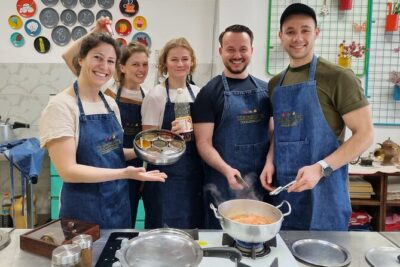
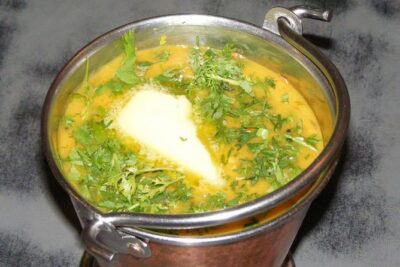
Veg and Non veg : Private Cooking Class in Delhi home (7 meal)
Read our review →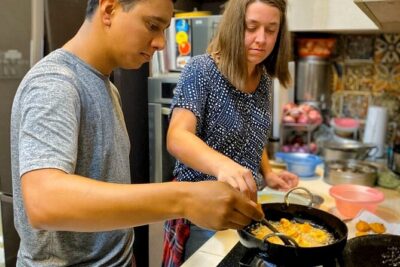
Indian Cooking Class in an Authentic Local Home – Learn 6 Dishes
Read our review →
AI Cooking Class and Much More in a Local Family Home
Read our review →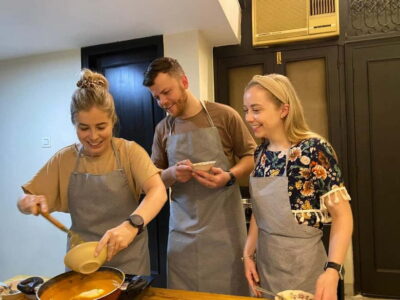
Spice Knight (Cooking Class -> Meal -> Local Market walk)
Read our review →
Vegetarian : Private Cooking Class in Delhi home ( Learn 7 meal)
Read our review →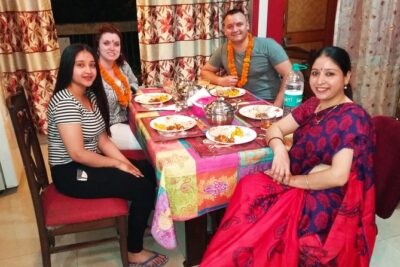
Cooking Demo + Lunch/Dinner and interaction with an Indian family @ Chez Anjali
Read our review →Browse the lists this tour appears in