
Reviewed · QUTUB MINAR TOURS
Delhi: Qutub Minar UNESCO World Heritage Site Walking Tour
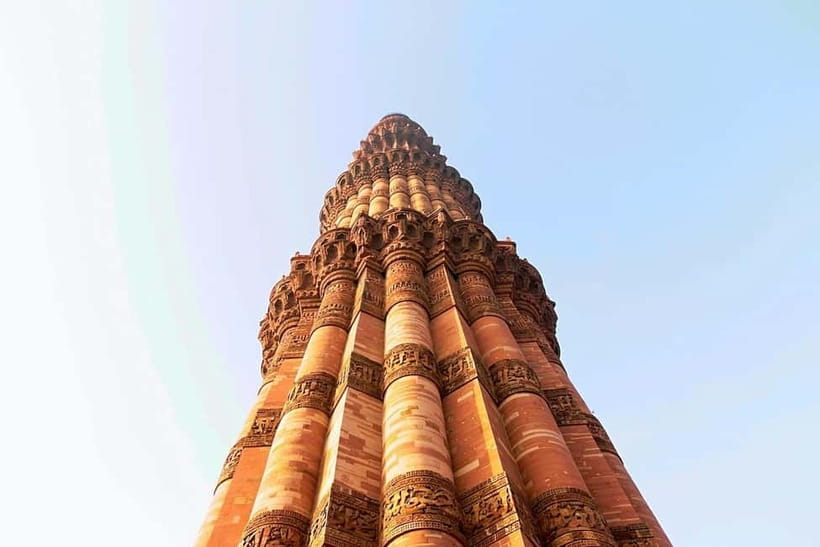
Qutub Minar is the kind of monument that makes you look up before you have even reached it. The 73-meter red sandstone and marble tower dominates the complex, but the real reward comes from walking around its base and reading the carved bands, changing storey designs, and layers of Delhi’s early Islamic architecture.
I like two things here. First, a private guide can turn a famous photo stop into a readable lesson in Mamluk design and medieval Delhi. Second, the short walk links several important sights, including the Quwwat-ul-Islam Mosque and Iron Pillar, so you get more than one monument for your money. The main consideration is that this is an outdoor walking visit, and the grand complex can be more interesting with a guide than by simply wandering on your own.
In This Review
- Key points to know before you book
- Why Qutub Minar works so well as a short Delhi tour
- Starting beneath the 73-meter Qutub Minar
- Reading the carved work and changing storeys
- Quwwat-ul-Islam Mosque and reused pillars
- The Iron Pillar and ancient metalwork
- Alai Darwaza’s Indo-Islamic detail
- The unfinished Alai Minar
- What the private format changes
- Adding the private-car transfer
- Timing, comfort, and accessibility
- Who will get the most from this tour
- Should you book the Qutub Minar walking tour?
- FAQ
- How long does the Qutub Minar walking tour last?
- What language is the tour conducted in?
- Is this a private tour?
- Is a private-car transfer included?
- Is the experience wheelchair accessible?
- What monuments are included in the walk?
- Can I cancel for a full refund?
Key points to know before you book
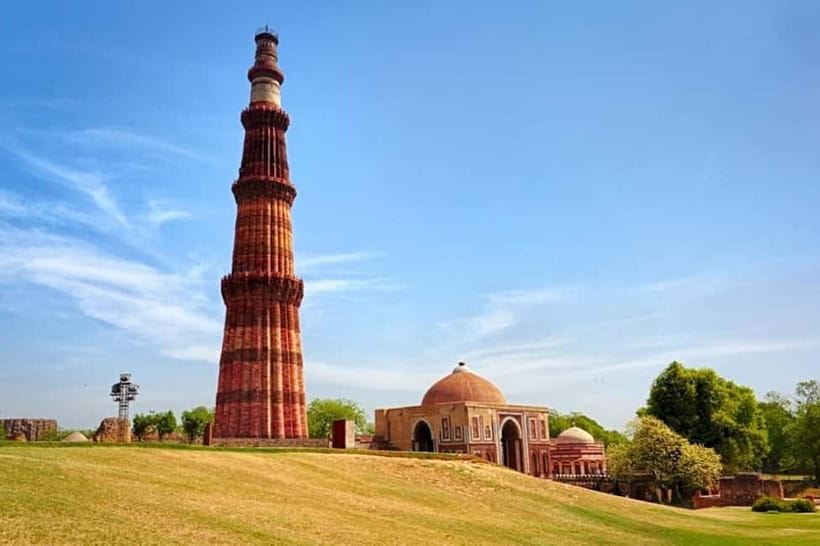
- The 73-meter Qutub Minar is the visual centerpiece, with carved Arabic inscriptions and geometric patterns on each level.
- The Quwwat-ul-Islam Mosque was the first mosque built in India, and its pillars show the reuse of earlier Hindu and Jain temple material.
- The Iron Pillar offers a close look at ancient Indian metallurgy, with a surface noted for resisting rust.
- Alai Darwaza brings a different architectural mood, with refined Indo-Islamic details and a more enclosed feel.
- The unfinished Alai Minar shows an abandoned ambition, giving the site a useful sense of what was planned but never completed.
- A private English or Hindi-speaking guide is included, with a private-car transfer available if you choose that option.
Why Qutub Minar works so well as a short Delhi tour
Delhi can feel enormous. Its monuments are spread across a wide city, and a visit can easily become a long day of traffic, queues, and scattered sights. This experience keeps your attention on one historic complex for roughly two to three hours, which is a sensible length for a walking tour.
At $9 per person, the basic tour is priced as an easy addition to a Delhi itinerary. The value is not simply the low cost. It comes from having a guide explain why the buildings look the way they do, point out details you might miss, and connect separate structures into one story.
The private-group format is especially useful if you want to move at your own pace. You can pause at the carvings, ask about the Iron Pillar, or spend more time comparing the minar’s storeys without being tied to a large group. It also suits families and first-time visitors who prefer direct explanations rather than a long audio guide.
The tour is available in English or Hindi. Guide Madhuvan has been specifically praised for an engaging approach, which matters at a site filled with dates, rulers, architectural terms, and competing layers of history. A good guide helps keep those details from becoming a blur.
More Qutub Minar visits:
- 09 Hour Tour Of Delhi With India Gate Qutab Minar And Humayuns Tomb
★ 5.0 · 30 reviews - Skip-the-line Qutub Minar Private Tour with Transfer Option
★ 4.7 · 17 reviews - New Delhi: Qutub Minar Light & Sound Show Tour
★ 4.3 · 15 reviews
Starting beneath the 73-meter Qutub Minar
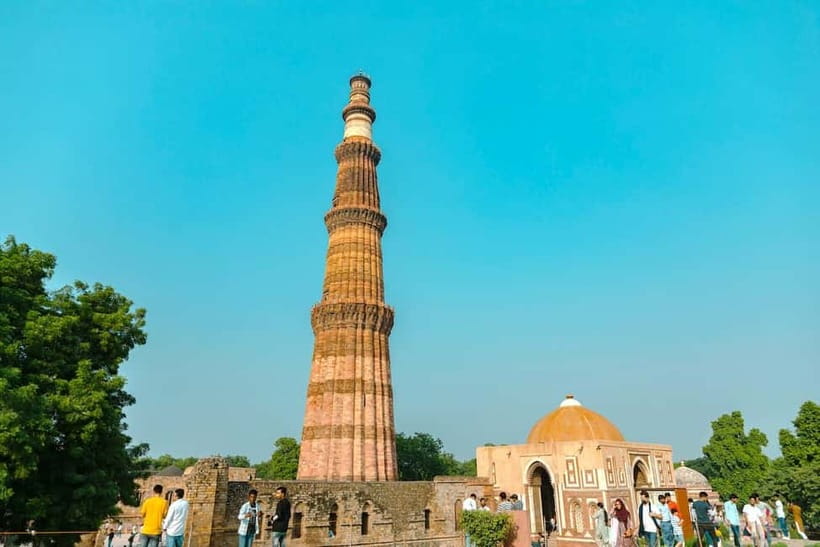
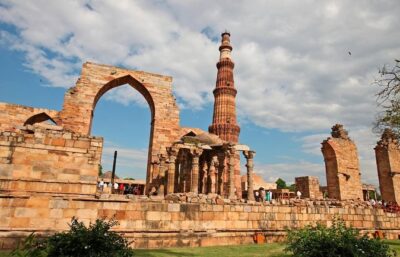
The visit begins with the main attraction: Qutub Minar. Built in the early 13th century, the minaret combines red sandstone and marble in a tall, tapered form that is hard to appreciate fully from a single photograph. You need to walk around it.
From the base, look for the bands of Arabic inscriptions and the repeated geometric patterns. The decoration is not spread evenly in one style. Each storey has its own design, reflecting construction under successive rulers. That change from level to level gives the tower a useful sense of time.
I would not rush this first stop. The tower is easy to photograph, but its details are best seen in a slow circuit. Your guide can help identify the differences between the storeys and explain how the Mamluk dynasty shaped the early monument.
The tower’s height is impressive, but the lower sections offer the most immediate visual detail. Stand close enough to see the stonework, then step back to take in the complete vertical form. This simple change of distance makes the visit feel less like a quick monument check and more like an architectural study.
Because the tour lasts two to three hours, you should have time to appreciate the minar without letting it consume the whole visit. That balance is important. Qutub Minar is the headline sight, but the surrounding complex explains why the site earned its place as a UNESCO World Heritage Site.
Reading the carved work and changing storeys
The carvings are one of the best reasons to take a guided walk. Arabic inscriptions wrap around parts of the tower, while geometric patterns add rhythm to the red stone. These details are easy to overlook when you are focused on the sheer height.
The Mamluk connection also gives the decoration a historical frame. Rather than seeing the tower as one finished object, you can read it as a structure shaped by different rulers over time. The distinct treatment of each storey helps make that change visible.
You do not need a specialist background in architecture to enjoy this part. Ask your guide to point out where the designs shift, how the materials change, and which details are easiest to miss from a distance. The activity is at its best when the explanation stays connected to what you can see in front of you.
This is also where a private tour can be more useful than a large shared group. A guide can respond to your interests. If patterns interest you, you can spend more time on the carvings. If the political and religious background catches your attention, you can ask for more context before moving to the mosque.
Quwwat-ul-Islam Mosque and reused pillars
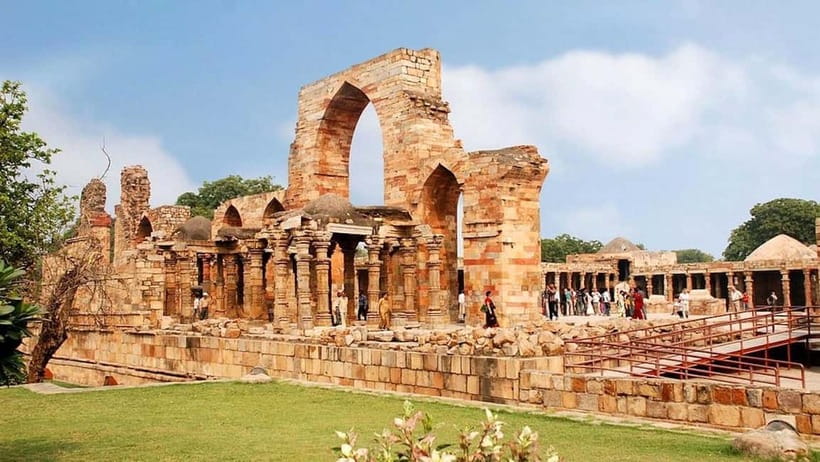
The Quwwat-ul-Islam Mosque is one of the complex’s most important stops. It is described as the first mosque built in India, and its arched gateways and columns create a sharp contrast with the tall open form of Qutub Minar.
One of the most striking features is the use of pillars repurposed from earlier Hindu and Jain temples. The result is a visible meeting of artistic traditions. The columns are not simply background supports. Their earlier decorative language remains part of what you see, giving the mosque a layered appearance.
This section calls for careful attention. Look at the pillars, then compare them with the arches and other Islamic architectural elements around them. The mixture makes the site more complex than a single-style monument, and it gives your guide an opportunity to explain how Delhi’s buildings reflect changes in power, faith, and craftsmanship.
The mosque also helps put the minar into context. Qutub Minar is not an isolated tower placed in an empty park. It belongs to a larger religious and political complex. Once you see the mosque, the tower feels less like a standalone landmark and more like part of a planned setting.
Some visitors may find the reused material difficult to interpret without guidance. That is one of the clearest points in favor of this tour. A guide can describe what you are looking at without requiring you to sort out the architectural differences on your own.
More Mughal-era sites near New Delhi:
- The Great Indian Food Tour: Old Delhi Food and Heritage Walk
★ 5.0 · 1,698 reviews - Old Delhi Food, Heritage&Cultural Walk with Rickshaw ride to Masterji Kee Haveli
★ 5.0 · 742 reviews - Old Delhi Heritage Walking Tour
★ 5.0 · 247 reviews - 3-hour Old Delhi Heritage Walking tour with Rickshaw Ride
★ 5.0 · 240 reviews
The Iron Pillar and ancient metalwork
Just beyond the mosque, the Iron Pillar offers a completely different kind of interest. It is far less massive than Qutub Minar, but its reputation comes from its rust-resistant surface and its connection to ancient Indian metallurgy.
This is a good reminder that the complex is not only about medieval stone architecture. The pillar brings engineering and metalwork into the visit. You can stand close to it, study its surface, and hear the explanation of why it remains such a notable object.
I like this stop because it changes the pace. After looking upward at a towering minaret and across the mosque’s carved pillars, you focus on one relatively compact piece of metal. Its importance comes from what it has endured and what it suggests about technical skill in ancient India.
The Iron Pillar is also easy to pass by if you are moving quickly. Make sure your guide includes it clearly in the walk, and do not treat it as a minor object simply because it lacks the scale of the minar. It adds a different chapter to the complex.
Alai Darwaza’s Indo-Islamic detail
The Alai Darwaza introduces another architectural highlight. Its Indo-Islamic design gives the structure a more finished and concentrated look than the open ruins around it.
Take time to examine the gateway’s details rather than using it only as a passage. Its form and decoration show how architectural ideas developed within the complex. After the varied pillars of the mosque, the Alai Darwaza offers another chance to compare styles and materials.
This stop is valuable for visitors who enjoy close architectural observation. The Qutub Minar impresses through height, while the Alai Darwaza rewards attention to proportion and ornament. Your guide can help you notice the features that distinguish it from the earlier structures.
The sequence also keeps the walk from becoming repetitive. You move from a tall minaret to a mosque, from metalwork to a decorated gateway, and then to an unfinished project. Each stop has a different visual character.
The unfinished Alai Minar
The Alai Minar is one of the most revealing sights in the complex because it was never completed. Its unfinished state gives you a clear look at an ambition that ended before the final design could take shape.
Completed monuments often hide the work behind their polished surfaces. An abandoned project does the opposite. It lets you think about scale, planning, and the practical limits that can stop a ruler’s grand idea. The Alai Minar is especially useful when viewed beside the completed Qutub Minar.
Your guide can connect the two structures as part of the same larger story. One tower reached its intended form, while the other remained incomplete. That contrast makes the complex feel more human. It contains success, adaptation, and unfinished plans, not just perfect architecture.
Do not expect the Alai Minar to provide the same visual drama as the main tower. Its value is interpretive. If you enjoy understanding how historic sites were built and changed, this is an important stop. If you mainly want polished monuments and quick photographs, it may hold your attention for less time.
What the private format changes
A private group gives you more control than a standard large-group visit. The guide speaks directly to your party, and you can ask questions without competing with a crowd. That is useful at Qutub Minar, where several structures sit close together but each needs a different explanation.
The tour is led in English or Hindi. The available information identifies Crystal India Holidays as the provider, and Madhuvan is named as a guide associated with an engaging visit. If you are booking because you want that guide specifically, confirm availability at the time of reservation rather than assuming every departure will have the same person.
A private group can also suit mixed interests. One person may want to study the carvings, another may care more about the mosque, and someone else may be most curious about the Iron Pillar. The format makes it easier to give each stop the attention it deserves.
The tradeoff is simple: a private tour may feel less spontaneous than wandering alone, because you are following a planned route with a guide. For this particular complex, I think the structure is helpful. The site has enough layers that a little direction improves the visit.
Adding the private-car transfer
A private-car transfer is included only if you select that option. This matters because the $9 starting price should not be confused with a package that automatically includes transport.
If you are already near Qutub Minar, the walking tour alone may be the better value. If you want a door-to-door arrangement or prefer not to organize your own way there, the car option may be worth the added cost. The supplied details do not state the exact transfer price, pickup point, or vehicle type, so check those terms before paying.
The walking portion remains the heart of the experience. A car can make arrival easier, but it does not replace the time needed to look closely at the minar, mosque, pillar, gateway, and unfinished tower.
Timing, comfort, and accessibility
The activity lasts two to three hours, with starting times based on availability. That gives you useful flexibility when fitting Qutub Minar around other Delhi plans.
The experience is wheelchair accessible, an important point for visitors who need a more manageable route through historic grounds. Since the visit includes walking among several structures, it is still sensible to confirm the exact meeting and route details when booking.
You should also allow enough time for a measured pace. The most rewarding parts are small details in stone and metal, not just the large views. A hurried visit may cover every stop but miss the work that makes the complex special.
Free cancellation is available up to 24 hours before the activity for a full refund, and you can reserve now and pay later. Those terms are useful if your Delhi plans are still changing, though you should follow the stated cancellation deadline.
Who will get the most from this tour
I would recommend this tour to first-time visitors who want a clear introduction to Qutub Minar without committing to a full-day sightseeing program. It also fits architecture fans, history-minded families, and anyone who likes seeing how different traditions appear in one place.
It is a good choice if you want a private guide who can explain details in English or Hindi. The praise for Madhuvan’s engaging style suggests that guide interaction is one of the experience’s strongest features, though guide assignment should be confirmed when you book.
You may prefer a self-guided visit if you want to linger alone, take photographs without discussion, or spend an unpredictable amount of time at one monument. The tour has a set two to three-hour shape, so it is less suited to people who want a completely open-ended day.
Should you book the Qutub Minar walking tour?
Book it if you want more than a photograph of Delhi’s famous minaret. For $9 per person, the tour brings together the 73-meter tower, carved Mamluk details, the Quwwat-ul-Islam Mosque, Iron Pillar, Alai Darwaza, and unfinished Alai Minar in one focused visit.
The strongest reason to choose it is the private guide. Qutub Minar’s buildings are close enough to see on your own, but their connections and contrasting styles are easier to understand with clear commentary. Madhuvan’s specific praise for an engaging approach is encouraging, especially if you value a lively explanation.
Choose the private-car option only if you need the added convenience, and check its extra cost before booking. If you have two or three hours available and want an affordable, focused look at one of Delhi’s most important historic sites, this is a sensible choice.
FAQ
How long does the Qutub Minar walking tour last?
The tour lasts approximately two to three hours.
What language is the tour conducted in?
The live guide is available in English or Hindi.
Is this a private tour?
Yes. The experience is offered for a private group.
Is a private-car transfer included?
A private-car transfer is included if you select that option. It is not automatically part of every booking.
Is the experience wheelchair accessible?
Yes. The activity is listed as wheelchair accessible.
What monuments are included in the walk?
The route includes Qutub Minar, the Quwwat-ul-Islam Mosque, the Iron Pillar, Alai Darwaza, and the unfinished Alai Minar.
Can I cancel for a full refund?
Yes. You can cancel up to 24 hours in advance for a full refund. The activity also offers reserve now and pay later booking.
More Walking Tours in New Delhi
- Breakfast Walk in Old Delhi
★ 5.0 · 449 reviews - Delhi Food Walk: Rickshaw Ride, Street Eats & Market Tour
★ 5.0 · 401 reviews - New Delhi Slum Walking Tour
★ 5.0 · 360 reviews - Old Delhi: Spices, Heritage and Bazaars Walking Tour
★ 5.0 · 173 reviews
Just added around New Delhi
- Delhi: All-Inclusive Full or Half Day Tour With Hotel Pickup★ 5.0 · 3 reviews
- From Delhi : All Inclusive Taj Mahal Tour by Gatimaan Express★ 5.0 · 3 reviews
- Skip the line: Taj Mahal Agra Private Day Trip From Delhi By Car★ 5.0 · 3 reviews
- Delhi: Old and New Delhi One Day Private Guided City Tour★ 5.0 · 3 reviews
- New Delhi Night City Tour★ 5.0 · 3 reviews
- Old Delhi Half day private city tour★ 5.0 · 3 reviews
- A full-day tour of Old & New Delhi Monument Express Entry★ 5.0 · 3 reviews
- Sultanpur Bird Sanctuary Tour Near Delhi★ 5.0 · 3 reviews
Qutub Minar Tours, compared.
09 Hour Tour Of Delhi With India Gate Qutab Minar And Humayuns Tomb
Read our review →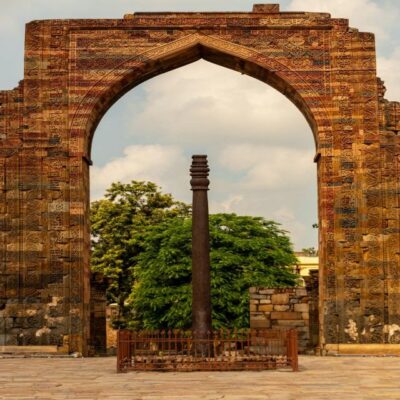
Skip-the-line Qutub Minar Private Tour with Transfer Option
Read our review →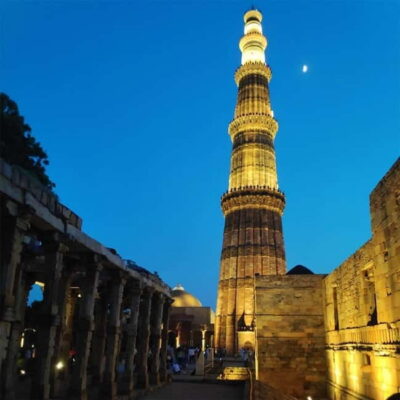

Private Delhi Tour: Lotus Temple, Qutub Minar and Dilli Haat
Read our review →
Private Walking Tour: South Delhi Heritage including Qutub Minar and Mehrauli Archaeological Park
Read our review →
Private Tour in Mehrauli Archaeological Park & Qutub Minar
Read our review →
Mehrauli Archaeological Park Tour with Qutub Minar
Read our review →Browse the lists this tour appears in