
Reviewed · WORKSHOPS
Delhi Textile & Handicraft Tour: Artisan Workshops Experience
Delhi’s best moments on this tour happen when you stop watching crafts from behind glass and see hands at work. You’ll move from Zari-filled lanes in Chandni Chowk to live embroidery, carpet weaving, pashmina, and tailoring sessions, with a private car linking the far-flung stops.
I like the way the day can bend toward your interests, and I like having a guide help you judge fabric quality and prices. The chance to try carpet making at a traditional loom and order well-priced tailored clothing adds real substance. The drawback is the packed schedule: six stops in eight hours can feel rushed, especially if Old Delhi traffic or shopping discussions run long.
In This Review
- Key points to know before booking
- Why this Delhi craft tour works
- Chandni Chowk: trims, Zari, and Old Delhi lanes
- Connaught Place: a calmer look at premium fabric
- Nehru Place: watching Zardozi and Aari embroidery
- Gole Market: carpets, pashmina, and the loom
- Khan Market: turning fabric into a finished garment
- Dilli Haat: handmade pieces for home
- Transport, pace, and comfort on an eight-hour day
- Guides, private attention, and the shopping experience
- Who should book this textile experience?
- Booking value and final advice
- Should you book the Delhi Textile and Handicraft Tour?
- FAQ
- How long does the Delhi Textile and Handicraft Tour last?
- Is hotel pickup included?
- Is this a private tour?
- What textile demonstrations are included?
- Can I order custom clothing?
- Are meals included?
Key points to know before booking
- Chandni Chowk begins with a tuk-tuk ride: You’ll reach narrow textile lanes that a private car cannot enter.
- The demonstrations are the heart of the day: Zardozi, Aari embroidery, hand sewing, and carpet weaving show how much labor sits behind finished goods.
- The private format is useful: Your guide can adjust stops and shopping time for your group rather than follow a fixed public schedule.
- Tailoring is more than window shopping: At Khan Market, you can discuss designs, choose fabric, and receive measurements for optional stitching.
- The $60 price covers the practical pieces: Private air-conditioned transport, hotel pickup, a guide, demonstrations, and personalized help are included.
- Expect markets, not museums: Crowds, sales conversations, and changing workshop availability are part of the experience.
Why this Delhi craft tour works

This is not a single-market outing. It is a full day built around how Indian textiles are made, sold, adapted, and used. You’ll see raw materials and trim shops in Old Delhi, higher-grade fabrics in a boutique setting, hand embroidery in progress, looms at work, and finished home goods at Dilli Haat.
That range gives you useful context. A pashmina scarf, embroidered panel, or handloom fabric is easier to judge after you have watched someone work on it. You also get help comparing quality, which matters in a city where similar-looking items can vary widely in fiber, workmanship, and price.
The tour is private, so only your group participates. That makes it a better fit than a large shopping bus if you want to ask questions, linger over a fabric, or cut a stop short. The guide can also shape the day around a designer’s research, a couple’s shopping list, or a first-time visitor’s interest in Indian crafts.
The listed price is $60 per person. For an eight-hour private outing with hotel pickup, an air-conditioned vehicle, an English-speaking guide, a tuk-tuk ride, and live demonstrations, that is a sensible price if you value comfort and guidance. Meals and gratuities are extra, with a suggested gratuity of $5 per person.
A few more New Delhi departures worth comparing
- 5 Senses Tour – Old + New Delhi, Workshops, Lunch all inclusive
★ 5.0 · 386 reviews - Five Course Cooking Class & Meal
★ 5.0 · 250 reviews - Veg and Non veg : Private Cooking Class in Delhi home (7 meal)
★ 5.0 · 226 reviews
Chandni Chowk: trims, Zari, and Old Delhi lanes
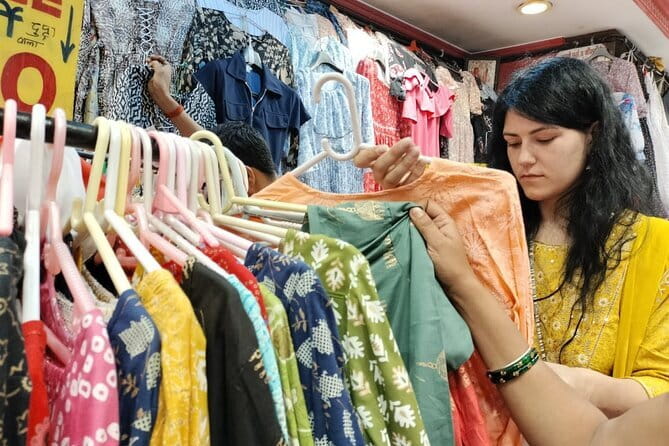
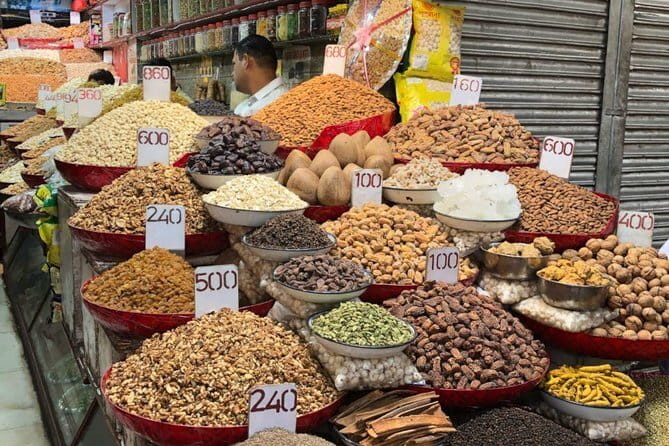
The day starts in Chandni Chowk, where the focus is textiles rather than the usual sightseeing circuit. You’ll pass fabric stalls, lace sellers, Zari shops, and accessory stores packed into narrow Old Delhi lanes.
The included tuk-tuk ride is important here. Your private car gets you near the market, but a tuk-tuk can slip through lanes too tight for normal traffic. It also gives you a quick sense of the market’s pace without asking you to walk the entire area before the day has properly begun.
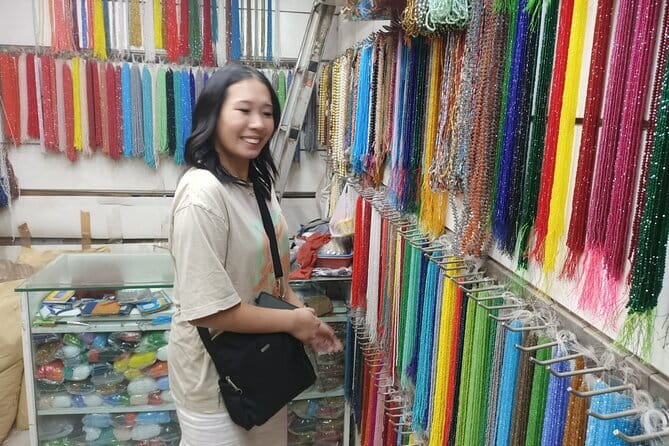
This is the place to look at the building blocks of Indian clothing: metallic thread, borders, lace, trims, and cloth in many weights and colors. If you are making an outfit, these small details can matter as much as the main fabric.
Allow for crowds. Peak hours can make the lanes slow, and the market is not a quiet workshop district. Wear comfortable walking shoes and keep your belongings close. The admission cost is free, but you should treat the market as an active trading area, not a polished retail center.
Your guide’s help is most useful here. You can ask what a trim is suited for, compare fabric feel, and avoid buying the first appealing piece. If you want a calm, slow shopping session, this may be the most demanding stop. If you like seeing where Delhi’s clothing trade operates, it is one of the day’s most revealing sections.
Connaught Place: a calmer look at premium fabric
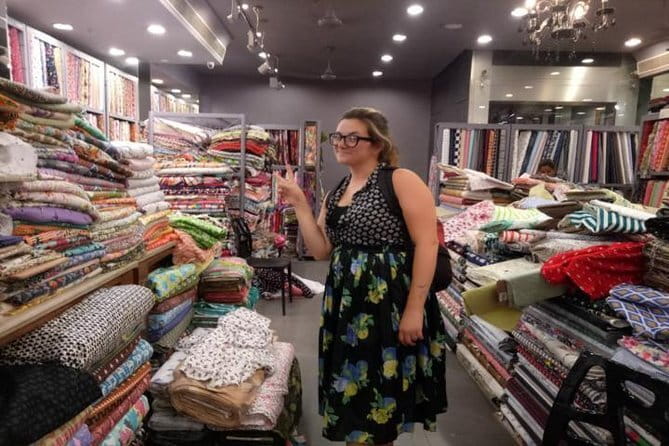
The next stop shifts from market lanes to a boutique fabric house near Connaught Place. The shop focuses on cotton, silk, handloom fabric, Indian textiles, and designer materials selected for their workmanship.
This change of setting helps you compare buying environments. Chandni Chowk is about range, movement, and small components. Connaught Place offers a more orderly place to inspect dress materials and cloth without the same crush of narrow lanes.
You’ll have about an hour here. That is enough for a useful look, but not an open-ended shopping appointment. If you already know you want cotton, silk, or a particular type of Indian fabric, tell the guide early so this stop earns its time.
The main benefit is guidance. Fabric can look impressive under shop lighting yet feel wrong for your intended use. You can ask about texture, weight, and suitability while comparing pieces in a setting designed for browsing.
The tour does not promise that every purchase will be a bargain. Its value is in giving you a better basis for comparison and helping you shop with fewer doubts. If you are not planning to buy cloth, this may feel less essential than the workshop visits.
Nehru Place: watching Zardozi and Aari embroidery
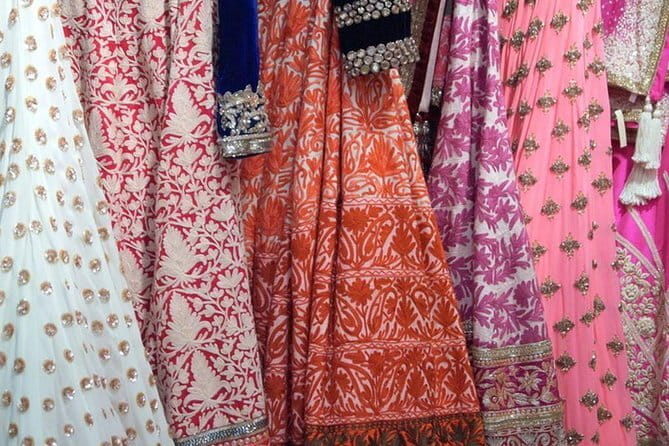
At Nehru Place, you’ll visit a workshop where the focus is hand embroidery. Depending on availability, you may see Zardozi, Aari work, and other hand-embroidery techniques demonstrated in person.
This is the point where a finished embroidered garment becomes easier to understand. Zardozi uses decorative metallic elements and careful handwork, while Aari work relies on a hooked needle technique. The exact demonstration can vary, so consider the visit a chance to see working methods rather than a guaranteed presentation of one specific design.
You’ll have around an hour to watch, ask questions, and browse handcrafted pieces. That time is brief, but live work gives you more than a label ever could. You can see the pace, precision, and repeated movements required to build a pattern.
The workshop also gives you a sensible pause from general shopping. You are not simply moving from one sales floor to another. You are seeing a skill that supports much of India’s formal clothing and decorative textile trade.
Ask the guide to help you compare handwork with machine-made decoration. The tour is designed to help with quality checks, and this is one of the best places to use that help. Demonstrations depend on availability, so the precise work being shown may change on the day.
Same city, a completely different day out:
- Old & New Delhi City Tour – Half or Full Day Options Available
★ 5.0 · 4,811 reviews - Old & New Delhi City Tour – Choose Half or Full Day Experience
★ 5.0 · 4,513 reviews - Same Day Taj Mahal, Agra Fort & Baby Taj Tour from Delhi by Car
★ 5.0 · 4,304 reviews - Taj Mahal Day Tour from Delhi by Superfast Train – TOP RATED TOUR
★ 5.0 · 4,166 reviews
Gole Market: carpets, pashmina, and the loom
Gole Market brings two related subjects together: carpet weaving and fine fiber. At a carpet and pashmina studio, you’ll see a traditional loom and learn how carpets are woven. A live weaving demonstration is included, subject to availability.
One especially appealing part of this stop is the chance to try carpet making at a traditional loom. That hands-on element turns a technical explanation into something you can feel in your fingers. It also makes clear why a detailed carpet is a labor-intensive purchase.
The studio also covers Kashmiri pashmina and silk blends. These materials can be confusing for shoppers, especially when similar products are presented at very different prices. Use the guide as a sounding board, and ask questions before treating a label or sales claim as proof of quality.
You get about an hour here. That is enough to see the loom, handle some textiles, and understand the basic work involved. It is not enough for a full education in carpets or fiber testing, so keep your expectations measured.
This stop may be the strongest choice for anyone interested in home décor, weaving, or textile production. It is also the place where your shopping budget can change quickly. A demonstration does not obligate you to buy, and you should feel free to browse without placing an order.
Khan Market: turning fabric into a finished garment
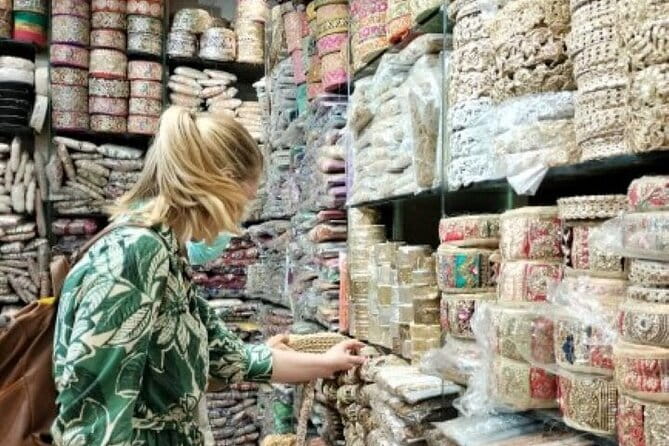
At Khan Market, the focus shifts from materials to clothing. You’ll meet tailors for a consultation about shirts, jackets, dresses, or traditional Indian outfits.
The process includes choosing fabric, discussing style, taking measurements, and getting design guidance. Optional stitching orders are available, but tailoring is not required. That distinction matters. You can learn how a garment might be made without committing to a purchase.
I like this stop for travelers who want something more personal than a ready-made souvenir. A well-chosen textile can become a shirt, jacket, dress, or traditional outfit that carries a clear connection to Delhi’s craft scene.
The practical question is timing. The tour lasts about eight hours, but the supplied details do not specify a tailoring delivery schedule. If you order clothing, ask the tailor and guide directly about completion arrangements before paying.
This is also a good place to tell the guide what you actually wear. A design that looks striking in a shop may not suit your daily use. The private format makes that discussion easier, since you can explain your preferences without holding up a group.
Dilli Haat: handmade pieces for home
The final shopping stop is Dilli Haat, where you’ll browse embroidered textiles, cushion covers, runners, wall art, and other handcrafted décor. You have about 30 minutes, so this is a quick final look rather than a long buying session.
Dilli Haat is useful if you want smaller home pieces instead of clothing or fabric by the meter. A cushion cover or runner is easier to pack than a carpet, and embroidered wall décor can bring home the visual character of Indian textile work without requiring custom measurements.
The short timing means you should not save every purchase decision for this stop. If you see something you like, use the available time efficiently. Your guide can help you compare workmanship and decide if a piece fits your budget.
This last stop also changes the mood. After technical demonstrations and fabric shopping, you get a chance to look at finished craft products. It rounds out the day, though anyone focused only on weaving or tailoring may prefer more time at the earlier workshops.
Transport, pace, and comfort on an eight-hour day

Delhi’s craft centers are spread across the city. Private hotel pickup and drop-off, plus an air-conditioned car, make a real difference. You are not responsible for piecing together transport between Old Delhi, central Delhi, South Delhi, and the other markets.
The car is especially welcome after walking through Chandni Chowk. The tour operates in all weather, but conditions can affect comfort and traffic. Wear light, practical clothing, bring water, and choose shoes that can handle uneven walking and crowded lanes.
The schedule allows roughly two hours in Chandni Chowk, then one hour each at Connaught Place, Nehru Place, Gole Market, and Khan Market, followed by 30 minutes at Dilli Haat. That leaves little slack. Tell your guide early if one subject matters most to you.
The day is customizable, but customization does not mean unlimited time. If you want a long tailoring consultation, detailed carpet shopping, or extended work with a designer, you may need to reduce attention elsewhere.
Guides, private attention, and the shopping experience
The guide is central to the tour’s value. RK helped one visitor focus on artisan textiles, carpet making, and quality fabric for tailoring. Shehla and Mr. Khan are also named as guides who provided on-time pickups, a customized plan, local food stops, and a strong sense of safety.
Those details point to the kind of help you can expect: transport coordination, translation or explanation at workshops, fabric comparisons, and adjustments to the day. You should still state your priorities clearly. Say if you are buying, researching, browsing, or simply learning.
The private setup is also reassuring for solo visitors, couples, and small groups. You can ask basic questions without feeling self-conscious, and you do not have to follow another group’s shopping timetable.
Keep in mind that a guide’s assistance does not replace your own judgment. Look closely at stitching, ask about materials, confirm prices, and avoid assuming that a demonstration guarantees the quality of every item for sale. A good guide helps you make a decision, not make every decision for you.
Who should book this textile experience?
I would recommend this tour most strongly to:
- Designers and students looking at Indian textile methods
- Shoppers who want fabric, embroidery, carpets, or tailoring
- Couples seeking a private day with flexible interests
- Solo visitors who prefer arranged transport and local assistance
- Anyone who wants working demonstrations rather than only market browsing
It is less suitable if you want a relaxed sightseeing day with long breaks. The six-stop plan covers a lot of ground, and shopping areas can be crowded. It may also be a poor fit if you have no interest in textiles, clothing, or handmade décor.
The tour currently carries a 4.9 rating from seven reviews, with especially strong praise for customized planning, punctual pickups, air-conditioning, safety, tailoring, and RK’s guidance. That is a small sample, so I would treat it as encouraging rather than conclusive.
Booking value and final advice
At $60 per person, the strongest value comes from combining private transport with access to craft-focused stops that would be difficult to connect on your own in one day. You are paying for time saved, local help, and a chance to see techniques in use, not just for admission to attractions. The stops themselves have no admission charge.
Add room in your budget for purchases, meals, and a $5-per-person gratuity. If you plan to buy a carpet, pashmina, fabric, or tailored clothing, decide in advance how much you want to spend. That makes the guide’s advice more useful and helps you resist pressure in a busy shopping setting.
Free cancellation is available if you cancel at least 24 hours before the local start time. Changes or cancellations within 24 hours are not refunded.
Should you book the Delhi Textile and Handicraft Tour?
Book it if you want to understand Indian textiles through markets, working hands, and finished goods. The best reasons are the traditional loom, live embroidery, custom tailoring, and private transport between distant parts of Delhi.
Skip it if you want a slow day, a museum-style presentation, or a simple shopping trip with only one neighborhood. For the right person, this is a practical way to see how cloth becomes clothing and décor, while getting enough local help to shop with care.
FAQ
How long does the Delhi Textile and Handicraft Tour last?
The experience lasts approximately eight hours, including the listed market, workshop, shopping, and return-drive portions.
Is hotel pickup included?
Yes. Pickup and drop-off at hotels in Delhi are included, along with a private air-conditioned vehicle.
Is this a private tour?
Yes. Only your group participates in the private activity.
What textile demonstrations are included?
Live demonstrations may include carpet weaving, embroidery, Zardozi, and Aari work, depending on availability on the day.
Can I order custom clothing?
Yes. The Khan Market stop includes fabric selection, measurements, and style guidance. Optional stitching orders are available for shirts, jackets, dresses, and traditional Indian outfits.
Are meals included?
No. Meals are not included. Gratuities are also separate, with $5 per person listed as the suggested amount.
Just added around New Delhi
- Delhi: All-Inclusive Full or Half Day Tour With Hotel Pickup★ 5.0 · 3 reviews
- From Delhi : All Inclusive Taj Mahal Tour by Gatimaan Express★ 5.0 · 3 reviews
- Skip the line: Taj Mahal Agra Private Day Trip From Delhi By Car★ 5.0 · 3 reviews
- Delhi: Old and New Delhi One Day Private Guided City Tour★ 5.0 · 3 reviews
- New Delhi Night City Tour★ 5.0 · 3 reviews
- Old Delhi Half day private city tour★ 5.0 · 3 reviews
- A full-day tour of Old & New Delhi Monument Express Entry★ 5.0 · 3 reviews
- Sultanpur Bird Sanctuary Tour Near Delhi★ 5.0 · 3 reviews
Workshops, compared.
5 Senses Tour – Old + New Delhi, Workshops, Lunch all inclusive
Read our review →
Veg and Non veg : Private Cooking Class in Delhi home (7 meal)
Read our review →
Indian Cooking Class in an Authentic Local Home – Learn 6 Dishes
Read our review →
AI Cooking Class and Much More in a Local Family Home
Read our review →
Spice Knight (Cooking Class -> Meal -> Local Market walk)
Read our review →Browse the lists this tour appears in