Reviewed · GOLDEN TRIANGLE TOURS
From Delhi: 3-Days Golden Triangle with Fatehpur Sikri
The best part of this three-day route is its range. In one tightly packed trip, you move from Delhi’s grand avenues and ancient tombs to the Taj Mahal at sunrise, a deserted Mughal capital, a remarkable stepwell, and Jaipur’s royal monuments. Fatehpur Sikri and Chand Baori add far more character than a simple Delhi, Agra, and Jaipur loop.
I like the private air-conditioned car, which saves you from sorting out intercity transport, and I like having local guides for places where a few historical details make the buildings far more meaningful. The main drawback is time: this is an ambitious schedule with early starts, long drives, and many major sights in only three days.
In This Review
- Key points to know before booking
- Why this three-day route works
- Day 1: Delhi’s monuments before the road to Agra
- Day 2: Taj Mahal light, Agra Fort, and the road to Jaipur
- Fatehpur Sikri and the story of an abandoned capital
- Chand Baori: a striking stop at Abhaneri
- Day 3: Jaipur’s forts, palaces, and famous facade
- Guides, language, and the private car
- Accommodation, tickets, and the real price
- Who should book this Golden Triangle trip?
- Should you book it?
- FAQ
- Is accommodation included in the $65 price?
- Are monument entrance tickets included?
- Which languages are available?
- Where does pickup take place?
- What room arrangement is provided for three people?
- Can I change the monuments in the itinerary?
Key points to know before booking
- Taj Mahal at sunrise: Start early for the soft light and cooler conditions, then visit Agra Fort.
- Fatehpur Sikri included: Explore Buland Darwaza, Diwan-i-Khas, and the Tomb of Salim Chishti.
- Chand Baori adds variety: See one of India’s most intricate stepwells at Abhaneri.
- Private sightseeing by car: Pickup and drop-off are available from a hotel or airport, with bottled water included.
- Jaipur covers the essentials: Amber Fort, Jal Mahal, City Palace, Jantar Mantar, Hawa Mahal, and bazaar time.
- Check your booking option: Accommodation and monument tickets are included only if you choose the relevant option.
Why this three-day route works
India’s Golden Triangle is popular for a good reason. Delhi, Agra, and Jaipur each offer a different view of northern India, and the roads between them make a compact circuit rather than a series of awkward backtracks.
This tour adds two worthwhile stops. Fatehpur Sikri gives you a grand Mughal city that was later abandoned, while Chand Baori shows a quieter and more geometric side of Indian architecture. Those stops make the journey from Agra to Jaipur more interesting, though they also make Day 2 a long one.
At $65 per person, the price looks unusually low for a private car, guides, taxes, parking, water, and hotel transfers. Read the booking choices carefully. Monument entrance and accommodation are included only when the selected option says so, so the final cost can be higher than the headline figure.
The private format is useful if you want to adjust the pace or request changes to the monuments. You can ask to add, remove, or alter stops, although each change should be confirmed before the trip begins. This flexibility is more valuable than it may sound, since three days leaves little room for wasted time.
More Agra and Fatehpur Sikri days:
- Same Day Taj Mahal, Agra Fort & Baby Taj Tour from Delhi by Car
★ 5.0 · 4,304 reviews - Full Day Taj Mahal, Agra Fort & Baby Taj Tour from Delhi by Car
★ 5.0 · 3,647 reviews - From Delhi: Taj Mahal & Agra Private Day Trip with Transfers
★ 4.9 · 3,181 reviews
Day 1: Delhi’s monuments before the road to Agra
The first day begins with Delhi, a city that can feel like several places at once. The route includes Qutub Minar, Humayun’s Tomb, the Lotus Temple, India Gate, Raj Ghat, Jama Masjid, and a drive past Rashtrapati Bhavan. You also stop for photographs outside the Red Fort.
That is a substantial list. You should expect an overview rather than long, quiet visits at every site. If Delhi is your main interest, you may want to ask in advance which monuments will receive the most time.
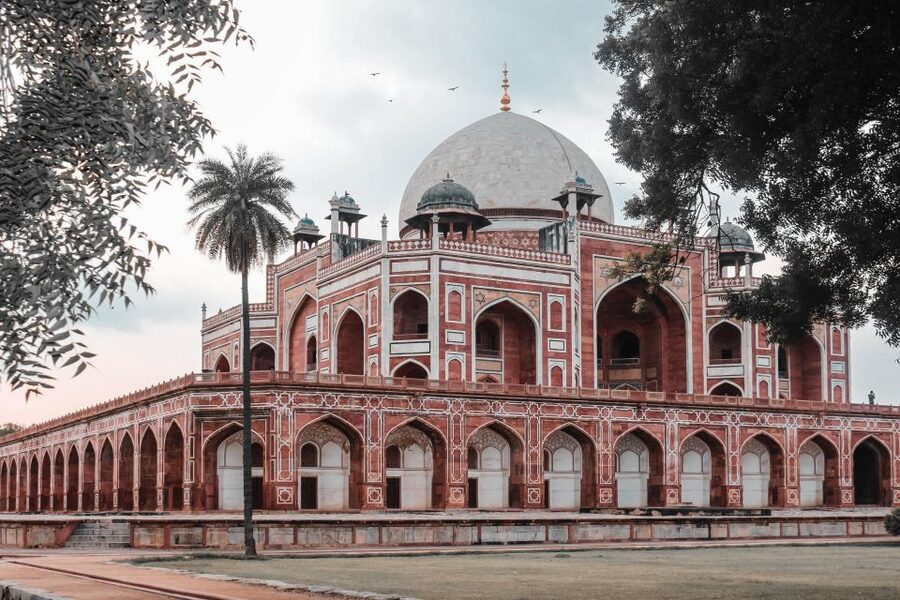
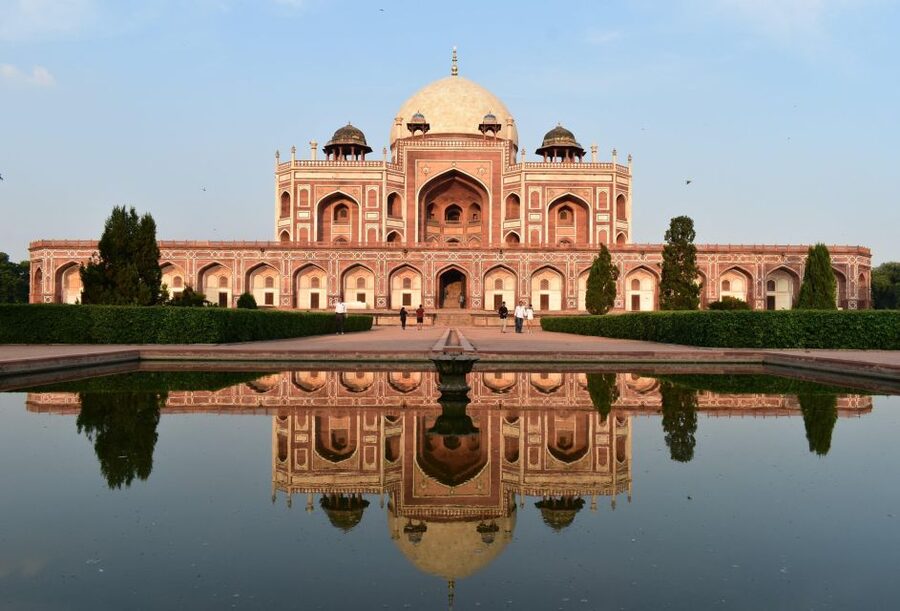
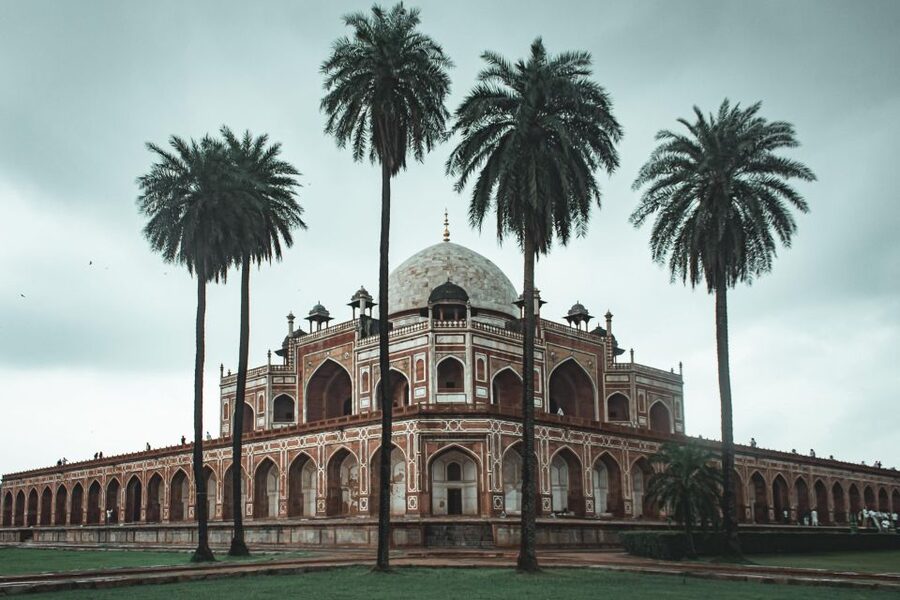
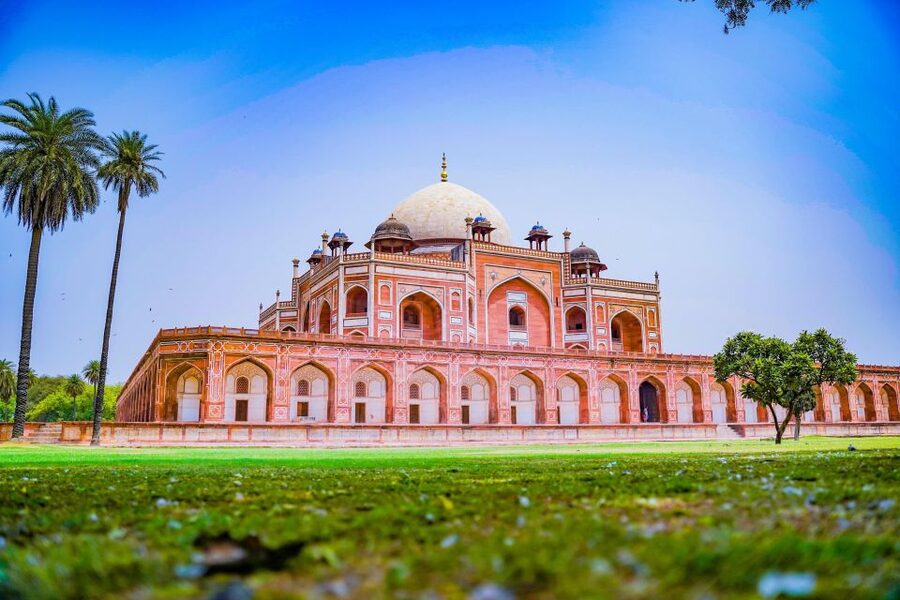
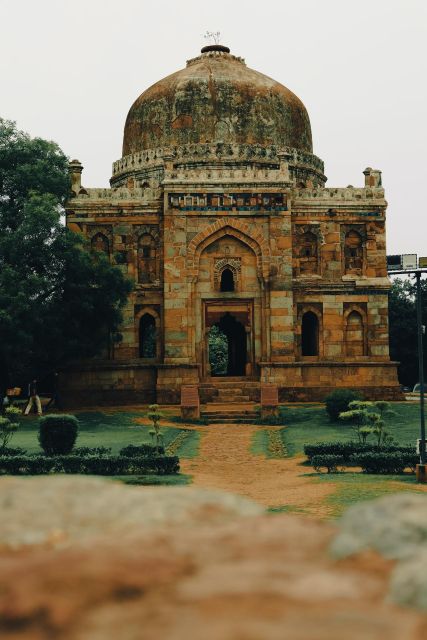
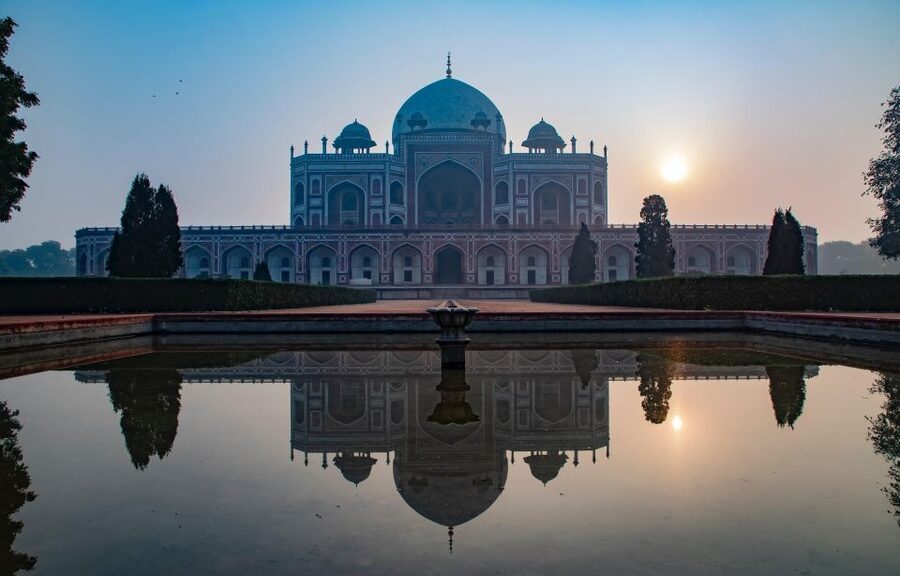
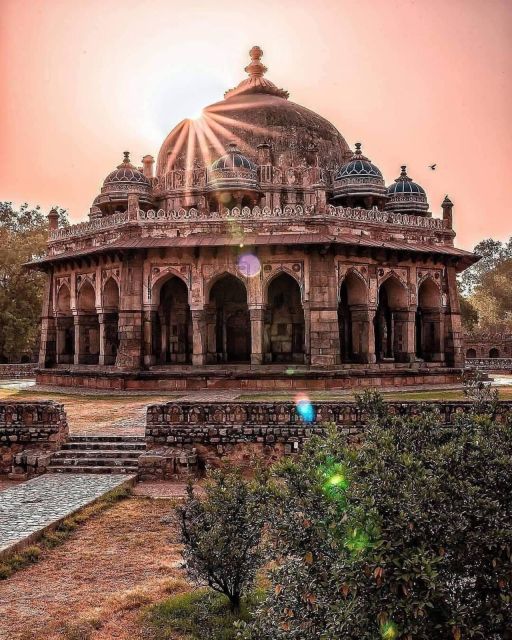
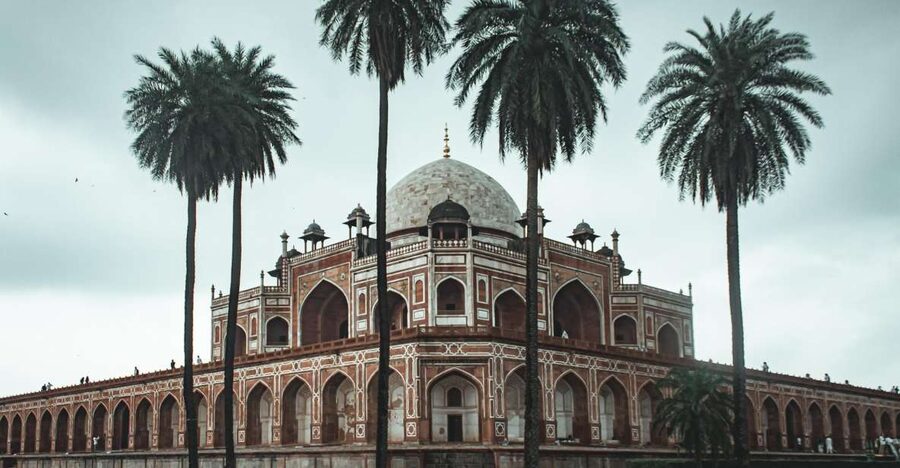
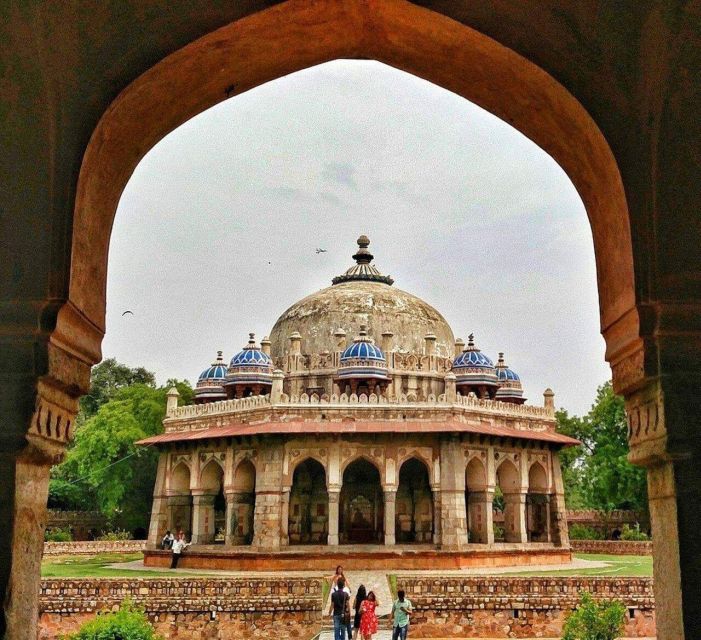
Qutub Minar is one of the day’s major historical stops. Its tall stone tower and surrounding ruins introduce the early Islamic architecture of Delhi. Humayun’s Tomb offers a different mood, with formal gardens and a grand tomb often linked to the development of later Mughal design. Guides including GG and Ali have been specifically appreciated for explaining Humayun’s Tomb and answering detailed questions, which is useful here because the site rewards context.
The Lotus Temple is a modern landmark with a distinctive flower-shaped design. It gives the day a change of pace after the older monuments. India Gate and Rashtrapati Bhavan show Delhi as the capital of modern India, while Raj Ghat marks the memorial to Mahatma Gandhi.
Jama Masjid and the Red Fort bring you back to Mughal-era Delhi. The Red Fort is viewed from outside on this schedule, so do not expect a full interior visit unless your arrangement is changed. Jama Masjid may be especially interesting if you want to see a major place of worship rather than only palace and tomb architecture.
Akshardham Temple is offered if time permits. That phrase matters. It is an optional possibility, not a guaranteed stop, and the day already contains enough sites to fill the available hours. If you prefer a slower visit at Qutub Minar, Humayun’s Tomb, or Jama Masjid, ask your guide before adding another monument.
You then drive to Agra for the night. The private vehicle means you can keep your bags with you and avoid coordinating several separate transfers. It also means road time is part of the experience, so this day will feel full from start to finish.
Day 2: Taj Mahal light, Agra Fort, and the road to Jaipur
The sunrise visit to the Taj Mahal is the emotional center of the trip. Starting early takes effort, but the timing helps you see the monument in changing light and avoids the hottest part of the day. The pale marble, reflecting pools, and formal gardens are best appreciated when you are not rushing straight into midday heat.
You should confirm the exact pickup time with your driver the evening before. Sunrise timing changes through the year, and the tour description does not give a fixed start hour.
The Taj Mahal is more than a photograph stop, though photography will naturally be a major part of the visit. A good guide can explain the building’s Mughal design, the reason for its construction, and the details that are easy to miss when you are focused on the main facade. Azhar, Satyam, Ali, and GG are among the guides associated with strong feedback for clear explanations, fluent English, patience, and attention to questions. Spanish-language guiding is also available.
Next comes Agra Fort, a UNESCO World Heritage Site. Its massive walls and palace spaces help you understand the political power behind the Taj Mahal. The two sites work well together: the Taj expresses imperial ambition through symmetry and marble, while Agra Fort feels more defensive and practical.
After Agra, the route heads toward Fatehpur Sikri. This is where the tour becomes more than a standard highlights package.
Fatehpur Sikri and the story of an abandoned capital
Fatehpur Sikri was built as a Mughal capital and later abandoned. Its empty courtyards and red sandstone buildings give it an unusual atmosphere. You can picture the city as a working seat of power, yet its present quiet makes the site feel removed from ordinary city life.
The main sights named for the visit are Buland Darwaza, Diwan-i-Khas, and the Tomb of Salim Chishti. Buland Darwaza is the imposing gateway, while Diwan-i-Khas is known for its unusual central column and upper platform. The white marble tomb of Salim Chishti provides a visual contrast to the red sandstone around it.
This is a place where a guide adds real value. The buildings can look like a series of courtyards if you do not know what each space was for. Guides have been described as clear, friendly, and willing to answer questions, though service can vary. One booking report noted a late guide and poor personal manners, so it is fair to expect useful information without assuming every guide will provide the same polish.
Fatehpur Sikri is also a practical test of your energy. By this point, you have already seen the Taj Mahal and Agra Fort, and you still have a drive to Jaipur ahead. Wear comfortable shoes and keep water close. Bottled mineral water is included, but you should still pace yourself.
More Golden Triangle itineraries from New Delhi:
- 3-Days Private Golden Triangle Tour: Delhi, Agra & Jaipur by Car
★ 5.0 · 1,107 reviews - 3-Days Private Golden Triangle Tour: Delhi, Agra & Jaipur by Car
★ 5.0 · 1,098 reviews - 3-Day Delhi, Agra and Jaipur Private Tour – India Golden Triangle
★ 5.0 · 812 reviews - Four-Day Private Luxury Golden Triangle Tour to Agra and Jaipur From New Delhi
★ 5.0 · 807 reviews
Chand Baori: a striking stop at Abhaneri
The stop at Chand Baori changes the visual rhythm again. Instead of domes, fort walls, and palace rooms, you see a vast geometric stepwell cut into repeated flights of stairs.
Chand Baori is one of India’s deepest and most intricate stepwells. Its appeal comes from the pattern as much as the engineering. From above, the repeated steps form a precise design that is easy to photograph, while the scale becomes clearer as you look down into the well.
The stop is at Abhaneri on the way to Jaipur, so it does not require a separate excursion. That is a strong use of the route. You gain a memorable architectural sight without adding another day.
Do not expect the same kind of guided narrative as at the Taj Mahal or Fatehpur Sikri unless your guide specifically provides it. The description promises a visit to admire the stepwell, but gives less detail about a dedicated guide there. Treat it as a focused stop rather than a long museum-style tour.
You spend the night in Jaipur. The hotel is included only with the accommodation option, so confirm this before booking if you need the room arranged as part of the package.
Day 3: Jaipur’s forts, palaces, and famous facade
Jaipur’s morning begins at Amber Fort, the strongest historical stop in the city portion of the tour. The fort complex combines defensive walls, courtyards, palace rooms, and views over the surrounding area. The site is spread out, so you will want comfortable footwear and a little patience with the pace.
Panna Meena ka Kund comes next. Like Chand Baori, it shows how practical water storage could also produce memorable architecture. Seeing both stepwells in one trip is useful because their repeated stair patterns invite comparison, even though the stops are brief.
Jal Mahal is mainly a photo stop. The palace sits in water, and the view is best treated as a quick pause rather than a full interior visit. This helps keep the schedule moving toward Jaipur’s central sights.
City Palace introduces Jaipur’s royal past through courtyards, gateways, and palace buildings. Jantar Mantar sits nearby and offers a different kind of spectacle. Its large astronomical instruments make scientific measurement visible in stone and masonry. You do not need an advanced interest in astronomy to enjoy the site, but a guide’s explanation helps you understand what the instruments were built to do.
Hawa Mahal is Jaipur’s most recognizable facade. The honeycomb of windows was designed for royal women to observe street life without being seen. The tour includes time to admire it, and you should ask whether the plan allows an exterior view, an interior visit, or both.
Shopping in Jaipur’s colorful bazaars rounds out the day. This is one of the few moments when you can break from monuments and look at local goods. Keep the time limit in mind, and make sure any purchase fits your budget and luggage plans. The tour includes personal expenses only at your own cost, so shopping is not covered.
In the evening, you drive back to Delhi. That final road journey makes Day 3 another long day, especially after Amber Fort and the central Jaipur sights. If you have a flight soon after returning, leave a generous margin. The supplied plan says the tour concludes in Delhi, but it does not promise a precise arrival hour.
Guides, language, and the private car
The tour offers private sightseeing with a local guide and an air-conditioned car. Pickup and drop-off can be arranged from your chosen hotel or airport, and even people booking without hotel accommodation still receive transfers from their own accommodation.
English and Spanish are available. Several guides have been singled out for fluent English, strong explanations, and patience with questions. Azhar is described as kind and clear, while Satyam is noted as friendly and well informed. Ali and GG have also been associated with careful explanations at Delhi’s historic sites.
That does not mean you are guaranteed a particular guide. If you have a language preference or hope to request someone by name, ask before confirming.
The car is one of the tour’s most useful features. The Golden Triangle covers a lot of ground, and a private vehicle removes the need to organize separate taxis, trains, and transfers. You can also discuss the order of stops and possible changes to the monument list.
The tradeoff is that private transport does not make the distances short. Delhi, Agra, Fatehpur Sikri, Abhaneri, Jaipur, and Delhi again form a demanding circuit. You gain efficiency, but not leisure.
Accommodation, tickets, and the real price
The headline price of $65 per person is attractive, but you need to check exactly what you are selecting. Accommodation and monument entrance are listed as included only if that option is chosen. Ask for the full total before booking if you want hotel rooms and tickets handled for you.
Rooms are arranged on a twin-sharing basis. A booking for three people receives a triple-sharing room by default. If you want two rooms instead, an extra charge applies.
Taxes, parking, service charges, bottled water, and the private car are included. Personal expenses are not, which covers purchases and other costs outside the stated inclusions.
The tour also offers free cancellation up to 24 hours before departure and a reserve-now, pay-later option. Those terms are useful if your Delhi arrival time is not yet fixed. Starting times depend on availability, especially for the sunrise visit.
Who should book this Golden Triangle trip?
I would choose this tour if you have only three days and want the major sights arranged without building the transport plan yourself. It suits first-time visitors who want a guide at the big monuments and prefer a private vehicle to public transport.
It also works well for families or mixed-age groups because pickup is included and the itinerary can be discussed with the driver or guide. Spanish speakers have an important advantage here, since that language is offered alongside English.
I would be cautious if you dislike early mornings, long drives, or fast sightseeing. The Taj Mahal sunrise is worth the effort, but the schedule leaves little room for lingering. Delhi alone could fill several days, and Jaipur’s forts and palaces deserve more time than this itinerary can provide.
The experience is also less suitable if you want a slow cultural stay in each city. You will see key monuments, but you will not have much unplanned time for neighborhood walks or extended local meals.
Should you book it?
Book this three-day Golden Triangle tour if your priority is maximum coverage with minimum planning. The combination of private transport, Delhi pickup, local guiding, the Taj Mahal at sunrise, Fatehpur Sikri, and Chand Baori gives the route more substance than a basic city-to-city transfer.
Before paying, confirm three things: your accommodation option, monument-ticket inclusion, and the approximate return time to Delhi. If you accept the early starts and road hours, this is a strong-value introduction to Delhi, Agra, and Jaipur. If you want depth and quiet, spend longer in fewer places instead.
FAQ
Is accommodation included in the $65 price?
Accommodation is included only if you select the option that includes hotels. Confirm the exact package before booking.
Are monument entrance tickets included?
Monument entrance is included if you select the relevant option. Guides can assist with purchasing tickets and help you use a separate entrance to avoid queues.
Which languages are available?
Live guiding is available in English and Spanish.
Where does pickup take place?
Pickup and drop-off are available from your chosen hotel or airport. If you book without hotel accommodation, pickup and drop-off can still be arranged from your own accommodation.
What room arrangement is provided for three people?
Three people receive a triple-sharing room by default. If you prefer two rooms, an additional charge applies.
Can I change the monuments in the itinerary?
Yes. You can request monuments to be added, removed, or changed. Confirm your preferred adjustments with the provider before the tour.
Just added around New Delhi
- Delhi: All-Inclusive Full or Half Day Tour With Hotel Pickup★ 5.0 · 3 reviews
- Skip the line: Taj Mahal Agra Private Day Trip From Delhi By Car★ 5.0 · 3 reviews
- From Delhi : All Inclusive Taj Mahal Tour by Gatimaan Express★ 5.0 · 3 reviews
- Delhi: Old and New Delhi One Day Private Guided City Tour★ 5.0 · 3 reviews
- New Delhi Night City Tour★ 5.0 · 3 reviews
- Old Delhi Half day private city tour★ 5.0 · 3 reviews
- A full-day tour of Old & New Delhi Monument Express Entry★ 5.0 · 3 reviews
- Sultanpur Bird Sanctuary Tour Near Delhi★ 5.0 · 3 reviews
Golden Triangle Tours, compared.
3-Days Private Golden Triangle Tour: Delhi, Agra & Jaipur by Car
Read our review →3-Days Private Golden Triangle Tour: Delhi, Agra & Jaipur by Car
Read our review →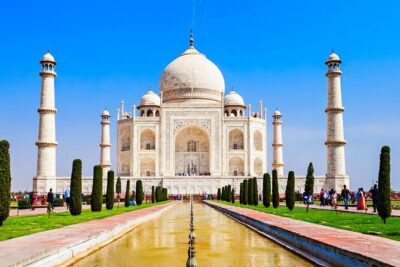
3-Day Delhi, Agra and Jaipur Private Tour – India Golden Triangle
Read our review →
Four-Day Private Luxury Golden Triangle Tour to Agra and Jaipur From New Delhi
Read our review →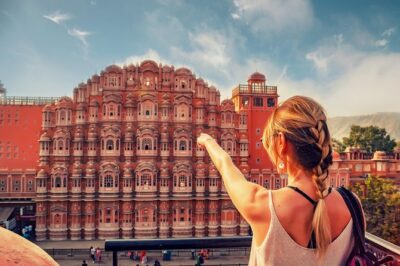
Jaipur Day Trip from Delhi by Car or Train – All Inclusive
Read our review →
Jaipur City Private Day Tour from Delhi by Car – All Inclusive
Read our review →
5 Nights 6 Days Private Golden Triangle Tour – Delhi Agra Jaipur
Read our review →