

Reviewed · GOLDEN TRIANGLE TOURS
Private Golden Triangle Tour 5 Days Delhi Agra Jaipur
The Taj Mahal is the headline, but this five-day private Golden Triangle tour gives you much more: Mughal forts, Delhi memorials, Jaipur’s royal courts, and the observatory built by a king who measured the heavens. It is a brisk first taste of northern India, with your own vehicle and local guides rather than a fixed group.
I like the door-to-door setup, especially the airport welcome, private transport, hotel stays, and four breakfasts. I also like the range of guides and drivers associated with the company: Dr. Gopal Verma is praised for clear explanations and flexibility in Agra, while Sunny, Mr. Jain, Sanjeev, Sher, and Mukesh are names connected with attentive guiding or safe driving.
The catch is the pace. Delhi alone includes eight stops, and the five-day route covers three large cities plus Fatehpur Sikri. Monument tickets are not included, adding $95 per person, and tips and personal spending are extra.
In This Review
- Key points to know before booking
- What the five-day route really feels like
- Delhi’s Mughal center, from Jama Masjid to Qutub Minar
- Agra Fort and the Baby Taj on day two
- Three hours at the Taj Mahal
- Jaipur’s palace courtyards and astronomical instruments
- The final morning and the practical value of private travel
- Is $982 a fair price?
- Who should book this Golden Triangle tour?
- FAQ
- Where does the tour start?
- Where does the tour end?
- How long is the Golden Triangle tour?
- Is this a private tour?
- Are monument admission fees included?
- What meals are included?
- Is hotel accommodation included?
- Can I cancel for a full refund?
- Should you book it?
Key points to know before booking
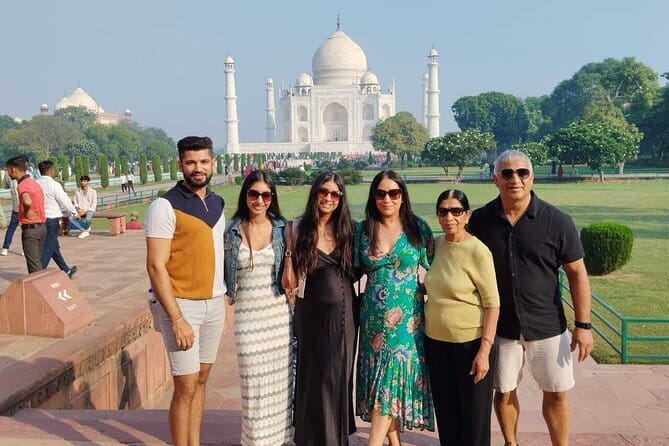
- The Taj Mahal gets three hours: You have enough time for the monument, gardens, photographs, and a slower look at the marble work.
- Delhi’s first day is packed: Jama Masjid, the Red Fort, Old Delhi, Gandhi’s memorial, India Gate, Rashtrapati Bhavan, Humayun’s Tomb, and Qutub Minar all appear in one day.
- Private transport keeps the route flexible: Only your group takes part, and you can benefit from a guide’s flexibility when timing or interests change.
- The $982 price is not the whole bill: Add $95 for monument admission, plus tips and personal expenses.
- The hotel plan is included: Accommodation is arranged on a double, twin, or single-sharing basis, with four breakfasts.
- This is a sightseeing-heavy introduction: You get famous monuments and useful historical context, but little unstructured time.
What the five-day route really feels like
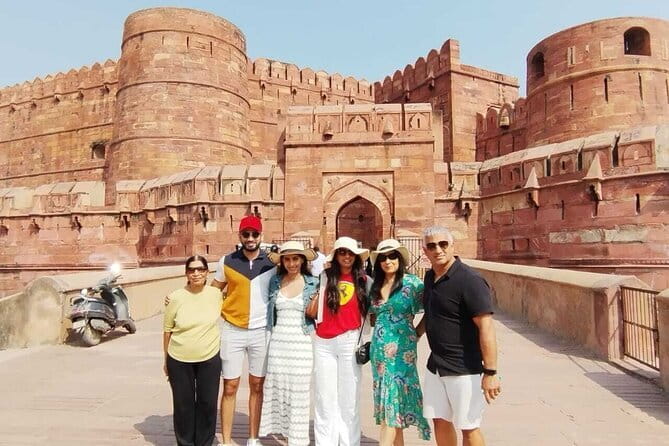
This is a classic north India circuit built for first-time visitors. Delhi introduces the Mughal and colonial layers of the capital, Agra brings the great marble monuments, and Jaipur changes the mood with Rajput palaces, painted facades, and astronomical instruments.
The private format matters here. You are not waiting for a large group at every gate, and you have one vehicle for the intercity sections. A live English-speaking guide is provided at each destination, so the person explaining Delhi’s Islamic architecture may not be the same person who takes you through Jaipur’s palace rooms.
The package begins at Indira Gandhi International Airport in Delhi. A representative provides a traditional welcome, then the tour uses private transport for the route. Toll tax, parking, interstate tax, fuel charges, and the vehicle are covered, which removes several small but annoying costs from a road trip across three cities.
More Agra and Fatehpur Sikri days:
- Same Day Taj Mahal, Agra Fort & Baby Taj Tour from Delhi by Car
★ 5.0 · 4,304 reviews - Full Day Taj Mahal, Agra Fort & Baby Taj Tour from Delhi by Car
★ 5.0 · 3,647 reviews - From Delhi: Taj Mahal & Agra Private Day Trip with Transfers
★ 4.9 · 3,181 reviews
Delhi’s Mughal center, from Jama Masjid to Qutub Minar
Day one covers a remarkable amount of ground. It starts in Old Delhi at Jama Masjid, Shah Jahan’s grand 17th-century mosque. The visit is listed at 30 minutes, enough for a first look at the courtyard, domes, and Indo-Islamic design, but not a slow architectural study.
The Red Fort follows, with about an hour inside. Its red sandstone walls once enclosed the Mughal court and administrative center. The fort is large, so an hour gives you the main impression rather than every corner. If you enjoy palace detail, ask your guide which surviving structures matter most.
Chandni Chowk provides a change of scale. Instead of imperial courtyards, you get narrow market lanes, food stalls, noise, color, and the everyday energy of Old Delhi. The scheduled 30 minutes is short, so treat this as a sharp glimpse rather than a full market outing. Wear comfortable shoes and keep your belongings close in crowded lanes.
Raj Ghat is quieter. The simple black marble platform marks the cremation site of Mahatma Gandhi. The surrounding garden and brief stop offer a needed pause after Old Delhi’s intensity.
India Gate and Rashtrapati Bhavan shift the focus to New Delhi’s planned government district. India Gate honors Indian soldiers who died in World War I, while Rashtrapati Bhavan is the official presidential residence, designed by Edwin Lutyens. The residence receives only 15 minutes in the schedule, so expect an exterior view rather than a full visit.
The day’s final major sights are Humayun’s Tomb and Qutub Minar. Humayun’s Tomb, a UNESCO World Heritage Site, is an elegant Persian-influenced Mughal mausoleum commissioned by Humayun’s wife, Bega Begum. The one-hour stop is worthwhile because the building helps you see the design ideas that later reached their most famous form at the Taj Mahal.
Qutub Minar is another UNESCO site and one of Delhi’s most memorable landmarks. At 73 meters, the brick minaret dominates the archaeological complex, where carved stone and Indo-Islamic forms reward a careful look. You have about an hour here.
The practical issue is fatigue. Eight stops make day one more like a guided survey than a relaxed day in Delhi. I would think of it as an efficient orientation, not the final word on the capital.
Agra Fort and the Baby Taj on day two
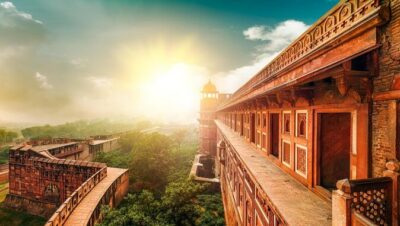
Day two turns toward Agra and concentrates on Mughal architecture. Agra Fort receives two hours, which is generous compared with several Delhi stops. Built largely under Emperor Akbar in the 16th century, it later became a palace and power center for the Mughal court.
The fort is not merely a defensive wall. Inside, you find courtyards, royal apartments, audience spaces, and views toward the Taj Mahal. Its red sandstone gives the visit a strong, earthy character, quite different from the Taj’s white marble. A good guide can help connect the fort to Shah Jahan, who spent his final years confined here with a view of the monument he built.
Itmad-ud-Daula, often called the Baby Taj, gets an hour. This smaller marble mausoleum was built by Nur Jahan for her father, Mirza Ghiyas Beg. Its delicate inlay and Persian design make it less overwhelming than the Taj Mahal, but that is part of its value. You can study the surface work at closer range.
Mehtab Bagh sits across the Yamuna River from the Taj Mahal. The traditional Mughal garden is included for about an hour and is especially useful for a different view of the monument. The setting is tied to sunset in the description, but exact light depends on the day and schedule, so do not assume a guaranteed sunset visit.
Agra’s day is well balanced on paper. You get one major fort, one refined mausoleum, and a garden viewpoint. Admission charges are not included at these sites, so remember that the separate $95 monument allowance covers the full trip rather than only Agra.
Three hours at the Taj Mahal
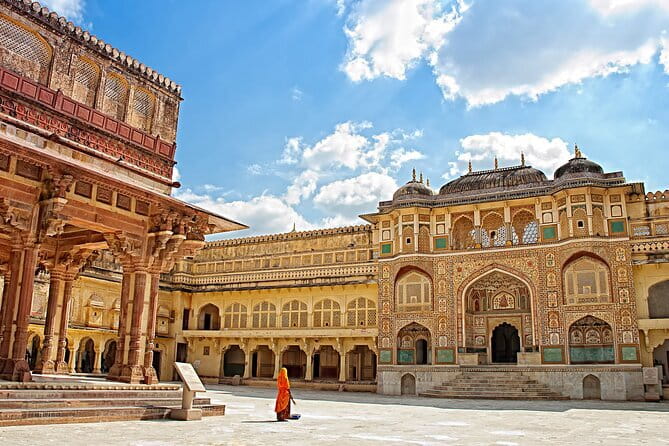
Day three begins with the Taj Mahal, and the three-hour allocation is one of the strongest parts of the route. The monument was built by Shah Jahan in memory of his wife Mumtaz Mahal. Its white marble, symmetrical gardens, domed profile, and detailed inlay deserve more than a rushed photo stop.
Three hours gives you room to see the main structure, spend time in the grounds, and return to details you missed on the first pass. Your guide can explain the building’s design and the story behind it, but you should also allow yourself some quiet time. The Taj is famous for good reason, and no amount of planning makes the first view feel ordinary.
The tour does not state a specific sunrise departure. If early light matters to you, ask the operator before booking how the Taj Mahal timing will be handled. The schedule simply gives three hours on day three.
Fatehpur Sikri follows, with about two hours. This former city of Emperor Akbar combines Persian, Mughal, and Indian design. Its grand courtyards and palace structures show a ruler experimenting with form, ceremony, and space.
The stop works well after the Taj because it gives you a second look at Mughal power, this time in a planned imperial city rather than a tomb complex. It also adds travel time to an already full day. You will want water and sensible footwear, since the site is spread across open courtyards and stone paths.
More Golden Triangle itineraries from New Delhi:
- 3-Days Private Golden Triangle Tour: Delhi, Agra & Jaipur by Car
★ 5.0 · 1,107 reviews - 3-Days Private Golden Triangle Tour: Delhi, Agra & Jaipur by Car
★ 5.0 · 1,098 reviews - 3-Day Delhi, Agra and Jaipur Private Tour – India Golden Triangle
★ 5.0 · 812 reviews - Four-Day Private Luxury Golden Triangle Tour to Agra and Jaipur From New Delhi
★ 5.0 · 807 reviews
Jaipur’s palace courtyards and astronomical instruments
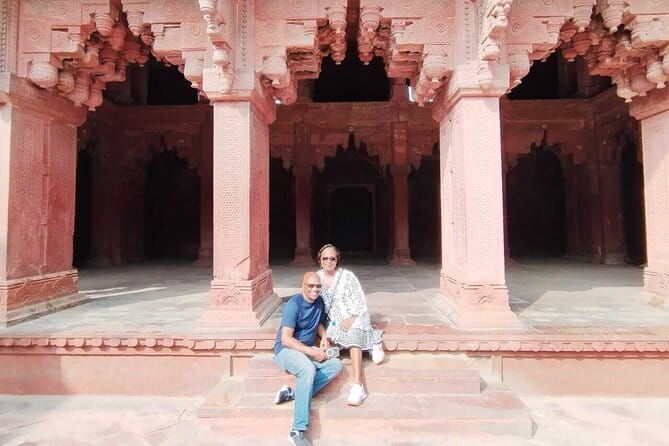
Day four is devoted to Jaipur. The City Palace gets three hours, the longest single stop in the city. Built by Maharaja Sawai Jai Singh II, the complex combines Rajput and Mughal styles and includes courtyards, museums, royal objects, and decorated gateways.
Three hours lets you move beyond a quick exterior photograph. Look for the way the palace uses color, ornament, and enclosed courtyards to create a different feel from Delhi’s Mughal monuments. The visit is still guided and scheduled, so ask to spend enough time in the museum sections if art and objects interest you.
Jantar Mantar is more unusual. This 18th-century observatory contains huge instruments used to measure time, track celestial movements, and predict eclipses. The scale is surprising. Instead of small brass tools behind glass, you see architecture built for observation.
Give yourself time to understand what each instrument does. Without explanation, the site can look like a collection of abstract walls and ramps. With a guide, it becomes a practical record of how rulers used science to organize calendars and study the sky.
Hawa Mahal, the Palace of Winds, is a short 30-minute stop. Its famous five-story facade has 953 small windows, or jharokhas, designed to allow air to pass through while giving royal women a screened view of street life. The scheduled visit is brief and works best as an exterior look and photo stop.
Albert Hall Museum finishes the sightseeing day. Built in 1887, it is Rajasthan’s oldest museum and uses Indo-Saracenic design. Its collection includes art, sculpture, and historical objects. The one-hour visit adds indoor culture after several large outdoor monuments.
Jaipur’s day has a better rhythm than Delhi’s, but it remains full. The City Palace and museum can easily absorb more time than the schedule allows, so decide in advance whether you care most about royal architecture, astronomical science, or museum collections.
The final morning and the practical value of private travel

Day five is not another sightseeing day. After breakfast, you check out and receive a transfer to the airport or hotel in Delhi. The return portion is listed at about six hours, making it important to plan your onward travel with care.
The package includes four breakfasts and hotel accommodation in a double, twin, or single-sharing arrangement. The supplied details do not name the hotels, so ask for the exact properties before paying if hotel standards or location are important to you.
Private travel is especially useful on this circuit because the route crosses several cities and includes long road sections. You are not sharing the vehicle with strangers, and only your own group participates. Group discounts may also be available, but the details are not specified, so request the current terms.
Driver quality matters as much as guiding on this route. Sanjeev is specifically praised for safe driving, while Sher and Mukesh are described as friendly, experienced, careful, and protective. Those names may not be assigned to your booking, but you can ask who will drive before departure.
The strongest service pattern is flexibility. Dr. Gopal Verma is praised for clear explanations and adapting the Agra sightseeing, while Sunny is described as attentive and involved. Mr. Jain is connected with a well-received Taj Mahal visit. Again, guide assignments can vary, but it is reasonable to ask whether one of these guides is available.
Is $982 a fair price?

The listed price is $982 per person. For that amount, you receive private transportation, fuel and road charges, hotel accommodation, four breakfasts, airport welcome, bottled water, and English-speaking guides at each destination.
Monument admissions are extra at $95 per person. That puts the known package cost at $1,077 before tips and personal expenses. You should also confirm exactly what room arrangement applies to your booking, since single, twin, and double sharing are offered.
The value is strongest if you want convenience and a private vehicle. Arranging three cities, several guides, hotels, and intercity road travel on your own takes time. This package puts the structure in place and leaves you to focus on the sights.
The value is weaker if you want a slow trip or prefer choosing inexpensive hotels and paying only for the monuments you enter. The schedule is fixed enough to cover the major sites, but the days leave limited space for wandering, shopping, or rest.
Who should book this Golden Triangle tour?

I would choose this tour for a first visit to India, especially if you want the famous sights without handling every transfer yourself. Families, solo visitors seeking a private vehicle, and small groups can all benefit from having a driver and destination guides.
It also suits people who care about context. Jama Masjid, Humayun’s Tomb, Agra Fort, Fatehpur Sikri, the City Palace, and Jantar Mantar make more sense with local explanation than with a quick visit and a guidebook paragraph.
I would hesitate if your priority is slow travel. Delhi’s eight-stop opening day is intense, and the route has several long driving sections. You should also budget the $95 admission fee, tips for the driver and guides, and personal spending from the start.
Free cancellation is available when you cancel at least 24 hours before the local start time. Changes or cancellations made inside that window are not accepted for a refund.
FAQ
Where does the tour start?
The tour starts at Indira Gandhi International Airport in New Delhi, Delhi 110037, India.
Where does the tour end?
The activity ends back at the meeting point, with the final transfer taking you to the airport or a hotel in Delhi after checkout.
How long is the Golden Triangle tour?
The tour lasts approximately five days.
Is this a private tour?
Yes. Only your group participates, and private transportation is included.
Are monument admission fees included?
No. Monument admission fees are paid on the spot and are listed as $95 per person.
What meals are included?
Four breakfasts are included. Other meals are not listed as part of the package.
Is hotel accommodation included?
Yes. Accommodation is included with double, twin, or single-sharing arrangements.
Can I cancel for a full refund?
Yes, if you cancel at least 24 hours before the experience start time. Cancellations made less than 24 hours before the start time are not refunded, and changes inside that period are not accepted.
Should you book it?
Book this tour if you want the main Golden Triangle sights arranged in one private trip, with transport, hotels, breakfast, and local guides handled for you. Its best features are the three-hour Taj Mahal visit, two-hour Agra Fort stop, full Jaipur day, and drivers known for careful service.
Skip it if you want a relaxed pace, named hotels in advance, or a package with admission fees included. For a first look at Delhi, Agra, and Jaipur, though, the route offers strong coverage and useful local help. Just arrive ready for early starts, busy roads, full sightseeing days, and the extra $95 monument cost.
More 5-Day Experiences in New Delhi
- Private 5-Day Ranthambhore Tiger Tour from Delhi including the Taj Mahal, Agra and Jaipur
★ 5.0 · 197 reviews - 5-Day Private Luxury Golden Triangle Tour to Agra and Jaipur From New Delhi
★ 5.0 · 142 reviews - From Delhi: 5-Day Tiger Safari & Golden Triangle Tour
★ 4.5 · 81 reviews - Five Day – Private Luxury Golden Triangle Tour to Agra & Jaipur From New Delhi.
★ 5.0 · 67 reviews
Just added around New Delhi
- Delhi: All-Inclusive Full or Half Day Tour With Hotel Pickup★ 5.0 · 3 reviews
- From Delhi : All Inclusive Taj Mahal Tour by Gatimaan Express★ 5.0 · 3 reviews
- Skip the line: Taj Mahal Agra Private Day Trip From Delhi By Car★ 5.0 · 3 reviews
- Delhi: Old and New Delhi One Day Private Guided City Tour★ 5.0 · 3 reviews
- New Delhi Night City Tour★ 5.0 · 3 reviews
- Old Delhi Half day private city tour★ 5.0 · 3 reviews
- A full-day tour of Old & New Delhi Monument Express Entry★ 5.0 · 3 reviews
- Sultanpur Bird Sanctuary Tour Near Delhi★ 5.0 · 3 reviews
Golden Triangle Tours, compared.
3-Days Private Golden Triangle Tour: Delhi, Agra & Jaipur by Car
Read our review →3-Days Private Golden Triangle Tour: Delhi, Agra & Jaipur by Car
Read our review →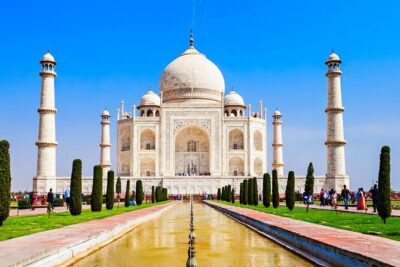
3-Day Delhi, Agra and Jaipur Private Tour – India Golden Triangle
Read our review →
Four-Day Private Luxury Golden Triangle Tour to Agra and Jaipur From New Delhi
Read our review →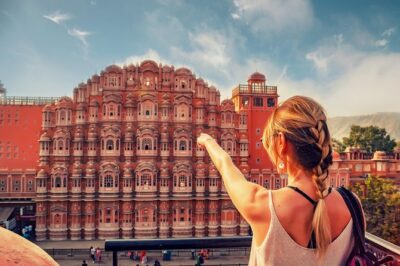
Jaipur Day Trip from Delhi by Car or Train – All Inclusive
Read our review →
Jaipur City Private Day Tour from Delhi by Car – All Inclusive
Read our review →
5 Nights 6 Days Private Golden Triangle Tour – Delhi Agra Jaipur
Read our review →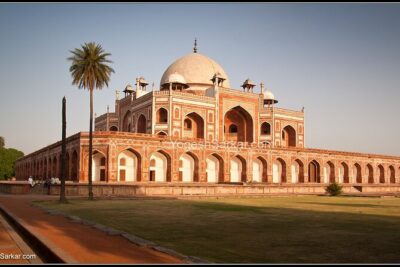
Browse the lists this tour appears in