
Reviewed · GOLDEN TRIANGLE TOURS
3 Days Private Luxury Golden Triangle Tour in Delhi, Agra, Jaipur
The Taj Mahal at sunrise is the great prize here, but the real appeal is the way this tour links three very different North Indian cities without making you manage trains, taxis, hotels, and monument tickets yourself. A private air-conditioned car gives you control over pickup times and stops, while local guides handle the stories at each major site.
I like the first day’s contrast between Old Delhi’s tuk-tuk ride and the grand avenues of New Delhi. I also like the choice between 3-star and 5-star hotels, which lets you spend more on comfort or keep the price close to the advertised $120 per person. The catch is the pace: long drives and several major monuments make this an efficient introduction, not a slow cultural holiday.
In This Review
- Key points at a glance
- Three cities, one tightly planned route
- Old Delhi begins with a tuk-tuk ride
- New Delhi adds a very different rhythm
- Qutub Minar closes the Delhi sightseeing
- The Taj Mahal works best before breakfast
- Agra Fort shows the power behind the marble
- Itmad-ud-Daula rewards close attention
- Fatehpur Sikri breaks up the road to Jaipur
- Jaipur’s Hawa Mahal is best from the outside first
- City Palace gives Jaipur its royal center
- Jal Mahal is a short final pause
- Private transport is the main value
- Guides can change the quality of each monument
- Who should book this three-day tour?
- Should you book the Golden Triangle package?
- FAQ
- How long does the tour last?
- Where can pickup take place?
- Is this a private tour?
- What type of transport is included?
- Are monument tickets included?
- Are hotels included?
- Are meals included?
- Can the Delhi itinerary include both Humayun’s Tomb and Akshardham?
- Can the tour end at Jaipur airport?
- What is the cancellation policy?
Key points at a glance
- Taj Mahal at sunrise: Start early for the softest light and cooler conditions at Agra’s most important sight.
- Private car across three cities: Delhi, Agra, and Jaipur are connected by road, with the driver handling the long transfers.
- Old Delhi by tuk-tuk: Ride through Chandni Chowk’s busy bazaars before visiting Jama Masjid.
- A choice of hotel level: Select 3-star or 5-star accommodation, with two nights, breakfasts, and dinners included.
- Guides at the monuments: A separate local guide is provided at each major site, with Zaidy and Amir Khan among the named guide options associated with the experience.
- Flexible final drop-off: Return to Delhi or choose Jaipur airport after the last sightseeing.
Three cities, one tightly planned route
The Golden Triangle connects Delhi, Agra, and Jaipur, and this three-day version covers the main sights in a logical order. You begin in Delhi, sleep in Agra, continue to Jaipur after seeing the Taj Mahal, then return to Delhi or finish at Jaipur airport.
That route saves you from backtracking, but it also means early starts and several hours in the car. The listed driving sections include about three hours from Delhi to Agra, three hours from Agra to Jaipur, and four hours from Jaipur back to Delhi. Traffic can affect the actual timing, so I would treat the schedule as a framework rather than a minute-by-minute promise.
Pickup is offered from Delhi, Noida, Gurugram, Ghaziabad, and Faridabad. On the first day, you can choose a start between 9 and 11 a.m., which is useful if you have arrived late the night before or need time to leave a hotel.
More Agra and Fatehpur Sikri days:
- Same Day Taj Mahal, Agra Fort & Baby Taj Tour from Delhi by Car
★ 5.0 · 4,304 reviews - Full Day Taj Mahal, Agra Fort & Baby Taj Tour from Delhi by Car
★ 5.0 · 3,647 reviews - From Delhi: Taj Mahal & Agra Private Day Trip with Transfers
★ 4.9 · 3,181 reviews
Old Delhi begins with a tuk-tuk ride
The first sightseeing stop is Chandni Chowk, where you meet your guide near Sunheri Masjid and take a tuk-tuk through Old Delhi. This is a good choice for a short visit because the narrow commercial streets are easier to experience from a small vehicle than from a large tour car.
Your guide explains how the bazaars serve local shoppers and businesses as you pass colorful stalls and crowded lanes. The ride lasts about an hour, and it gives you a quick sense of the working city before the formal monuments begin.
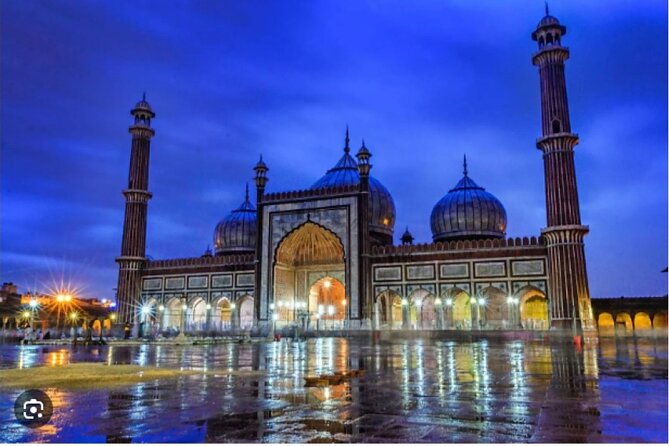
Jama Masjid follows. Built in 1656 with the help of about 5,000 workers, this red sandstone mosque has a broad courtyard and a strong sense of scale. You get about an hour here, enough to walk around and take in the structure without turning the visit into a long architectural study.
Dress respectfully, and expect the atmosphere to be more active than quiet. The mosque is a place of worship, not only a photo stop, so your guide’s instructions matter.
New Delhi adds a very different rhythm
After Old Delhi, the route shifts to modern government New Delhi. You pass the Tomb of the Unknown Soldier, whose walls carry the names of 13,300 Indian army servicemen who died during the First World War.
The tour also takes you through the grand government district associated with architects Sir Edwin Lutyens and Herbert Baker. The area covers about 330 acres and reflects the planned capital built during the British period. It is a useful counterpoint to the tightly packed streets of Chandni Chowk.
You then choose between Humayun’s Tomb and Swaminarayan Akshardham. This choice is important because the schedule does not give you a full visit to both.
Humayun’s Tomb is a UNESCO World Heritage Site and is described as India’s first garden tomb. Built after the Mughal emperor Humayun’s death at the request of his wife, it helped set a pattern for later Mughal architecture, including the Taj Mahal.
Akshardham is a much newer Hindu temple, completed in 2005, but its traditional architectural style gives it an old-world appearance. I would choose Humayun’s Tomb if Mughal architecture is your main interest, and Akshardham if you want to see a major modern Hindu temple complex.
Qutub Minar closes the Delhi sightseeing
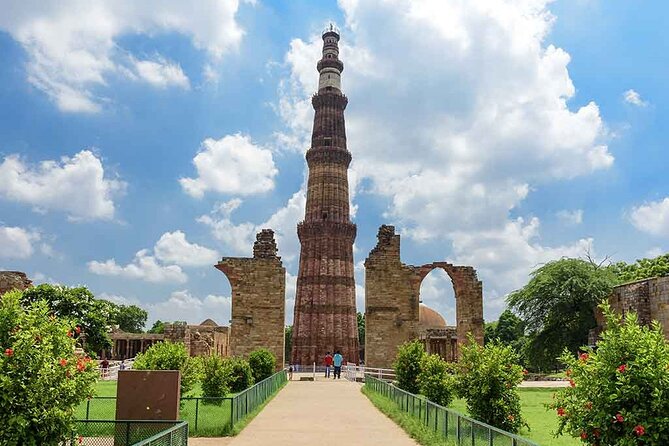
Qutub Minar is one of Delhi’s strongest stops. The brick minaret was begun in 1192 and rises from the wider Qutub complex in Mehrauli, an area with layers of early Delhi history.
The visit lasts about 45 minutes. That is enough to see the tower and surrounding ruins with a guide, though anyone fascinated by medieval architecture may wish for more time. Since the monument ticket is included, you do not have to deal with another payment queue.
After Qutub Minar, the driver takes you to Agra. The transfer is listed at roughly three hours, followed by hotel check-in. Dinner and breakfast are included with the selected accommodation package, while lunch and personal spending are not.
More Golden Triangle itineraries from New Delhi:
- 3-Days Private Golden Triangle Tour: Delhi, Agra & Jaipur by Car
★ 5.0 · 1,107 reviews - 3-Days Private Golden Triangle Tour: Delhi, Agra & Jaipur by Car
★ 5.0 · 1,098 reviews - 3-Day Delhi, Agra and Jaipur Private Tour – India Golden Triangle
★ 5.0 · 812 reviews - Four-Day Private Luxury Golden Triangle Tour to Agra and Jaipur From New Delhi
★ 5.0 · 807 reviews
The Taj Mahal works best before breakfast
Day two begins early with the Taj Mahal. That early start is one of the smartest features of the whole plan. Sunrise usually brings softer light and less heat than later in the day, and the white marble changes tone as the morning develops.
The monument was built by Emperor Shah Jahan in 1630 for his favorite wife. Your guide explains the personal story behind the mausoleum as well as its design. You have around two hours, which gives you time to approach the building, view its marble detail, and see the surrounding grounds without rushing through the entire visit.
The Taj Mahal is the emotional center of the trip, so do not waste this visit by treating it as a quick photo stop. Keep some time to simply look at the building from different points. The included ticket and private transfer also help here, since you can focus on the sight rather than local transport arrangements.
Agra Fort shows the power behind the marble
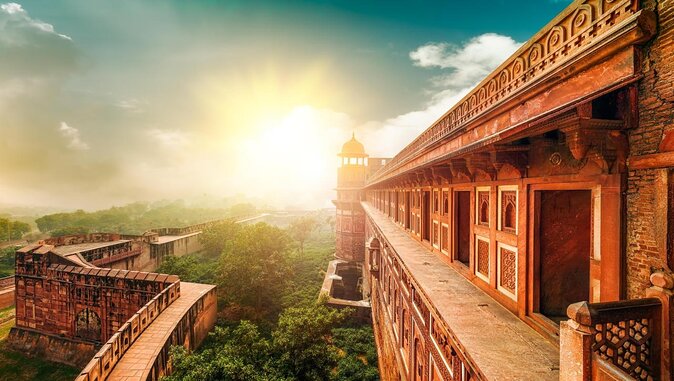
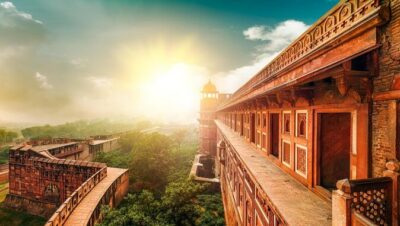
Agra Fort is nearby and follows the Taj Mahal. Built in the 17th century, this UNESCO World Heritage Site combines Indian and Islamic design and served as a major Mughal stronghold.
The fort is not just another red sandstone monument. Its courtyards and pavilions help explain the political world in which the Taj Mahal was built. You spend about an hour with a guide, which should give you the main story and the most important architectural views.
The short distance between the Taj Mahal and Agra Fort makes this part of the day efficient. Still, the second morning is demanding. If you have trouble with early starts, the sunrise visit may affect how much energy you have for the fort and the next stops.
Itmad-ud-Daula rewards close attention
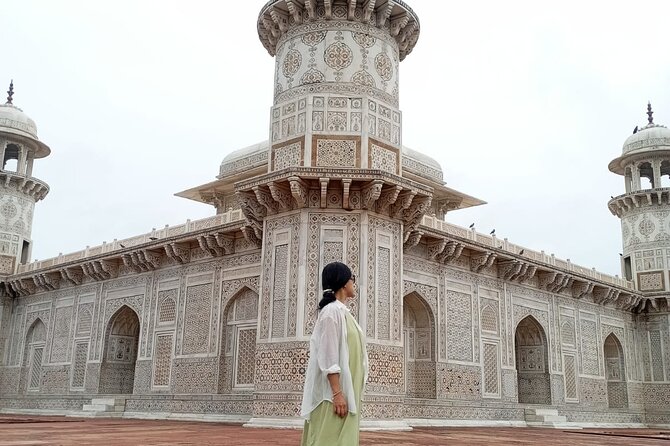
The Tomb of Itmad-ud-Daula is often treated as a smaller stop, but it adds useful detail to the Agra day. It was the first Mughal structure built entirely from marble, the first to use pietra dura extensively, and the first tomb built on the Yamuna’s banks.
You have about an hour here. Compared with the Taj Mahal, the site is more intimate, and the decorative work is easier to examine at close range. I like its place in the route because it lets you see the design ideas that shaped later Mughal monuments.
This is also a good reason to keep the local guide close. Without explanation, the tomb could feel like a brief pause between larger sights. With context, it becomes part of the architectural story.
Fatehpur Sikri breaks up the road to Jaipur
After Agra, the car heads toward Jaipur, stopping at Fatehpur Sikri along the way. The fortified city lies about 40 kilometers west of Agra and served as the Mughal capital from 1572 to 1585 before being abandoned as the capital.
The visit includes Panch Mahal and other parts of the old city, with about an hour set aside. You see a planned imperial center rather than a single isolated monument, which gives the stop a different feel from Agra Fort.
Fatehpur Sikri also breaks up the three-hour drive to Jaipur. That is valuable on a packed road day, though the total schedule remains long. Wear comfortable shoes and keep water with you, since this stop involves moving through a large historic site rather than viewing one building.
Afterward, the driver continues to Jaipur and drops you at the hotel. Dinner is included, giving you a chance to eat at the hotel after a full day on the road.
Jaipur’s Hawa Mahal is best from the outside first
Day three begins with Hawa Mahal, or the Palace of Winds. Built in 1799, its red and pink facade contains 953 windows with detailed designs.
The palace was made for royal women to watch street life without being seen. From the front, the honeycomb-like facade is one of Jaipur’s most recognizable sights. You have about an hour, enough for the guide to explain the building and for you to take in its unusual design.
The schedule does not promise a long independent exploration, so listen closely during the guided portion. The value here is understanding why the building looks so different from a conventional palace.
City Palace gives Jaipur its royal center
The City Palace takes about two hours and offers a fuller look at Jaipur’s royal identity. Located in the center of the city, it combines patterned gardens, grand buildings, and museum spaces.
The complex was once the seat of the Maharaja of Jaipur. Part of it remains reserved for the royal family, while other sections are open as a museum. Your guide can help separate the active royal areas from the public displays and explain how the palace fits into Jaipur’s history.
Two hours is a useful amount of time here. You can see the principal architecture and museum areas without spending the entire day indoors. If you enjoy decorative details, textiles, or royal objects, this may be your favorite Jaipur stop.
Jal Mahal is a short final pause
Jal Mahal sits in the middle of Man Sagar Lake and uses Rajput-style architecture. The 17th-century palace is viewed from the lakeside, and the visit lasts about 30 minutes.
This is a quieter stop than the City Palace. It gives you a short pause before the return drive and a chance to photograph the palace surrounded by water. The schedule describes it as a peaceful place, but the visit is brief, so think of it as a scenic stop rather than a full palace tour.
After Jal Mahal, you return to the Jaipur hotel area before beginning the journey back to Delhi. The drive is listed at about four hours. If your onward flight leaves from Jaipur, the tour can instead end at Jaipur airport, which avoids the return to Delhi.
Private transport is the main value
At $120 per person, the tour’s value depends on what is included in your chosen package and how many people share the booking. The price covers private air-conditioned transport, a driver, monument tickets, local guides, hotel nights, breakfasts, and dinners, with a 3-star or 5-star option.
That is a strong package for someone who wants the major sights handled in one booking. You are not paying separately for each monument ticket or arranging a new car for every city. The private format also means only your group participates, and the route can be adjusted to some degree.
The tradeoff is that lunch, gratuities, and personal expenses are extra. You should also confirm the exact hotel category and the final per-person price before booking, since group size and accommodation choice affect the value.
The car matters most on the transfer days. Four to five hours of driving can be tiring, but a private vehicle is more comfortable and simpler than piecing together public transport across three cities. One named driver, Sonu, is specifically praised for being punctual, safe, and helpful on long daily drives.
Guides can change the quality of each monument
A local guide at each monument is included, and that is important. These sites are large and visually impressive, but a good explanation gives you the connections between Mughal, Rajput, Sikh, Hindu, and colonial Delhi.
Zaidy is associated with clear English, strong site knowledge, and a talent for taking photographs. Amir Khan is another named guide who is described as helpful and good at explaining the monuments while assisting with photos. You can ask the operator which guide is assigned to your dates and whether a preferred language is possible.
A Japanese-language guide has also been arranged for a Japanese booking instead of the standard English guide. That does not guarantee every language, but it is worth asking early if language support is important to you.
Photography help is a small but useful extra. The monuments provide plenty of memorable views, and a guide who knows where to position you can save time. Still, keep your visit about the place as well as the pictures.
Who should book this three-day tour?
I would choose this tour if you have only a few days in North India and want the major Golden Triangle sights with minimal planning. It suits first-time visitors, couples, families, and small groups who value a private car and direct hotel transfers.
It is also a practical choice if you dislike changing trains or negotiating local transport. Pickup from several Delhi-area locations makes the opening morning easier, and the final drop at Jaipur airport can fit a wider travel plan.
I would not choose it if you prefer slow mornings, long museum visits, or free time in local neighborhoods. The schedule covers a great deal, but the price of that coverage is a busy route with long road transfers.
The tour has an overall 5 out of 5 rating from seven submitted ratings, with praise focused on the guides, safe driving, communication, photography help, and the amount seen in three days. Those are the areas I would value most when deciding, but I would still confirm your guide language, hotel category, pickup time, and final drop-off before paying.
Should you book the Golden Triangle package?
Book it if your goal is to see the Taj Mahal, Agra Fort, Fatehpur Sikri, Jaipur’s main palaces, and Delhi’s major monuments in one well-organized trip. The combination of private transport, included tickets, local guides, and two hotel nights makes the $120 starting price attractive, especially for a small group.
Skip it if you want a relaxed India experience. For the best balance, choose the private format, request your preferred guide language early, pick the monument option in Delhi that matters most to you, and protect the sunrise Taj Mahal visit by keeping the previous evening quiet.
FAQ
How long does the tour last?
The experience lasts approximately three days and includes sightseeing in Delhi, Agra, and Jaipur, with two hotel nights.
Where can pickup take place?
Pickup is offered from locations in Delhi, Noida, Gurugram, Ghaziabad, and Faridabad. On day one, you can choose a pickup time between 9 and 11 a.m.
Is this a private tour?
Yes. The activity is private, and only your group participates.
What type of transport is included?
All transfers and sightseeing are provided by private air-conditioned car with a driver.
Are monument tickets included?
Yes. Monument admission tickets are included for the listed sightseeing stops.
Are hotels included?
Yes. Two nights of accommodation are included when you choose the 3-star or 5-star accommodation package.
Are meals included?
Two breakfasts and three dinners are included. Lunch, gratuities, and personal expenses are not included.
Can the Delhi itinerary include both Humayun’s Tomb and Akshardham?
The schedule provides a choice between Humayun’s Tomb and Swaminarayan Akshardham, so you should select one rather than expect both.
Can the tour end at Jaipur airport?
Yes. After the Jaipur sightseeing, you can choose a return to Delhi or a drop-off at Jaipur airport.
What is the cancellation policy?
You can cancel up to 24 hours before the experience begins for a full refund. Changes or cancellations made less than 24 hours before the start time are not accepted for a refund.
More 3-Day Experiences in New Delhi
- 3-Day Private Luxury Golden Triangle Tour to Agra and Jaipur From New Delhi
★ 5.0 · 424 reviews - 3-Day Luxury Golden Triangle Tour: New Delhi, Agra & Jaipur
★ 5.0 · 246 reviews - Award-Winning 3-Day Private Golden Triangle Tour of India
★ 5.0 · 240 reviews - 3 Days 2 Night Golden Triangle Tour – Private Luxury Experience
★ 5.0 · 191 reviews
Just added around New Delhi
- Delhi: All-Inclusive Full or Half Day Tour With Hotel Pickup★ 5.0 · 3 reviews
- From Delhi : All Inclusive Taj Mahal Tour by Gatimaan Express★ 5.0 · 3 reviews
- Skip the line: Taj Mahal Agra Private Day Trip From Delhi By Car★ 5.0 · 3 reviews
- Delhi: Old and New Delhi One Day Private Guided City Tour★ 5.0 · 3 reviews
- New Delhi Night City Tour★ 5.0 · 3 reviews
- Old Delhi Half day private city tour★ 5.0 · 3 reviews
- A full-day tour of Old & New Delhi Monument Express Entry★ 5.0 · 3 reviews
- Sultanpur Bird Sanctuary Tour Near Delhi★ 5.0 · 3 reviews
Golden Triangle Tours, compared.
3-Days Private Golden Triangle Tour: Delhi, Agra & Jaipur by Car
Read our review →3-Days Private Golden Triangle Tour: Delhi, Agra & Jaipur by Car
Read our review →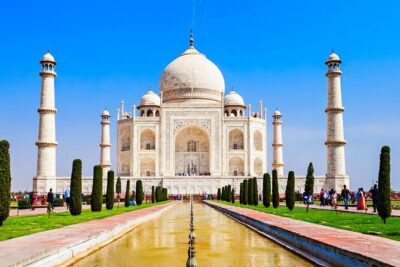
3-Day Delhi, Agra and Jaipur Private Tour – India Golden Triangle
Read our review →
Four-Day Private Luxury Golden Triangle Tour to Agra and Jaipur From New Delhi
Read our review →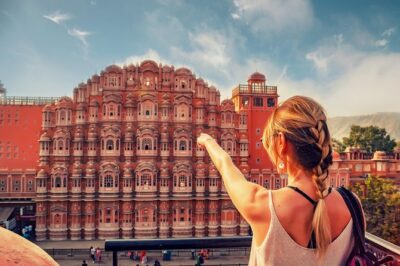
Jaipur Day Trip from Delhi by Car or Train – All Inclusive
Read our review →
Jaipur City Private Day Tour from Delhi by Car – All Inclusive
Read our review →
5 Nights 6 Days Private Golden Triangle Tour – Delhi Agra Jaipur
Read our review →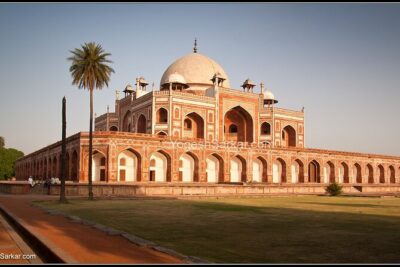
Browse the lists this tour appears in