

Reviewed · GOLDEN TRIANGLE TOURS
5 Day Private Luxury Golden Triangle Tour to Delhi Agra Jaipur
The Taj Mahal at sunrise is the prize, but this five-day private tour gives you much more: Mughal forts, royal Jaipur, Delhi memorials, grand mosques, and a hands-on look at northern India’s changing cities. You move by private air-conditioned car, with local English-speaking guides arranged in Delhi, Agra, and Jaipur.
I like the flexible start times, since you can shape each sightseeing day around your energy and the heat. I also like the practical package: five-star hotels, four breakfasts, monument tickets, bottled water, parking, fuel, tolls, and airport transfers are included. The main caution is pace. Delhi alone packs in a long list of sights, and the five days leave little room for unscheduled wandering.
In This Review
- Golden Triangle highlights at a glance
- Why this five-day route works
- Day 1: Delhi’s monuments from India Gate to Qutub Minar
- Day 2: The Taj Mahal and Agra Fort
- Day 3: Fatehpur Sikri and the road to Jaipur
- Day 4: Amber Fort and Jaipur’s royal center
- The private car and guide setup
- Hotels, meals, and extra costs
- Who will get the most from this tour?
- Should you book it?
- FAQ
- What cities does the five-day tour visit?
- Is the tour private?
- Is airport pickup included?
- What type of vehicle is provided?
- Are monument entrance fees included?
- Are meals included?
- How are hotel rooms arranged?
- Can I choose the sightseeing start time?
Golden Triangle highlights at a glance
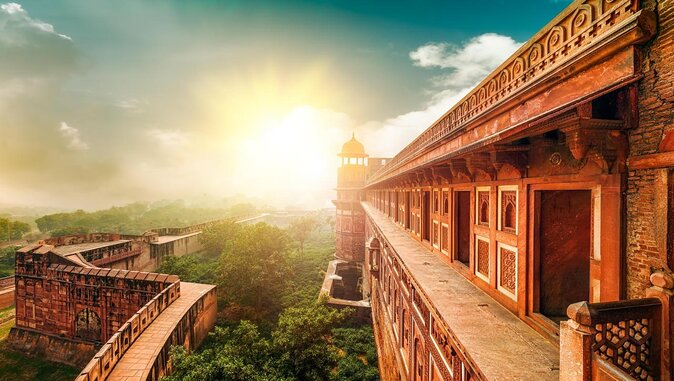
- Private car from airport to airport: Your own air-conditioned sedan, MUV, or van handles the route, with pickup and drop-off in Delhi or Jaipur.
- Four major Mughal sites: See Humayun’s Tomb, Delhi’s Red Fort, the Taj Mahal, and Agra Fort, each showing a different side of imperial India.
- Jaipur’s royal circuit: Amber Fort, City Palace, Jantar Mantar, Hawa Mahal, and Jal Mahal fill a full sightseeing day.
- Local guides at the main cities: English-speaking guides are provided in Delhi, Agra, and Jaipur, while the driver stays with you between stops.
- Flexible daily timing: You can choose when to begin sightseeing, a useful feature for early Taj Mahal visits or slower mornings.
- A route that suits first-time visitors: The tour covers the classic highlights without requiring you to arrange separate hotels, cars, tickets, and transfers.
Why this five-day route works
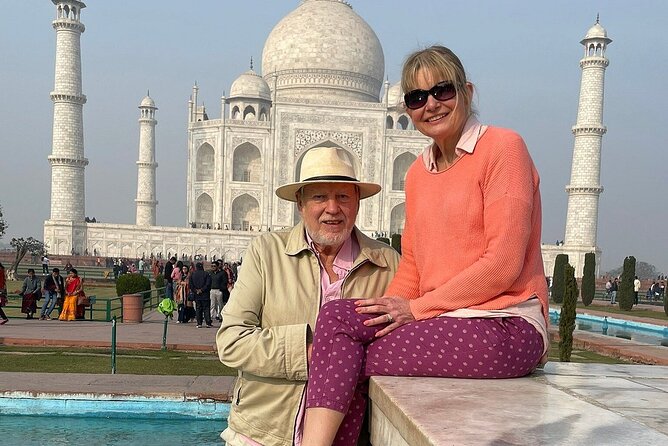
India’s Golden Triangle links Delhi, Agra, and Jaipur in a compact loop. Each city has a distinct feel. Delhi is the huge capital, layered with Sultanate, Mughal, colonial, and modern landmarks. Agra is smaller and centered on the Taj Mahal and Mughal court. Jaipur brings you to Rajasthan, where hill forts, pink sandstone buildings, and royal residences shape the experience.
I find this route useful for a first visit because it gives you a clear introduction without asking you to manage Indian rail tickets, intercity taxis, hotel changes, and monument entry on your own. The private setup also means you are not tied to the pace of a large group.
The trade-off is time. Five days includes arrival and departure transfers, so you really have about three full sightseeing days plus the final departure morning. You will see the major places, but this is not a slow trip. If you want markets, cooking lessons, long museum visits, or quiet time in each city, you may want to add nights.
The advertised price is $194, which represents strong value if the listed inclusions apply to your booking. It covers five-star accommodation or a similar hotel, private transport, fuel, tolls, parking, taxes, guides, breakfasts, bottled water, and monument admission at the named sites. Lunch and dinner are extra, as are gratuities, so plan for those costs separately.
More Agra and Fatehpur Sikri days:
- Same Day Taj Mahal, Agra Fort & Baby Taj Tour from Delhi by Car
★ 5.0 · 4,304 reviews - Full Day Taj Mahal, Agra Fort & Baby Taj Tour from Delhi by Car
★ 5.0 · 3,647 reviews - From Delhi: Taj Mahal & Agra Private Day Trip with Transfers
★ 4.9 · 3,181 reviews
Day 1: Delhi’s monuments from India Gate to Qutub Minar
Your arrival begins with airport, hotel, or railway station pickup. A representative meets you with a sign showing your name, then transfers you to the hotel before sightseeing begins.
The first day includes both New Delhi and Old Delhi. That contrast matters. New Delhi has broad avenues and major government buildings, while Old Delhi gathers Mughal-era monuments, mosques, and memorials in a much tighter setting.
India Gate is a short stop, usually about 15 minutes. This sandstone war memorial was built under British rule as part of the Imperial War Graves Commission’s work. It is best treated as a quick orientation point rather than a long visit.
At Humayun’s Tomb, you get a stronger architectural experience. The 16th-century tomb was commissioned by Empress Bega Begum for her husband, Humayun, and its formal gardens and red sandstone design help explain the Mughal style that later reached its grandest form at the Taj Mahal. Allow about an hour.
The Lotus Temple offers a change of mood. This Bahá’í House of Worship, dedicated in 1986, is known for its white petal-like form. The visit is short, around 30 minutes, and the building is open to people of all faiths. You should expect a quiet visit rather than a conventional temple tour.
The Red Fort brings you into Shah Jahan’s imperial Delhi. Its massive red sandstone walls once enclosed the main residence of the Mughal emperors. An hour gives you a useful look, although the complex is large enough that you could easily spend longer if the schedule allowed.
At Jama Masjid, you see one of India’s largest mosques. Shah Jahan built it between 1650 and 1656 at the highest point of Shahjahanabad, his planned Mughal city. The listed visit is only about 15 minutes, so check in advance how much time your guide intends to allow.
Raj Ghat, the memorial to Mahatma Gandhi, is another brief stop. The simple memorial rewards a quiet pause, but half an hour is enough for most people.
The final major sight is Qutub Minar, a UNESCO World Heritage Site and victory tower built between 1199 and 1220. Its carved stonework and tall shaft make it one of Delhi’s most memorable monuments. You have about an hour here.
You also pass or view Rashtrapati Bhavan, the President of India’s residence, created by architects Sir Edwin Lutyens and Herbert Baker. Since the full Delhi plan contains many stops, I would confirm the exact viewing arrangements for the President’s House and any other short photo stops.
This is an ambitious day. I would start as early as you reasonably can, wear comfortable shoes, and keep water close. The tour provides two 500-milliliter bottles per person per day, but Delhi’s heat and the number of sites make extra water a sensible purchase.
Day 2: The Taj Mahal and Agra Fort
After breakfast, you drive to Agra and check into the hotel. The plan then turns to the two places that make Agra essential: the Taj Mahal and Agra Fort.
The Taj Mahal deserves time without rushing. Shah Jahan commissioned this white marble mausoleum in 1631 for Mumtaz Mahal, his favorite wife. His own tomb was later placed beside hers, slightly disturbing the original symmetry but adding a human detail to the grand imperial design.
The visit is scheduled for about two hours. That gives you time to walk through the grounds, see the main tomb from several angles, and listen to the guide explain the design and story. The package includes a battery bus ride between the parking area and the Taj Mahal, plus admission.
A sunrise visit is often the most appealing way to see the monument, but the listed daily schedule says you can choose your sightseeing start time rather than promising a fixed sunrise entry. Confirm the timing before you go. That small point matters, especially if the Taj Mahal is your main reason for choosing this route.
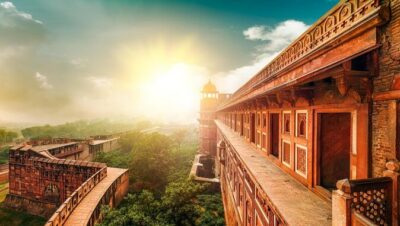
After the Taj, Agra Fort adds context that the mausoleum cannot provide. This was a working imperial fortress and palace, not just a ceremonial monument. Humayun was crowned here, and Akbar began major rebuilding in 1565. The fort’s walls, courtyards, and palace buildings show how Mughal rulers lived, governed, and defended their power.
The planned visit lasts about 90 minutes. I consider that a good minimum. A guide can help you connect the fort to Shah Jahan, who was confined here by his son Aurangzeb and is traditionally said to have spent his final years looking toward the Taj Mahal.
The drive from Delhi to Agra is not given a precise duration, so your usable sightseeing time will depend on traffic and your starting point. Keep Day 2 focused. The Taj Mahal and Agra Fort are the essential stops, and adding too many extras could make the day feel hurried.
Day 3: Fatehpur Sikri and the road to Jaipur
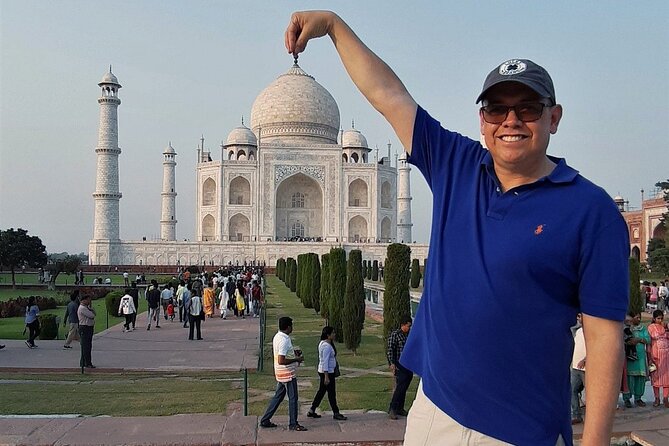
After breakfast, you leave Agra for Jaipur with a stop at Fatehpur Sikri, the former Mughal capital built by Emperor Akbar.
The site was created in honor of the Sufi saint Sheikh Salim Chishti. It is a planned city of red sandstone courtyards, palaces, audience spaces, and religious buildings. The short life of the capital is part of its appeal. You can walk through a place designed for imperial ambition that was later abandoned as a seat of power.
The tour allows about two hours at Fatehpur Sikri, with roughly 90 minutes specifically noted for the Panch Mahal area. Buland Darwaza, described as one of the world’s largest entrance gates, makes a strong first impression. The nearby shrine of Sheikh Salim Chishti provides a more intimate and spiritual counterpoint to the huge imperial spaces.
This is a valuable stop because it breaks up the drive to Jaipur and gives you another view of Mughal architecture. It also prevents the Golden Triangle from becoming only a checklist of Delhi and Agra’s most famous monuments.
You arrive in Jaipur and check into the hotel for the night. The day is shorter on paper than the first two, but the road time matters. I would keep the evening open rather than planning an ambitious night program.
More Golden Triangle itineraries from New Delhi:
- 3-Days Private Golden Triangle Tour: Delhi, Agra & Jaipur by Car
★ 5.0 · 1,107 reviews - 3-Days Private Golden Triangle Tour: Delhi, Agra & Jaipur by Car
★ 5.0 · 1,098 reviews - 3-Day Delhi, Agra and Jaipur Private Tour – India Golden Triangle
★ 5.0 · 812 reviews - Four-Day Private Luxury Golden Triangle Tour to Agra and Jaipur From New Delhi
★ 5.0 · 807 reviews
Day 4: Amber Fort and Jaipur’s royal center
Jaipur gets a full sightseeing day, scheduled for about eight hours. That is helpful because the city’s main sights are spread out and each offers something different.
Begin with Amber Fort, outside central Jaipur. Built on a hill, the fort began under Man Singh I in 1592 and combines defensive walls with ornate palace rooms and courtyards. You can expect a strong visual contrast with the Mughal forts: Amber feels more like a Rajput palace complex shaped by hilltop position and courtly decoration.
The visit is planned for two hours. Take your time with the views and interior spaces, but ask your guide about the walking route. A hill fort can require more effort than its clock time suggests.
Next comes Jal Mahal, the Water Palace, sitting in Man Sagar Lake. The stop lasts only about 10 minutes, so treat it as a photo pause rather than a full palace visit. The building was first constructed in 1699 and later renovated along with the lake.
In the city center, City Palace explains Jaipur’s royal administration and court life. Construction was completed in 1732, and the complex remains tied to the former ruling family. The museum visit lasts about an hour, enough for a focused look at palace rooms and collections.
At Jantar Mantar, you see 19 astronomical instruments built by Sawai Jai Singh, the founder of Jaipur. Completed in 1734, the observatory includes the world’s largest stone sundial. This is one place where a guide adds real value, since the instruments make more sense when someone explains how they measured time and celestial positions.
You also see Hawa Mahal, the pink and red sandstone palace famous for its screened windows. It was built in 1799 and connected to the women’s chambers of the City Palace. The schedule does not give a separate visit length, so confirm if you will enter or view it from outside.
The Albert Hall Museum receives only about five minutes in the listed plan, and admission is not included for this stop. That timing suggests an exterior photo stop, not a museum visit. If the museum matters to you, ask for a longer visit and verify the ticket cost.
Finish with Birla Mandir, a white marble temple built in 1988 and dedicated to Lakshmi and Vishnu. The visit is about 15 minutes. It is a modern religious building, so it provides a useful contrast with Jaipur’s older palaces and observatory.
Day 4 is full but better balanced than Day 1. I like the mix of grand architecture, science, religion, and city views. Still, you should decide your priorities before setting out. If Amber Fort and City Palace are your main interests, do not let too many short photo stops cut into those visits.
The private car and guide setup
The private format is one of the tour’s strongest practical features. One or two people travel in a four-seat air-conditioned sedan, three or four use a six-seat MUV, and groups of five to ten use a 10-seat air-conditioned van.
The price includes the driver, fuel, tolls, parking, daily allowances, state taxes, and bottled water. That removes many small costs that can otherwise complicate an Indian road trip.
An English-speaking guide is provided in Delhi, Agra, and Jaipur. The driver handles the intercity route, while the local guides explain the monuments. The quality of the guiding can vary by person, so I would ask the operator to confirm who will meet you at each city.
Sultan Singh is a driver name worth asking about. He has been singled out for punctuality, calm driving, restaurant suggestions, and making the route easy to manage. Shankar Singh is another named driver associated with helpful service and long hours. Javed handles arrangements and has been praised for quick WhatsApp communication and willingness to adjust plans.
Those names do not guarantee assignment, so request a preferred driver when booking. The vehicle and driver are often more important than people expect on a route with several long road sections.
Hotels, meals, and extra costs
The package lists five-star hotels or similar properties, with rooms generally arranged on double or twin sharing. A three-person booking normally means one triple-sharing room. If three people want two rooms, the booking is priced as four people instead.
Four breakfasts are included, matching the four hotel nights. Lunch and dinner are not included, giving you freedom to choose, but you should allow for those meals in your budget. Some drivers can suggest restaurants, though the supplied information does not promise a specific dining plan.
Tips are optional. Since the tour involves a driver, several local guides, hotel staff, and a representative at pickup, carry small amounts if you want to reward good service.
Who will get the most from this tour?
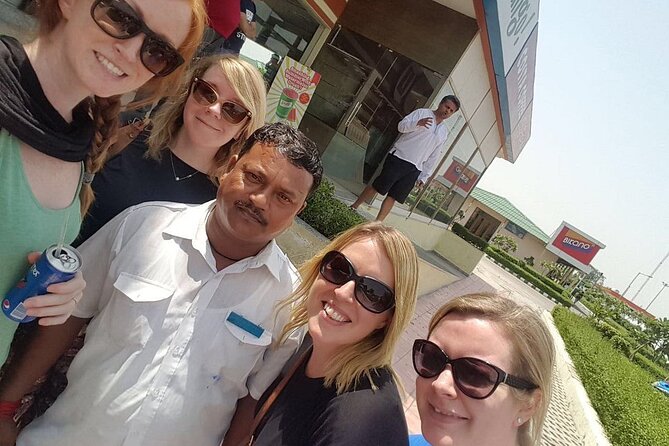
I would choose this experience if you want the classic sights with private transport and minimal planning. It suits first-time visitors, couples, families, and small groups who value door-to-door movement and the ability to adjust the daily start time.
It is also a good fit if you are arriving at Delhi airport and leaving from Jaipur, or if you prefer to return to Delhi. Drop-off can be arranged at Jaipur or Delhi airport, a hotel, or another agreed location in either city.
I would hesitate if your main goal is slow travel. The first Delhi day is packed, the second depends on road conditions, and the Jaipur day has several short stops. You can ask for changes, but the route cannot give every monument the attention it deserves in only five days.
Booking confirmation is provided at the time of purchase, and the activity is private for your group. Most people can take part, and the tour is near public transportation, although the actual sightseeing is handled by the private vehicle.
Should you book it?
Book this tour if you want strong coverage at a low advertised price, included monument fees, upscale hotel accommodation, and a driver who can keep the route organized. It gives you the essential Delhi, Agra, and Jaipur sights in a straightforward package.
Before paying, confirm the hotel names, the exact airport or hotel drop-off, the Taj Mahal start time, the identity of your local guides, and whether Sultan Singh or Shankar Singh is available. I would also clarify the brief Albert Hall stop and decide if you want more time at Hawa Mahal or Fatehpur Sikri.
The cancellation terms are simple: cancel at least three full days before the local start time for a full refund. Later cancellations and late changes are not refunded or accepted.
FAQ
What cities does the five-day tour visit?
The tour covers New Delhi, Agra, and Jaipur, with a stop at Fatehpur Sikri between Agra and Jaipur.
Is the tour private?
Yes. Only your own group participates in the activity.
Is airport pickup included?
Yes. Pickup is offered from Indira Gandhi International Airport, a Delhi hotel, or a railway station. Drop-off can be arranged in Jaipur or New Delhi at an airport, hotel, or agreed location.
What type of vehicle is provided?
One or two people use a four-seat air-conditioned sedan. Three or four people use a six-seat air-conditioned MUV, and groups of five to ten use a 10-seat air-conditioned van.
Are monument entrance fees included?
Yes, admission is included for the monuments named in the package, including the Taj Mahal, Agra Fort, Red Fort, Qutub Minar, Amber Fort, City Palace, and Jantar Mantar.
Are meals included?
Four hotel breakfasts are included. Lunch and dinner are not included.
How are hotel rooms arranged?
Rooms are generally provided on double or twin sharing. A booking for three people normally uses triple sharing. Three people requesting two rooms must pay the additional cost for a four-person booking.
Can I choose the sightseeing start time?
Yes. The tour allows flexibility to begin sightseeing at your preferred time, subject to the practical opening and visiting arrangements of each monument.
More 5-Day Experiences in New Delhi
- Private 5-Day Ranthambhore Tiger Tour from Delhi including the Taj Mahal, Agra and Jaipur
★ 5.0 · 197 reviews - 5-Day Private Luxury Golden Triangle Tour to Agra and Jaipur From New Delhi
★ 5.0 · 142 reviews - Private Golden Triangle Tour 5 Days Delhi Agra Jaipur
★ 5.0 · 92 reviews - From Delhi: 5-Day Tiger Safari & Golden Triangle Tour
★ 4.5 · 81 reviews
Just added around New Delhi
- Delhi: All-Inclusive Full or Half Day Tour With Hotel Pickup★ 5.0 · 3 reviews
- From Delhi : All Inclusive Taj Mahal Tour by Gatimaan Express★ 5.0 · 3 reviews
- Skip the line: Taj Mahal Agra Private Day Trip From Delhi By Car★ 5.0 · 3 reviews
- Delhi: Old and New Delhi One Day Private Guided City Tour★ 5.0 · 3 reviews
- New Delhi Night City Tour★ 5.0 · 3 reviews
- Old Delhi Half day private city tour★ 5.0 · 3 reviews
- A full-day tour of Old & New Delhi Monument Express Entry★ 5.0 · 3 reviews
- Sultanpur Bird Sanctuary Tour Near Delhi★ 5.0 · 3 reviews
Golden Triangle Tours, compared.
3-Days Private Golden Triangle Tour: Delhi, Agra & Jaipur by Car
Read our review →3-Days Private Golden Triangle Tour: Delhi, Agra & Jaipur by Car
Read our review →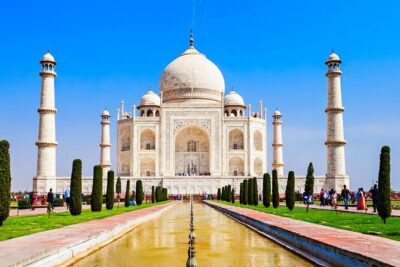
3-Day Delhi, Agra and Jaipur Private Tour – India Golden Triangle
Read our review →
Four-Day Private Luxury Golden Triangle Tour to Agra and Jaipur From New Delhi
Read our review →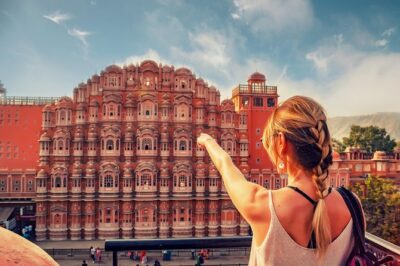
Jaipur Day Trip from Delhi by Car or Train – All Inclusive
Read our review →
Jaipur City Private Day Tour from Delhi by Car – All Inclusive
Read our review →
5 Nights 6 Days Private Golden Triangle Tour – Delhi Agra Jaipur
Read our review →
Browse the lists this tour appears in