
Reviewed · GOLDEN TRIANGLE TOURS
6-Day Private Golden Triangle Tour – Explore Delhi, Agra & Jaipur
The Taj Mahal at sunrise is the emotional high point here, but the tour’s real strength is how much ground you cover without having to arrange each train, hotel, driver, and guide yourself. Your own vehicle and local guides keep the pace private, while the route links India’s three most famous northern cities.
I like the Old Delhi rickshaw ride, which gives you a quick taste of Chandni Chowk and Khari Baoli without asking you to navigate the lanes alone. I also like the choice of vehicle size, from a four-seat sedan for one or two people to a ten-seat van for larger groups. The main drawback is the packed schedule, especially the long drives and the extra monument fees, listed at ₹6,000 per person.
In This Review
- Key points to know before booking
- A private route through India’s Golden Triangle
- Day 1: An easy arrival in Delhi
- Day 2: From Jama Masjid to Qutub Minar
- Day 3: The expressway to Agra and the Baby Taj
- Day 4: The Taj Mahal at first light
- Day 5: Jaipur’s forts, palaces, and astronomical instruments
- Day 6: Returning to Delhi or continuing from Jaipur
- What the private vehicle changes
- What is included and what you should budget
- Who should book this six-day route
- FAQ
- Is this a private tour?
- What type of vehicle is provided?
- Are hotels and breakfasts included?
- Are monument entrance fees included?
- Can I be picked up outside central Delhi?
- Can I finish the tour in Jaipur instead of returning to Delhi?
- Should you book it?
Key points to know before booking
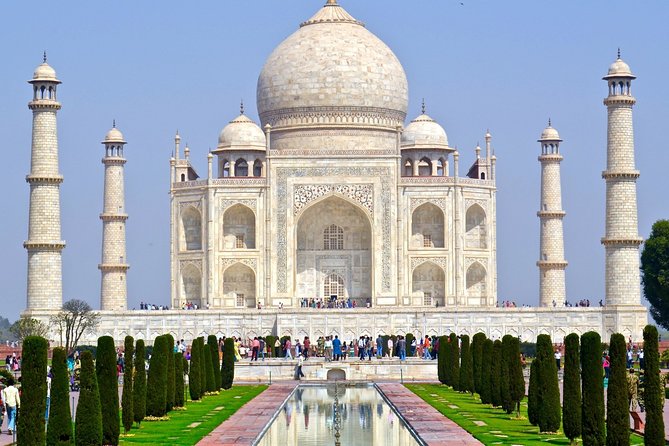
- Sunrise at the Taj Mahal: Visit the monument early, when the white marble changes with the first light.
- Private transport throughout: Your group has its own air-conditioned vehicle, driver, and local guide in Delhi, Agra, and Jaipur.
- Old Delhi by rickshaw: Ride through the narrow market lanes of Chandni Chowk, with the rickshaw included.
- Five hotel nights available: Choose the hotel option for 4-star or 5-star lodging and daily breakfast.
- A full Jaipur day: Amber Palace, City Palace, Jantar Mantar, Hawa Mahal, and several shorter stops fill Day 5.
- Monument tickets cost extra: Entrance fees are not part of the tour price and should be included in your budget.
A private route through India’s Golden Triangle
At $236.70 per person, this six-day tour offers a useful package for anyone who wants the classic Delhi, Agra, and Jaipur route with private transport. The value comes from combining the driver, city guides, hotel option, breakfasts, bottled water, airport or hotel transfers, and sightseeing into one arrangement.
That price needs a careful look. Monument entrance fees are separate, with the supplied cost listed as ₹6,000 per person for all monuments. Lunch, dinner, and gratuities are also extra. If you choose the hotel package, confirm exactly which 4-star or 5-star properties are included before paying, since the price may depend on your room and hotel selection.
This is not a slow holiday. You will see a great deal, but you will also spend several hours in the vehicle. The private format helps because you can ask for a break, adjust the pace, or request shopping, food experiences, or cultural activities. You are not tied to a shared group’s schedule.
More Agra and Fatehpur Sikri days:
- Same Day Taj Mahal, Agra Fort & Baby Taj Tour from Delhi by Car
★ 5.0 · 4,304 reviews - Full Day Taj Mahal, Agra Fort & Baby Taj Tour from Delhi by Car
★ 5.0 · 3,647 reviews - From Delhi: Taj Mahal & Agra Private Day Trip with Transfers
★ 4.9 · 3,181 reviews
Day 1: An easy arrival in Delhi
Your private driver can collect you from the airport, railway station, hotel, or another requested location in Delhi, Noida, or Gurugram. The first transfer takes about 45 minutes, though Indian traffic can affect the actual time.
The day is deliberately light. After reaching your hotel and checking in, you have time to rest or walk near your accommodation. That is a sensible opening after a long flight, especially because the next day covers a large number of Delhi sights.
Five nights of accommodation are included if you select the hotel option. Rooms are generally arranged on a twin-sharing basis. A booking for three people normally uses a triple-sharing room, while two rooms for three people cost extra.
Day 2: From Jama Masjid to Qutub Minar
Day 2 is Delhi at full volume. Begin at Jama Masjid, the huge Mughal mosque built by Shah Jahan in 1656. You have about 30 minutes here, enough for the main view and the atmosphere around the courtyard, though the minaret visit and entry arrangements can require additional attention.
The Old Delhi rickshaw ride is one of the most distinctive parts of the day. For about 45 minutes, you pass through the tight lanes of Chandni Chowk, a market area that has served Delhi for centuries. The ride is included, and it saves you from trying to handle the traffic and crowds on foot.
Next comes Khari Baoli, known as Asia’s largest spice market. Allow your senses to catch up with the scene: sacks, aromas, shopfronts, and constant movement. This stop is short, so ask your guide to point out the parts that interest you rather than expecting a long market visit.
You also get an outside view of a UNESCO-listed Mughal monument, although the itinerary does not identify it by name. That wording matters. If you want to enter, ask your guide which site is intended and whether the visit can be added.
Agrasen Ki Baoli offers a sharp change of mood. This old stepwell, with its repeated arches and descending steps, is quiet and compact compared with Old Delhi. Entry is free, and the 30-minute stop works well as a pause between larger sights.
At Gurudwara Bangla Sahib, you can see the peaceful pond and learn about the Sikh tradition of the community kitchen. The visit is free and lasts about 45 minutes. Dress and behave respectfully at this religious site, and follow the guide’s instructions about footwear and head covering.
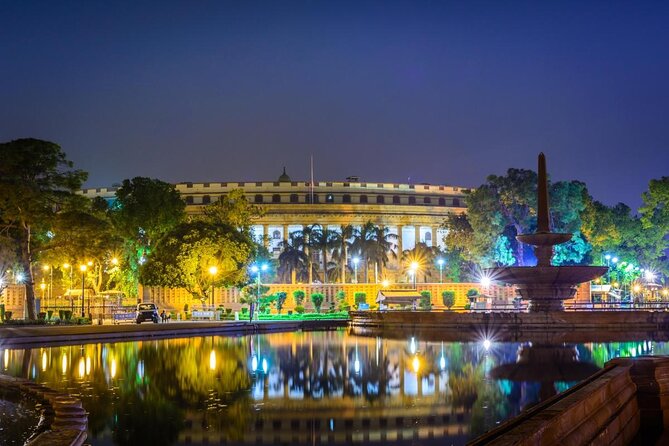
The afternoon moves through central Delhi. India Gate is a quick photo stop at about 15 minutes, followed by views of important British-era government buildings. These are brief exterior stops, not long architectural tours.
Humayun’s Tomb deserves more time. Give it about an hour to appreciate the garden setting, red sandstone, white marble details, and its importance as an early example of the Mughal garden tomb style. Admission is extra.
Gandhi Smriti is a quieter, more reflective stop. The house is tied to Mahatma Gandhi’s final days and works best if you are willing to slow down for half an hour. Lotus Temple then offers a change in form, with its famous lotus shape and silent interior. The visit is free.
Finish at Qutub Minar, the 73-meter victory tower begun in 1193. Its carved stonework and surrounding ruins reward a proper visit, but the entrance fee is extra. The day ends back in Delhi, where you spend the night before heading to Agra.
The strength of Day 2 is variety. The weakness is time. You cannot study every site in detail, so tell your guide which places matter most to you. The supplied feedback describes a guide and driver working hard to fit in sights despite heavy afternoon traffic. That is useful advice: traffic is not a minor detail in Delhi, and a private vehicle gives you more control when delays appear.
Day 3: The expressway to Agra and the Baby Taj
After breakfast, you leave Delhi for Agra on the Yamuna Expressway. The drive is estimated at three and a half to four hours. Private transport makes this transfer simple, but it is still a long morning in the car.
Once in Agra, the first visit is the Taj Mahal View Point across the Yamuna River. The stop is planned for sunset and lasts about 30 minutes. It does not replace entering the Taj Mahal, but it gives you a different angle and a calmer setting for photographs.
Itmad-ud-Daula, often called the Baby Taj, follows. This small marble tomb is known for delicate inlay work and predates the Taj Mahal. It is a good companion to the larger monument because you can notice the fine decoration more easily here.
The day is lighter than Delhi, which helps after the road journey. Admission to the Agra sights is extra, so keep your ticket budget ready.
More Golden Triangle itineraries from New Delhi:
- 3-Days Private Golden Triangle Tour: Delhi, Agra & Jaipur by Car
★ 5.0 · 1,107 reviews - 3-Days Private Golden Triangle Tour: Delhi, Agra & Jaipur by Car
★ 5.0 · 1,098 reviews - 3-Day Delhi, Agra and Jaipur Private Tour – India Golden Triangle
★ 5.0 · 812 reviews - Four-Day Private Luxury Golden Triangle Tour to Agra and Jaipur From New Delhi
★ 5.0 · 807 reviews
Day 4: The Taj Mahal at first light
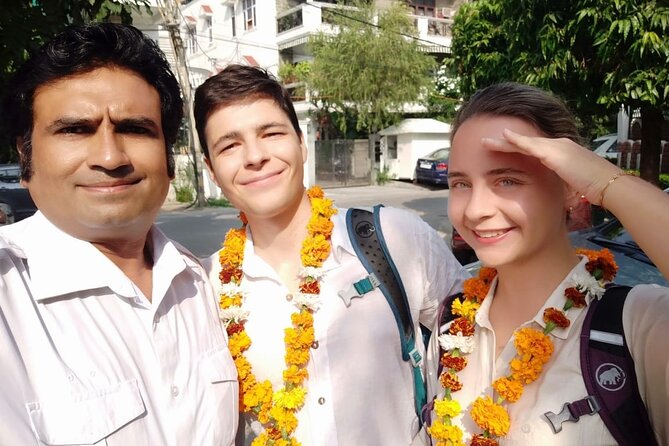
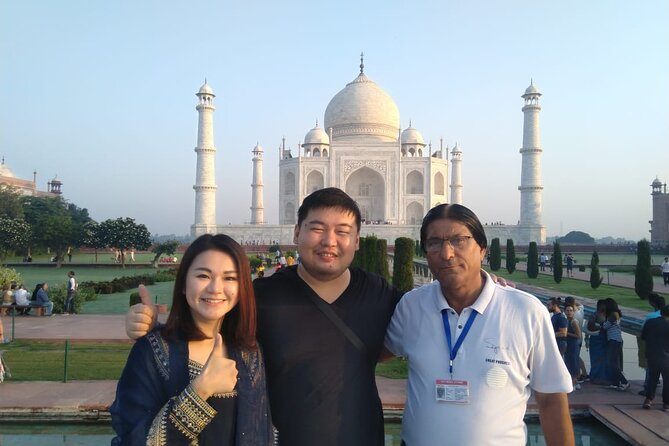
The early visit to the Taj Mahal is the tour’s signature moment. You see the monument as morning light reaches the marble, with about two hours set aside for the visit. A battery-powered bus takes you between the parking area and the monument, and that service is included.
The early start has practical value. The cooler part of the day is easier for walking, and the changing light gives the building a softer appearance than a midday visit. Your local guide can also help explain the design, the Mughal setting, and the details that are easy to miss when you are focused only on the famous central view.
Entry is not included, and the monument fee is part of the separate ₹6,000 estimate. Check current ticket arrangements before departure, especially if you have a preferred entry time.
Agra Fort comes next, with about an hour for palaces, audience halls, and gardens. The fort is not simply a military wall. It shows how Mughal rulers lived and governed, and its large courtyards provide a useful contrast to the Taj Mahal’s carefully framed beauty.
After the Agra visits, you drive to Jaipur. The transfer is estimated at about five hours. This is the hardest road stretch of the tour, coming after an early morning at the Taj Mahal. You reach Jaipur, check into your hotel, and spend the night there.
Day 5: Jaipur’s forts, palaces, and astronomical instruments
Jaipur’s main sightseeing day begins at Amber Palace, also called Amber Fort. Allow two hours for the hilltop complex, whose design combines Rajput and Mughal influences. The Sheesh Mahal, or Mirror Palace, and Diwan-i-Aam are among the key interiors.
This is a substantial visit, with sloping routes and many steps. The tour provides private transport, but it does not promise a particular method of reaching the fort. Ask your guide about the practical arrangements in advance if walking uphill or climbing stairs is difficult for anyone in your group.
Panna Meena ka Kund is a quick stop of about 15 minutes. Its geometric stair pattern makes a memorable photograph, but the visit is brief. Jal Mahal follows as a 30-minute photo stop beside Man Sagar Lake. The palace sits in the water, and the view is the point, since the schedule does not describe an interior visit.
Gaitore Ki Chhatriyan takes about half an hour. The carved royal cenotaphs provide a quieter look at Jaipur’s memorial architecture. This is a good place for you to ask the local guide about the symbols and designs rather than simply moving on for photographs.
At City Palace, you have about an hour to see courtyards, museums, and royal buildings. Some parts remain connected with Jaipur’s royal family, which gives the complex a more personal feel than a purely archaeological site. Admission is extra.
Jantar Mantar is one of Jaipur’s most unusual stops. The UNESCO-listed observatory contains 19 scientific instruments, including the world’s largest stone sundial. You get an hour here, enough to understand how the structures track time and celestial movements if your guide explains how to read them.
Finish at Hawa Mahal, the Palace of Wind. The five-story façade has 953 windows, designed so royal women could watch street events without appearing in public. The scheduled visit lasts about 20 minutes, so expect an exterior-focused stop unless you arrange more time.
Jaipur Day 5 is packed but well chosen. It covers royal power, religious and memorial architecture, science, and city design. If shopping or food interests you more than one of the shorter stops, the private format allows you to request a change.
Day 6: Returning to Delhi or continuing from Jaipur
After breakfast, the standard plan sends you back to Delhi, a drive of about five hours. You can also end the tour in Jaipur if you are continuing elsewhere, which is a valuable option because it avoids an unnecessary return journey.
The final day contains no scheduled sightseeing. That makes it a transfer day, not a final Jaipur visit. If you want more time in Jaipur, arrange it before booking or ask whether the route can be adjusted.
What the private vehicle changes
The vehicle is matched to your group size. One or two people receive a four-seat sedan, three or four use a six-seat MPV, and groups of five to ten get a ten-seat van. Each vehicle is air-conditioned, and bottled mineral water is supplied during the drives.
The driver handles the intercity route while local guides lead sightseeing in Delhi, Agra, and Jaipur. That division is helpful: you get regional explanations at the monuments without asking one person to cover every city in the same way.
The private setup also helps with the tour’s biggest challenge, traffic. A supplied comment describes afternoon congestion in Delhi and says the guide and driver still worked to fit in as many sites as possible. You should still expect changes when roads are slow. Private travel gives you flexibility, not a magic escape from Delhi traffic.
What is included and what you should budget
The package includes private guided sightseeing, transport, pickup and drop-off, five breakfasts when hotels are selected, bottled water, hotel taxes, and the Old Delhi rickshaw ride. The Taj Mahal battery bus is also included.
You pay separately for lunch, dinner, optional gratuities, and monument entry. The stated monument allowance is ₹6,000 per person. Because the itinerary includes many paid sites, this is a meaningful extra rather than a small afterthought.
The $236.70 per-person price is strongest for people who value convenience and private service. If you already have hotels, you can book without accommodation, but compare that version carefully with the hotel-inclusive price. For a solo visitor, the private format may cost more than a shared tour. For a couple or small family, it can make more sense because the vehicle and guides serve only your group.
Who should book this six-day route
I would choose this tour if you want the classic Golden Triangle without arranging several hotels, road transfers, and city guides yourself. It suits couples, families, seniors who prefer a private vehicle, and small groups that want to set their own pace.
It also suits first-time visitors who want the main sights in a clear order. The route includes the essential monuments, plus smaller stops such as Agrasen Ki Baoli, Panna Meena ka Kund, and Gaitore Ki Chhatriyan.
I would hesitate if you want long, unhurried visits at every site. Delhi Day 2 is especially full, and the Agra to Jaipur transfer is long. You should also avoid assuming that the advertised price covers every cost. Add monument tickets, meals, and any gratuities before deciding.
The tour allows changes for shopping, food experiences, cultural performances, or special interests. Use that option. A private itinerary is most useful when it reflects what you actually want to see, not when you simply follow every listed stop.
FAQ
Is this a private tour?
Yes. Only your group participates, with a private vehicle, driver, and local guides in Delhi, Agra, and Jaipur.
What type of vehicle is provided?
One or two people use a four-seat sedan, three or four people use a six-seat MPV, and groups of five to ten use a ten-seat van. Vehicles are air-conditioned.
Are hotels and breakfasts included?
Five nights of accommodation and five breakfasts are included when you book the hotel option. You can also book without hotels if you have your own accommodation.
Are monument entrance fees included?
No. Monument admission is separate, and the stated cost is ₹6,000 per person for all monuments. Lunch, dinner, and gratuities are also excluded.
Can I be picked up outside central Delhi?
Pickup and drop-off are available from hotels, airports, railway stations, or other requested locations in Delhi, Noida, and Gurugram.
Can I finish the tour in Jaipur instead of returning to Delhi?
Yes. On Day 6, you can request drop-off at a location in Jaipur if you are continuing your journey elsewhere.
Should you book it?
Book this tour if you want India’s essential Golden Triangle sights with private transport, local guides, hotel choices, and a ready-made route. The best reasons are the sunrise Taj Mahal visit, the Old Delhi rickshaw ride, and the ability to adjust the schedule for your own group.
Before booking, confirm the exact hotel category, room arrangement, monument fees, and final drop-off plan. If you accept the long drives and full Delhi schedule, the $236.70 starting price can offer solid practical value. If you prefer slow mornings and extended museum visits, choose a less crowded itinerary with more free time.
More 6-Day Experiences in New Delhi
- 5 Nights 6 Days Private Golden Triangle Tour – Delhi Agra Jaipur
★ 5.0 · 574 reviews - Delhi: 6-Day Golden Triangle Delhi, Agra, and Jaipur Tour
★ 4.9 · 189 reviews - 6-Day Private Tour of the Golden Triangle
★ 5.0 · 184 reviews - Golden Triangle Tour: Private Delhi Agra Jaipur 5 Nights 6 Days
★ 5.0 · 157 reviews
Just added around New Delhi
- Delhi: All-Inclusive Full or Half Day Tour With Hotel Pickup★ 5.0 · 3 reviews
- From Delhi : All Inclusive Taj Mahal Tour by Gatimaan Express★ 5.0 · 3 reviews
- Skip the line: Taj Mahal Agra Private Day Trip From Delhi By Car★ 5.0 · 3 reviews
- Delhi: Old and New Delhi One Day Private Guided City Tour★ 5.0 · 3 reviews
- New Delhi Night City Tour★ 5.0 · 3 reviews
- Old Delhi Half day private city tour★ 5.0 · 3 reviews
- A full-day tour of Old & New Delhi Monument Express Entry★ 5.0 · 3 reviews
- Sultanpur Bird Sanctuary Tour Near Delhi★ 5.0 · 3 reviews
Golden Triangle Tours, compared.
3-Days Private Golden Triangle Tour: Delhi, Agra & Jaipur by Car
Read our review →3-Days Private Golden Triangle Tour: Delhi, Agra & Jaipur by Car
Read our review →
3-Day Delhi, Agra and Jaipur Private Tour – India Golden Triangle
Read our review →
Four-Day Private Luxury Golden Triangle Tour to Agra and Jaipur From New Delhi
Read our review →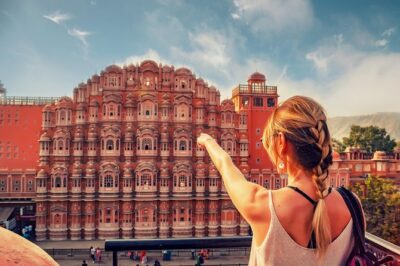
Jaipur Day Trip from Delhi by Car or Train – All Inclusive
Read our review →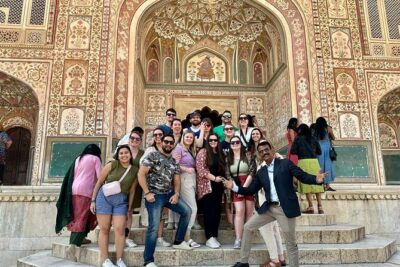
Jaipur City Private Day Tour from Delhi by Car – All Inclusive
Read our review →
5 Nights 6 Days Private Golden Triangle Tour – Delhi Agra Jaipur
Read our review →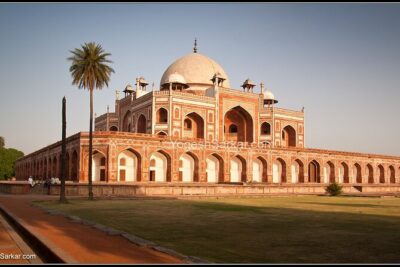
Browse the lists this tour appears in