

Reviewed · GOLDEN TRIANGLE TOURS
7 Day Golden Triangle Tour With Holi Colour Festival 4 March 2026
The best reason to choose this seven-day Golden Triangle tour is its timing: you see Delhi, Agra, and Jaipur while Holi colors transform Jaipur into a giant public celebration. The trip pairs major sights such as the Taj Mahal, Agra Fort, Amber Fort, and Qutub Minar with Holika Dahan and Holi festivities, including time with local people in the Pink City.
I like two things right away. First, the private car and driver give you control during a busy route with several long drives. Second, the plan gives the Taj Mahal two different visits, a sunset viewpoint on arrival and an early visit the next morning. The main consideration is pace: seven days cover a lot of ground, and monument entrance fees, meals, and some hotel costs may sit outside the $335.72 price.
In This Review
- Key points at a glance
- Why Holi makes this Golden Triangle route different
- Delhi begins with faith, architecture, and old markets
- The road to Agra and the first Taj Mahal view
- Sunrise at the Taj Mahal, then the road to Jaipur
- A full day of Holi in Jaipur
- Jaipur’s forts, observatory, and palace views
- Birla Mandir, the Monkey Temple, and the return to Delhi
- What the $335.72 price really covers
- Who should book this tour
- Final call
- FAQ
- What date does this Holi tour take place?
- Where does the tour begin?
- How long does the experience last?
- Is this a private tour?
- What type of transport is provided?
- Are hotel stays included?
- What happens if three people book together?
- Are monument entrance fees included?
- Are meals included?
- Does the tour include airport drop-off at the end?
- Can I cancel for a full refund?
Key points at a glance

- Holi in Jaipur: Celebrate Holika Dahan on arrival, then spend the next day taking part in Holi with local people.
- Two Taj Mahal moments: See the monument from Mehtab Bagh at sunset, then return for a morning visit.
- Private transport: A sedan serves one or two people, a wagon suits three or four, and a minivan carries five to ten.
- Delhi in two chapters: Visit grand imperial sights and the everyday market lanes of Chandni Chowk.
- Helpful named contacts: Gopal arranged Holi plans for several visitors, while Surendra and Vinod are among the drivers praised for their care.
- Good headline price: At $335.72 per person, the package can offer solid value, but check the hotel option and extra entrance costs before paying.
Why Holi makes this Golden Triangle route different
A standard Delhi, Agra, and Jaipur circuit is already a strong first visit to northern India. Adding Holi changes the tone. Instead of treating Jaipur as only a collection of palaces and forts, you get a chance to see a major Hindu festival in a city setting.
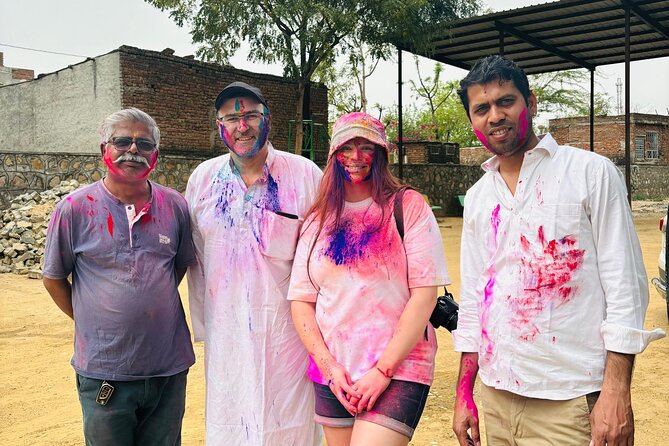
The timing includes Holika Dahan, the bonfire ceremony held on the night before the main color celebrations. The next day is set aside for Holi in Jaipur, with traditional color throwing and contact with local people. Several accounts of the experience give special attention to Govind Dev Ji Temple, where the celebration felt particularly meaningful.
You should prepare for a public festival rather than a polished stage performance. The description refers to street celebrations, temple events, music, and color play. That means the day may feel social and unpredictable, which is part of its appeal. It also means you should protect your phone, wear clothes you can sacrifice, and ask the tour team exactly where and when the activities will take place.
Gopal appears to be the main contact for arranging the Holi portion. The strongest praise attached to this trip focuses on his planning and on the friendly way the team brought different groups together. You may meet other people connected with the same company during the celebration, even though your transport and sightseeing arrangement is private.
More Golden Triangle itineraries from New Delhi:
- 3-Days Private Golden Triangle Tour: Delhi, Agra & Jaipur by Car
★ 5.0 · 1,107 reviews - 3-Days Private Golden Triangle Tour: Delhi, Agra & Jaipur by Car
★ 5.0 · 1,098 reviews - 3-Day Delhi, Agra and Jaipur Private Tour – India Golden Triangle
★ 5.0 · 812 reviews
Delhi begins with faith, architecture, and old markets
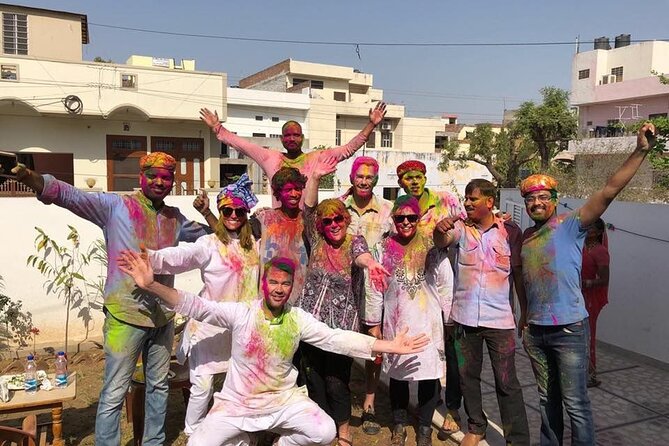
Day one is deliberately light. After pickup at Indira Gandhi International Airport, you visit Gurudwara Bangla Sahib and Agrasen Ki Baoli. Each stop takes about 30 minutes, so this opening works well if you have just landed.
Gurudwara Bangla Sahib is a Sikh place of worship known for its large water tank and its connection with the eighth Sikh Guru, who is said to have helped people during smallpox and cholera outbreaks. You get a quick look at a living religious site rather than only another old building. Dress respectfully and follow the site’s rules.
Agrasen Ki Baoli is a protected stepwell in central Delhi. Its long, descending flights of steps show how practical water architecture could also create a powerful visual space. The visit is short, so you will get an introduction rather than a slow architectural study.
Day two is much fuller. Qutub Minar gets about an hour, enough to appreciate its height, carved surface, and place in the early Delhi Sultanate. At 73 meters and five stories, it is one of the city’s most recognizable monuments, and the included admission removes one small ticket task.
The Lotus Temple offers a sharp change in mood. Its white, flower-shaped design dates from 1986, and it welcomes people of all religions. You have about 30 minutes here, so think of it as a calm architectural pause, not a long visit.
India Gate and Parliament House are mainly viewed from outside on this schedule. India Gate is a war memorial dedicated to soldiers of British India, while Parliament House represents India’s two national assemblies. The India Gate stop lasts only about 15 minutes, so it is best treated as a photo stop.
Jama Masjid brings you into the Mughal period. Built under Shah Jahan between 1650 and 1656, it is one of India’s largest mosques. The planned visit lasts 30 minutes. Respectful clothing matters, and access rules at religious sites can change, so listen to your guide.
Humayun’s Tomb deserves the full hour assigned to it. Commissioned in 1558 by Empress Bega Begum for the Mughal emperor Humayun, the tomb is an important Delhi monument and a useful lead-in to the design tradition associated with the Taj Mahal.
The final stop, Chandni Chowk, is where the itinerary becomes less formal. Give yourself an hour among spice stalls, dried fruit, saris, silver jewelry, and narrow side streets. You will see Delhi as a working city, not just a sequence of grand monuments. It can be crowded and hectic, but that is precisely why this stop adds balance.
The road to Agra and the first Taj Mahal view
Day three uses the Yamuna Expressway for the roughly 222-kilometer trip from Delhi to Agra. The stated drive is about four hours after breakfast. That is a substantial stretch in a car, but a private vehicle is useful here because you can stop only when needed and keep your luggage with you.
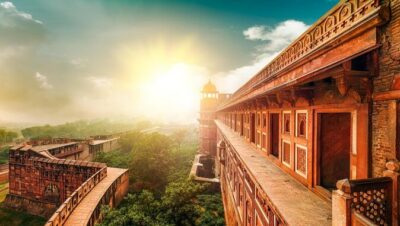
After checking in, the tour visits Agra Fort. Allow about an hour for this UNESCO-listed complex, where Mughal rulers including Akbar and Shah Jahan shaped the buildings and courtyards. The fort is not simply a secondary monument beside the Taj Mahal. Its walls, palaces, and river views help explain the power behind the monument you will see later.
Itmad-ud-Daula, often called the Baby Taj, gets another hour. Its smaller scale and detailed stone decoration offer a more intimate contrast with Agra Fort. I like having this stop in the plan because it prevents the day from becoming a single-monument dash.
The afternoon moves toward the Taj Mahal sunset viewpoint and Mehtab Bagh. The schedule gives two hours for the sunset Taj view, described as a place across the river with fewer crowds, followed by 30 minutes at Mehtab Bagh. Confirm with your guide how these two entries are being handled, since the itinerary describes both as separate stops.
This first Taj visit is about changing light and distance. You see the monument across the Yamuna rather than entering immediately, which builds anticipation and gives you a different photographic angle. The following morning is reserved for the main visit.
Sunrise at the Taj Mahal, then the road to Jaipur
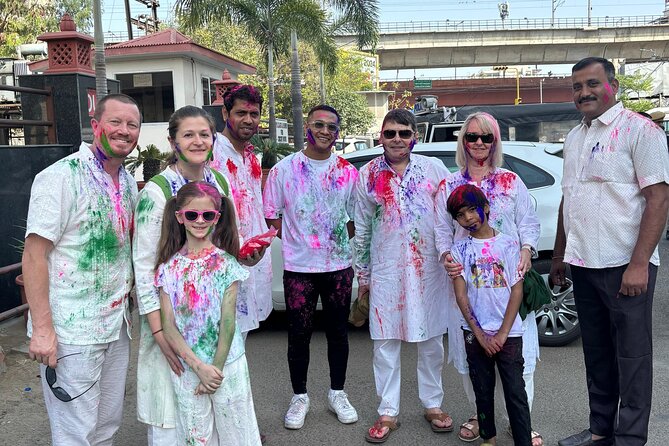
Day four starts with the Taj Mahal at sunrise. The planned visit lasts two hours, though the admission is listed as not included for this portion, so budget for that ticket. An early start also means you should be ready for a morning departure and a more demanding day afterward.
The Taj was commissioned by Shah Jahan in 1632 as a mausoleum for his wife, Mumtaz Mahal. You do not need a long lecture to understand its pull, but a private guide can help you notice the symmetry, marble work, gardens, and relationship to the Yamuna.
From Agra, the route continues to Fatehpur Sikri. Akbar built this former Mughal capital in the late 16th century, and it served as the empire’s capital for about a decade. The one-hour stop lets you see a planned royal complex before the tour moves on.
Chand Baori at Abhaneri is a short but memorable stop. This stepwell reaches about 30 meters below ground and uses repeated stair patterns to create a striking geometric design. You have only 30 minutes, so watch your footing and do not expect a long walk through the entire site.
After arrival in Jaipur, you check into the hotel and attend Holika Dahan. The bonfire marks the legend of Holika and serves as the ceremonial opening to the main Holi celebration. This is one of the tour’s most distinctive features, but the exact venue and timing should be confirmed with Gopal before the day begins.
A few more New Delhi departures worth comparing
- 7-Day Golden Triangle Tour with Ranthambore Tiger Safari
★ 5.0 · 53 reviews - 7-Day Golden Triangle & Varanasi Tour from Delhi with Guide
★ 5.0 · 38 reviews - 7 Day Golden Triangle Tour { Delhi Agra Jaipur Tour }
★ 5.0 · 23 reviews - 7 Days Golden Triangle Delhi,agra, Jaipur
★ 5.0 · 20 reviews
A full day of Holi in Jaipur
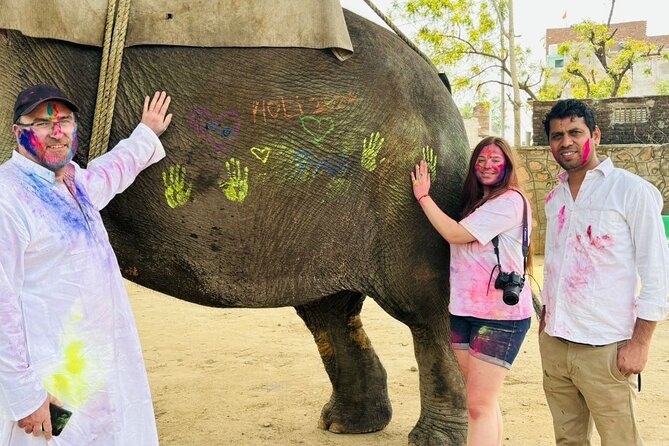
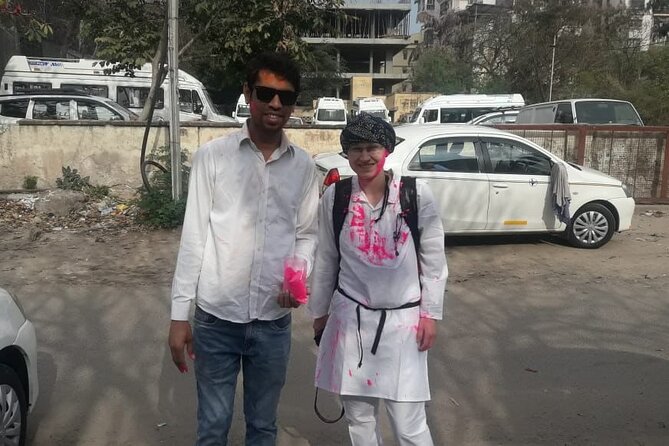
Day five sets aside about six hours for Holi in the Pink City. The plan is to celebrate with local people, and the supplied details describe color throwing, a bonfire tradition, music, and temple-centered activity.
This is not a normal sightseeing day. You will not be ticking off palaces and museums. Instead, you get a direct look at how a major festival takes over public life. The strongest praise for the tour centers on the company’s ability to arrange this part, especially at Govind Dev Ji Temple, and on Gopal’s help bringing the celebration together.
Come prepared. Wear old clothes, protect cameras and phones, and carry only what you can keep secure. Colored powder and water may affect clothing and electronics. Ask whether the company supplies any festival materials, because the included services specifically mention bottled water but do not list Holi colors or protective clothing.
You should also be comfortable with crowds and physical contact. Holi is built around people applying color to one another, and a private car does not make the public celebration private. If you prefer to watch from the edge, tell the guide clearly. The tour’s appeal lies in participation, but you should still set your own limits.
Jaipur’s forts, observatory, and palace views
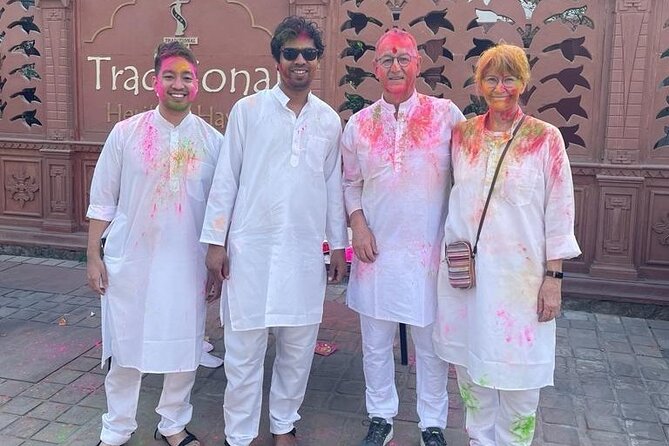
Day six returns to structured sightseeing. Panna Meena ka Kund is first, with about 15 minutes to see the stepwell near Amber’s palace area. It is a quick stop, but it connects neatly with Agrasen Ki Baoli and Chand Baori, showing how water design appears across the route.
The main fort visit follows and receives two hours. The itinerary describes Jaipur’s most famous fort, the former capital of Rajasthan until 1728, as a guided walk through palaces, squares, and monuments. This is one of the days when having a local guide matters, because the complex is too large and layered to understand from photographs alone.
Jal Mahal is listed as a photo opportunity from the road by Man Sagar Lake. The unusual palace appears to float in the water, though the building itself is not described as an interior visit. Treat this as a brief scenic stop, not a full palace tour. The listing shows an unusual duration of one day and six hours, which is almost certainly a scheduling error, so confirm the actual time with the operator.
Jantar Mantar is a UNESCO World Heritage site built in 1734 by Sawai Jai Singh II. Its 19 architectural instruments demonstrate how rulers used monumental structures to measure time and study the sky. The one-hour visit is included in the plan and gives Jaipur a scientific side beyond its royal buildings.
Hawa Mahal, the Palace of Winds, gets 30 minutes. Its pink and red sandstone facade is one of Jaipur’s signature sights, but a short stop usually means an exterior view and photographs rather than a long interior visit.
The City Palace receives one hour, but its admission is not included. Set aside extra money for this ticket. The palace served as the administrative and ceremonial seat of Jaipur’s Maharaja from 1721, and its courtyards and buildings provide a final look at the city’s royal past.
Birla Mandir, the Monkey Temple, and the return to Delhi
The final day begins with Birla Mandir, a white marble temple noted for its detailed latticework and dedication to Lord Vishnu. The itinerary does not assign a duration, so ask the driver or guide how much time is planned.
Galtaji Temple, commonly called the Monkey Temple, follows for about 30 minutes. The complex has three sacred water pools and a setting among rocky hills outside central Jaipur. The name gives you a fair warning: monkeys are part of the character of the place, so keep food and loose items secure.
The drive back to Delhi takes about five hours. Drop-off can be arranged at the airport, your hotel, or another desired location in the city. This is a long final road day, so do not schedule a tight onward flight without confirming traffic conditions and your exact drop-off time.
What the $335.72 price really covers
At $335.72 per person, the cost looks attractive for a seven-day private route, especially if two people share a car and the hotel-inclusive option is selected. The package includes private air-conditioned transport, airport or hotel pickup and drop-off, local guides for sightseeing, bottled water during journeys, six breakfasts, and six nights of accommodation when you book the option that includes hotels.
The value depends heavily on the booking choice. Rooms are normally twin-sharing. Three people are assigned a triple-sharing room by default, while two rooms for three people cost extra. Monument admission is not generally included, and the City Palace, sunrise Taj Mahal visit, lunches, dinners, insurance, flights, trains, and personal spending are excluded.
That makes the tour a good fit if you want transport and planning handled but still want control over meals and optional spending. It is less suitable if you want one all-inclusive bill with every ticket and meal covered.
Group discounts may help larger parties. Vehicle size also changes with the party: a four-seat sedan for one or two people, a six-seat wagon for three or four, and a 10-seat minivan for five to ten. The activity itself is private, so only your booking group joins the formal tour.
Who should book this tour
I would recommend it for a first visit to northern India, especially if Holi is a main reason for your trip. You get the essential monuments, private road transport, hotel coordination, and a festival day that would be difficult to arrange without local help.
It also suits families and small groups that value a private vehicle. The route includes several long drives, but you are not sharing daily transport with a large coach group. The named drivers Surendra and Vinod have received especially warm praise for making the journey run well.
You should think twice if you dislike early starts, long car rides, crowded celebrations, or short visits. Delhi day two is full, day four combines the sunrise Taj Mahal with a road journey, and the return from Jaipur takes about five hours. This is a highlights tour, not a slow stay in each city.
Free cancellation is available when you cancel at least 24 hours before the local start time. Changes or cancellations inside that window are not accepted for a refund.
Final call
Book this tour if you want the classic Golden Triangle with a real festival focus rather than a standard monument circuit. The strongest reasons are the private driver, two distinct Taj Mahal viewpoints, and organized access to Holi events in Jaipur, with Gopal serving as a useful point of contact.
Before booking, confirm three things: the exact Holi schedule, the hotel-inclusive price, and the total monument-ticket budget. If those numbers suit you, $335.72 per person offers a practical way to cover Delhi, Agra, Jaipur, and Holi in one tightly planned week.
FAQ
What date does this Holi tour take place?
The tour is scheduled for 4 March 2026.
Where does the tour begin?
The stated starting point is Indira Gandhi International Airport in New Delhi.
How long does the experience last?
The tour lasts approximately seven days and includes six hotel nights when the hotel-inclusive option is booked.
Is this a private tour?
Yes. The formal tour is private, and only your booking group participates.
What type of transport is provided?
Transport is by private, air-conditioned vehicle with a driver. One or two people use a four-seat sedan, three or four use a six-seat wagon, and groups of five to ten use a 10-seat minivan.
Are hotel stays included?
Six nights of accommodation with breakfast are included if you select the option that includes hotels. Rooms are generally arranged on a twin-sharing basis.
What happens if three people book together?
A triple-sharing room is provided by default. If three people want two rooms, an additional charge applies.
Are monument entrance fees included?
Some admission tickets are included in the schedule, but monument entrance fees are generally listed as excluded. City Palace admission is specifically not included, and the sunrise Taj Mahal visit is also listed without included admission.
Are meals included?
Six breakfasts are included. Lunch, dinner, and personal expenses are not included.
Does the tour include airport drop-off at the end?
Yes. The return drive to Delhi can end at the airport, a hotel, or another desired location in the city.
Can I cancel for a full refund?
You can cancel for a full refund up to 24 hours before the experience starts, based on local time. Cancellations or changes made less than 24 hours before the start time are not accepted for a refund.
Just added around New Delhi
- Delhi: All-Inclusive Full or Half Day Tour With Hotel Pickup★ 5.0 · 3 reviews
- From Delhi : All Inclusive Taj Mahal Tour by Gatimaan Express★ 5.0 · 3 reviews
- Skip the line: Taj Mahal Agra Private Day Trip From Delhi By Car★ 5.0 · 3 reviews
- Old Delhi Half day private city tour★ 5.0 · 3 reviews
- Delhi: Old and New Delhi One Day Private Guided City Tour★ 5.0 · 3 reviews
- New Delhi Night City Tour★ 5.0 · 3 reviews
- A full-day tour of Old & New Delhi Monument Express Entry★ 5.0 · 3 reviews
- Sultanpur Bird Sanctuary Tour Near Delhi★ 5.0 · 3 reviews
Golden Triangle Tours, compared.
3-Days Private Golden Triangle Tour: Delhi, Agra & Jaipur by Car
Read our review →3-Days Private Golden Triangle Tour: Delhi, Agra & Jaipur by Car
Read our review →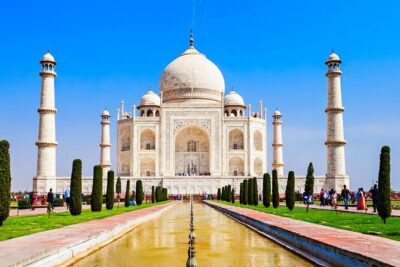
3-Day Delhi, Agra and Jaipur Private Tour – India Golden Triangle
Read our review →
Four-Day Private Luxury Golden Triangle Tour to Agra and Jaipur From New Delhi
Read our review →
Jaipur Day Trip from Delhi by Car or Train – All Inclusive
Read our review →
Jaipur City Private Day Tour from Delhi by Car – All Inclusive
Read our review →
5 Nights 6 Days Private Golden Triangle Tour – Delhi Agra Jaipur
Read our review →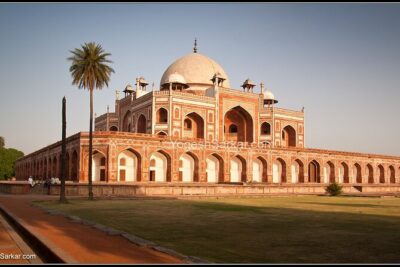
Browse the lists this tour appears in