
Reviewed · GOLDEN TRIANGLE WITH VARANASI
7-Day Golden Triangle & Varanasi Tour from Delhi with Guide
The most striking part of this seven-day circuit is its range. You move from Jaipur’s royal palaces and Agra’s Mughal monuments to Varanasi’s sacred riverfront, then return to Delhi for a concentrated look at India’s capital. It packs four major destinations into six nights, so you see a lot, but you will not have much spare time.
I like the private air-conditioned transport, which gives your group a driver rather than putting you on a large shared coach. I also like the overnight train legs to and from Varanasi: they save hotel nights and give the journey a more local rhythm. The main drawback is the pace. Early starts, long road transfers, sightseeing, and overnight rail travel can leave you tired by the final Delhi tour.
In This Review
- Five things to know before booking
- How the seven-day route fits together
- Jaipur begins with palaces and pink sandstone
- Amber Fort and Jal Mahal on day two
- Fatehpur Sikri breaks the journey to Agra
- The Taj Mahal at sunrise
- Varanasi brings a different kind of India
- Sunrise on the Ganges and the overnight train
- Delhi’s seven-stop finale
- What the $675 price really covers
- Who will enjoy this route most
- Should you book the Golden Triangle and Varanasi tour?
- FAQ
- Where does the tour start?
- How long does the tour last?
- Which cities are included?
- Are hotels included?
- Are train tickets included?
- Is private transport included?
- Are monument entrance fees included?
- What is not included in the price?
Five things to know before booking
- Four major cities in seven days: Delhi, Jaipur, Agra, and Varanasi are all included, with little room for unscheduled wandering.
- A Taj Mahal sunrise: Day four begins with one of India’s most memorable sights before moving on to Agra Fort.
- Varanasi by train: Air-conditioned sleeping berths connect the Golden Triangle with the Ganges city.
- Private group travel: Groups of one to three use a Tata Indigo or Swift Dzire, four to six use a Toyota Innova, and seven to ten use a Tempo Traveler.
- Guides with named roles: Jaipur and Agra include English-speaking guides, while guides such as Salau, Janak, Amit, and Imbraim are associated with different portions of the trip.
- A fixed, non-refundable booking: The full amount is lost if you cancel or request a change, so confirm your dates and passport details carefully.
How the seven-day route fits together
This is a high-energy introduction to North India, not a slow holiday. The route begins with pickup at Indira Gandhi International Airport or a Delhi hotel, then heads toward Jaipur. From Jaipur, you continue to Fatehpur Sikri and Agra, take the train to Varanasi, return by overnight train, and finish with Delhi sightseeing before airport transfer.
The plan includes four hotel nights with twin or double sharing and continental breakfast. The train tickets include air-conditioned sleeping berths, and private vehicle transport is used for the road portions. Admission fees for several major monuments are not included, along with meals beyond the stated breakfasts, drinks, tips, and personal spending.
That structure makes the tour useful for a first visit when you want the main sights arranged for you. It is less suitable if you prefer late mornings, long museum visits, or time to explore one city at a relaxed pace.
More itineraries that add Varanasi:
- Delhi Agra Jaipur & Varanasi Tour – Taj Mahal & Ganga Aarti
★ 5.0 · 50 reviews - 9 – Days Private Golden Triangle Tour with Khajuraho & Varanasi
★ 5.0 · 22 reviews - 6-Day Private Tour of Delhi, Agra, Jaipur, and Varanasi from Delhi
★ 5.0 · 19 reviews
Jaipur begins with palaces and pink sandstone
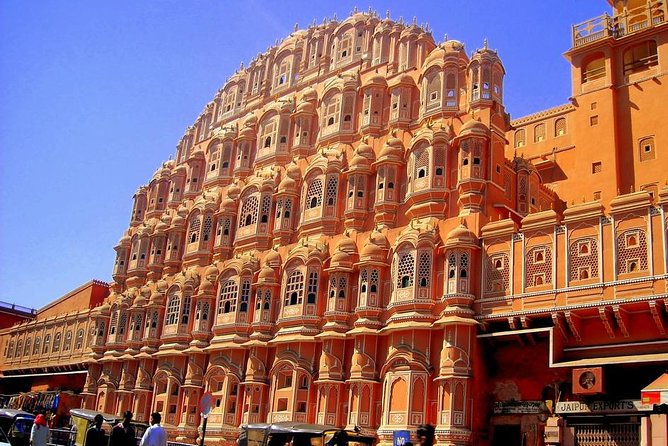
After pickup in Delhi, you travel to Jaipur and check into the hotel before beginning a city tour. The first stops are City Palace and Hawa Mahal, two landmarks that explain why Jaipur is often called the Pink City.
City Palace is a large royal complex containing the Chandra Mahal, Mubarak Mahal, courtyards, and other buildings. Allow about two hours here. I would pay close attention to the changing scale of the courtyards and palace rooms rather than rushing from one photo stop to the next. The admission fee is extra, so budget for it separately.
Hawa Mahal, or the Palace of Wind, is known for its red and pink sandstone facade and its many small openings. It was connected to the women’s quarters, allowing royal women to observe street life without being seen. The listed visit is about an hour, and the building is especially easy to appreciate from the outside.
The first day combines a transfer with sightseeing, so your exact arrival time matters. If you are landing in Delhi that morning, you should expect a full day. The private vehicle helps, but the road journey still takes energy.
Amber Fort and Jal Mahal on day two
Day two centers on Amber Palace, usually called Amer Fort, located about 11 kilometers from Jaipur. Plan on roughly three hours. The fort sits high above Amer and includes grand gateways, courtyards, and palace spaces tied to Rajasthan’s royal past.
This is one of the tour’s strongest stops because it gives you a large historic complex rather than a single facade. Wear practical shoes and expect time spent walking through an elevated site. Admission is not included, so keep cash or payment arrangements ready for the entrance fees required during the tour.
The day also includes Jal Mahal, the palace set in Man Sagar Lake. The visit is about an hour, and the exterior lake view is the central point. You should not expect a long interior tour from the information provided. It works well as a shorter stop after Amber Fort, giving the day a change of pace.
The Jaipur portion includes an English-speaking guide. Amit is one guide connected with this tour, and the guide quality can shape how much meaning you get from the palace rooms, royal families, and architectural details. Confirm who will guide your group before departure if that matters to you.
Fatehpur Sikri breaks the journey to Agra

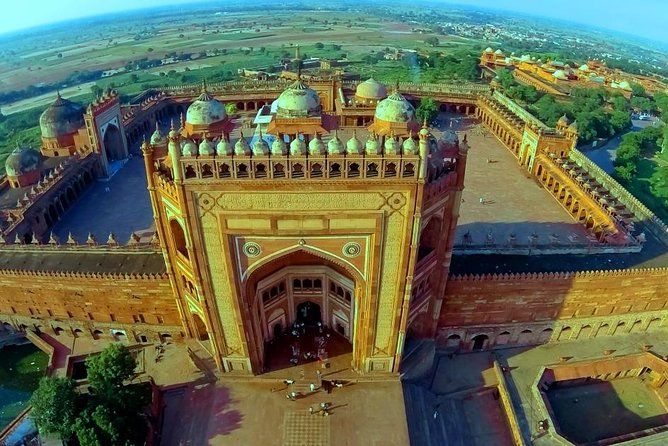
Day three visits Fatehpur Sikri, the 16th-century city built by Emperor Akbar as a capital and palace. The planned stop lasts about two hours. Its location makes it a useful bridge between Jaipur and Agra rather than another isolated excursion.
I like this inclusion because many short Golden Triangle trips focus only on the Taj Mahal and Agra Fort. Fatehpur Sikri adds another imperial center and shows how ambitious Mughal building projects could be. The admission is listed as free, but other costs connected with the day are not specified, so keep personal expenses separate from the tour price.
This is also one of the days when the pace becomes clear. You are moving between cities while fitting in a major site. The private vehicle means your group can travel directly, but you should treat the road time as part of the experience rather than expecting a short hop.
More Golden Triangle itineraries from New Delhi:
- 3-Days Private Golden Triangle Tour: Delhi, Agra & Jaipur by Car
★ 5.0 · 1,107 reviews - 3-Days Private Golden Triangle Tour: Delhi, Agra & Jaipur by Car
★ 5.0 · 1,098 reviews - 3-Day Delhi, Agra and Jaipur Private Tour – India Golden Triangle
★ 5.0 · 812 reviews - Four-Day Private Luxury Golden Triangle Tour to Agra and Jaipur From New Delhi
★ 5.0 · 807 reviews
The Taj Mahal at sunrise
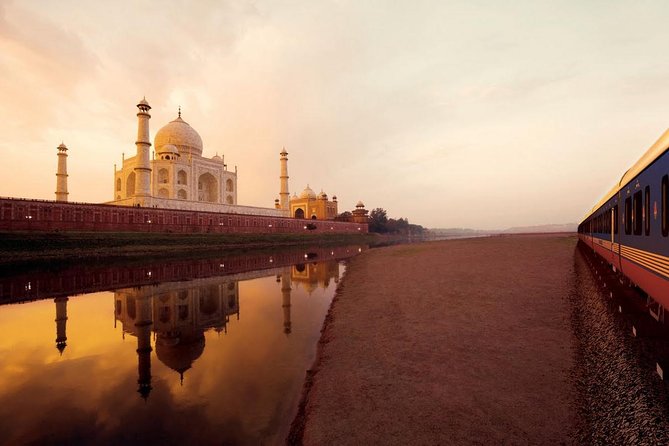
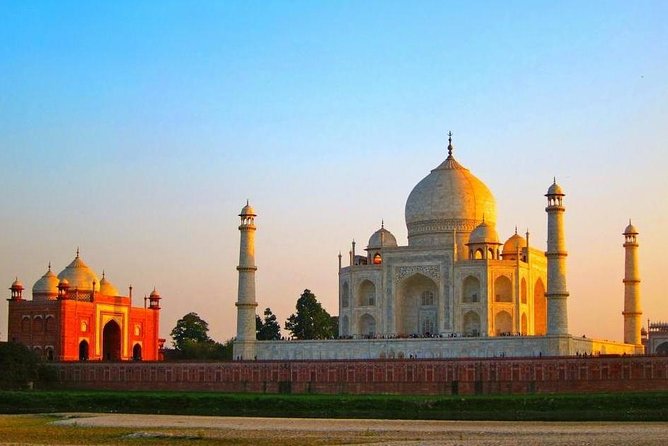
Day four begins with a sunrise visit to the Taj Mahal. The planned time is three hours, which gives you more than a quick exterior photograph. The monument is one of the world’s best-known buildings, but arriving early changes the feel of the visit and gives you the best chance to see it before the day becomes hotter and more crowded.
The Taj Mahal ticket is not included. Check the admission arrangement and current entry rules before you go, since monument procedures can change. Your guide can help you understand the building’s place in Mughal India, but allow yourself quiet time to look at the marble work and the symmetrical garden setting.
Next comes Agra Fort, a red sandstone fortress on the Yamuna River. The two-hour visit covers palace areas associated with Rajput and Mughal rulers inside the walled complex. The itinerary also refers to Mehtab Bagh across the river, though the available details do not specify the exact visit duration or admission treatment.
Agra is where an English-speaking guide can be especially useful. Imbraim is one guide associated with the Agra and Taj Mahal portion of this journey. A good guide can help you distinguish the different building periods and explain how the fort connects to the Taj Mahal, rather than leaving you with a series of impressive but unrelated structures.
Varanasi brings a different kind of India
The route then shifts from royal architecture to religious life in Varanasi. After arriving at the station, you are met and taken to the hotel. The schedule allows some time to rest before an afternoon or evening sightseeing program.
Dasaswamedh Ghat is the key riverfront stop. Broad steps descend toward the Ganges, where Hindu rituals take place daily. The planned visit lasts about two hours. This is not a conventional monument visit. You are watching an active place of worship, so modest clothing, quiet observation, and respect for ceremonies matter.
The tour also includes Kashi Vishwanath Temple, a major Shiva temple known for its gold-plated spire and sacred well. The listed visit is two hours, but temple access can depend on current rules and conditions. The information provided does not promise entry into every area, so think of this as a guided visit to one of Varanasi’s central religious landmarks, not a guaranteed private temple experience.
Janak is one of the Varanasi guides connected with the tour, and Salau is another guide associated with the six-night route. A local guide is valuable here because Varanasi can be difficult to interpret from a distance. The city’s meaning is tied to ritual, faith, and daily use of the river, not simply to buildings.
Sunrise on the Ganges and the overnight train
Day six starts early with a walking tour near the Ganges. You see morning rituals and daily activity along the riverfront, with about two hours scheduled. This is one of the most worthwhile parts of the route because it gives you Varanasi at a quieter hour and puts the river at the center of the experience.
The early start is also the catch. You will already have had a demanding schedule, and the day ends with a transfer to the station for an overnight train to Delhi. Air-conditioned sleeping berths are included, but a train berth is not the same as a private hotel room. Pack a small overnight bag, keep essential documents close, and leave your larger luggage easy to identify.
The tour description includes train travel to and from Varanasi, so rail is not an optional extra. This saves time on the long distance between the Golden Triangle and Varanasi, but it also makes the trip more tiring than a route based entirely on hotels and daytime transport.
Delhi’s seven-stop finale
After arriving in Delhi, your driver meets you for a full sightseeing day before taking you to the airport. The schedule allows up to eight hours and includes seven named stops. This is a lot for one day, so expect outside views or short visits at some locations rather than a detailed museum-style tour of each.
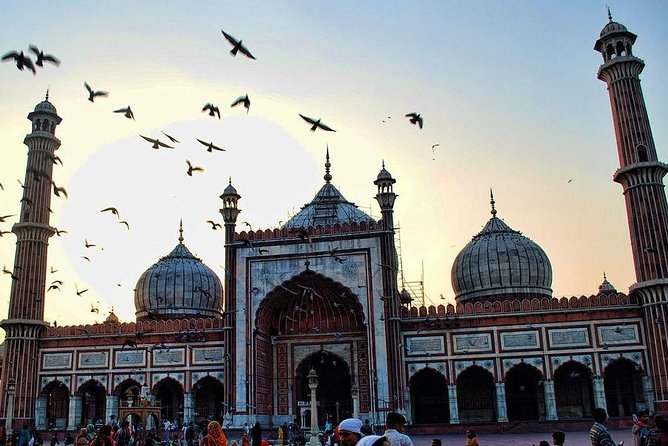
Jama Masjid is one of Delhi’s largest mosques, built by Mughal Emperor Shah Jahan between 1644 and 1656. India Gate is a war memorial on New Delhi’s ceremonial axis, and its open setting provides a change from the enclosed forts and palaces.
Humayun’s Tomb dates from the 16th century and was commissioned by Empress Bega Begum for her husband, Emperor Humayun. The tomb is an important Mughal monument, and its design helps you connect the architecture of Delhi with what you saw in Agra.
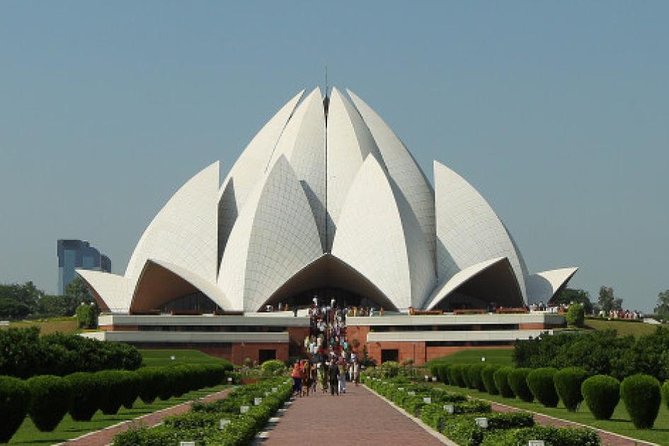
The Lotus Temple brings a different religious tradition into the day. Its flower-like shape has made it one of Delhi’s best-known modern landmarks. The visit is listed as free, though you should follow any entry or photography rules in effect.
Qutub Minar is part of the Qutb complex, a UNESCO World Heritage site in the Mehrauli area. Its one-hour slot is enough for a focused visit, but not for a slow examination of every part of the complex. The entrance fee is not included.
The final stop is Red Fort, the former Delhi residence of Mughal emperors for nearly two centuries until 1856. It includes museums and historic structures, but the one-hour schedule is brief. If the fort is a personal priority, ask your guide how much of the complex you can realistically see before the airport transfer.
What the $675 price really covers
At $675 per person, the tour offers reasonable value if you want the major arrangements handled in one booking. Four hotel nights, breakfast, private air-conditioned road transport, round-trip air-conditioned train tickets with sleeping berths, airport or hotel pickup, and guided sightseeing are included.
The value improves for couples or small groups because the private vehicle is shared by your party rather than arranged as separate transfers. The transport class depends on group size, so a group of one to three uses a smaller Tata Indigo or Swift Dzire, while four to six use a Toyota Innova. Groups of seven to ten travel in a Tempo Traveler.
You still need money for monument admission, tips, food, drinks, and personal expenses. Breakfast is included four times, but the tour does not cover every meal. Admission charges for City Palace, Hawa Mahal, Amber Fort, the Taj Mahal, Agra Fort, Qutub Minar, Red Fort, and other listed sites should be treated as extra.
The rate is strongest for someone who values convenience and time savings. If you are comfortable arranging trains, drivers, hotels, and guides on your own, you may find a slower independent plan more flexible. If you want to cover the four cities without managing each connection yourself, the package saves a great deal of planning.
Who will enjoy this route most
I would recommend this tour to a first-time visitor who wants India’s most famous sights in one week. It suits couples, families, and private groups that prefer a driver, included rail tickets, and guides in the major sightseeing cities.
The tour is also a good fit if Varanasi is important to you. Many Golden Triangle routes stop with Delhi, Jaipur, and Agra, while this one adds the Ganges, Dasaswamedh Ghat, Kashi Vishwanath Temple, and a sunrise river walk.
I would hesitate to recommend it to anyone who dislikes early mornings, overnight trains, or changing hotels and cities often. The final Delhi day is especially packed, and the non-refundable policy means you should not book until your dates, passport information, and flight plans are firm.
The supplier requires each participant’s passport name, number, expiry date, and country at booking, and you must carry a valid passport on the travel day. Extra people receive an extra bed in the same room, with triple or additional double-sharing arrangements based on group size.
Should you book the Golden Triangle and Varanasi tour?
Book it if you want maximum coverage in seven days, private road transport, organized train connections, and access to guides who can explain the monuments and religious sites. Salau, Janak, Amit, and Imbraim are among the named guides associated with different sections, and the tour has received a 4.9 rating from 38 reviews with 100 percent recommendation shown in the supplied information.
Skip it if your ideal India trip means lingering in Jaipur, taking a quiet afternoon in Agra, or spending several unhurried days beside the Ganges. This is a tightly arranged introduction, but it gives you the country’s headline sights, strong cultural contrasts, and practical support at a price that can make sense for a private group.
FAQ
Where does the tour start?
The tour starts at Indira Gandhi International Airport in New Delhi. Pickup is also offered from a Delhi hotel.
How long does the tour last?
The experience lasts approximately seven days and includes six nights.
Which cities are included?
The route includes New Delhi, Jaipur, Agra, and Varanasi.
Are hotels included?
Yes. Four nights of accommodation in twin or double sharing are included, with continental breakfast.
Are train tickets included?
Yes. Round-trip air-conditioned train tickets with sleeping berths are included for the journeys to and from Varanasi.
Is private transport included?
Yes. Transport by private air-conditioned vehicle is included. Groups of one to three use a Tata Indigo or Swift Dzire, groups of four to six use a Toyota Innova, and groups of seven to ten use a Tempo Traveler.
Are monument entrance fees included?
No. Admission fees for several stops, including City Palace, Hawa Mahal, Amber Fort, the Taj Mahal, Agra Fort, Qutub Minar, and Red Fort, are not included.
What is not included in the price?
Tips, food, drinks, personal expenses, and the listed monument admission fees are not included.
More 7-Day Experiences in New Delhi
- 7-Day Golden Triangle Tour with Ranthambore Tiger Safari
★ 5.0 · 53 reviews - 7 Day Golden Triangle Tour { Delhi Agra Jaipur Tour }
★ 5.0 · 23 reviews - 7 Days Golden Triangle Delhi,agra, Jaipur
★ 5.0 · 20 reviews - Journey to India’s Heart: 7-Day Golden Triangle Escape
★ 5.0 · 19 reviews
Just added around New Delhi
- Delhi: All-Inclusive Full or Half Day Tour With Hotel Pickup★ 5.0 · 3 reviews
- From Delhi : All Inclusive Taj Mahal Tour by Gatimaan Express★ 5.0 · 3 reviews
- Skip the line: Taj Mahal Agra Private Day Trip From Delhi By Car★ 5.0 · 3 reviews
- Delhi: Old and New Delhi One Day Private Guided City Tour★ 5.0 · 3 reviews
- New Delhi Night City Tour★ 5.0 · 3 reviews
- Old Delhi Half day private city tour★ 5.0 · 3 reviews
- A full-day tour of Old & New Delhi Monument Express Entry★ 5.0 · 3 reviews
- Sultanpur Bird Sanctuary Tour Near Delhi★ 5.0 · 3 reviews
Golden Triangle with Varanasi, compared.

Delhi Agra Jaipur & Varanasi Tour – Taj Mahal & Ganga Aarti
Read our review →
9 – Days Private Golden Triangle Tour with Khajuraho & Varanasi
Read our review →
6-Day Private Tour of Delhi, Agra, Jaipur, and Varanasi from Delhi
Read our review →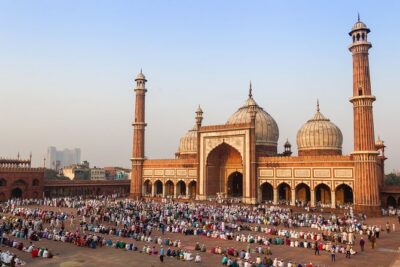
11 Days Golden Triangle & Varanasi With Luxury Accommodation,internal Flights
Read our review →
8-Day Private Luxury Golden Triangle With Spiritual Varanasi Tour
Read our review →
10 Day Private Luxury Golden Triangle with Khajuraho and Varanasi
Read our review →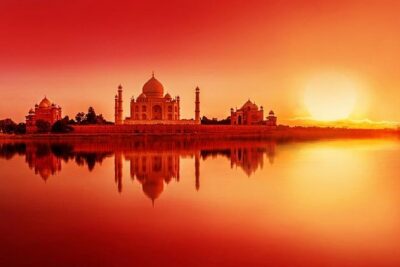
Private Luxury Delhi, Agra, Jaipur & Varanasi from Delhi – 5 Nights 6 Days Tour
Read our review →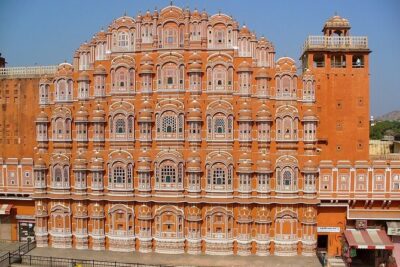
6 Days Private Golden Triangle Tour with Varanasi from Delhi
Read our review →Browse the lists this tour appears in