
Reviewed · GOLDEN TRIANGLE WITH VARANASI
9 – Days Private Golden Triangle Tour with Khajuraho & Varanasi
India’s most famous sights arrive in one ambitious nine-day route: Mughal Delhi and Agra, royal Jaipur, the carved temples of Khajuraho, and spiritual Varanasi. I like the way the trip combines headline attractions with local rail journeys and a dawn boat ride on the Ganges. I also like having a private car and separate local guides in each major city.
The trade-off is pace. You cover a lot of ground, and the move from Agra to Khajuraho and then Varanasi involves trains and transfers. That makes this a strong first taste of northern India, but not a slow, restful holiday. Also budget about $100 per person for monument tickets, along with tips, meals beyond breakfast, and personal spending.
In This Review
- Key points at a glance
- How this nine-day route works
- Delhi, from Mughal power to Old Delhi market lanes
- Jaipur’s forts, palaces, and astronomical instruments
- Agra and the Taj Mahal at close range
- Orchha and the change from road to rail
- Khajuraho’s Hindu and Jain temple sculpture
- Varanasi, Sarnath, and the Ganges
- Sunrise on the Ganges before your flight
- What the private format adds
- Who should book this tour
- Should you book the nine-day route?
- FAQ
- How long is the private Golden Triangle tour with Khajuraho and Varanasi?
- Where does the tour begin and end?
- Is the tour private?
- What transportation is included?
- Are hotels and breakfasts included?
- Are monument entrance fees included?
- Is the Taj Mahal open every day?
- What is the cancellation policy?
Key points at a glance
- Delhi opens with both Mughal and British-era sights, including the Red Fort, Chandni Chowk, Humayun’s Tomb, India Gate, and Qutub Minar.
- A private chauffeur-driven car handles the main road journeys, with clean vehicles, fuel, parking, tolls, and taxes included.
- Jaipur’s Amber Palace is reached by jeep, followed by the City Palace, Hawa Mahal, Jantar Mantar, and Jal Mahal.
- The Taj Mahal and Agra Fort receive proper sightseeing time, with a battery van ride at the Taj Mahal.
- Khajuraho adds a very different kind of heritage, with Hindu and Jain temples covered in detailed stone sculpture.
- Varanasi closes the trip with a sunrise Ganges boat ride, Sarnath, the ghats, and major religious sites.
How this nine-day route works
This private Golden Triangle, Khajuraho, and Varanasi tour is designed for you if you want India’s best-known cultural stops without arranging each car, train, hotel transfer, and guide yourself. You travel with your own group rather than joining a large shared coach, which gives the schedule a more personal feel.
The price is listed at $683 per person. That includes seven hotel nights, one night on an overnight train, eight breakfasts, two air-conditioned train journeys, a private chauffeur-driven car, local English-speaking guides, and several transport extras. For a nine-day private trip, that is attractive value, but the headline price does not tell the whole story.
Monument admission is not included and is estimated at about $100 per person. Lunches and dinners are also generally your responsibility. Tips, camera charges, optional activities, insurance, and air travel come separately, so I would compare the final cost rather than judging the base price alone.
The route starts in New Delhi and ends with a transfer to Varanasi airport. Pickup is offered, and a company representative handles airport and railway-station transfers according to the plan. Most people can take part, and the tour is private, so your group will not be mixed with strangers during the sightseeing days.
More itineraries that add Varanasi:
- Delhi Agra Jaipur & Varanasi Tour – Taj Mahal & Ganga Aarti
★ 5.0 · 50 reviews - 7-Day Golden Triangle & Varanasi Tour from Delhi with Guide
★ 5.0 · 38 reviews - 6-Day Private Tour of Delhi, Agra, Jaipur, and Varanasi from Delhi
★ 5.0 · 19 reviews
Delhi, from Mughal power to Old Delhi market lanes
Your first day is deliberately light. After an airport welcome and transfer to your hotel, the rest of the day is free. That pause matters after a long international flight, since Delhi can be intense even before you begin sightseeing.
Day two brings a broad introduction to the capital. The Red Fort is the natural first major stop. Built from red sandstone under Mughal rule, it served as a ceremonial and political center for the emperors. Give yourself time to notice the scale of the walls and the shift from fortress-like exteriors to formal palace spaces inside.
From there, a rickshaw ride through Chandni Chowk adds a dose of Old Delhi life. This is one of the city’s oldest and busiest market areas, close to Old Delhi Railway Station. The ride is included, and it helps you cover the crowded lanes without trying to navigate them on foot from one end to the other.
Humayun’s Tomb offers a calmer change of mood. Built in 1565, it is an early and important example of Mughal garden-tomb design. The broad formal gardens and red sandstone structure help you understand the architectural ideas that later reached their grandest expression at the Taj Mahal.
New Delhi then shifts the story toward the modern Indian state. You see Rashtrapati Bhavan, the official home of the president, along with India Gate, the 42-meter memorial arch at the center of New Delhi. These are usually viewed from outside, so think of them as orientation stops rather than long indoor visits.
Qutub Minar finishes the sightseeing day. The 73-meter tower was begun in 1193 by Qutab-ud-din Aibak after the defeat of Delhi’s last Hindu kingdom. Its five levels, balconies, and carved stonework make it one of Delhi’s most striking monuments.
The Delhi day covers a lot of history in a short span. Your guide can help connect the pieces, but expect traffic and busy public spaces. The value here is range: you move from Mughal court culture to market streets, garden architecture, government buildings, and early Islamic Delhi.
Jaipur’s forts, palaces, and astronomical instruments
On day three, you leave Delhi after breakfast and drive to Jaipur. The tour includes a hotel check-in on arrival, but the road transfer takes much of the day, so do not expect a full sightseeing program before the next morning.
Jaipur sightseeing begins at Amber Palace, outside the main city. Built on a hillside in the sixteenth century, the fort combines Hindu and Muslim design. The included jeep ride takes you up to Amber Fort, a useful touch because it saves you from making the climb on foot.
Allow about two hours here. The courtyards, gateways, palace rooms, and hill setting deserve more than a quick photograph. Your local guide can also help you read the complex as a royal residence rather than simply another fort.
Jal Mahal is a brief photo stop. The low palace appears to float in the water, though only its upper levels are visible. It was once used as a shooting lodge by the Maharajah. Ten minutes is enough for a look, but do not mistake this for a full palace visit.
Hawa Mahal, Jaipur’s famous Palace of Winds, is another short stop. Its five-story facade faces the commercial center of the Pink City and is best appreciated from the street. The honeycomb of windows was made for the royal women to watch city life without being seen.
The City Palace gives you more time indoors and around courtyards, gardens, and royal buildings. It was the seat of Jaipur’s rulers and remains one of the city’s most useful places for understanding the former princely state.
Jantar Mantar is a fine final stop. This UNESCO-listed collection contains 19 large astronomical instruments, built by Sawai Jai Singh II and completed in 1734. The huge stone sundial is the attention-grabber, but the site becomes much more interesting when your guide explains how the instruments measured time and tracked the sky.
The itinerary also includes a visit to a handmade jewelry or stone-cutting factory and time for shopping in local markets. These stops can be useful if you want crafts or jewelry, but keep your spending plans clear. Shopping is part of the tour’s design, not an incidental extra.
Agra and the Taj Mahal at close range
Day five moves to Agra after breakfast. The drive is followed by hotel check-in and sightseeing, including the Taj Mahal and Agra Fort. The schedule gives around two hours at each major monument, which is enough for a meaningful visit if traffic and entry lines cooperate.
The Taj Mahal is the emotional center of the trip, and the included battery van ride makes the approach easier. Shah Jahan built the mausoleum for Mumtaz Mahal, his third wife, and the white marble changes character as you walk closer. Look beyond the familiar front view at the symmetry, inlaid stonework, domes, and reflected light.
The tour does not include the Taj Mahal admission fee. It is also closed every Friday, so check the day of your visit before booking or request a route adjustment if needed.
Agra Fort provides the historical counterweight to the Taj. Built by Akbar beside the Yamuna River, it has a curved outer wall about 2.4 kilometers long and roughly 20 meters high. Inside, the maze of courtyards and palace buildings shows how Mughal power worked in practical terms, not just ceremonial ones.
A marble factory visit is included in Agra. It can show you the stone-cutting and inlay tradition associated with the city, though you should treat any purchase as optional. The tour also includes packaged drinking water, a small but useful comfort during long sightseeing days.
More Golden Triangle itineraries from New Delhi:
- 3-Days Private Golden Triangle Tour: Delhi, Agra & Jaipur by Car
★ 5.0 · 1,107 reviews - 3-Days Private Golden Triangle Tour: Delhi, Agra & Jaipur by Car
★ 5.0 · 1,098 reviews - 3-Day Delhi, Agra and Jaipur Private Tour – India Golden Triangle
★ 5.0 · 812 reviews - Four-Day Private Luxury Golden Triangle Tour to Agra and Jaipur From New Delhi
★ 5.0 · 807 reviews
Orchha and the change from road to rail
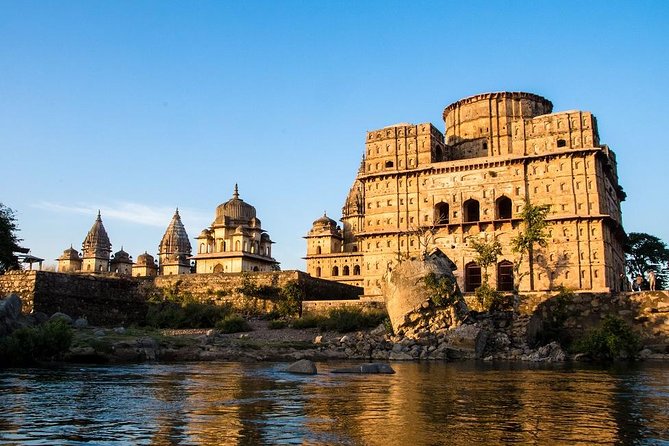
The route becomes more complicated on day six. After an early breakfast, you go to Agra railway station and board a train to Jhansi in an air-conditioned coach. A representative meets you at Jhansi, and the journey continues toward Khajuraho, with a stop at Orchha Fort along the way.
Orchha gives the trip a welcome change of scale and mood. You spend about three hours visiting the fort area before continuing onward. The plan is especially useful for people who want more than the three standard Golden Triangle cities, since Orchha breaks up the transfer and adds another historic setting.
The train segment is part of the experience, but it also requires more attention from you. Keep your passport, tickets, medication, and valuables in your day bag. Station transfers are arranged, and the air-conditioned coach is included, but rail travel can feel less predictable than riding directly in the private car.
The accommodation plan includes one overnight train. The detailed day-by-day schedule also refers to a train from Khajuraho to Varanasi, so confirm the exact rail timings and sleeping arrangement before departure. That clarification is worth making because it affects how much rest you get before Varanasi sightseeing.
Khajuraho’s Hindu and Jain temple sculpture
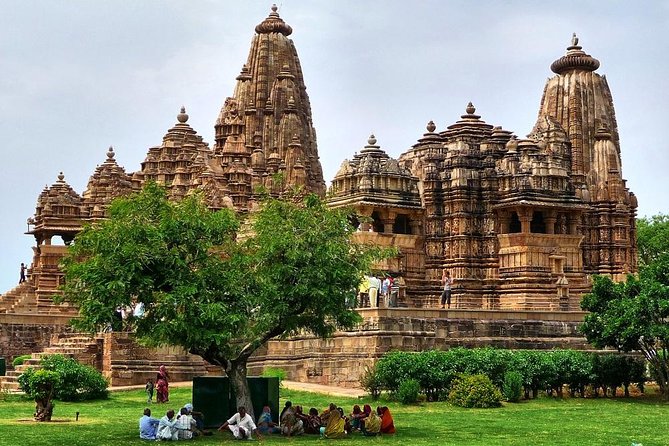
Khajuraho is the most unusual stop on this route. The Western Group contains 14 temples, including Kandariya Mahadeo, Matangesvara, Chaunsath Yogini, and Varaha. The buildings are famous for erotic carvings, but reducing them to that single subject misses most of what you are seeing.
Look at the temple walls as a record of courtly life, musicians, dancers, animals, religious figures, and human relationships. The stonework is dense, and a guide makes a real difference because the visual details can otherwise blur into one large display.
You have about two hours at the Western Group. The temples are best approached with patience, especially Kandariya Mahadeo, whose rising form and layered carvings reward a slower look. Admission is not included, so add the site fees to your budget.
The Eastern Group takes another two hours and includes seven temples. Three are Hindu and four are Jain, giving you a useful comparison between religious traditions. Vamana and Javari are among the named temples in this group.
The Eastern Group is a strong reason to choose this tour over a basic Golden Triangle itinerary. It shows that Khajuraho is not only about the famous Western Group and its sensual imagery. You get a wider picture of the area’s religious art and architectural range.
Varanasi, Sarnath, and the Ganges
By day eight, you arrive at Varanasi by train and transfer to your hotel. The city is a sharp contrast to the ordered avenues of New Delhi, the planned streets of Jaipur, and the monumental spaces of Agra.
The first excursion is to Sarnath, about a two-and-a-half-hour visit. Sarnath is one of the four holiest Buddhist places and has a quieter setting than central Varanasi. Its stupas and archaeological remains give you a chance to consider the Buddhist side of northern India’s religious story.
Back in Varanasi, Kashi Vishwanath Temple is dedicated to Shiva and is one of the 12 Jyotirlingas. The planned visit is about 30 minutes. Religious access and crowd conditions can shape the experience, so listen carefully to your guide and follow the site’s current rules.
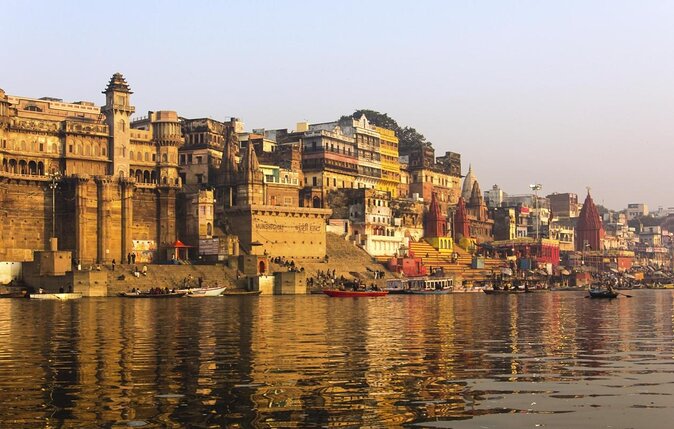
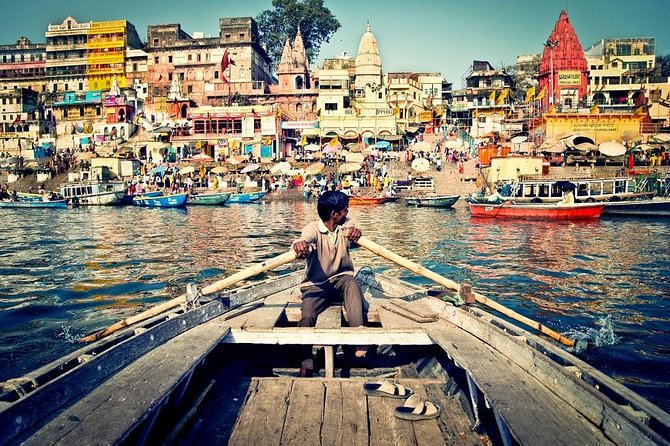
The Banaras Ghats are the city’s defining sight. There are about a hundred ghats along the Ganges, where pilgrims bathe and carry out religious rituals. You have around an hour here, enough to see the riverfront and understand why the city has drawn pilgrims for centuries.
The itinerary also includes Bharat Mata Temple, a distinctive shrine without a conventional deity. Instead, it contains a marble relief map of India. Alamgir Mosque adds another layer to the city’s religious architecture, with its seventeenth-century Mughal design and complicated connection to an earlier Shiva temple.
The plan highlights an evening prayer ceremony on the Ganges, but the detailed schedule does not give a separate duration or exact arrangement for it. Ask for the precise timing when you confirm your day, particularly if you want to prioritize the ceremony.
Sunrise on the Ganges before your flight
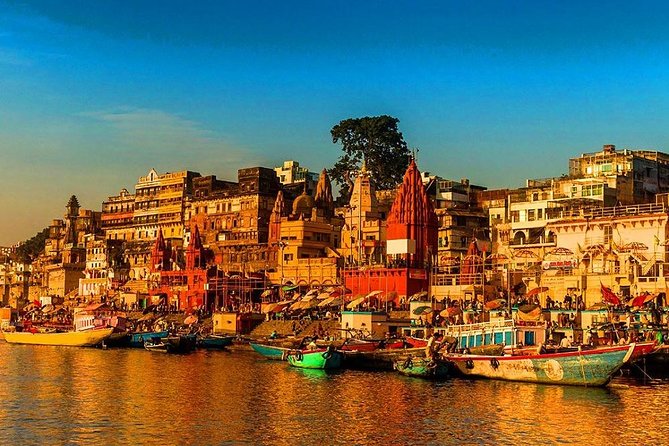
Day nine starts before dawn with a one-hour boat ride on the Ganges. This is one of the tour’s best-timed activities. From the water, you can watch the city wake as the sun comes up, with the ghats forming a long ceremonial edge along the river.
The boat ride is included, but monument and activity fees are listed separately in the general exclusions, so confirm any local payment required. Afterward, you return to the hotel for breakfast and transfer to Varanasi airport for your onward flight.
This final morning is memorable, but it is not leisurely. You rise early, return for breakfast, and head to the airport. Plan your flight time with care and leave room for the airport transfer.
What the private format adds
The biggest practical advantage is control. You have a private car and chauffeur throughout the road portions, with local English-speaking guides in Delhi, Jaipur, Agra, Khajuraho, and Varanasi. That means you can ask questions without competing with a large group, and your guide can explain the meaning behind what you see.
The operator’s strongest service features are the clean cars, professional drivers, and local guides. Those basics matter in India, where long road days, crowded streets, and complicated transfers can wear you down.
The private format does not remove every difficulty. Traffic remains traffic, and the rail portions still require punctual station arrival and careful handling of luggage. You also change hotels several times, so pack in a way that makes frequent departures easy.
Who should book this tour
I would choose this trip if you want a broad first visit to northern India and care more about variety than downtime. It suits couples, families, and small private groups who want Delhi, the Taj Mahal, Jaipur, Khajuraho, and Varanasi in one organized route.
It is less suited to you if you prefer long stays, slow mornings, or independent wandering. The schedule is full, and the train connections make it more active than a standard Golden Triangle tour.
The 100 percent recommendation rate from 22 published ratings and a five-star overall score are encouraging, especially alongside the practical praise for clean vehicles, professional drivers, and pleasant local guides. Still, the right decision depends on your tolerance for early starts, long transfers, and extra admission costs.
Cancellation is free up to 24 hours before the experience begins. Changes or cancellations inside that window are not accepted for a refund.
Should you book the nine-day route?
Book it if you want the major sights of northern India plus two distinctive additions: Khajuraho’s temple sculpture and Varanasi’s Ganges rituals. The private transport, guides, rail tickets, jeep ride, rickshaw ride, battery van, water, and breakfasts make the $683 starting price appealing.
Before paying, confirm the hotel names, train departure times, the overnight rail arrangement, monument fees, and the timing of the evening prayer ceremony. If those details suit you, this is an efficient and culturally varied introduction to India, with enough structure to reduce travel stress and enough local contact to keep the journey from feeling like a simple monument checklist.
FAQ
How long is the private Golden Triangle tour with Khajuraho and Varanasi?
The tour lasts approximately nine days.
Where does the tour begin and end?
It begins in New Delhi, with airport pickup and transfer to the hotel. The final transfer is to Varanasi airport for your onward flight.
Is the tour private?
Yes. Only your group participates in the private tour or activity.
What transportation is included?
A private English-speaking chauffeur-driven car is provided throughout the road portions. The tour also includes an air-conditioned train from Agra to Jhansi, an air-conditioned train from Khajuraho to Varanasi, a Jaipur jeep ride to Amber Fort, a rickshaw ride in Chandni Chowk, a battery van at the Taj Mahal, and a Ganges boat ride.
Are hotels and breakfasts included?
Seven nights of hotel accommodation, one night in an overnight train, and eight breakfasts are included.
Are monument entrance fees included?
No. Monument and sightseeing entrance fees are excluded and are estimated at about $100 per person.
Is the Taj Mahal open every day?
No. The Taj Mahal is closed every Friday.
What is the cancellation policy?
You can cancel up to 24 hours before the experience start time for a full refund. Cancellations or changes made less than 24 hours in advance are not accepted.
Just added around New Delhi
- Delhi: All-Inclusive Full or Half Day Tour With Hotel Pickup★ 5.0 · 3 reviews
- From Delhi : All Inclusive Taj Mahal Tour by Gatimaan Express★ 5.0 · 3 reviews
- Skip the line: Taj Mahal Agra Private Day Trip From Delhi By Car★ 5.0 · 3 reviews
- Delhi: Old and New Delhi One Day Private Guided City Tour★ 5.0 · 3 reviews
- New Delhi Night City Tour★ 5.0 · 3 reviews
- Old Delhi Half day private city tour★ 5.0 · 3 reviews
- A full-day tour of Old & New Delhi Monument Express Entry★ 5.0 · 3 reviews
- Sultanpur Bird Sanctuary Tour Near Delhi★ 5.0 · 3 reviews
Golden Triangle with Varanasi, compared.
Delhi Agra Jaipur & Varanasi Tour – Taj Mahal & Ganga Aarti
Read our review →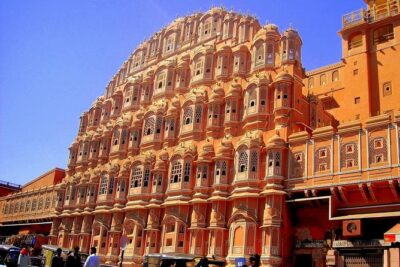
7-Day Golden Triangle & Varanasi Tour from Delhi with Guide
Read our review →
6-Day Private Tour of Delhi, Agra, Jaipur, and Varanasi from Delhi
Read our review →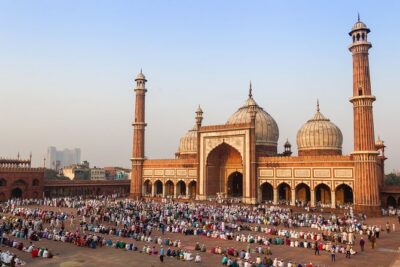
11 Days Golden Triangle & Varanasi With Luxury Accommodation,internal Flights
Read our review →
8-Day Private Luxury Golden Triangle With Spiritual Varanasi Tour
Read our review →
10 Day Private Luxury Golden Triangle with Khajuraho and Varanasi
Read our review →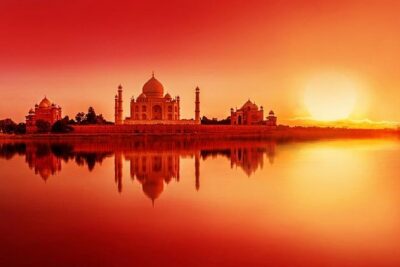
Private Luxury Delhi, Agra, Jaipur & Varanasi from Delhi – 5 Nights 6 Days Tour
Read our review →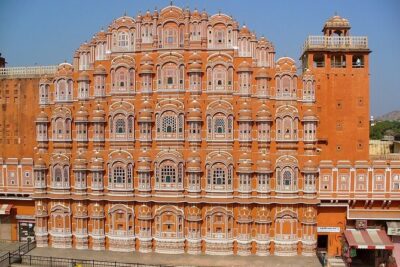
6 Days Private Golden Triangle Tour with Varanasi from Delhi
Read our review →Browse the lists this tour appears in