
Reviewed · GOLDEN TRIANGLE TOURS
Delhi Agra and Jaipur in 3 Days – Golden Triangle Tour India
The Taj Mahal at sunrise is the centerpiece, but this three-day trip gives you much more: the crowded lanes of Old Delhi, Mughal tombs and forts, Fatehpur Sikri, and Jaipur’s grand palaces. A private car and driver keep the long road days manageable, while a separate guide in each city explains what you are seeing.
I like the included monument tickets and the rickshaw ride through Chandni Chowk. I also like having guides in Delhi, Agra, and Jaipur rather than trying to make sense of three very different cities alone. The main drawback is the pace: long drives, early starts, and a packed schedule leave little room for wandering.
In This Review
- Key points at a glance
- What the three-day route really feels like
- Old Delhi: Jama Masjid and Chandni Chowk
- Humayun’s Tomb and New Delhi’s ceremonial sights
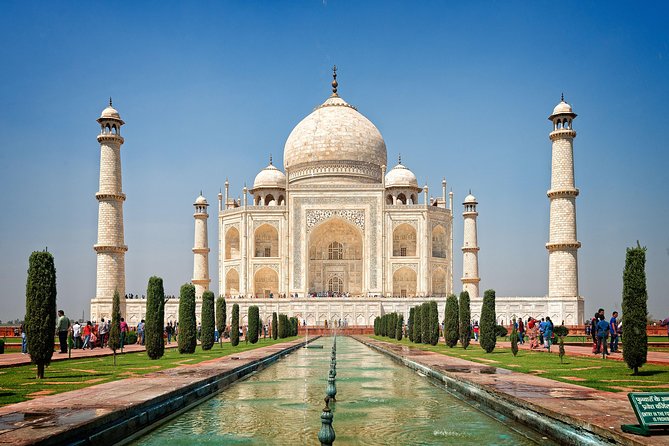
- The Taj Mahal at sunrise
- Agra Fort and the road to Jaipur
- Jaipur begins with Amber Fort
- City Palace, Jantar Mantar, and Hawa Mahal
- Guides, driver, and the private-car advantage
- Is $300 per person good value?
- Who should book this Golden Triangle tour?
- Should you book it?
- FAQ
- How long is the Golden Triangle tour?
- Where does the tour start?
- Is the tour private?
- Is transportation included?
- Are guides included in all three cities?
- Is the Taj Mahal visit scheduled for sunrise?
- Are monument entrance fees included?
- Are hotels included?
- Can I cancel for a full refund?
Key points at a glance
- Sunrise at the Taj Mahal: Start around 6 a.m. for up to three hours at India’s most famous monument.
- Private car for three days: Your air-conditioned vehicle and driver travel with you from New Delhi through Agra and Jaipur.
- A different guide in each city: Local guides cover Delhi, Agra, and Jaipur, with Ali in Delhi and Kamiesh noted among the especially strong guides.
- Old Delhi by rickshaw: The Chandni Chowk ride takes you through spice, fruit, and dry-goods markets that are difficult to cover by car.
- Two hotel categories: You can choose 3-star or 5-star accommodation in Agra and Jaipur, or arrange your own hotels.
- A very full final day: Amber Fort, Jal Mahal, City Palace, Jantar Mantar, and Hawa Mahal are all included in Jaipur.
What the three-day route really feels like
This is a sightseeing sprint, not a slow cultural holiday. You cover three major cities, several Mughal and Rajput monuments, and a substantial stretch of road between Delhi, Agra, and Jaipur.
That speed is also the point. If you have only three days, the tour connects the classic Golden Triangle sights without asking you to arrange drivers, tickets, hotels, and guides separately. The private format matters, since you travel only with your own group and can communicate directly with the driver and each guide.
The route begins in New Delhi at 9 a.m. on the first day. The second day starts at about 6 a.m. for the Taj Mahal. The third day begins at 8 a.m. in Jaipur and usually finishes around 2 p.m. The schedule is workable, but you should expect full days rather than leisurely visits.
More Agra and Fatehpur Sikri days:
- Same Day Taj Mahal, Agra Fort & Baby Taj Tour from Delhi by Car
★ 5.0 · 4,304 reviews - Full Day Taj Mahal, Agra Fort & Baby Taj Tour from Delhi by Car
★ 5.0 · 3,647 reviews - From Delhi: Taj Mahal & Agra Private Day Trip with Transfers
★ 4.9 · 3,181 reviews
Old Delhi: Jama Masjid and Chandni Chowk
Your first stop is Jama Masjid, one of Old Delhi’s major landmarks. You have about an hour with admission included, and your guide explains the setting before you move into the streets of Chandni Chowk.
The change in atmosphere is immediate. Chandni Chowk is a shopping district filled with spice sellers, dried fruit, and narrow lanes. The included rickshaw ride is useful here because a car cannot reach many of the smaller streets. You get a quick look at daily commerce instead of seeing Old Delhi only through a vehicle window.
Allow yourself to be jostled a little. This part of the tour is crowded and noisy by nature, and the rickshaw is more about seeing the district than covering a long distance. Comfortable shoes are a good idea, even though the vehicle handles most of the day’s road travel.
The Red Fort is viewed from outside. Much of the complex is occupied by the Indian Army, so this tour does not provide a full interior visit. You can stop for photographs while your guide explains its place in Delhi’s Mughal story, but do not expect a complete Red Fort tour.
Humayun’s Tomb and New Delhi’s ceremonial sights
After Old Delhi, you stop for lunch before continuing through New Delhi. Lunch is not included, so you pay for it yourself. The break gives you a chance to sit down before the afternoon monuments.
Humayun’s Tomb is the first major New Delhi stop. Admission is included, and you have about an hour. Its formal gardens and Mughal design make it a calmer counterpoint to Chandni Chowk. The site also helps you understand the architectural tradition that later reached its most famous expression at the Taj Mahal.
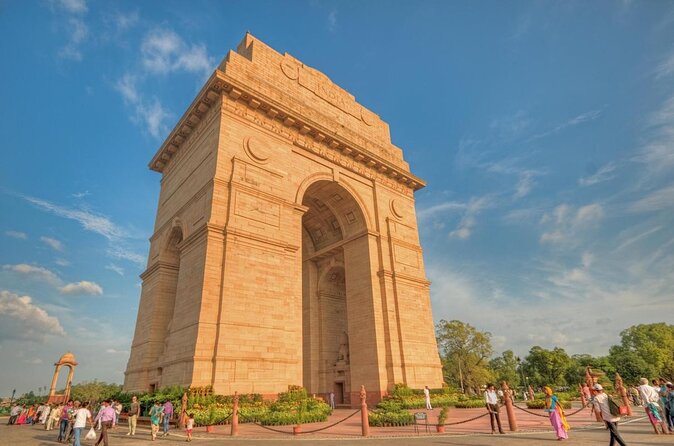
India Gate and Parliament House are viewed from the road, with time for photographs. These are drive-by stops rather than interior visits. That is useful for a first look at the capital’s ceremonial center, but the schedule does not treat them as full attractions.
Qutub Minar receives about an hour and includes admission. This tall medieval minaret is one of the most striking stops in Delhi, especially after the compact lanes of Old Delhi. Your guide gives the monument context, while the private car saves you from piecing together several distant parts of the city on your own.
Lotus Temple is also listed as the final Delhi sight. It is a Bahá’í House of Worship dedicated in 1986. Since the exact time spent there can depend on the day’s traffic and pacing, it is wise to ask your guide how it fits into the schedule before you set out.
After Delhi, you drive to Agra in the evening. This is the first major road stretch, so the air-conditioned car and experienced driver are not minor comforts. They are what make the itinerary possible in three days.
The Taj Mahal at sunrise
The early start on day two is the moment to protect. Pickup is planned for about 6 a.m., followed by roughly three hours at the Taj Mahal. The sunrise timing gives you a softer light and a cooler start than a late-morning visit, though the exact view depends on the conditions that day.
Admission is included, and your Agra guide accompanies you. A good guide is valuable here because the monument can look simple from a distance, while the details of its design, symmetry, and setting reward explanation.
The three-hour allowance is generous enough for a guided visit and photographs without making you rush straight back to the car. You return to the hotel afterward for breakfast, then check out before continuing to Agra Fort.
One practical issue deserves attention: the breakfast timing. The itinerary places breakfast after the Taj Mahal, and one past scheduling mix-up involved an early pickup and a breakfast box that contained raw vegetables and was difficult to eat on the road. If you need food before a 6 a.m. departure, confirm the plan with the operator and your hotel in advance.
More Golden Triangle itineraries from New Delhi:
- 3-Days Private Golden Triangle Tour: Delhi, Agra & Jaipur by Car
★ 5.0 · 1,107 reviews - 3-Days Private Golden Triangle Tour: Delhi, Agra & Jaipur by Car
★ 5.0 · 1,098 reviews - 3-Day Delhi, Agra and Jaipur Private Tour – India Golden Triangle
★ 5.0 · 812 reviews - Four-Day Private Luxury Golden Triangle Tour to Agra and Jaipur From New Delhi
★ 5.0 · 807 reviews
Agra Fort and the road to Jaipur
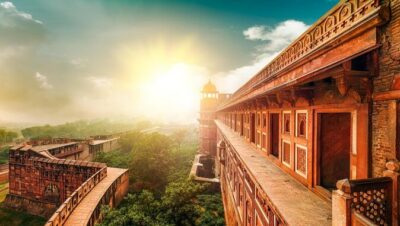
Agra Fort follows breakfast and checkout. You have about an hour with admission included. The fort gives you a different view of Mughal power than the Taj Mahal: it is a large defensive and royal complex rather than a single mausoleum.
This stop fits well after the Taj Mahal because it keeps you in Agra without adding another major transfer. Your guide can connect the two monuments, helping you see them as parts of the same imperial city rather than unrelated photo stops.
The route then continues toward Jaipur, with Fatehpur Sikri on the way. The itinerary allows about four hours for this part of the day, including the visit and the onward drive. Fatehpur Sikri is a former Mughal city of red sandstone, and its courtyards and buildings provide a strong change from Agra’s white marble.
The arrival in Jaipur is expected around 7 p.m. This makes day two particularly long. You will have seen two of northern India’s biggest monuments, but the road time can be tiring. If you are prone to motion sickness or simply prefer a slower schedule, this is the day to think about most carefully.
Jaipur begins with Amber Fort
Day three starts at 8 a.m. with pickup from your Jaipur hotel. Amber Fort, also called Amer Fort, is the first major stop and receives about two hours with admission included.
The fort sits outside central Jaipur and is one of the trip’s most impressive settings. The visit is large enough to feel substantial, unlike a quick photograph from the roadside. Give yourself time to notice the courtyards, gates, and changing views as you move through the complex with your guide.
The tour then stops at Jal Mahal, the Palace on Lake. You cannot enter the building, but you can take photographs from outside. This is a short scenic stop rather than a full palace visit, so it works well between Amber Fort and the central Jaipur sights.
Because the Jaipur day is compact, the guide’s pacing matters. The strongest guides help you focus on the important rooms and stories without letting one stop consume the entire morning. Ali is specifically praised for his work in Delhi, while Kamiesh is among the Agra guides singled out for a strong experience. You receive a separate guide in each city, so the quality and style may vary from place to place.
City Palace, Jantar Mantar, and Hawa Mahal
City Palace is given about two hours and includes admission. The complex was established with Jaipur in 1727, when Maharaja Sawai Jai Singh II moved his court from Amber. It is the clearest place on this route to see Jaipur’s royal identity in one setting.
Jantar Mantar follows with about an hour. This observatory contains 19 architectural astronomical instruments, completed in 1734. It is a good stop for anyone who likes buildings with a practical purpose. The instruments are not simply decorative monuments, and your guide can make their function easier to understand.
Hawa Mahal, the Palace of Winds, is viewed from outside. Entrance is not included because the tour does not enter the building, but there is time for photographs. Its elaborate front is one of Jaipur’s most recognizable images, and an exterior stop is enough for the classic view, though you should not expect an interior exploration.
The Jaipur sightseeing portion generally finishes around 2 p.m. That gives you a useful afternoon if your onward plans begin later, but the tour does not specify a return transfer beyond the day’s sightseeing. Confirm where the final drop-off will be if you need to reach an airport, railway station, or another city.
Guides, driver, and the private-car advantage
Your driver remains with you for the three days, while a guide meets you in each city. This arrangement is better than relying on one person to explain every place, since Delhi, Agra, and Jaipur have different political, religious, and architectural traditions.
The vehicle is private, air-conditioned, and supplied with bottled water. Fuel, tolls, taxes, and facility charges are included. Those details matter on a route with long intercity drives, since small road charges can otherwise add up and slow you down.
Durgesh is named as a particularly kind and conscientious three-day driver. Another strong account describes the van, driver, and guides as excellent, with the guides adding extra places beyond the standard route. You should still remember that an extra photo stop is not guaranteed. The fixed itinerary is already full.
The private format also gives you more control than a large coach. You are not waiting for strangers at every stop, and the group consists only of your own party. At the same time, private does not mean relaxed. Traffic, monument opening patterns, and road conditions can still stretch the day.
Is $300 per person good value?
At $300 per person, the package can be good value if your chosen option includes the two hotel nights. You receive private transport from New Delhi, a driver, guides in all three cities, the Chandni Chowk rickshaw, monument entrance fees, bottled water, breakfast, and two nights of accommodation when that option is booked.
You can select 3-star or 5-star hotels in Agra and Jaipur, or arrange your own lodging. This flexibility is useful, but it also means you should check exactly which hotel category and inclusions are attached to your booking. Hotel quality has not been consistent for every booking, and one past experience found the accommodation disappointing despite strong transport and guides.
The 5-star option costs more in many tour setups, but it may be worth considering after two long days. If you prefer control, book your own hotels and use the tour mainly for transport, guides, and entries. Just confirm how the price changes when accommodation is removed.
Meals other than breakfast are not included, and tipping for the driver and guides is also separate. Personal purchases and other expenses come out of your pocket. Add those costs before comparing this package with a self-arranged route.
Who should book this Golden Triangle tour?
I would choose this trip if you have limited time and want the main sights handled in one organized route. It suits first-time visitors who prefer a private vehicle, want explanations at the monuments, and do not want to bargain for separate cars and guides in three cities.
It also suits couples, families, or small groups who value staying together. Group discounts may make the per-person cost more attractive as your party grows, although the exact discount is not specified.
I would think twice if you want long museum visits, unplanned market time, or slow mornings. The schedule gives you a strong first look at each city, not a detailed stay in any one of them. The 6 a.m. Taj Mahal departure and the long Agra to Jaipur day are the clearest trade-offs.
Wear comfortable walking shoes. Most travelers can participate, but the monuments involve walking and the schedule requires energy. You should also be comfortable with early starts and long car journeys.
Should you book it?
Book this tour if coverage and convenience matter more to you than a slow pace. The route includes the major Golden Triangle sights, private transport, monument tickets, a rickshaw ride, and city-specific guides. Strong drivers such as Durgesh and guides such as Ali and Kamiesh can make a major difference to how smoothly the days unfold.
Before paying, confirm the hotel category, breakfast arrangements for the early Taj Mahal morning, the exact Delhi stops, and the final Jaipur drop-off. If those details suit your plans, $300 per person is a reasonable way to cover a lot of northern India in three days. If you want more rest or more time inside each city, add nights and shorten the route instead.
FAQ
How long is the Golden Triangle tour?
The experience lasts approximately three days and covers Delhi, Agra, and Jaipur.
Where does the tour start?
Pickup is offered from your preferred location in New Delhi, with the stated start time at 9 a.m.
Is the tour private?
Yes. Only your own group participates in the private tour or activity.
Is transportation included?
Yes. A private air-conditioned car with a driver is provided from New Delhi, along with tolls, fuel surcharge, taxes, and facility fees.
Are guides included in all three cities?
Yes. A live guide is provided in Delhi, Agra, and Jaipur, with a different guide meeting you in each city.
Is the Taj Mahal visit scheduled for sunrise?
Yes. Day two begins with hotel pickup at about 6 a.m. for a sunrise visit lasting approximately three hours.
Are monument entrance fees included?
Yes. Entrance fees are included for the listed ticketed attractions, including Jama Masjid, Humayun’s Tomb, Qutub Minar, the Taj Mahal, Agra Fort, Amber Fort, City Palace, and Jantar Mantar.
Are hotels included?
Two nights of hotel accommodation in Agra and Jaipur are included only if you select that option. You can choose a 3-star or 5-star category, or arrange your own hotels.
Can I cancel for a full refund?
Yes, if you cancel at least 24 hours before the experience start time. Cancellations or changes made within 24 hours are not refunded or accepted.
More 3-Day Experiences in New Delhi
- 3-Day Private Luxury Golden Triangle Tour to Agra and Jaipur From New Delhi
★ 5.0 · 424 reviews - 3-Day Luxury Golden Triangle Tour: New Delhi, Agra & Jaipur
★ 5.0 · 246 reviews - Award-Winning 3-Day Private Golden Triangle Tour of India
★ 5.0 · 240 reviews - 3 Days 2 Night Golden Triangle Tour – Private Luxury Experience
★ 5.0 · 191 reviews
Just added around New Delhi
- Delhi: All-Inclusive Full or Half Day Tour With Hotel Pickup★ 5.0 · 3 reviews
- From Delhi : All Inclusive Taj Mahal Tour by Gatimaan Express★ 5.0 · 3 reviews
- Skip the line: Taj Mahal Agra Private Day Trip From Delhi By Car★ 5.0 · 3 reviews
- Delhi: Old and New Delhi One Day Private Guided City Tour★ 5.0 · 3 reviews
- New Delhi Night City Tour★ 5.0 · 3 reviews
- Old Delhi Half day private city tour★ 5.0 · 3 reviews
- A full-day tour of Old & New Delhi Monument Express Entry★ 5.0 · 3 reviews
- Sultanpur Bird Sanctuary Tour Near Delhi★ 5.0 · 3 reviews
Golden Triangle Tours, compared.
3-Days Private Golden Triangle Tour: Delhi, Agra & Jaipur by Car
Read our review →3-Days Private Golden Triangle Tour: Delhi, Agra & Jaipur by Car
Read our review →
3-Day Delhi, Agra and Jaipur Private Tour – India Golden Triangle
Read our review →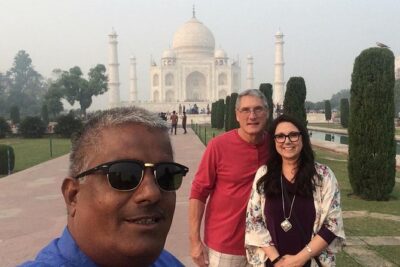
Four-Day Private Luxury Golden Triangle Tour to Agra and Jaipur From New Delhi
Read our review →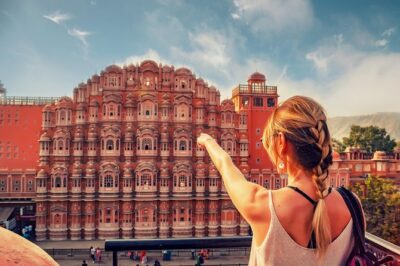
Jaipur Day Trip from Delhi by Car or Train – All Inclusive
Read our review →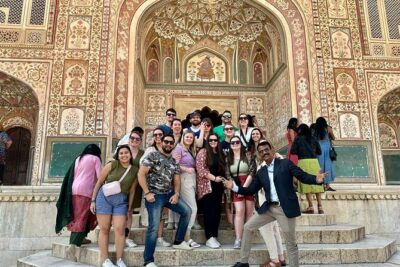
Jaipur City Private Day Tour from Delhi by Car – All Inclusive
Read our review →
5 Nights 6 Days Private Golden Triangle Tour – Delhi Agra Jaipur
Read our review →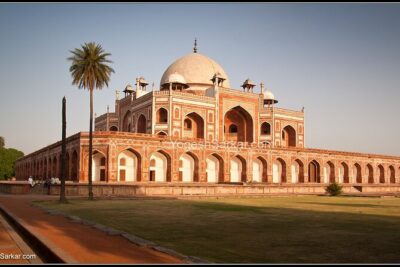
Browse the lists this tour appears in