
Reviewed · GOLDEN TRIANGLE TOURS
Delhi Agra Jaipur 3 Days Golden Triangle Tour
The sunrise visit to the Taj Mahal is the tour’s big prize. You leave Agra early, see the marble monument in softer light, then return for breakfast before touring Agra Fort and driving toward Jaipur. It is a smart way to fit India’s Golden Triangle into three days, though the schedule asks you to cover a lot of road.
I like the private SUV and chauffeur, which make Delhi traffic and the long Agra to Jaipur run easier to manage. I also like the local guides in each city, plus the cycle rickshaw ride through Old Delhi, where a car cannot show you the narrow market lanes. The main drawback is simple: three cities in three days means early starts, long drives, and little free time.
In This Review
- Key points to know before booking
- A fast route through India’s Golden Triangle
- Day 1: Lotus Temple, Mughal tombs, and Old Delhi
- Lotus Temple
- Humayun’s Tomb
- Gandhi Smriti and India Gate
- Rashtrapati Bhavan and Parliament House
- Jama Masjid, Red Fort, and Chandni Chowk
- Day 2: The Taj Mahal at sunrise, then Agra’s Mughal strongholds
- Taj Mahal at sunrise
- Agra Fort
- Itmad-ud-Daula, the Baby Taj
- Fatehpur Sikri and the road to Jaipur
- Day 3: Jaipur’s forts, palaces, and precise stone instruments
- Amber Fort and Panna Meena ka Kund
- Hawa Mahal
- Jantar Mantar
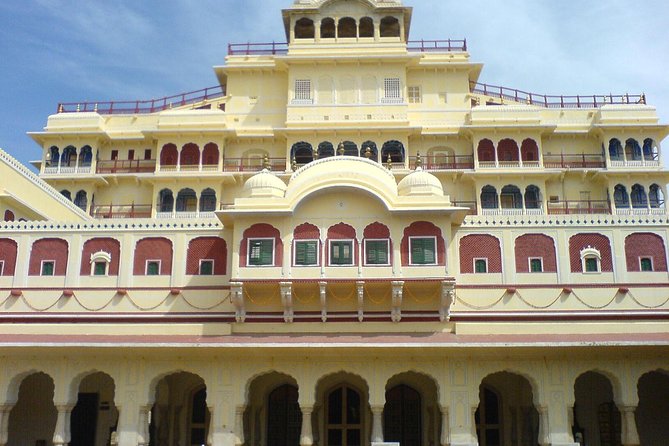
- City Palace
- Jal Mahal
- The drive back to Delhi is part of the deal
- Guides, drivers, and the private-tour advantage
- What the $30 price really covers
- Who should book this three-day route
- Should you book it?
- FAQ
- How long is the Golden Triangle tour?
- Is hotel pickup included?
- Are hotels included in the tour price?
- Are meals included?
- Are monument entrance fees included?
- Is the Taj Mahal open every day?
- Is the tour private?
Key points to know before booking
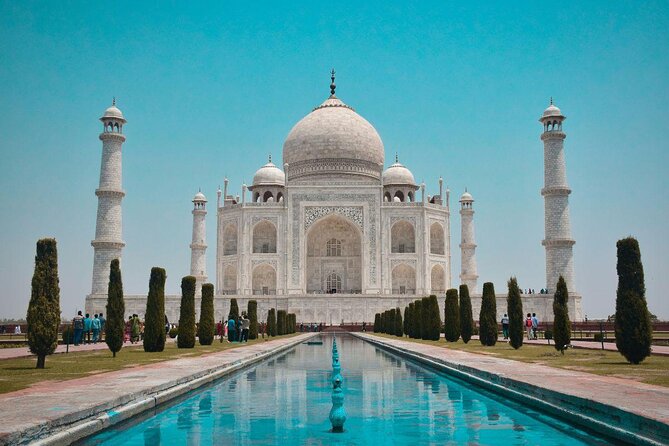
- Sunrise at the Taj Mahal: Visit early, return to your hotel for breakfast, then continue with Agra Fort and Baby Taj.
- One private vehicle: Your group travels with an air-conditioned vehicle, chauffeur, fuel, tolls, parking, and state taxes covered.
- Delhi’s old and new sides: See Lotus Temple, Humayun’s Tomb, India Gate, government buildings, Jama Masjid, Red Fort, and Chandni Chowk.
- Jaipur’s royal sights: The route includes Amber Fort, City Palace, Hawa Mahal, Jantar Mantar, Jal Mahal, and Panna Meena ka Kund.
- Budget headline price: The $30 rate is attractive, but hotels, meals, and monument tickets may cost extra.
- Important closure days: The Taj Mahal is closed Fridays, and Lotus Temple is closed Mondays, with Birla Temple offered as an alternative.
A fast route through India’s Golden Triangle
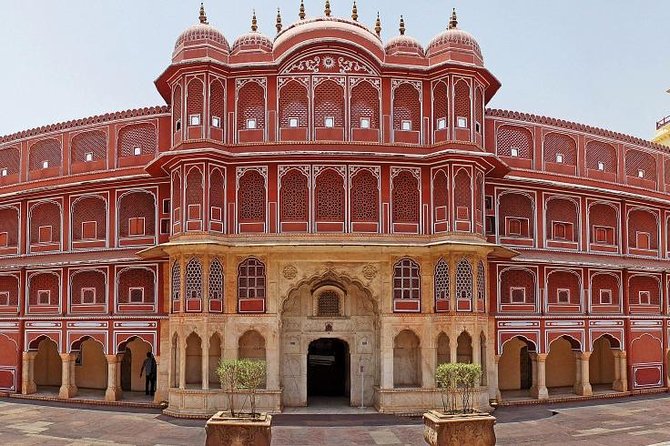
Delhi, Agra, and Jaipur form India’s best-known first trip. Delhi gives you imperial avenues, Mughal tombs, crowded markets, and major national monuments. Agra brings the Taj Mahal and Agra Fort. Jaipur adds Rajput palaces, hill forts, painted facades, and an extraordinary collection of astronomical instruments.
This three-day plan is aimed at efficiency. You get a private driver, hotel or airport pickup, local guides in each city, and a drop-off at a Delhi hotel, airport, or railway station at the end. You choose your own hotels, which gives you control over price and location but also means you must arrange suitable rooms for the two nights.
The listed price of $30 per person is unusually low for a private, multi-city route, so read the inclusions carefully. The base price does not include accommodation, food, or monument tickets unless you select the entrance-fee option. The supplied information lists monument fees at $70 per person when purchased separately, making the ticket-inclusive choice worth checking before you pay.
More Agra and Fatehpur Sikri days:
- Same Day Taj Mahal, Agra Fort & Baby Taj Tour from Delhi by Car
★ 5.0 · 4,304 reviews - Full Day Taj Mahal, Agra Fort & Baby Taj Tour from Delhi by Car
★ 5.0 · 3,647 reviews - From Delhi: Taj Mahal & Agra Private Day Trip with Transfers
★ 4.9 · 3,181 reviews
Day 1: Lotus Temple, Mughal tombs, and Old Delhi
The first morning begins around 9:00 a.m. after you check out. Your chauffeur and guide collect you from your Delhi hotel. Since your bags may remain in the vehicle during sightseeing, confirm the day’s storage arrangements with the tour team when you book.
Lotus Temple
Lotus Temple is a Bahá’í House of Worship with a distinctive flower-shaped design. Entry is free, and the planned visit lasts about an hour.
This is a calm opening stop before the noise and traffic build later in the day. The temple is closed every Monday. If your first day falls on Monday, the itinerary substitutes Birla Temple, so check the weekday arrangement before finalizing your dates.
Humayun’s Tomb
The next stop is Humayun’s Tomb, with about two hours planned and admission included. This Mughal monument is more than a quick photo stop. Its formal gardens, domed tomb, and carefully ordered design give you a useful introduction to the architectural ideas that later appear in Agra.
I would pay attention to the guide here. A good explanation can help you see the connection between Delhi’s Mughal buildings and the Taj Mahal, rather than treating each monument as an isolated stop.
More Golden Triangle itineraries from New Delhi:
- 3-Days Private Golden Triangle Tour: Delhi, Agra & Jaipur by Car
★ 5.0 · 1,107 reviews - 3-Days Private Golden Triangle Tour: Delhi, Agra & Jaipur by Car
★ 5.0 · 1,098 reviews - 3-Day Delhi, Agra and Jaipur Private Tour – India Golden Triangle
★ 5.0 · 812 reviews - Four-Day Private Luxury Golden Triangle Tour to Agra and Jaipur From New Delhi
★ 5.0 · 807 reviews
Gandhi Smriti and India Gate
After lunch near India Gate, you visit Gandhi Smriti. The site marks the place where Mahatma Gandhi spent part of his final years and where he was assassinated. The visit lasts about 30 minutes and admission is free.
India Gate follows, with roughly 19 minutes planned. The memorial honors Indian Army servicemen who died during the First World War, with names carved into its walls. This is a short exterior visit, useful for photographs and context rather than a long museum stop.
Rashtrapati Bhavan and Parliament House
The route then passes Rashtrapati Bhavan and Parliament House. The schedule allows about five minutes at Rashtrapati Bhavan and ten minutes at Parliament House, so think of these as photo and orientation stops.
Rashtrapati Bhavan occupies a large 330-acre complex and was designed during the construction of New Delhi by Edwin Lutyens and Herbert Baker. Your guide can help explain how the colonial-era government district differs from the older Mughal and market areas you see later.
Jama Masjid, Red Fort, and Chandni Chowk
Old Delhi changes the pace. Jama Masjid, built in the 17th century, is one of the world’s largest mosques. About an hour is planned, and admission is included.
Red Fort follows, with another hour scheduled. Built between 1639 and 1648, it served as a main residence of Mughal emperors. The listed itinerary marks admission as free, but ticket arrangements can vary by the option you choose, so confirm what your booking covers.
The day ends at Chandni Chowk, Delhi’s large historic market. A cycle rickshaw ride is included, and this is one of the most practical touches in the plan. Narrow lanes and dense trading streets are easier to experience from a rickshaw than from a larger vehicle. You may see a quick slice of local commerce, though the short 30-minute allocation means this is an introduction, not a full market exploration.
After the Delhi sightseeing, you drive to Agra for the night. The tour does not include your hotel, so book your own accommodation in Agra and make sure the driver has the correct address.
Day 2: The Taj Mahal at sunrise, then Agra’s Mughal strongholds
Day two starts early. That is the right call for the Taj Mahal, especially because the monument is closed every Friday. You visit the Taj first, return to the hotel for breakfast, check out, and then continue to Agra Fort and Itmad-ud-Daula before heading toward Jaipur.
Taj Mahal at sunrise
The Taj Mahal visit is scheduled for about three hours, including the early entry. Sunrise brings cooler conditions and softer light, although the exact atmosphere will depend on the season and weather.
Give yourself time to look beyond the main photograph. The white marble changes tone as the light shifts, and the scale of the grounds becomes clearer as you move through them. Your guide can also explain the building’s Mughal design and the story behind its construction.
The tour includes skip-the-line entry when entrance fees are included. That can matter on a tightly timed morning. Bring the required passport photocopy for the touring days, as the additional information specifically calls for it.
Agra Fort
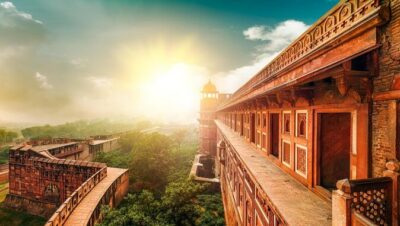
After breakfast, you visit Agra Fort for about an hour. Emperor Akbar began the fort in 1565, and its walls, courtyards, halls, and views toward the Taj offer a different side of Agra.
The Taj is delicate and ceremonial. Agra Fort is defensive, political, and imposing. Seeing both in sequence gives you a better sense of Mughal power than visiting the Taj alone.
Itmad-ud-Daula, the Baby Taj
Itmad-ud-Daula is often called Baby Taj because of its smaller scale and fine decorative work. The plan allows 30 minutes, with the option to go inside or simply take photographs from outside.
This stop works well after Agra Fort because it is compact and close enough to fit without adding another major block of time. If you want a detailed visit, tell the guide early. Thirty minutes passes quickly.
Fatehpur Sikri and the road to Jaipur
The drive to Jaipur includes a stop at Fatehpur Sikri, a former Mughal city founded by a 16th-century emperor. Red sandstone buildings cluster around the central area, and Buland Darwaza is one of its notable features.
One hour is scheduled here. That is enough for a useful look, but not enough for a slow, wandering visit. The stop also adds to an already long day, so you should expect more time in the vehicle than on foot.
After Fatehpur Sikri, you continue to Jaipur. The tour provides private transport, tolls, fuel, parking, and state taxes, which keeps the long transfer easier to budget. You spend the night in Jaipur at accommodation you arrange yourself.
Day 3: Jaipur’s forts, palaces, and precise stone instruments
Your final sightseeing day covers Jaipur’s main sights after breakfast and hotel checkout. The order may vary, but the planned stops include Amber Fort, Hawa Mahal, Jantar Mantar, City Palace, Jal Mahal, and Panna Meena ka Kund.
Amber Fort and Panna Meena ka Kund
Amber Fort is listed in the day’s overview, although the stop-by-stop schedule does not give it a separate duration. That is worth noting. Confirm the precise timing with your guide, especially if you want more than a quick look.
Nearby Panna Meena ka Kund is a historic stepwell linked to water harvesting. The geometric stairs make it a strong photo stop, and the planned visit lasts about 30 minutes. It offers a change from palace interiors and shows how practical water systems shaped daily life in Rajasthan.
Hawa Mahal
Hawa Mahal, or the Palace of Breeze, receives about an hour and admission is included. Its famous honeycomb facade was built for the women of the royal household to watch street life without being seen from outside.
The building is best understood from both the exterior and interior viewpoints. Ask your guide where to look for the facade’s layered windows and narrow openings. Since Jaipur’s streets can be busy, a short visit here is more about seeing the design clearly than lingering in one quiet spot.
Jantar Mantar
Jantar Mantar is one of Jaipur’s most unusual sights. It contains 19 architectural astronomical instruments, including the world’s largest stone sundial, and it is a UNESCO World Heritage Site.
Plan on an hour. The instruments can look abstract until the guide explains how they measured time and tracked celestial positions. This is one of the places where a local guide adds real value. Without context, the stone forms may seem like oversized sculpture.
City Palace
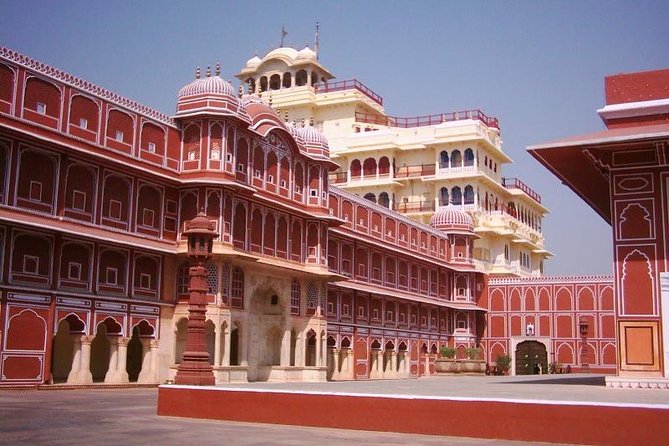
City Palace was developed by Maharaja Jai Singh, an accomplished astronomer, and part of the complex remains connected to Jaipur’s former royal family. The visit lasts about an hour, with admission included.
The palace helps tie Jaipur’s royal, political, and scientific sides together. You will see a different architectural mood from the Mughal buildings in Delhi and Agra, with the Rajput court setting at the center.
Jal Mahal
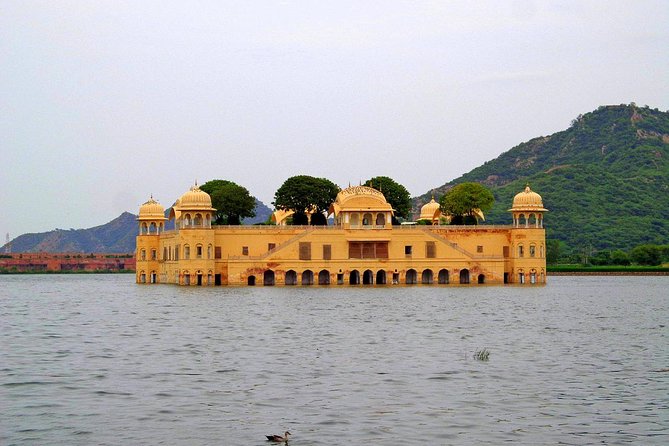
Jal Mahal is the Water Palace, set in Man Sagar Lake. The plan allows 30 minutes and lists admission as free.
This is mainly a viewing and photography stop. The palace’s position in the lake gives you one of Jaipur’s most recognizable scenes, but the schedule does not promise an interior visit. Treat it as a brief pause between larger attractions.
The drive back to Delhi is part of the deal
After Jaipur, the driver returns you to Delhi, with about four hours allocated for the journey. Drop-off is available at a Delhi airport, railway station, or hotel in Delhi, Gurugram, or Noida.
That final transfer is useful if your next stop is a flight or train. It also makes day three a long one. You should not plan an important evening activity immediately after the scheduled arrival, since road conditions can affect timing and the tour already includes a full Jaipur sightseeing day.
The vehicle is air-conditioned, and the tour provides complimentary mineral water. A private chauffeur also lets you pause for basic needs more easily than a fixed group coach, although this remains a tightly planned route.
Guides, drivers, and the private-tour advantage
The tour uses a government-approved city guide in each city. That arrangement matters because Delhi, Agra, and Jaipur each require different historical context, and the monuments are too varied for one short explanation to cover everything well.
Past service has particularly praised driver Gulbir Singh for being on time, patient, and careful behind the wheel. One account also noted a modern large SUV and strong German-language guiding, while another described the guides as helpful with questions and photography. These details suggest that driver quality is a major part of the experience, not just a transport footnote.
You should still confirm your preferred language when booking. The supplied information confirms live guides but does not promise a particular language for every departure.
Because this is a private activity, only your group participates. That gives you more control than a large coach tour, but it does not remove the basic pressure of the schedule. If you want long museum visits, leisurely meals, or unplanned market time, three days will feel compressed.
What the $30 price really covers
The low starting price can be good value if you understand the terms. Included services are:
- Air-conditioned vehicle with chauffeur
- Hotel or New Delhi airport pickup and drop-off
- Government-approved local guide in each city
- Toll taxes, state taxes, fuel, and parking
- Mineral water
- Monument admission only if you choose the entrance-inclusive option
- Skip-the-line entry when that ticket option applies
Not included are hotels, breakfast, lunch, dinner, and other food. You also arrange your own accommodation in Agra and Jaipur. The separate monument-fee amount is listed as $70 per person if you book without entrance tickets, so compare the final totals rather than judging the tour by the $30 headline.
Group discounts may improve the per-person value, especially for families or small parties. A private vehicle, multiple guides, and three cities for this price can make sense for a first visit, provided you are comfortable arranging hotels and meals separately.
Who should book this three-day route
I would recommend it to a first-time India visitor with limited time who wants the major sights handled in one plan. It also suits you if you prefer a private car, want hotel pickup, and value a driver who knows how to handle Delhi traffic.
The route is less suitable if you dislike early mornings, long road transfers, or changing hotels. It is also not the best choice for someone who wants to explore each city slowly. You see a great deal, but you often move on just as a place begins to feel familiar.
Pack light, carry the required passport photocopy, and verify the monument-ticket option before booking. Check your dates against the Friday Taj Mahal closure and Monday Lotus Temple closure. Those two details can affect the whole plan.
Should you book it?
Book this tour if your goal is maximum coverage in three days. The Taj Mahal at sunrise, a private driver, local guides, and the Old Delhi rickshaw ride give the trip a strong backbone. The city mix is excellent, moving from Delhi’s layered capital to Agra’s Mughal monuments and Jaipur’s royal and scientific sights.
Skip it if you want a relaxed pace or dislike handling hotel and meal arrangements yourself. For everyone else, the value is strongest when you select the ticket-inclusive option, confirm your pickup and language details, and accept that the road between the monuments is part of the experience.
FAQ
How long is the Golden Triangle tour?
The tour lasts approximately three days. It covers Delhi on day one, Agra on day two, and Jaipur on day three, with driving between the cities.
Is hotel pickup included?
Yes. Pickup is offered from your hotel or the New Delhi airport, and the final drop-off can be at a Delhi airport, railway station, or hotel in Delhi, Gurugram, or Noida.
Are hotels included in the tour price?
No. Accommodation in Agra and Jaipur is not included. You arrange your own hotels according to your budget and preferences.
Are meals included?
No. Breakfast, lunch, dinner, and other food costs are not included.
Are monument entrance fees included?
They are included only if you book the entrance-fee option. If you choose the option without tickets, the listed monument-fee cost is $70 per person.
Is the Taj Mahal open every day?
No. The Taj Mahal is closed every Friday. Plan your dates carefully so the Agra visit does not fall on that day.
Is the tour private?
Yes. This is a private activity, so only your group participates. The tour includes a private vehicle, chauffeur, and a live government-approved guide in each city.
More 3-Day Experiences in New Delhi
- 3-Day Private Luxury Golden Triangle Tour to Agra and Jaipur From New Delhi
★ 5.0 · 424 reviews - 3-Day Luxury Golden Triangle Tour: New Delhi, Agra & Jaipur
★ 5.0 · 246 reviews - Award-Winning 3-Day Private Golden Triangle Tour of India
★ 5.0 · 240 reviews - 3 Days 2 Night Golden Triangle Tour – Private Luxury Experience
★ 5.0 · 191 reviews
Just added around New Delhi
- Delhi: All-Inclusive Full or Half Day Tour With Hotel Pickup★ 5.0 · 3 reviews
- From Delhi : All Inclusive Taj Mahal Tour by Gatimaan Express★ 5.0 · 3 reviews
- Skip the line: Taj Mahal Agra Private Day Trip From Delhi By Car★ 5.0 · 3 reviews
- Delhi: Old and New Delhi One Day Private Guided City Tour★ 5.0 · 3 reviews
- New Delhi Night City Tour★ 5.0 · 3 reviews
- Old Delhi Half day private city tour★ 5.0 · 3 reviews
- A full-day tour of Old & New Delhi Monument Express Entry★ 5.0 · 3 reviews
- Sultanpur Bird Sanctuary Tour Near Delhi★ 5.0 · 3 reviews
Golden Triangle Tours, compared.
3-Days Private Golden Triangle Tour: Delhi, Agra & Jaipur by Car
Read our review →3-Days Private Golden Triangle Tour: Delhi, Agra & Jaipur by Car
Read our review →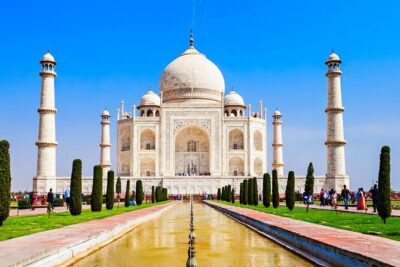
3-Day Delhi, Agra and Jaipur Private Tour – India Golden Triangle
Read our review →
Four-Day Private Luxury Golden Triangle Tour to Agra and Jaipur From New Delhi
Read our review →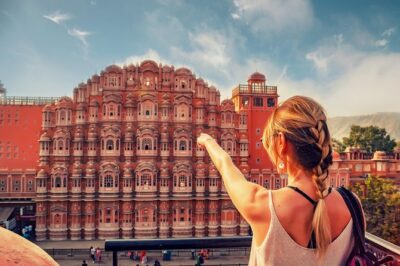
Jaipur Day Trip from Delhi by Car or Train – All Inclusive
Read our review →
Jaipur City Private Day Tour from Delhi by Car – All Inclusive
Read our review →
5 Nights 6 Days Private Golden Triangle Tour – Delhi Agra Jaipur
Read our review →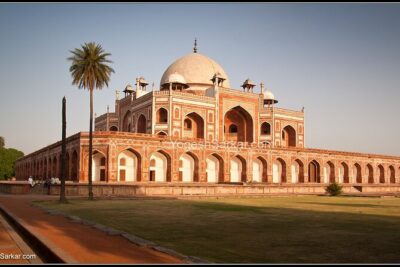
Browse the lists this tour appears in