
Reviewed · GOLDEN TRIANGLE TOURS
Five days Golden Triangle India Tour From Delhi
The great draw here is simple: in five days, you see India’s three most important sightseeing cities, from Delhi’s Mughal and modern landmarks to the Taj Mahal and Jaipur’s Rajput palaces. The early visit to the Taj Mahal is especially well judged, giving you softer light and a cooler, calmer start.
I like the private format, which lets you adjust the pace and ask for help when a site gets confusing. I also like that an air-conditioned car, four hotel nights, breakfast, tolls, and taxes are included. The main catch is that monument admission fees are extra, and the schedule is packed, with several long drives.
In This Review
- Key points to know before booking
- Why this five-day route works
- Day 1: Delhi from Qutub Minar to Akshardham
- Day 2: The road to Agra and the Baby Taj
- Day 3: Sunrise at the Taj Mahal and the drive to Jaipur
- Day 4: Jaipur’s forts, palaces, and astronomical tools
- Guides, drivers, and the private-tour advantage
- Day 5: Returning from Jaipur to Delhi
- What the $210 price really covers
- Who should book this tour?
- Should you book the Golden Triangle tour?
- FAQ
- How long is the Golden Triangle tour?
- What cities does the tour visit?
- Is the Taj Mahal visited at sunrise?
- Are monument entrance fees included?
- Is transportation included?
- Is this a private tour?
- What is included with the accommodation?
- Is hotel or Delhi pickup available?
Key points to know before booking
- Sunrise Taj Mahal visit: You enter the Taj Mahal early on Day 3, then return to the hotel for breakfast before checking out.
- Private trip for your group: You are not placed with strangers, and the route can be adjusted in advance or during the journey.
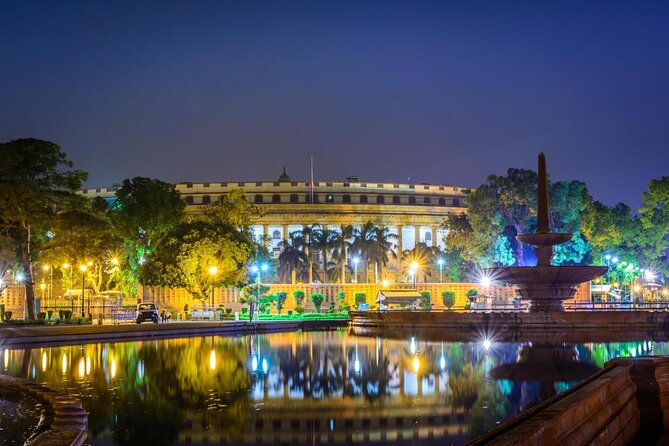
- Delhi sightseeing is wide-ranging: Qutub Minar, Jama Masjid, Lotus Temple, Raj Ghat, India Gate, and Akshardham are all covered.
- Four hotel nights are included: Breakfast is provided each morning, while the hotel category is not specified in the tour details.
- Monument tickets cost extra: This keeps the listed price low, but you need to budget for entry fees at the major sights.
- Guide and driver support matter: Praveen, Rajiv Gupta, Suresh, and Umesh are among the staff names praised for guiding, driving, communication, and ticket assistance.
Why this five-day route works
The Golden Triangle links Delhi, Agra, and Jaipur in a route that makes sense geographically. You begin in Delhi, travel to Agra, continue to Jaipur by way of the Chand Baori stepwell, and then return to Delhi.
At $210 per person, the price is appealing for a private tour that includes transport, accommodations, breakfast, tolls, taxes, and city guides. The figure needs a little unpacking, though. Since monument entrances are not included, your final cost will be higher. Lunches, dinners, and personal expenses are also not listed as included.
The value is strongest if you want someone else to handle the driving and the handoffs between cities. India’s major monuments can involve lines, ticket counters, security checks, and busy approaches. A guide can explain the sites while helping you get through those practical steps.
This is not a slow holiday. It is a sightseeing sprint with comfortable transport between stops. If you have only five days and want the classic route, that is a fair trade. If you want long afternoons in markets or time to wander each city alone, you may find the schedule too full.
More Golden Triangle itineraries from New Delhi:
- 3-Days Private Golden Triangle Tour: Delhi, Agra & Jaipur by Car
★ 5.0 · 1,107 reviews - 3-Days Private Golden Triangle Tour: Delhi, Agra & Jaipur by Car
★ 5.0 · 1,098 reviews - 3-Day Delhi, Agra and Jaipur Private Tour – India Golden Triangle
★ 5.0 · 812 reviews
Day 1: Delhi from Qutub Minar to Akshardham
Your first day covers a remarkable range of Delhi. The itinerary includes ancient Islamic architecture, Mughal monuments, memorials, government buildings, a Bahá’í temple, and a major Hindu temple complex.
Qutub Minar is a strong opening stop. The tapering tower rises 73 meters and forms part of a UNESCO World Heritage complex in Mehrauli. You have about an hour here, enough to see the tower and the surrounding remains, but not enough for a slow archaeological visit. Admission is extra.
The route then moves to Jama Masjid, Shah Jahan’s great Friday Mosque in Old Delhi. Built between 1644 and 1658, it can hold about 25,000 people and sits above the surrounding streets on a raised platform. The scheduled 45 minutes gives you a useful look, though this is one place where clothing rules and entry procedures may affect your time.
Lotus Temple changes the mood. Its white, flower-shaped design belongs to a Bahá’í House of Worship open to everyone, regardless of faith. Admission is free, and an hour allows time to appreciate both the building and its quiet setting.
At Raj Ghat, you pause beside the simple black-marble platform marking the place where Mahatma Gandhi was cremated in 1948. The 30-minute visit is enough because the site is intentionally spare. It offers a calm break after the noise and traffic of Old Delhi.
The government district follows. You see Rashtrapati Bhavan, the President of India’s official residence, and Parliament House from the outside. The itinerary describes a possible look inside the President’s House, but the listed stop itself is only 30 minutes, so you should confirm what access is available on your date.
India Gate is another brief stop. This 42-meter memorial arch honors Indian soldiers who died in World War I, the Northwest Frontier operations, and the 1919 Anglo-Afghan War. It is best treated as a photo and context stop rather than a long visit.
The day finishes at Swaminarayan Akshardham, a lavish temple complex built in 2005. Pale red sandstone carries carvings of deities, saints, and mythical creatures, and the complex is known for its large gold statue of Bhagwan Shri Swaminarayan. Admission is free, but the temple is closed on Mondays, so the operator needs to adjust the plan if your Delhi day falls then.
This first day is ambitious. The stops are short, and traffic can make the schedule feel tighter. Still, it gives you an unusually broad introduction to Delhi instead of limiting you to only the best-known Mughal sights.
Day 2: The road to Agra and the Baby Taj
Day 2 begins with the drive to Agra on the Yamuna Expressway. The stated driving time is about three hours, passing through the countryside before arrival and hotel check-in.
The expressway makes this transfer more predictable than a slower local-road route, but three hours in a car still takes energy. Use the ride as a rest period because the next two days include an early start and more sightseeing.
In Agra, you visit the Tomb of Itimad-ud-Daulah, often called the Baby Taj. This Mughal mausoleum is smaller and more intimate than the Taj Mahal, with delicate work that earned it the nickname jewel box. It is often described as a design forerunner to the Taj, making it a useful stop before seeing Shah Jahan’s more famous monument.
You have about 45 minutes here, and admission is extra. That short visit is probably enough for a first trip, although anyone interested in Mughal decoration may wish for more time.
The day ends at a Taj Mahal sunset viewpoint across the river. This gives you a different angle from the main entrance and a chance to see the monument away from the largest crowds. The scheduled 30 minutes is brief, but the stop adds variety and helps you see how much the Taj Mahal’s appearance changes with the light.
You spend the night in Agra. Four hotel nights are included across the tour, with breakfast, but the supplied details do not identify the hotel names or categories. If room standards matter to you, ask for those details before paying.
Day 3: Sunrise at the Taj Mahal and the drive to Jaipur
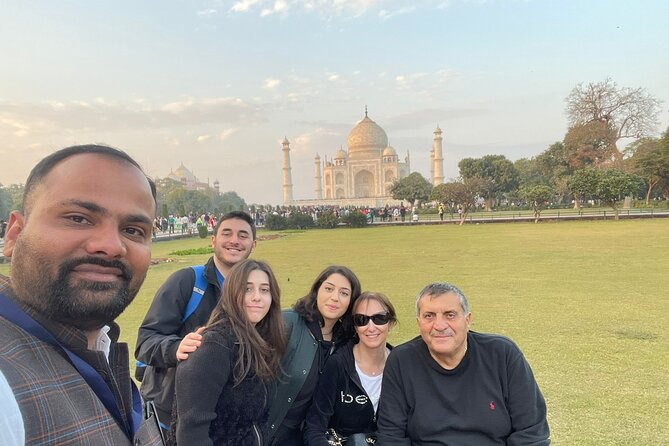
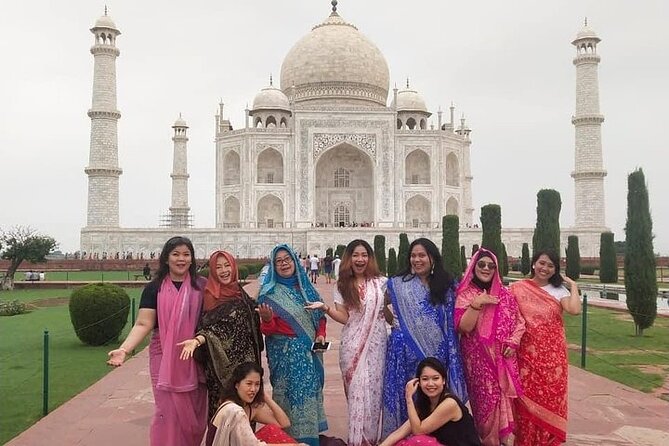
The Taj Mahal visit begins at sunrise. This is one of the best choices in the whole plan. The light can be gentle, the air cooler, and the experience less tiring than a midday visit. The monument is closed on Fridays, so check the dates carefully when booking.
The Taj Mahal was built by Shah Jahan as a memorial to his wife Mumtaz Mahal, who died giving birth to their fourteenth child in 1631. Your guide can add the human and architectural context that makes the white marble more than a quick photo stop.
Allow about two hours at the Taj. That should give you time for the main approach, the mausoleum, the gardens, and photographs, though entry lines and security can influence the exact pace. Admission is not included.
Afterward, you return to the hotel for breakfast and check out. This arrangement is practical, since you do not have to carry your luggage through the monument visit.
Agra Fort comes next. The red sandstone fort was the main residence of the Mughal emperors and contains palaces, balconies, courtyards, and gardens. The scheduled 45 minutes is enough for the principal areas with a guide, but the complex deserves careful attention. From here, the Taj Mahal’s place in Mughal court life becomes easier to understand.
Entry to Agra Fort is extra. As at the Taj Mahal, a guide can be useful for sorting out the many structures and explaining how the fort functioned rather than leaving you with a pile of impressive walls.
The drive to Jaipur includes Chand Baori, one of India’s largest and deepest stepwells. The geometric stairway descends toward a water tank, showing how local builders collected rainwater in a hot, dry region. Its repeated steps and carvings make it one of the most visually striking stops on the route.
You have about an hour at Chand Baori, and admission is extra. The stop breaks up the road journey and gives you something very different from the Mughal monuments in Agra.
After another hour or so of travel, you reach Jaipur, check into the hotel, and rest. That final word matters. This is a long day, so do not plan a late evening unless you have plenty of energy.
A few more New Delhi departures worth comparing
- Private 5-Day Ranthambhore Tiger Tour from Delhi including the Taj Mahal, Agra and Jaipur
★ 5.0 · 197 reviews - 5-Day Private Luxury Golden Triangle Tour to Agra and Jaipur From New Delhi
★ 5.0 · 142 reviews - Private Golden Triangle Tour 5 Days Delhi Agra Jaipur
★ 5.0 · 92 reviews - From Delhi: 5-Day Tiger Safari & Golden Triangle Tour
★ 4.5 · 81 reviews
Day 4: Jaipur’s forts, palaces, and astronomical tools
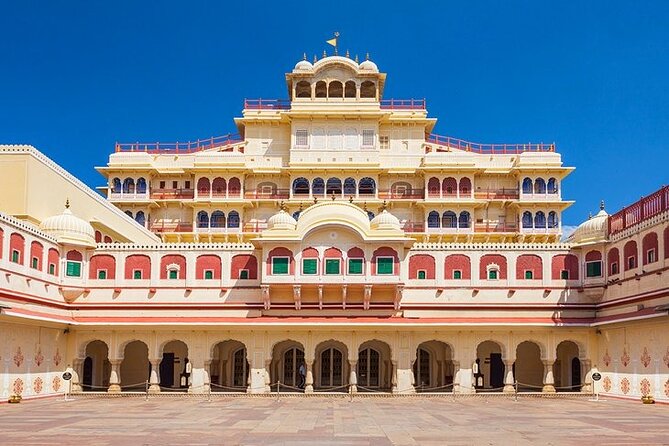
Jaipur’s sightseeing day begins at Amber Fort, also called Amer Fort, about 11 kilometers from the city. Set high on a hill, the fort combines Rajput defensive architecture with ornate palace interiors. Two hours gives you time to see the main courtyards, halls, and decorative details without racing through.
The fort is the day’s major physical challenge because of its hilltop setting. Most travelers can take part in the tour, but anyone with mobility concerns should discuss the route and pace with the operator before booking.
Next comes the City Palace of Jaipur, the former seat of the Maharaja of Jaipur and the Kachwaha Rajput clan. The complex includes Chandra Mahal, Mubarak Mahal, and other buildings. Its appeal lies in the contrast between royal ceremonial spaces and the details of daily court life.
The planned two hours here is generous compared with several other stops. Admission is extra, and you should ask which areas are covered by the ticket available for your visit.
At Jal Mahal, you stop for about 30 minutes to photograph the palace appearing to float in Man Sagar Lake. The building and lake were renovated and enlarged in the eighteenth century by Maharaja Jai Singh II of Amber. The stop is mainly visual, since the schedule describes a photo opportunity rather than an interior visit.
Jantar Mantar gives Jaipur a scientific turn. Built in 1734, this UNESCO World Heritage site contains 19 large instruments designed to observe astronomical positions with the naked eye. An hour with a guide can help you understand what the instruments do, since their scale and unusual shapes are not always self-explanatory.
The final major stop is Hawa Mahal, or the Palace of Winds. Built in 1799 by Sawai Pratap Singh, this five-story pink and red sandstone façade is one of Jaipur’s defining sights. The itinerary allows an hour, including time for photographs and a look at the architectural details. Admission is extra.
Lunch is scheduled at a local restaurant during the day, but the meal itself is not included in the package price. Keep some flexibility here because the full Jaipur program covers a lot of ground.
Guides, drivers, and the private-tour advantage
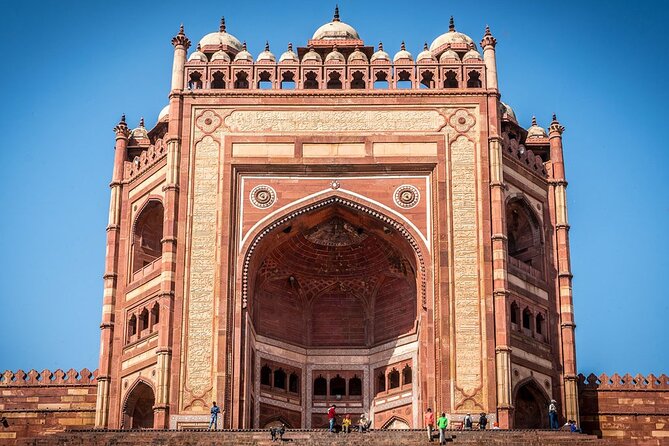
The strongest part of the service is the personal support. Praveen is repeatedly praised for explaining the Taj Mahal clearly, arranging tickets, helping with lines, taking photographs, and adapting the schedule to personal interests and time limits.
Other named staff include Rajiv Gupta, Suresh, and Umesh. Rajiv is described as a guide who stayed with a group through Delhi, Agra, and Jaipur. Suresh and Umesh are praised as careful, reliable drivers, with particular attention to calm driving and clear communication.
You should not assume one specific person will be assigned unless the company confirms it. Still, these names give you useful points of reference when discussing your booking.
The private format is especially helpful for families and older companions. One booking was adjusted for parents approaching 70, and another group appreciated the ability to change plans both before departure and during the tour. That flexibility can make a packed route much more manageable.
You also get the comfort of an air-conditioned vehicle throughout. In a five-day road trip with transfers of roughly three to five hours, this is not a minor extra. It gives you a private place to rest between monuments.
Day 5: Returning from Jaipur to Delhi
After breakfast, you check out and drive back to Delhi. The return journey is listed at about four hours, while the route description also refers to approximately five hours. Plan for a long transfer rather than relying on an exact arrival time.
The tour ends with drop-off at Delhi Airport or your location in Delhi. If you are connecting to a flight, leave a generous buffer. The exact traffic conditions and your drop-off point will affect the timing.
There is no sightseeing listed for this day, which is sensible after the full Jaipur schedule. It also means the tour works best when your arrival and departure plans allow room around the five-day program.
What the $210 price really covers
At $210 per person, this is a low-cost way to arrange a private Golden Triangle route, especially because the price includes:
- Four nights of accommodation
- Four breakfasts
- An air-conditioned vehicle
- An English-speaking city guide
- Tolls and taxes
- Delhi pickup and final drop-off options
The missing piece is monument admission. Entry fees for Qutub Minar, the Taj Mahal, Agra Fort, Amber Fort, City Palace, Jantar Mantar, Hawa Mahal, and other paid sites are not included.
That arrangement keeps the headline price clear, but you should ask for the current entrance total before departure. It is also worth confirming the hotel names, room arrangements, vehicle type, and which guide will meet you in each city.
Free cancellation is available if you cancel at least 24 hours before the local start time. A cancellation within 24 hours is not refunded, and late changes are not accepted.
Who should book this tour?
I would choose this trip if you want the classic sights in a short window and prefer private transport to arranging trains, cars, hotels, and guides yourself. It suits first-time visitors, families, couples, and groups who value help with tickets and photography.
It is also a good fit for people who want flexibility. The operator has adjusted routes for family needs and personal interests, and the private setup means you can discuss changes rather than follow a fixed group schedule.
I would hesitate if you want a relaxed cultural stay. Delhi has eight listed stops on Day 1, Agra has a sunrise start and a long transfer on Day 3, and Jaipur packs five major sights into one day. You will see a lot, but you will not have much unplanned time.
Should you book the Golden Triangle tour?
Book it if your priority is maximum sightseeing with minimum transport hassle. The route includes the essential monuments, the sunrise Taj Mahal visit is well timed, and the private guides and drivers add real practical value.
Before booking, confirm the entrance-fee budget, hotel details, Monday scheduling for Akshardham, and the guide assignment. If those points suit you, this is a solid five-day introduction to Delhi, Agra, and Jaipur at a competitive price.
FAQ
How long is the Golden Triangle tour?
The tour lasts approximately five days and includes four nights of accommodation.
What cities does the tour visit?
The route covers New Delhi, Agra, and Jaipur, with a stop at Chand Baori near Abhaneri between Agra and Jaipur.
Is the Taj Mahal visited at sunrise?
Yes. The Taj Mahal visit is scheduled for sunrise on Day 3, followed by breakfast and hotel checkout.
Are monument entrance fees included?
No. Entrance fees for the monuments are not included in the tour price.
Is transportation included?
Yes. An air-conditioned vehicle is provided throughout the tour, and tolls and taxes are included.
Is this a private tour?
Yes. Only your group participates in the activity.
What is included with the accommodation?
The package includes four hotel nights and four breakfasts. The specific hotel names and categories are not stated in the tour details.
Is hotel or Delhi pickup available?
Pickup is offered, and the final day includes drop-off at Delhi Airport or your location in Delhi.
Just added around New Delhi
- Delhi: All-Inclusive Full or Half Day Tour With Hotel Pickup★ 5.0 · 3 reviews
- Skip the line: Taj Mahal Agra Private Day Trip From Delhi By Car★ 5.0 · 3 reviews
- From Delhi : All Inclusive Taj Mahal Tour by Gatimaan Express★ 5.0 · 3 reviews
- Delhi: Old and New Delhi One Day Private Guided City Tour★ 5.0 · 3 reviews
- New Delhi Night City Tour★ 5.0 · 3 reviews
- Old Delhi Half day private city tour★ 5.0 · 3 reviews
- A full-day tour of Old & New Delhi Monument Express Entry★ 5.0 · 3 reviews
- Sultanpur Bird Sanctuary Tour Near Delhi★ 5.0 · 3 reviews
Golden Triangle Tours, compared.
3-Days Private Golden Triangle Tour: Delhi, Agra & Jaipur by Car
Read our review →3-Days Private Golden Triangle Tour: Delhi, Agra & Jaipur by Car
Read our review →
3-Day Delhi, Agra and Jaipur Private Tour – India Golden Triangle
Read our review →
Four-Day Private Luxury Golden Triangle Tour to Agra and Jaipur From New Delhi
Read our review →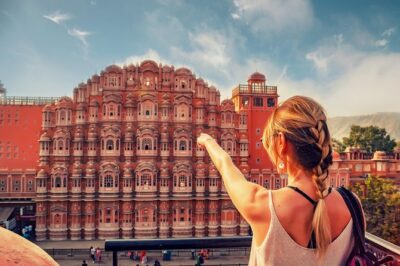
Jaipur Day Trip from Delhi by Car or Train – All Inclusive
Read our review →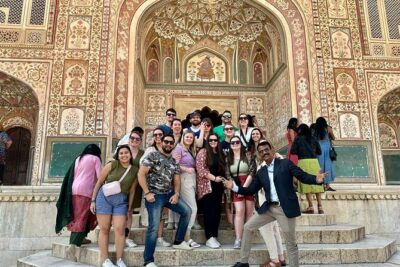
Jaipur City Private Day Tour from Delhi by Car – All Inclusive
Read our review →
5 Nights 6 Days Private Golden Triangle Tour – Delhi Agra Jaipur
Read our review →
Browse the lists this tour appears in