
Reviewed · GOLDEN TRIANGLE TOURS
Golden Triangle Tour 3 Days
The best part of this tour is its sweep: in three days, you move from the lanes of Old Delhi to the Taj Mahal, then on to Jaipur’s grand palaces and hill fort. It gives you the classic first look at northern India without making you arrange every car, hotel, guide, and entry ticket yourself. I especially like the private vehicle and the Old Delhi rickshaw ride, which lets you see far more than you would on foot.
I also like the choice of packages. You can select a lower-priced option or pay more for hotel stays and monument admission, which makes the tour easier to match to your budget. The drawback is the pace: Day 1 is packed, the drives are long, and the $20 starting price does not necessarily include every cost.
In This Review
- Key points at a glance
- What this three-day route really covers
- Day 1: Jama Masjid and the lanes of Old Delhi
- Gandhi, India Gate, and Mughal garden design
- New Delhi’s grand avenues before Agra
- Day 2: A sunrise visit to the Taj Mahal
- Fatehpur Sikri and the long road to Jaipur
- Day 3: Jaipur’s royal center and Hawa Mahal
- Amber Palace and Jaipur’s astronomical instruments
- Guides, cars, hotels, and what the price means
- Who should book this Golden Triangle tour?
- Final booking advice
- FAQ
- Where does the Golden Triangle tour begin and end?
- How long does the tour last?
- Is this a private tour?
- Is hotel accommodation included?
- Are monument entrance fees included?
- Is breakfast included?
- What is included in the vehicle service?
- Can I cancel for a full refund?
Key points at a glance
- Old Delhi by rickshaw: Spend time around Jama Masjid and Chandni Chowk, then ride through the historic lanes.
- Taj Mahal at sunrise: The second morning begins early at Agra’s most important sight, with about three hours set aside.
- Private touring: Your own group travels together in an air-conditioned vehicle with a guide.
- Flexible package choices: Hotel category and monument fees depend on the option you choose.
- Three major cities: Delhi, Agra, and Jaipur are linked with overnight stays in Agra and Jaipur.
- Strong guide support: Guides named in the feedback include Kaushal, Indu, Kalim, and Nameera, with particular praise for patient explanations.
What this three-day route really covers
The Golden Triangle joins New Delhi, Agra, and Jaipur, three places that offer very different views of India. Delhi gives you Mughal monuments, Sikh tradition, colonial-era government buildings, and crowded market streets. Agra brings the Taj Mahal and Agra Fort. Jaipur finishes with Rajput palaces, astronomical instruments, and the hilltop Amber Palace.
You travel in a private, air-conditioned vehicle, so your group does not share the sightseeing schedule with strangers. That matters here. The route includes several long road sections, including about three hours from Delhi to Agra and roughly four hours from Agra to Jaipur. A private car gives you a place to rest between monuments and makes the final drop-off in Delhi more direct.
The tour is listed at $20 per person, but treat that as a starting price rather than the full cost of every version. Hotel accommodation, breakfast, and monument tickets depend on the package selected. The included features list covers air-conditioned transport, guide service, unlimited bottled water, and two breakfasts when the hotel option is selected. Tips and anything not specifically listed remain your responsibility.
More Golden Triangle itineraries from New Delhi:
- 3-Days Private Golden Triangle Tour: Delhi, Agra & Jaipur by Car
★ 5.0 · 1,107 reviews - 3-Days Private Golden Triangle Tour: Delhi, Agra & Jaipur by Car
★ 5.0 · 1,098 reviews - 3-Day Delhi, Agra and Jaipur Private Tour – India Golden Triangle
★ 5.0 · 812 reviews
Day 1: Jama Masjid and the lanes of Old Delhi
The first day begins with Jama Masjid, one of India’s largest mosques. Built by Mughal emperor Shah Jahan between 1644 and 1656, it gives you an early lesson in the scale and style of Mughal Delhi. The planned visit is about 30 minutes, enough for a focused stop rather than a long architectural study.
From there, you move into Chandni Chowk for about an hour. This is the part of Delhi where the city feels most immediate. Market lanes carry spices, dried fruit, silver jewelry, colorful saris, and small shops selling essential oils. The streets can be tight and crowded, so do not expect a quiet stroll. You are here for the movement, the smells, and the contrast between grand monuments and ordinary commerce.
The included rickshaw tour lasts about 90 minutes and is one of the more memorable parts of the day. It gives you a better sense of Old Delhi’s narrow streets and local culture than a drive past the area would. Your guide can help explain what you are seeing, which is useful when the market’s activity becomes a blur of signs, stalls, and passing traffic.
A practical note: keep your belongings close in crowded market areas, and wear shoes suited to uneven streets. The tour data does not specify every rickshaw detail, so your exact route may depend on traffic and local conditions.
Gandhi, India Gate, and Mughal garden design
After Old Delhi, the tour visits Raj Ghat, the memorial to Mahatma Gandhi. A black marble platform marks the place of his cremation on January 31, 1948, with an eternal flame at one end. The stop lasts around 30 minutes and offers a calm change after the noise of Chandni Chowk.
You then drive past India Gate, a war memorial honoring soldiers who died in the First World War. The listed stop is only about five minutes and is described as a drive-by, so plan on seeing it from the vehicle rather than touring the grounds.
The longer stop is Humayun’s Tomb, with about 90 minutes to explore. This Mughal garden tomb is important not only for its appearance but also for its place in the development of Mughal architecture. The formal garden layout, water channels, and raised pathways help explain the design ideas that later reached their most famous form at the Taj Mahal.
The day continues to Gurudwara Bangla Sahib, one of Delhi’s most prominent Sikh places of worship. The visit is scheduled for about 90 minutes. Its connection with the eighth Sikh Guru, Guru Har Krishan, gives the site religious importance, while the Sikh tradition of langar, or communal food service, helps you understand the faith’s emphasis on service and shared meals.
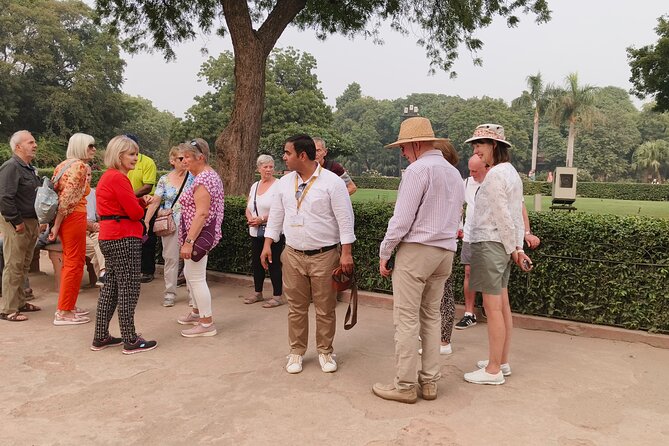
Guides are a major part of the experience here. One named guide, Kaushal Pandey, received specific praise for patient answers and clear explanations at Jama Masjid and Bangla Sahib. Other guide names connected with the tour include Indu in Delhi, Kalim in Agra, and Nameera in Jaipur. Your assigned guide may differ, but the multi-guide setup can be useful because each city has its own local specialist.
New Delhi’s grand avenues before Agra
The final Delhi sights include Rashtrapati Bhavan and the Lotus Temple. Rashtrapati Bhavan is the official residence of India’s president and was formerly known as Viceroy’s House. The scheduled visit is just ten minutes, so expect an exterior look and a short explanation rather than an interior tour.
The Lotus Temple is a Bahá’í House of Worship dedicated in 1986. Its lotus-shaped design makes it one of New Delhi’s most recognizable modern buildings. The stop lasts about 30 minutes, and admission is listed as free.
This is a very full first day. Ten stops may sound efficient on paper, but the timing leaves little room for long meals, unplanned shopping, or a slower look at any one place. I would choose this route if your goal is to see the main sights quickly. If you prefer long museum visits and unhurried photography, the schedule may feel tight.
After Delhi, you drive about three hours to Agra for the night. Hotel accommodation is included only if you select the relevant package, so check that detail before paying. An overnight in Agra is worthwhile because it makes the early Taj Mahal visit possible without starting from Delhi.
A few more New Delhi departures worth comparing
- 3-Day Private Luxury Golden Triangle Tour to Agra and Jaipur From New Delhi
★ 5.0 · 424 reviews - 3-Day Luxury Golden Triangle Tour: New Delhi, Agra & Jaipur
★ 5.0 · 246 reviews - Award-Winning 3-Day Private Golden Triangle Tour of India
★ 5.0 · 240 reviews - 3 Days 2 Night Golden Triangle Tour – Private Luxury Experience
★ 5.0 · 191 reviews
Day 2: A sunrise visit to the Taj Mahal
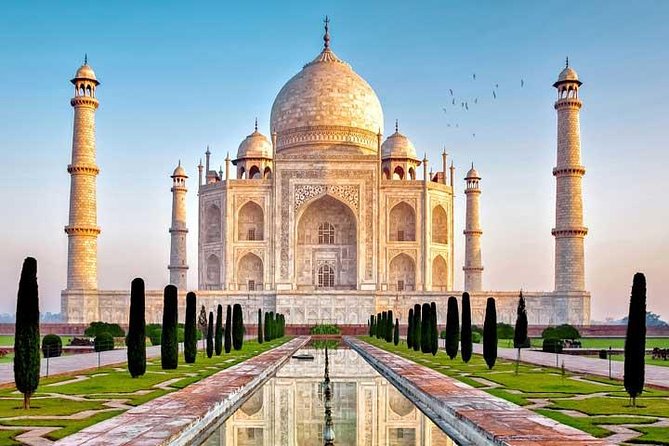
The second day begins early with the Taj Mahal at sunrise. About three hours are allocated, giving you time to approach the monument, see the changing morning light on the white marble, and explore the grounds with your guide.
The Taj Mahal is a mausoleum commissioned by Shah Jahan in 1632 on the south bank of the Yamuna River. Its fame can make the visit feel almost too familiar before you arrive, but the scale and setting are still powerful. The sunrise timing is a smart choice because it places the monument at the front of the day, before the rest of the Agra schedule.
Your guide can help separate the building’s basic facts from the many stories attached to it. The tour information confirms guide service, but the exact guide assigned in Agra is not guaranteed. Kalim is one of the Agra guide names associated with this experience.
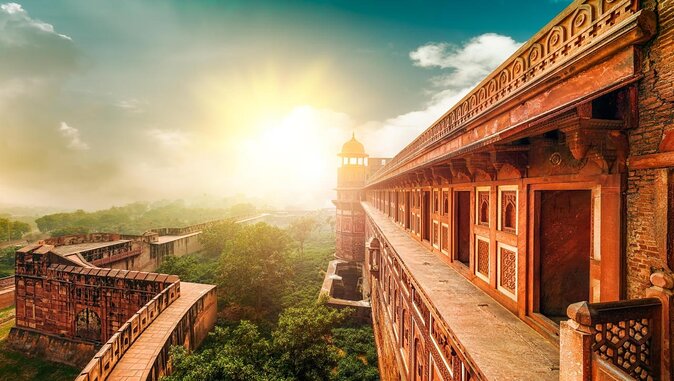
Next comes Agra Fort, with about two hours planned. This former Mughal imperial residence is also a UNESCO World Heritage site. It provides useful context for the Taj Mahal because you see the power and court life of the dynasty that commissioned it, rather than treating the Taj as an isolated monument.
Allow yourself time to notice the shift from massive defensive walls to palace courtyards and formal spaces. After the Taj Mahal’s pale symmetry, Agra Fort gives you a heavier, more fortified view of Mughal rule.
Fatehpur Sikri and the long road to Jaipur
On the drive from Agra to Jaipur, the route detours to Fatehpur Sikri. The former Mughal capital was founded by Akbar in 1569 and served as the empire’s capital from 1571 to 1585. The planned stop is about an hour, and admission is listed as free in the itinerary, though your selected package may treat monument fees differently.
This stop breaks up the four-hour drive to Jaipur and adds another layer to the Mughal story. It also means Day 2 contains both major sightseeing and a substantial road journey. You will spend the night in Jaipur after completing the drive.
The main practical issue is fatigue. A sunrise visit, a two-hour fort tour, a historic city stop, and a long transfer make this the most demanding day. The air-conditioned vehicle and bottled water help, but you should still plan for a late arrival and a quiet evening.
Day 3: Jaipur’s royal center and Hawa Mahal
The third day focuses on Jaipur. At the City Palace, you have about two hours to explore a complex that includes Chandra Mahal, Mubarak Mahal, and other royal buildings. This is a good place to see how Jaipur’s rulers combined courtly spaces, decorative detail, and administrative power within one large compound.
The tour then makes a short 15-minute stop at Hawa Mahal, the Palace of Winds. Its famous screen wall allowed royal women to observe street festivals without being seen from outside. The brief visit is mainly for the exterior and photographs, so do not expect a full palace tour.
The short Hawa Mahal stop is sensible for a three-day route, but it limits your time. If this facade is high on your list, tell your guide early that you want a few quiet minutes for photographs rather than only a quick roadside view.
Amber Palace and Jaipur’s astronomical instruments
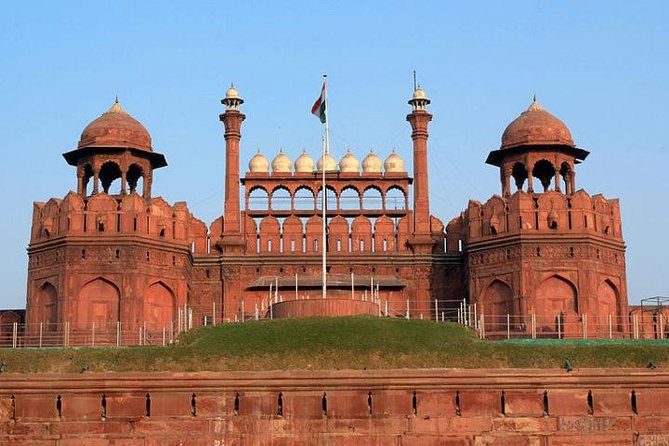
The longest Jaipur stop is Amber Palace, also called Amber Fort, with about two hours allocated. Set at the top of the Aravalli Hills, the fort is known for a mixture of Indo-Islamic design, mirror work, gold-painted decoration, and European influences.
The site gives you a strong change of mood from the city palace. You trade Jaipur’s streets for hill views and a large royal complex. The route information does not specify a particular way of reaching the fort, so ask your guide what is included before assuming any special transport or ride.
The itinerary also includes Jantar Mantar. The supplied description mistakenly places Jantar Mantar in New Delhi, but the stop belongs to Jaipur’s famous astronomical site. It is listed with only one minute, which is clearly too brief for a meaningful visit. Treat this as a schedule entry to confirm, not as a realistic exploration time.
Jantar Mantar contains 13 large architectural instruments used to measure astronomical positions and time. If the tour allows more time than the posted schedule suggests, this can be one of Jaipur’s most unusual stops. If not, you may see it only briefly.
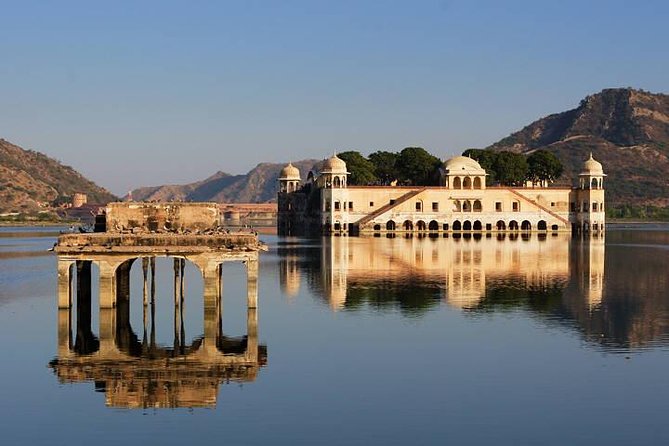
The final Jaipur stop is Jal Mahal, the Water Palace, for about ten minutes of photographs. The palace sits in the middle of Man Sagar Lake, and the short stop is designed for an exterior view rather than an interior visit.
After Jaipur, you drive back to Delhi and are dropped at your preferred location. The listed drop-off time is only five minutes because it refers to the final transfer, not the length of the drive. The full return journey is not given, so keep your evening flexible.
Guides, cars, hotels, and what the price means
The private format is the tour’s biggest practical advantage. Only your group participates, and you have an air-conditioned vehicle for the transfers between cities. You also receive guide service at the monuments, which is especially helpful at places such as Humayun’s Tomb, Fatehpur Sikri, and Jantar Mantar, where design and historical context add much to the visit.
The operator has received a 4.8 rating from 58 reviews, with 97 percent recommending the experience. The most specific praise focuses on the guides’ patience and explanations. Kaushal Pandey is singled out for answering questions carefully, while the Delhi, Agra, and Jaipur guide names include Indu, Kalim, and Nameera.
Hotel options range from 3-star to 5-star accommodation, with breakfast when that option is chosen. Two breakfasts are listed as included with the hotel package. Because the $20 price is not enough to describe every package, compare the exact option carefully: confirm the hotel category, number of nights, breakfast, and monument tickets before booking.
Monument admission is also package-dependent. Some versions include fees, while others do not. This is the detail most likely to change the final cost, so do not assume that every ticket is covered simply because several itinerary stops show admission included.
Group discounts are available, and mobile tickets make the booking easier to carry. Confirmation is provided at booking, and free cancellation is available up to 24 hours before the local start time. Changes or cancellations within 24 hours are not refunded.
Who should book this Golden Triangle tour?
I would recommend it to a first-time visitor who wants the major sights with minimal planning. It is also a good match for families or friends who value a private car, hotel choices, and a guide who can explain what you are seeing.
You should also consider it if you have only three days in northern India. The route covers a great deal, and the overnight stays in Agra and Jaipur prevent the entire trip from becoming a series of same-day returns to Delhi.
I would be more cautious if you dislike early mornings, long drives, or tightly timed sightseeing. The schedule is ambitious, particularly on Days 1 and 2. You may also want a slower trip if your priority is shopping, museums, extended meals, or time inside each monument.
Final booking advice
Book this tour if your aim is to see the Golden Triangle essentials in a private, organized way and you accept the fast pace. The Taj Mahal sunrise, Old Delhi rickshaw ride, Humayun’s Tomb, Agra Fort, Fatehpur Sikri, and Amber Palace make a strong three-day set.
Before you commit, compare the package details rather than judging the experience by the $20 headline price. Confirm whether your choice includes hotel accommodation, breakfast, monument fees, and the hotel category. If those pieces suit your budget, Agra Voyage offers a practical route with strong guide support and little planning work left for you.
FAQ
Where does the Golden Triangle tour begin and end?
The tour is based in New Delhi. After sightseeing in Jaipur on Day 3, the vehicle drives back to Delhi and drops you at your preferred location.
How long does the tour last?
The experience lasts approximately three days, with overnight stays in Agra and Jaipur when the accommodation option is selected.
Is this a private tour?
Yes. It is a private activity, so only your own group participates.
Is hotel accommodation included?
Accommodation is included when you select the package offering a 3, 4, or 5-star hotel. Check the specific package because the $20 starting price does not describe every option.
Are monument entrance fees included?
Monument fees are included only if you select the relevant package. Confirm this detail before booking.
Is breakfast included?
Breakfast is included with the accommodation option. Two breakfasts are listed as included.
What is included in the vehicle service?
The tour includes an air-conditioned vehicle and unlimited bottled water. Guide service is also included.
Can I cancel for a full refund?
You can cancel at least 24 hours before the experience start time for a full refund. Cancellations or changes made within 24 hours are not refunded or accepted.
Just added around New Delhi
- Delhi: All-Inclusive Full or Half Day Tour With Hotel Pickup★ 5.0 · 3 reviews
- From Delhi : All Inclusive Taj Mahal Tour by Gatimaan Express★ 5.0 · 3 reviews
- Skip the line: Taj Mahal Agra Private Day Trip From Delhi By Car★ 5.0 · 3 reviews
- New Delhi Night City Tour★ 5.0 · 3 reviews
- Old Delhi Half day private city tour★ 5.0 · 3 reviews
- Delhi: Old and New Delhi One Day Private Guided City Tour★ 5.0 · 3 reviews
- A full-day tour of Old & New Delhi Monument Express Entry★ 5.0 · 3 reviews
- Sultanpur Bird Sanctuary Tour Near Delhi★ 5.0 · 3 reviews
Golden Triangle Tours, compared.
3-Days Private Golden Triangle Tour: Delhi, Agra & Jaipur by Car
Read our review →3-Days Private Golden Triangle Tour: Delhi, Agra & Jaipur by Car
Read our review →
3-Day Delhi, Agra and Jaipur Private Tour – India Golden Triangle
Read our review →
Four-Day Private Luxury Golden Triangle Tour to Agra and Jaipur From New Delhi
Read our review →
Jaipur Day Trip from Delhi by Car or Train – All Inclusive
Read our review →
Jaipur City Private Day Tour from Delhi by Car – All Inclusive
Read our review →
5 Nights 6 Days Private Golden Triangle Tour – Delhi Agra Jaipur
Read our review →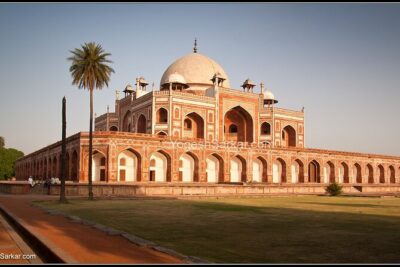
Browse the lists this tour appears in