
Reviewed · GOLDEN TRIANGLE TOURS
Private 5 Days Heritage Golden Triangle Tour By Car & Driver
India’s Golden Triangle is a big first taste of the country, and this five-day private tour gives you room to take it in without racing from sight to sight. You’ll move between Delhi, Agra, and Jaipur by private car, with a driver handling the traffic and local guides leading key sightseeing.
I like the relaxed pace and the fact that the route includes more than the usual headline monuments. The Old Delhi spice market, sunrise at the Taj Mahal, Fatehpur Sikri, and Abhaneri Stepwell add local texture. I also like the private format, which lets you adjust the day and avoid sharing a vehicle with strangers.
The main consideration is cost planning. The $450 price covers the car, driver, guides, fuel, taxes, parking, and bottled water, but hotels and monument entrance fees are extra. You’ll also spend several hours on the road, especially between Jaipur and New Delhi.
In This Review
- Key points at a glance
- Why five days works well for the Golden Triangle
- Arrival day: Old Delhi street food and the Spice Market
- Day two: Delhi’s imperial sights and the drive to Agra
- Day three: Taj Mahal at sunrise, Agra Fort, and the road to Jaipur
- Fatehpur Sikri on the way
- Abhaneri Stepwell if time remains
- Day four: Amber Fort and Jaipur’s royal center
- Jaipur shopping and free time
- Day five: Jaipur to New Delhi by private car
- What the $450 price really covers
- Guides, driving, and the practical rhythm
- Who should book this Golden Triangle tour
- Final verdict: a strong first visit with extra costs
- FAQ
- How long does the Golden Triangle tour last?
- Is this a private tour?
- Are hotels included in the $450 price?
- Are monument entrance fees included?
- What transport is provided?
- Where does the tour end?
Key points at a glance
- Sunrise at the Taj Mahal: Reach Agra’s most famous monument early, then return to the hotel for breakfast and freshening up.
- Old Delhi after arrival: Your first taste of Delhi includes street food and the Spice Market, an informal introduction to the city.
- Private car and driver: You avoid driving yourself through India’s heavy traffic and travel with only your own group.
- Several UNESCO-listed sights: The route includes the Taj Mahal, Agra Fort, Fatehpur Sikri, Amber Fort, and Jantar Mantar.
- Jaipur’s classic sights: Amber Fort, Jal Mahal, Hawa Mahal, the City Palace, and Jantar Mantar fill the main Jaipur day.
- A useful driver detail: Driver Parveen has been noted for punctuality, calm driving, and a kind manner, qualities that matter on a road-heavy trip.
Why five days works well for the Golden Triangle
Delhi, Agra, and Jaipur form India’s most popular short touring route. On paper, the three cities look close together. In practice, traffic, hotel check-ins, monument queues, and the sheer scale of each place can make a three-day sprint tiring.
This five-day plan gives you four hotel nights, though you must arrange and pay for the accommodation yourself. You get a full Delhi sightseeing day, an early Taj Mahal visit, a substantial Jaipur day, and a final transfer back to New Delhi.
I like this length for first-time visitors who want structure but do not want every hour fixed. You still see the major sights, but the route includes smaller stops that shorter versions often leave out. The tradeoff is simple: you spend less time arranging transport, but you also follow a fairly traditional tourist route rather than staying longer in one city.
The tour is private, so only your group participates. That matters in Delhi and Jaipur, where you may want to pause, shorten a visit, or ask for a shopping stop. The supplied information says the itinerary can be adjusted with your private guide, though the exact changes will depend on timing and the guide’s schedule.
More Golden Triangle itineraries from New Delhi:
- 3-Days Private Golden Triangle Tour: Delhi, Agra & Jaipur by Car
★ 5.0 · 1,107 reviews - 3-Days Private Golden Triangle Tour: Delhi, Agra & Jaipur by Car
★ 5.0 · 1,098 reviews - 3-Day Delhi, Agra and Jaipur Private Tour – India Golden Triangle
★ 5.0 · 812 reviews
Arrival day: Old Delhi street food and the Spice Market
Your representative meets you on arrival in New Delhi and transfers you to your hotel. After checking in and freshening up, the driver takes you into Old Delhi for street food and the Spice Market before returning you to the hotel.
This is a smart opening. You do not begin with a long monument checklist while carrying airport fatigue. Instead, you get an early look at one of Delhi’s most intense areas, where food stalls, market lanes, and the spice trade create a strong first impression.
Street food is also a useful way to start understanding Delhi’s everyday life, but you should use sensible judgment about what you eat. The tour includes the visit, not food purchases, so bring some local currency if you want to sample anything. Alcohol is not included and can be purchased separately where available.
The first day is not a full sightseeing day. That is a good thing if you arrive tired, but you should not expect to see all of Delhi immediately. Your overnight stay is in Delhi, with the hotel cost separate from the tour price.
Day two: Delhi’s imperial sights and the drive to Agra
After breakfast, your driver collects you for a half-day Delhi tour with a guide. The planned stops include Jama Masjid, the Red Fort, India Gate, the President House, Parliament House, and the Lotus Temple.
Jama Masjid gives you a sense of Old Delhi’s Mughal heritage and scale. The Red Fort follows naturally, since it was the seat of Mughal power in the capital. You will want your guide to explain the connection between the mosque, the fort, and the wider history of Shahjahanabad, the old imperial city.
India Gate and the government buildings show a different Delhi. Here, the focus shifts from Mughal rule to the modern capital and the formal center of national government. The itinerary lists the President House and Parliament House, but the information does not say that interior access is included. Treat these as exterior sightseeing stops unless your guide tells you otherwise.
The Lotus Temple provides a change of mood and architecture. Its white petal-like form is one of Delhi’s best-known modern landmarks, and its inclusion keeps the day from becoming a sequence of forts and government buildings.
The Delhi visit is described as half-day sightseeing, so the schedule is busy. Jama Masjid, the Red Fort, and the Lotus Temple each deserve time, while traffic can affect the order. I would ask the guide at the start which sites are priorities if your group prefers a slower visit.
After Delhi, you drive to Agra and check into your hotel. The private car is valuable here. You do not need to navigate the road, find parking, or work out how to connect separate trains and transfers. Fuel, tolls, parking, and interstate taxes are included.
Day three: Taj Mahal at sunrise, Agra Fort, and the road to Jaipur
The day begins early with a drive to the Taj Mahal for sunrise. This is the strongest piece of scheduling in the entire tour. Morning light gives the monument a softer appearance, and starting early also gets you there before the hottest part of the day.
The Taj Mahal is not just a photo stop. Give yourself time to look at the marble in changing light, the symmetry of the complex, and the fine detail in the inlay work. Your guide can add context, but the early hour is valuable even if you prefer to explore quietly.
You return to your hotel afterward for freshening up and breakfast. That break is practical. A sunrise start can make the rest of the day hard going, and the chance to sit down before checking out is better than moving straight from the monument to luggage and another long drive.
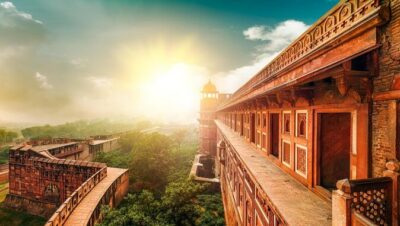
Agra Fort comes next. Its red sandstone walls and courtyards tell a different story from the Taj Mahal’s polished white marble. The fort was a center of Mughal power, and its scale helps you understand that the Taj Mahal was part of a much larger imperial world.
After Agra Fort, the car heads toward Jaipur. This is a long sightseeing and transport day, so pack water and keep your expectations sensible. Bottled water is included, but lunch is not. You can choose a restaurant, and the driver or guide can suggest where to eat.
More Mughal-era sites near New Delhi:
- The Great Indian Food Tour: Old Delhi Food and Heritage Walk
★ 5.0 · 1,698 reviews - Old Delhi Food, Heritage&Cultural Walk with Rickshaw ride to Masterji Kee Haveli
★ 5.0 · 742 reviews - Old Delhi Heritage Walking Tour
★ 5.0 · 247 reviews - 3-hour Old Delhi Heritage Walking tour with Rickshaw Ride
★ 5.0 · 240 reviews
Fatehpur Sikri on the way
Fatehpur Sikri is scheduled as a stop between Agra and Jaipur. This former Mughal capital is one of the most rewarding additions to the route because it feels different from the Taj Mahal and Agra Fort. Its buildings show a mix of imperial planning, courtyards, palaces, and religious architecture.
The stop also breaks up the long drive. You are not simply watching the road pass by for the entire afternoon. Still, time can be tight after the sunrise visit, hotel breakfast, checkout, and Agra Fort. Ask early how long you have at Fatehpur Sikri so you know if you can explore properly or need to keep moving.
Abhaneri Stepwell if time remains
The itinerary allows for Abhaneri Stepwell only if time remains. That wording is important. You should treat it as a bonus, not a guaranteed stop.
Stepwells were practical water structures as well as carefully designed public spaces. Abhaneri offers a different kind of architectural experience from the grand Mughal and Rajput monuments. If traffic or a late start cuts into the schedule, this is the stop most likely to be dropped.
You then continue to Jaipur, check into your hotel, and have the rest of the day at leisure. That free time is welcome after a full road day. Your Jaipur hotel is not included in the $450 price, so confirm the accommodation arrangement before booking.
Day four: Amber Fort and Jaipur’s royal center
The main Jaipur sightseeing day begins after breakfast, with a guide joining you. The first major stop is Amber Fort, a UNESCO World Heritage Site outside the central city.
Amber Fort combines defensive walls, royal courtyards, temples, and decorated halls. The Sheesh Mahal, or Hall of Mirrors, is one of the best-known interiors. Your guide can help you make sense of the fort’s Rajput design and its relationship with the surrounding hills.
Plan for walking and uneven surfaces at historic sites. The supplied information does not specify how the ascent to the fort is handled, so ask your operator about the exact arrival arrangements if mobility is a concern. The tour says most people can participate, and children must be accompanied by an adult.
From Amber Fort, the route continues to Jal Mahal, the Water Palace, set in Man Sagar Lake. You normally view this palace from the lakeside rather than treating it as a standard interior visit, and the stop works well as a short photo pause between larger monuments.
Hawa Mahal is next. Its honeycomb-like facade was designed with many small windows, allowing royal women to observe street life while remaining out of public view. The exterior is the famous part, and traffic around the central city can affect how long you spend there.
The City Palace follows. It was the royal residence of Jaipur’s former ruling family and now contains a museum with Rajasthani clothing and other collections. This is where Jaipur’s court life becomes more personal. Textiles and garments often tell you as much about status, ceremony, and climate as the palace rooms do.
Jantar Mantar closes the listed sightseeing stops. This astronomical complex is a UNESCO World Heritage Site and contains large instruments built to measure time and track celestial movements. It can look puzzling without explanation, so this is a place where a guide adds real value.
Lunch is at your choice of restaurant, with suggestions available if you want them. The tour does not include lunch, drinks, or alcohol. After sightseeing, the driver returns you to your hotel, leaving the rest of the day open for shopping or other interests.
Jaipur shopping and free time
The free time after the guided visits is one of the more useful parts of the itinerary. Jaipur is known for textiles, jewelry, decorative goods, and handicrafts, but shopping can quickly become tiring if it is forced into a formal tour schedule.
You can use the time to browse, rest, or ask the driver about other places of interest. The information promises suggestions rather than a specific shop, which is better for keeping the choice in your hands. Be clear about your budget and avoid feeling obliged to buy simply because a stop is recommended.
I would not try to add too many extra sights after Amber Fort, the City Palace, and Jantar Mantar. Jaipur’s monuments take time, and the point of a five-day tour is to avoid turning every day into a contest.
Day five: Jaipur to New Delhi by private car
The final transfer covers about 250 kilometers and takes around four and a half hours. The driver drops you at your designated place in New Delhi.
This is a practical ending for anyone flying out of Delhi or continuing from the capital. It is not a sightseeing day, so do not book a tight onward connection without allowing for road delays. The stated drive time is an estimate, not a guarantee.
The included private vehicle makes this final leg simple. Your luggage stays with you, you do not need to arrange a separate intercity transfer, and the tour ends back at the New Delhi meeting point.
What the $450 price really covers
At $450, this tour can offer good value for a private five-day route, especially for a small group splitting the cost. You are paying for a private air-conditioned vehicle, chauffeur, fuel, tolls, parking, interstate taxes, government taxes, bottled water, airport or hotel transfers, and professional guides.
The price does not include hotel accommodation, monument admission, meals, drinks, tips, or souvenir photos. Those extras can change the final cost considerably, so add them before comparing this tour with a package that advertises a higher headline price but includes hotels or tickets.
The private format is the main value. India’s road travel can be stressful, and having a driver who knows the route is easier than handling navigation, parking, and traffic yourself. A recorded experience specifically praised Parveen for punctuality, calm driving, and kindness. Those are not flashy extras, but they are exactly the traits you want when several days involve long drives.
Group discounts may improve the per-person price. A solo participant pays the full private-tour cost, while a couple or family can spread the vehicle and guide expenses across the group.
Guides, driving, and the practical rhythm
The tour includes a professional guide for Delhi and Jaipur sightseeing, while the itinerary does not clearly specify a separate guide at every Agra stop. Confirm the guide arrangements for the Taj Mahal, Agra Fort, and Fatehpur Sikri before paying if detailed commentary at every site matters to you.
Your driver is central to the experience. This is not just a sightseeing add-on. The driver handles the Delhi to Agra, Agra to Jaipur, and Jaipur to Delhi legs, plus local transfers. A calm driver can make the difference between enjoying the route and arriving at each stop tense and worn out.
The tour begins at a listed start time of 12:00 am, but the arrival-day plan is based on your flight or other arrival time. Confirm the meeting details and pickup time with the operator. Pickup and drop-off are available at a hotel, airport, or railway station.
Mobile ticketing and booking confirmation are provided. Free cancellation is available if you cancel at least 24 hours before the experience start time. Changes or cancellations inside that window are not accepted for a refund.
Who should book this Golden Triangle tour
I would choose this tour if you are visiting India for the first time and want the major sights arranged without joining a large group. It also suits families, couples, and small groups who value a private vehicle and want some say in the daily pace.
It works best for people who enjoy monuments, guided history, road travel, and a clear route. The private setup is useful if your group has different energy levels or wants to add a shopping stop when time allows.
I would think twice if you want a slow, city-based holiday. You change hotels in Delhi, Agra, and Jaipur, and the Agra to Jaipur day includes several hours in the car. You should also budget carefully for hotels, tickets, food, and tips.
Final verdict: a strong first visit with extra costs
You should book this private Golden Triangle tour if you want the famous sights with less transport stress and a more forgiving pace than a three-day trip. The sunrise Taj Mahal visit, Old Delhi food stop, Fatehpur Sikri detour, and full Jaipur day give the route useful variety.
Before booking, confirm your hotel plan, monument ticket budget, guide coverage in Agra, and final pickup details. If those points are clear, the $450 base price offers a practical private framework for seeing Delhi, Agra, and Jaipur without having to manage India’s roads yourself.
FAQ
How long does the Golden Triangle tour last?
The tour lasts approximately five days and includes Delhi, Agra, Jaipur, and the return drive to New Delhi.
Is this a private tour?
Yes. Only your group participates in the activity.
Are hotels included in the $450 price?
No. Hotel accommodation is not included and must be arranged separately.
Are monument entrance fees included?
No. Monument entrance fees are not included in the tour price.
What transport is provided?
You receive a chauffeur-driven, air-conditioned private vehicle for the Delhi, Agra, and Jaipur route. Fuel, parking, tolls, interstate taxes, and fuel surcharge are included.
Where does the tour end?
The driver drops you at your designated place in New Delhi. The activity ends back at the meeting point area.
More 5-Day Experiences in New Delhi
- Private 5-Day Ranthambhore Tiger Tour from Delhi including the Taj Mahal, Agra and Jaipur
★ 5.0 · 197 reviews - 5-Day Private Luxury Golden Triangle Tour to Agra and Jaipur From New Delhi
★ 5.0 · 142 reviews - Private Golden Triangle Tour 5 Days Delhi Agra Jaipur
★ 5.0 · 92 reviews - From Delhi: 5-Day Tiger Safari & Golden Triangle Tour
★ 4.5 · 81 reviews
Just added around New Delhi
- Delhi: All-Inclusive Full or Half Day Tour With Hotel Pickup★ 5.0 · 3 reviews
- From Delhi : All Inclusive Taj Mahal Tour by Gatimaan Express★ 5.0 · 3 reviews
- Skip the line: Taj Mahal Agra Private Day Trip From Delhi By Car★ 5.0 · 3 reviews
- Old Delhi Half day private city tour★ 5.0 · 3 reviews
- Delhi: Old and New Delhi One Day Private Guided City Tour★ 5.0 · 3 reviews
- New Delhi Night City Tour★ 5.0 · 3 reviews
- A full-day tour of Old & New Delhi Monument Express Entry★ 5.0 · 3 reviews
- Sultanpur Bird Sanctuary Tour Near Delhi★ 5.0 · 3 reviews
Golden Triangle Tours, compared.
3-Days Private Golden Triangle Tour: Delhi, Agra & Jaipur by Car
Read our review →3-Days Private Golden Triangle Tour: Delhi, Agra & Jaipur by Car
Read our review →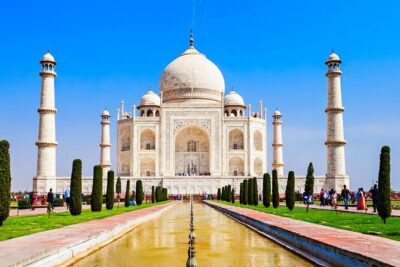
3-Day Delhi, Agra and Jaipur Private Tour – India Golden Triangle
Read our review →
Four-Day Private Luxury Golden Triangle Tour to Agra and Jaipur From New Delhi
Read our review →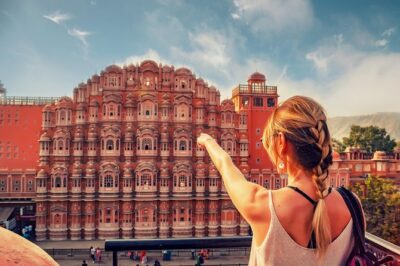
Jaipur Day Trip from Delhi by Car or Train – All Inclusive
Read our review →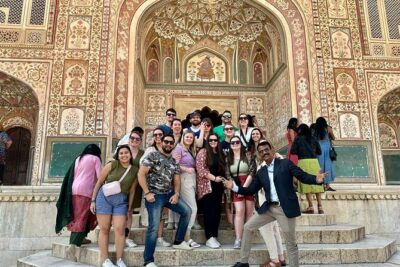
Jaipur City Private Day Tour from Delhi by Car – All Inclusive
Read our review →
5 Nights 6 Days Private Golden Triangle Tour – Delhi Agra Jaipur
Read our review →
Browse the lists this tour appears in