

Reviewed · GOLDEN TRIANGLE TOURS
4-Day Delhi, Agra and Jaipur Private Tour
The best part of this four-day Golden Triangle trip is its private door-to-door setup. You move between Delhi, Agra, and Jaipur in your own air-conditioned car, with local guides in each city and no strangers setting the pace. The sunrise visit to the Taj Mahal is the emotional high point, while Old Delhi and Jaipur supply the street life, temples, forts, and royal buildings.
I like two things especially. First, the route packs in major sights without adding a forced shopping stop, thanks to the advertised No Tourist Trap Guarantee. Second, the itinerary includes worthwhile extras such as Chand Baori stepwell and Panna Meena ka Kund, not just the usual headline monuments.
The tradeoff is simple: this is an ambitious four days. Long drives, early starts, many monuments, and a return trip to Delhi make it better for an active first visit than for a slow holiday. Hotels and about $70 in monument tickets per person are also extra.
In This Review
- Key points to know before booking
- What this four-day Golden Triangle route really feels like
- Day 1: Old Delhi begins with Jama Masjid and Chandni Chowk
- Day 1: Sikh service and New Delhi landmarks
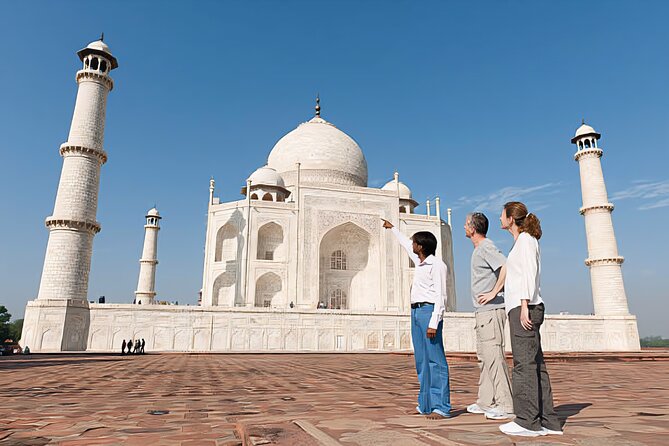
- Day 2: The Taj Mahal before breakfast
- Day 2: Chand Baori adds a strong rural Rajasthan stop
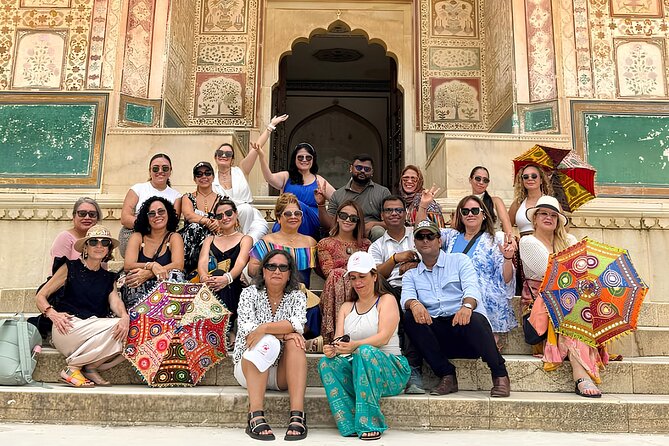
- Day 3: Amber Fort and Jaipur’s royal center
- Day 3: City Palace, Jantar Mantar, and Hawa Mahal
- Day 4: Albert Hall, Patrika Gate, and the road to Delhi
- Private cars, guides, and group sizes
- How to plan the costs and daily pace
- Who should book this private Golden Triangle tour
- FAQ
- Is this a private tour?
- What cities does the tour visit?
- Is accommodation included?
- Are monument entrance tickets included?
- Is hotel or airport pickup provided?
- What happens if the Taj Mahal visit falls on a Friday?
- What happens if the first day is a Monday?
- What vehicle is used for a group of four people?
- Is a passport required?
- Can the itinerary be changed?
Key points to know before booking

- Taj Mahal at sunrise: Start early to see the marble change color in the first light, then visit Agra Fort and Itmad-ud-Daula.
- Private transport throughout: A sedan serves one to three people, an SUV four to six, and a minibus seven to fifteen.
- Delhi has a full first day: Old Delhi, New Delhi, Humayun’s Tomb, Lotus Temple, and Qutub Minar lead into a three-hour drive to Agra.
- Jaipur includes major forts and smaller sights: Amber Fort, City Palace, Jantar Mantar, two stepwells, Jal Mahal, Hawa Mahal, Albert Hall, and Patrika Gate.
- No hotel is included: You book three nights yourself, and monument tickets cost about $70 per person in addition to the tour price.
- Guide quality matters: The experience includes guides in all three cities. One review specifically praises Mr. D. Singh in Agra and Mr. Kumar as the driver.
What this four-day Golden Triangle route really feels like
At $141.85 per person, this looks inexpensive for a private multi-city tour. The price covers a private car, driver, local guides, fuel, taxes, hotel or airport pickup and drop-off, bottled water, and a battery golf cart ride toward the Taj Mahal.
But you need to count the extras. Three nights of accommodation are not included, and monument tickets run about $70 per person. Gratuities, meals, shopping, drinks, laundry, and phone calls are also yours to pay. The true cost depends heavily on the hotels you choose.
That said, the arrangement can be good value if you want transport and city guides without organizing every transfer yourself. Delhi, Agra, and Jaipur are connected by long road journeys, and having one private vehicle removes much of the hassle. You can also ask for reasonable timing adjustments because this is a private tour.
The tour is best for a first visit to northern India. You see the classic sights, but you also get time at places that often disappear from a rushed Golden Triangle schedule. I would not choose it for a restful break or for anyone who dislikes early mornings and road travel.
More Agra and Fatehpur Sikri days:
- Same Day Taj Mahal, Agra Fort & Baby Taj Tour from Delhi by Car
★ 5.0 · 4,304 reviews - Full Day Taj Mahal, Agra Fort & Baby Taj Tour from Delhi by Car
★ 5.0 · 3,647 reviews - From Delhi: Taj Mahal & Agra Private Day Trip with Transfers
★ 4.9 · 3,181 reviews
Day 1: Old Delhi begins with Jama Masjid and Chandni Chowk
The first day opens in Old Delhi at Jama Masjid, Shah Jahan’s great red sandstone mosque. You have about an hour here, with time to appreciate the scale of the courtyard, the gateways, and the elevated views over the city.
Admission is extra, and modest clothing is required at religious sites. Cover your shoulders and knees, and follow local instructions inside the mosque.
From Jama Masjid, a traditional rickshaw carries you through Chandni Chowk. This short ride is one of the most useful parts of the day because it gets you close to the narrow lanes and market activity without asking you to navigate it alone. Thirty minutes is not long, but it gives you a taste of Old Delhi’s crowded, noisy character.
The next stop, Khari Baoli, is Asia’s largest wholesale spice market. The listed visit is only about ten minutes, so think of it as a sharp sensory glimpse rather than a market tour. You can expect spice warehouses, strong aromas, and workers handling the everyday trade of the area.
Red Fort follows. Built by Shah Jahan, this massive red sandstone complex was the center of Mughal power in Delhi. Allow an hour, though the site can reward more time if you are especially interested in imperial buildings. Admission is not included.
Day 1: Sikh service and New Delhi landmarks
Gurudwara Bangla Sahib gives the day a different tone. This Sikh temple is known for its peaceful setting, sacred pool, and langar tradition, where food and service express equality and community. The visit lasts about 30 minutes and is free, but dress modestly and observe the temple’s instructions.
The route then shifts from Old Delhi to the grand avenues of New Delhi. India Gate is the war memorial at the heart of the capital, and Parliament House and the President of India’s residence are viewed from outside. These are mainly orientation stops, useful for seeing the formal side of the city rather than entering government buildings.
The schedule lists ten hours for India Gate, which appears to be a timing error beside a ten-minute Parliament House stop. You should confirm the day’s exact timing with the operator, but the descriptions indicate a short India Gate visit and exterior views of the government buildings.
Lotus Temple offers a quieter pause. The lotus-shaped Baháʼí House of Worship welcomes people of all faiths and is known for its calm interior and modern design. The visit lasts about 45 minutes and is free. It is closed on Mondays, along with Red Fort, so the replacement stops are Agrasen ki Baoli and Lodhi Garden.
Humayun’s Tomb is one of Delhi’s finest Mughal monuments. Its formal Persian-style gardens and balanced design make it an important stop in its own right, and it also helps you see the architectural ideas that later appear at the Taj Mahal. Admission is extra, with about an hour allowed.
The final Delhi sight is Qutub Minar, a UNESCO World Heritage Site and the world’s tallest brick minaret. Its carved stonework and Indo-Islamic design provide a strong finish to a day that has covered several eras and religious traditions.
After Qutub Minar, you drive around three hours to Agra on the Yamuna Expressway. Your driver drops you at your hotel, which you book separately. This is a long first day, so keep your evening free and do not plan an important late-night activity.
Day 2: The Taj Mahal before breakfast
The early start is worth planning around. You leave before dawn for the Taj Mahal, then watch the white marble take on changing color as daylight arrives. About two hours are scheduled, which gives you time for the approach, the main monument, and the garden views.
The battery golf cart from the parking area to the entrance is included. Monument admission is not, and the Taj Mahal is closed every Friday.
The sunrise visit is also the part most affected by the date you choose. If your second day in Agra falls on a Friday, the route is rearranged so you visit Delhi and Jaipur first and reach Agra later. Check the revised order before you book hotels, since the three-night plan depends on the city sequence.
After breakfast, Agra Fort puts the Taj Mahal into a wider Mughal setting. This walled complex contains palaces, royal halls, mosques, and defensive walls. You have about an hour with a guide. The fort is large enough that a focused explanation helps you understand what you are seeing instead of simply walking through red sandstone rooms.
Itmad-ud-Daula, often called the Baby Taj, is scheduled for 45 minutes. This white marble tomb predates the Taj Mahal and is noted for its fine inlay work. It is a smaller, more intimate stop, and admission is extra.
More Golden Triangle itineraries from New Delhi:
- 3-Days Private Golden Triangle Tour: Delhi, Agra & Jaipur by Car
★ 5.0 · 1,107 reviews - 3-Days Private Golden Triangle Tour: Delhi, Agra & Jaipur by Car
★ 5.0 · 1,098 reviews - 3-Day Delhi, Agra and Jaipur Private Tour – India Golden Triangle
★ 5.0 · 812 reviews - Four-Day Private Luxury Golden Triangle Tour to Agra and Jaipur From New Delhi
★ 5.0 · 807 reviews
Day 2: Chand Baori adds a strong rural Rajasthan stop
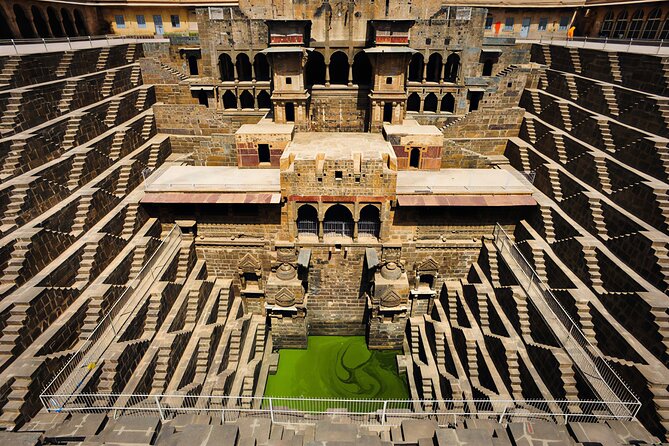
The road to Jaipur includes a detour to Chand Baori at Abhaneri. This stepwell is known for its precise rows of roughly 3,500 steps and its great depth. You have about 30 minutes, enough for photographs and a look at the geometry, but not a long archaeological visit.
This stop matters because it breaks up the highway drive and gives the day a different visual rhythm. The main monuments are imperial and royal. Chand Baori is a piece of practical water architecture, built around the needs of daily life.
Afterward, expect about two more hours on the road to Jaipur. Your driver drops you at your self-booked hotel. The transfer time can change with traffic, so avoid booking fixed evening plans.
Day 3: Amber Fort and Jaipur’s royal center
Panna Meena ka Kund starts the third day. This 16th-century stepwell is smaller than Chand Baori, but its symmetrical staircases make it a fine photography stop. It is free and takes about 30 minutes.
Amber Fort is the day’s main event. Set in the hills outside Jaipur, the honey-colored complex includes palaces and courtyards associated with Jaipur’s rulers. Two hours gives you enough time to see the major sections with a guide, though uneven surfaces and stairs mean comfortable shoes are sensible.
The tour specifically notes that it does not organize elephant activities. That is useful if you want to know exactly what is and is not part of the fort visit. You travel by the private vehicle arrangement rather than booking an elephant ride through the tour.
Jal Mahal comes next, with about 15 minutes for photographs. The palace appears to float in Man Sagar Lake, but you do not go inside. Treat this as a scenic roadside stop, not a full palace visit.
Day 3: City Palace, Jantar Mantar, and Hawa Mahal

The City Palace brings you into Jaipur’s royal center. Part of the complex remains connected with the royal family, while courtyards, decorated halls, and museum rooms provide the main visit. About 90 minutes are scheduled, and admission is extra.
Jantar Mantar sits nearby and is one of Jaipur’s most unusual sights. Its enormous astronomical instruments date from the 18th century and were built to track time and celestial positions. The structures look almost modern in their scale and shape, but they were designed for careful observation. Give yourself the full hour.
The day ends with a short photo stop at Hawa Mahal, Jaipur’s Palace of Winds. Its pink facade contains 953 small windows, built so royal women could observe public life without being seen. Fifteen minutes is enough for the famous exterior photograph, but not for an interior visit.
You will notice a pattern in Jaipur: several stops are brief, while Amber Fort and the City Palace receive the most time. That works well for a first visit, but it favors breadth over lingering. If you want more time at one palace or museum, use the private format to ask what can be shortened.
Day 4: Albert Hall, Patrika Gate, and the road to Delhi
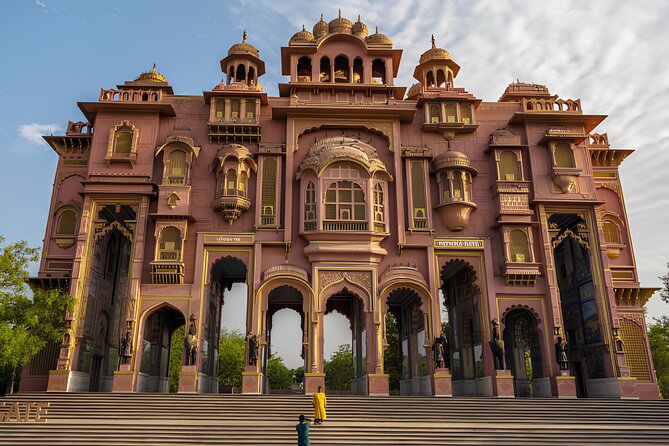
After breakfast and checkout, Albert Hall Museum opens the final day. It is Rajasthan’s oldest museum and occupies an Indo-Saracenic building with a striking exterior. The planned visit lasts 90 minutes, and admission is extra.
Patrika Gate is the final Jaipur stop. Its painted arches make it a popular photography location, and 15 minutes is enough for a quick look and photographs. It is a modern decorative landmark, so its appeal is visual rather than historical.
The return to New Delhi takes four to five hours. Drop-off is available at the Delhi airport or another Delhi location, but confirm the exact destination and timing before arranging a flight. Traffic can affect the journey, and a same-day flight should leave a generous buffer.
Private cars, guides, and group sizes
The private vehicle is the practical heart of this tour. For one to three people, the vehicle is a four-seat sedan. Four to six people travel in a six-seat SUV, while groups of seven to fifteen use a 20-seat minibus.
Tell the operator about luggage when booking. Space is limited, especially if everyone has more than one large suitcase. A valid current passport is required for hotel check-ins and monument entry, so keep it accessible.
Local guides are included in Delhi, Agra, and Jaipur. You may have different guides in each city, which is useful because each guide can focus on local sites. Mr. D. Singh is specifically associated with the Agra portion, and Mr. Kumar is named for the driving service in the available feedback. Names and assignments can change, so do not assume they are guaranteed.
The tour has a perfect five-star rating from nine reviews, with particular praise for safe driving and Agra storytelling. That is encouraging, but it is still a small sample. The written evidence supports a strong impression of the driver and Agra guide, not a promise that every guide will suit your style.
How to plan the costs and daily pace
The advertised $141.85 price is attractive for private transport across three cities, but it is not the complete trip price. Add hotel costs for three nights and roughly $70 per person for monument tickets.
You should also budget for tips if the driver and guides provide good service. Gratuities are optional, as are personal purchases and meals outside anything specifically arranged.
The pace is active. Day 1 contains many Delhi sights before a three-hour drive. Day 2 starts before dawn, includes three Agra visits, a stepwell, and the drive to Jaipur. Day 3 is full but more concentrated, and Day 4 ends with a long return to Delhi.
I would pack light, carry water, and wear shoes suitable for forts and stone courtyards. Bring clothing that covers shoulders and knees for the Lotus Temple and Gurudwara, as well as other religious settings.
Free cancellation is available up to 24 hours before the start time. Changes or cancellations inside that window are not refunded, using the local start time as the cutoff.
Who should book this private Golden Triangle tour
I would choose this tour if you want the major sights handled efficiently and value having your own driver. It suits couples, families, and small groups that want to control the car, hotel choices, and some timing without paying for a fully luxury package.
It also suits first-time visitors who want a broad introduction. You get Mughal monuments in Delhi and Agra, Jaipur’s royal buildings, Sikh and Baháʼí religious sites, markets, stepwells, and several photo stops.
I would look elsewhere if you want included hotels, fixed all-in pricing, or long unhurried visits. The tour covers a lot, but the cost rises after accommodation and admissions, and the road time is unavoidable.
Book it if the Taj Mahal at sunrise, private transport, and a wide first look at northern India matter more to you than a slow schedule. Before paying, confirm the city order for your dates, especially if Friday affects Agra, and ask for the exact pickup, hotel drop-off, and airport timing.
FAQ
Is this a private tour?
Yes. Only your own group participates, and transportation is provided in a private vehicle.
What cities does the tour visit?
The route covers New Delhi, Agra, and Jaipur over approximately four days.
Is accommodation included?
No. You arrange and pay for three nights of accommodation yourself.
Are monument entrance tickets included?
No. Monument tickets are payable on site and cost approximately $70 per person.
Is hotel or airport pickup provided?
Yes. Hotel and airport pickup and drop-off are included.
What happens if the Taj Mahal visit falls on a Friday?
The Taj Mahal is closed every Friday. The itinerary is automatically rearranged so Delhi and Jaipur come first and Agra is visited later.
What happens if the first day is a Monday?
The Lotus Temple and Red Fort are closed on Mondays. They are replaced with Agrasen ki Baoli and Lodhi Garden.
What vehicle is used for a group of four people?
A six-seat SUV is used for groups of four to six people.
Is a passport required?
Yes. Every participant must have a valid current passport for hotel check-ins and monument entries.
Can the itinerary be changed?
The private format allows flexibility, but the tour is active and fast-paced. Transfer times are approximate and can change with traffic.
More 4-Day Experiences in New Delhi
- 4 Days Golden Triangle Tour
★ 5.0 · 499 reviews - Private Luxury Delhi – Agra – Jaipur Golden Triangle Tour – 3 Nights 4 Days
★ 5.0 · 306 reviews - Private 4-Day Golden Triangle Tour with Ranthambore Tiger Safari
★ 5.0 · 248 reviews - From Delhi: Private 4-Day Golden Triangle Luxury Tour
★ 4.8 · 226 reviews
Just added around New Delhi
- Delhi: All-Inclusive Full or Half Day Tour With Hotel Pickup★ 5.0 · 3 reviews
- From Delhi : All Inclusive Taj Mahal Tour by Gatimaan Express★ 5.0 · 3 reviews
- Skip the line: Taj Mahal Agra Private Day Trip From Delhi By Car★ 5.0 · 3 reviews
- Delhi: Old and New Delhi One Day Private Guided City Tour★ 5.0 · 3 reviews
- New Delhi Night City Tour★ 5.0 · 3 reviews
- Old Delhi Half day private city tour★ 5.0 · 3 reviews
- A full-day tour of Old & New Delhi Monument Express Entry★ 5.0 · 3 reviews
- Sultanpur Bird Sanctuary Tour Near Delhi★ 5.0 · 3 reviews
Golden Triangle Tours, compared.
3-Days Private Golden Triangle Tour: Delhi, Agra & Jaipur by Car
Read our review →3-Days Private Golden Triangle Tour: Delhi, Agra & Jaipur by Car
Read our review →
3-Day Delhi, Agra and Jaipur Private Tour – India Golden Triangle
Read our review →
Four-Day Private Luxury Golden Triangle Tour to Agra and Jaipur From New Delhi
Read our review →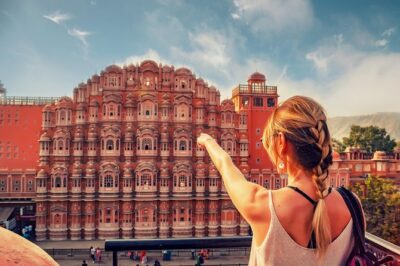
Jaipur Day Trip from Delhi by Car or Train – All Inclusive
Read our review →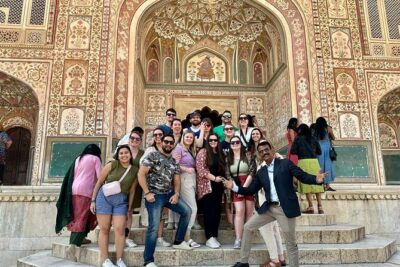
Jaipur City Private Day Tour from Delhi by Car – All Inclusive
Read our review →
5 Nights 6 Days Private Golden Triangle Tour – Delhi Agra Jaipur
Read our review →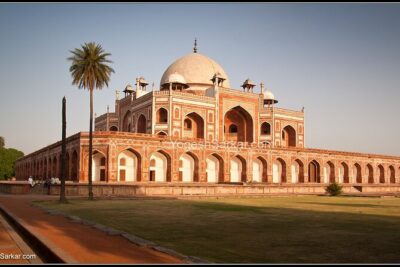
Browse the lists this tour appears in