
Reviewed · GOLDEN TRIANGLE TOURS
Private 4-Day Golden Triangle Tour with Ranthambore Tiger Safari
The most unusual feature here is the combination of India’s major monuments with a Ranthambore tiger safari. In four days, you move from Mughal mosques and imperial forts to jungle roads, then finish among Jaipur’s palaces and astronomical instruments. It is a lot of India in a short space.
I like having the same private driver for the full route, and I like that the guides can adjust the sightseeing plan after booking. The Old Delhi rickshaw ride is another smart touch. The main drawback is simple: you spend long hours in the car, especially between Agra, Ranthambore, Jaipur, and Delhi.
In This Review
- Key points to know
- Delhi’s Old City, from Jama Masjid to the Red Fort
- Qutub Minar, Lotus Temple, and central Delhi
- The Delhi to Agra transfer and hotel choice
- Sunrise at the Taj Mahal
- The long road to Ranthambore
- A shared safari in Ranthambore National Park
- Jaipur’s stepwell and Amber Fort
- City Palace, Jantar Mantar, and Jaipur’s famous facade
- Returning to Delhi by road
- What the $230 price really covers
- Who will enjoy this fast-paced route
- Important planning details before you book
- Should you book this Golden Triangle and safari tour?
- FAQ
- How long is the tour?
- Is the tour private?
- Is hotel accommodation included?
- Are monument entrance fees included?
- Is the Taj Mahal visited at sunrise?
- What happens if the tour starts on a Thursday?
- What happens if the tour includes a Monday in Delhi?
- Is the Ranthambore safari private?
- When does the tour return to Delhi?
Key points to know
- Sunrise at the Taj Mahal: You reach Agra’s defining monument early, with about three hours for the visit and guided access inside.
- A real four-city route: Delhi, Agra, Ranthambore, and Jaipur are linked by road, so this is sightseeing with substantial transfer time.
- Private vehicle, private group: Your family or friends travel together in an air-conditioned car, wagon, or van sized to the group.
- Shared wildlife safari: The Ranthambore outing uses a government-assigned zone and a shared jeep or canter, not a private safari vehicle.
- Three hotel nights included: You can choose among hotel categories, with breakfast included and one hotel dinner provided.
- Monument tickets cost extra: The listed entrance fees are about $180 per person, a major addition to the $230 tour price.
Delhi’s Old City, from Jama Masjid to the Red Fort
Your first day begins in Old Delhi, where the city feels close, noisy, and intensely human. Jama Masjid gives you a strong opening point. Built by Mughal Emperor Shah Jahan between 1650 and 1656, the mosque is one of Delhi’s major Islamic monuments.
Allow about an hour here. The entrance fee is not included, and appropriate clothing is important at a religious site. Your guide can help you understand the building’s place in Shah Jahan’s Delhi rather than leaving you to see it as just another grand stone complex.
From there, you move into Chandni Chowk. This central market district is filled with spice sellers, dried fruit, silver jewelry, and saris. The lanes are narrow, and the pace can be hectic, but that is precisely why the rickshaw ride works well here.
The included rickshaw outing lasts about 30 minutes. You are not simply being driven between monuments. You get a brief look at the old commercial quarter from street level, with the driver handling the tight lanes while your guide helps explain what you are seeing.
The Red Fort follows. It served as the main home of Mughal emperors for almost two centuries, until 1856, and now contains several museums. The schedule allows only about 30 minutes, and the listed entrance fee is not included, so you should confirm with your guide which parts are practical to see in that time.
More tiger safari itineraries from New Delhi:
- From Delhi: 4-Day Golden Triangle & Ranthambore Guided Tour
★ 4.7 · 121 reviews - 4 Day Golden Triangle with Ranthambore Tiger Safari Tour from Delhi
★ 5.0 · 110 reviews - From Delhi : 6 Days Delhi, Jaipur, Agra & Ranthambore By Car
★ 5.0 · 73 reviews
Qutub Minar, Lotus Temple, and central Delhi
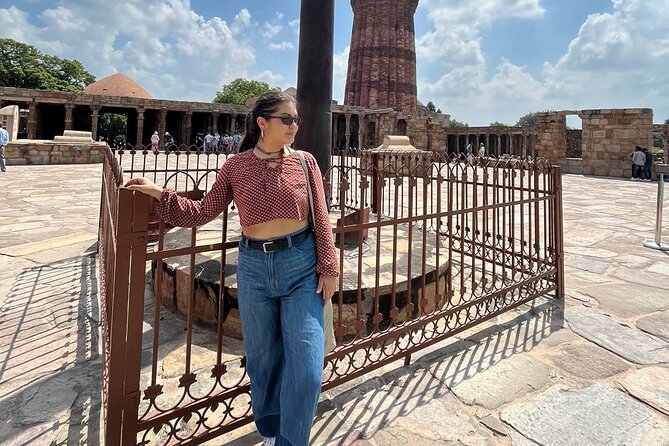
Qutub Minar changes the historical frame. Built in 1193 by Qutub-ud-din Aibak, founder of the Delhi Sultanate, the tower is a UNESCO World Heritage site. Its spiral staircase and tall stone form make it one of the city’s essential sights.
The planned visit lasts about an hour. The admission charge is extra, and your guide assists with ticket purchases, which saves you from waiting in the ticket line yourself. That help matters on a tightly timed day.
The Lotus Temple offers a sharp change in style. Completed in 1986, the white, flower-shaped building is a modern Delhi landmark. You have around 30 minutes here, with free admission listed.
The route then passes India Gate, Parliament House, and Rashtrapati Bhavan. India Gate honors soldiers of British India who died in wartime service. Parliament House contains the Lok Sabha and Rajya Sabha, while Rashtrapati Bhavan is the official residence of India’s president.
These central sights are mainly viewed from outside or during the drive. Do not expect a full interior tour of Parliament or the presidential residence. Their value is in seeing how Mughal, colonial, and modern India occupy the same capital.
Agrasen Ki Baoli is a quick 15-minute stop. This protected stepwell gives you a quieter architectural pause after the markets and major monuments. It is a short visit, but its geometric stairs make it worthwhile if you enjoy less obvious historic sites.
If your Delhi day falls on a Monday, the Red Fort and Lotus Temple are closed. The plan substitutes Gurudwara Bangla Sahib for those visits. Also note that the wording of the schedule includes a stop at Yamuna Sports Complex and a restaurant lunch opportunity, but lunch is not listed among the included meals.
The Delhi to Agra transfer and hotel choice
After Delhi sightseeing, you drive to Agra by expressway. The transfer is listed at about three hours, though traffic can change the timing. You check into your Agra hotel and have the rest of the day at leisure.
The tour offers hotel categories, including three-star and four-star choices, with five-star availability depending on the option selected. Named examples include Hotel Taj Vilas or a similar property for the three-star choice and Hotel Golden Tuli or a similar property for the four-star choice.
Breakfast is included on the accommodation plan. Rooms are generally twin-sharing, while a booking of three people normally uses a triple-sharing room. If three people want two rooms, an extra charge applies.
This first evening is useful because the next morning starts early. I would treat the Agra night as a practical base rather than expecting a long leisure stop. The value is in avoiding a same-day rush from Delhi to the Taj Mahal and back.
Sunrise at the Taj Mahal
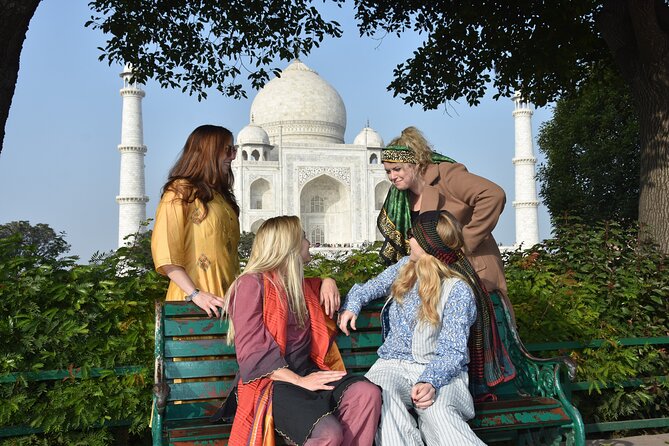
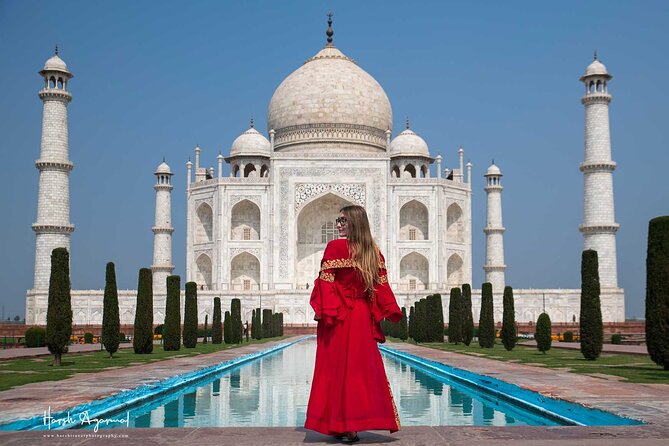
Day two begins with the main event. You visit the Taj Mahal at sunrise, with roughly three hours set aside for the site and a guided visit inside lasting about two hours.
The Taj Mahal is a UNESCO World Heritage site, and the early start is well chosen. Morning light gives you a calmer setting than the middle of the day, though exact conditions depend on the season and the site’s operating rules. The entrance ticket is not included.
Your guide meets you for the monument visit and helps with the ticket process. Guides associated with this operation include Shan, Aamir, Ali, Isha, Faisal, and Sonny, though the specific person assigned to you can vary.
A strong guide makes a difference at the Taj Mahal. The building is famous enough that you already know the basic story, but small details about the design, the Mughal court, and the monument’s symbolism can turn a quick photo stop into a better visit. Shan has been singled out for lively storytelling and careful attention to safety, while Aamir and Ali have been praised for clear explanations and a relaxed pace.
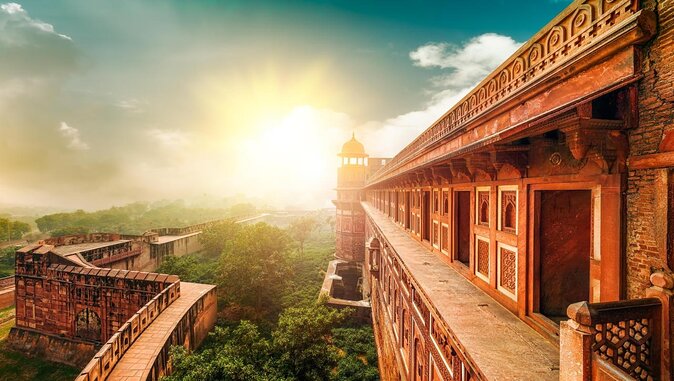
After the Taj Mahal, you visit Agra Fort for about an hour. The fort is another UNESCO site, but it offers a different kind of experience. Here, massive walls lead to courtyards, palaces, and rooms linked to Mughal power. Your guide explains the fort’s role and points out its architectural details.
The admission fee is extra. One hour is enough for a focused visit, but not for every corner of the complex. If you care more about Agra Fort than shopping or optional stops, ask your guide to protect the full hour.
More Golden Triangle itineraries from New Delhi:
- 3-Days Private Golden Triangle Tour: Delhi, Agra & Jaipur by Car
★ 5.0 · 1,107 reviews - 3-Days Private Golden Triangle Tour: Delhi, Agra & Jaipur by Car
★ 5.0 · 1,098 reviews - 3-Day Delhi, Agra and Jaipur Private Tour – India Golden Triangle
★ 5.0 · 812 reviews - Four-Day Private Luxury Golden Triangle Tour to Agra and Jaipur From New Delhi
★ 5.0 · 807 reviews
The long road to Ranthambore
After Agra Fort, the route turns toward Ranthambore National Park. The listed transfer time is about four hours, making this one of the tour’s longest road sections.
This is where the tour’s broad reach creates its main compromise. You gain a chance to see a tiger reserve, but you give up time that could have been spent resting in Agra or Jaipur. Carry water, snacks, and a phone charger, and use the hotel stops to reset.
At Ranthambore, you check into your hotel and have the rest of the day free. The three-star example is Hotel Ranthambore Tiger Resort or a similar property, with a four-star choice available depending on the booking.
The included hotel dinner is provided once during the tour. Other meals should be checked carefully before departure, since the stated inclusions cover breakfasts and one dinner, not a full meal plan.
A shared safari in Ranthambore National Park
The safari begins early on day three. You enter Ranthambore National Park in a shared jeep or canter for about two to three hours, accompanied by a locally appointed English-speaking guide.
The key word is shared. The operator tries to arrange a shared jeep, but the number of jeeps is limited. If one is not available, you may ride in a larger shared canter. A canter carries more people and gives the outing a different feel, so set your expectations before you go.
The government assigns the safari zone based on availability. You cannot count on a particular zone or guarantee a tiger sighting. The park is known for Bengal tigers, but wildlife follows its own schedule. Your safari is best viewed as a chance to search the forest with a trained local guide, not as a guaranteed animal encounter.
The safari guides can explain basic information in English, but fluent English is not always available. That is worth knowing if natural history interpretation is a major reason for booking. The safari guide is also separate from your private sightseeing guide.
Once the safari ends, you travel on to Jaipur. The transfer is listed at about three hours, followed by hotel check-in and free time. That leaves little room for a relaxed afternoon, especially after an early start in the park.
Jaipur’s stepwell and Amber Fort
Day four begins after breakfast with Panna Meena ka Kund. This stepwell is a compact stop, scheduled for about 20 minutes. Its repeated stair patterns and quiet setting make it a good introduction to Jaipur’s architectural style.
Amber Fort receives the most time in the morning, about two hours. The UNESCO-listed complex includes ornate palaces, gateways, and broad views from its hill setting. The admission fee is not included.
Amber Fort deserves an unhurried guide. Its appeal is not only the exterior walls. Look for the relationship between courtyards, decorated halls, defensive structures, and the views across the surrounding area. Two hours gives you enough time for a solid visit, though the walking can be demanding, so comfortable shoes are a sensible requirement.
Jal Mahal follows, with about 30 minutes for photographs and an explanation of the palace in Man Sagar Lake. The palace was refurbished and expanded by Maharaja Jai Singh II in the 18th century. The stop is mainly an exterior viewpoint, not an interior palace tour.
City Palace, Jantar Mantar, and Jaipur’s famous facade
The City Palace takes about two hours. It once served as the administrative and ceremonial center of Jaipur’s maharaja and now contains the Maharaja Sawai Man Singh II Museum. This is one of Jaipur’s best places to connect royal life with the city’s planning and court culture.
Admission is extra. The longer time allowance makes this a more substantial visit than the quick photo stops elsewhere in the day.
Jantar Mantar is next. Founded in 1734 by Sawai Jai Singh II, the UNESCO-listed site contains 19 large astronomical instruments. These structures were built to measure time and track celestial movements, and a guide is especially useful because their purpose is not always obvious at first glance.
Hawa Mahal is scheduled for about 30 minutes. The five-story red and pink sandstone facade is one of Jaipur’s most recognizable sights. The stop is short and mainly visual, but it gives you a chance to see the Palace of Winds and hear why its unusual design mattered.
Gaitore Ki Chhatriyan closes the sightseeing. This royal cremation ground contains decorated cenotaphs in the Rajput style. It is a quieter ending than the City Palace or Hawa Mahal, and the 30-minute visit gives you a final look at Jaipur’s memorial architecture.
Returning to Delhi by road
The tour returns to Delhi on the fourth day, with arrival expected around 9 pm. That is a very full final day, so do not schedule a late evening flight from Delhi unless you have a large safety margin.
Transfer times are estimates. Traffic can change the route, particularly around Delhi. If you want to arrive earlier or later, the operator says the schedule can be adjusted, but a shorter day would also mean reducing sightseeing.
Transport is private and air-conditioned. One or two people travel in a three-seat sedan such as a Toyota Etios or similar. Groups of three to five use a six-seat wagon such as a Toyota Innova or similar, while groups of six to 10 use a 10-seat Tempo Traveler.
This setup is one of the tour’s strongest features. Your driver remains with you throughout, and you are not repeatedly finding taxis between cities. Drivers such as Bilal and Amar have been noted for comfortable, safe road service, which matters on India’s busy intercity routes.
What the $230 price really covers
The advertised price is $230 per person, but the real budget needs one important adjustment. Monument entry fees are listed separately at about $180 per person, bringing the stated tour cost and entry fees to roughly $410 per person before any other personal spending.
The $230 package includes private air-conditioned transport, three nights of accommodation if you select a hotel option, breakfasts, local guides for sightseeing, the Old Delhi rickshaw ride, fuel and service charges, the Ranthambore safari, and one hotel dinner.
That can be good value if you want the convenience of a private driver, organized hotel transfers, and guides in four major destinations. It is less attractive if you already have hotels and prefer to buy each sight separately. A no-hotel option is available, and in that case you arrange your own accommodation, with the first night intended for Agra and the second for Jaipur.
Group discounts may improve the value for families or friends. The private format also lets you request changes, such as adding, removing, or changing monuments after booking.
Who will enjoy this fast-paced route
I would recommend this trip to a first-time visitor who wants the major sights handled in one package. The route covers the classic Golden Triangle landmarks, adds a wildlife stop, and removes much of the daily work of arranging cars, hotels, tickets, and guides.
It suits families and small groups especially well. You travel only with your own party in the main vehicle, and the itinerary can be adjusted. The driver and guides can also help with practical concerns such as food choices, road timing, and monument tickets.
You should think twice if you dislike long drives or prefer slow travel. Delhi sightseeing on day one is packed, Agra to Ranthambore takes about four hours, and the final return to Delhi can run until 9 pm. The safari is also shared and does not guarantee a tiger.
The tour is a better fit for people who see the road time as the price of covering a large part of northern India. If you want a restful holiday, split this route into more days.
Important planning details before you book
The Taj Mahal is closed on Fridays. If your tour begins on Thursday, the order changes to Delhi, Jaipur, Ranthambore, Agra, and Delhi so the Taj Mahal can be visited on an open day.
Red Fort and Lotus Temple are closed on Mondays. On that day, Gurudwara Bangla Sahib replaces those visits. Bring a current valid passport, wear comfortable walking shoes, and expect to pay monument entry fees separately.
Cancellation is free up to 24 hours before the start time. Inside that window, the payment is not refunded and changes are not accepted.
Should you book this Golden Triangle and safari tour?
Book it if you want maximum coverage in minimum time, value a private car and steady driver, and accept that the itinerary is road-heavy. The Taj Mahal at sunrise, Old Delhi by rickshaw, and a Ranthambore safari give the trip more range than a standard three-city circuit.
Skip it if you want long museum visits, leisurely hotel time, or a private wildlife vehicle. Before paying, confirm your hotel category, calculate the extra $180 monument fees, check the Friday and Monday closures, and decide if a shared jeep or canter meets your expectations. For a first visit with limited time, the convenience is strong, but the pace is the price.
FAQ
How long is the tour?
The tour lasts approximately four days and includes Delhi, Agra, Ranthambore National Park, Jaipur, and a return to Delhi.
Is the tour private?
Yes. The main tour is private, with only your family or friends in your group. The Ranthambore safari is shared in a jeep or canter.
Is hotel accommodation included?
Three nights of accommodation are included if you select an option with hotels. Three-star, four-star, and five-star choices may be available depending on the selected option.
Are monument entrance fees included?
No. Monument entry fees are listed separately at about $180 per person. Guides can assist with purchasing the tickets.
Is the Taj Mahal visited at sunrise?
Yes. The Agra schedule begins early with a sunrise visit to the Taj Mahal, followed by a guided visit inside lasting about two hours.
What happens if the tour starts on a Thursday?
The route changes to Delhi, Jaipur, Ranthambore, Agra, and Delhi because the Taj Mahal is closed on Fridays.
What happens if the tour includes a Monday in Delhi?
The Red Fort and Lotus Temple are closed on Mondays. The itinerary substitutes Gurudwara Bangla Sahib for those sites.
Is the Ranthambore safari private?
No. The safari is conducted in a shared jeep or canter. The government assigns the safari zone based on availability.
When does the tour return to Delhi?
The planned return is around 9 pm on the fourth day. The timing can be adjusted if requested, subject to changes in the schedule.
More 4-Day Experiences in New Delhi
- 4 Days Golden Triangle Tour
★ 5.0 · 499 reviews - Private Luxury Delhi – Agra – Jaipur Golden Triangle Tour – 3 Nights 4 Days
★ 5.0 · 306 reviews - From Delhi: Private 4-Day Golden Triangle Luxury Tour
★ 4.8 · 226 reviews - Private Golden Triangle Tour 3 Night/4 Days – All Inclusive
★ 5.0 · 185 reviews
More Safari in New Delhi
- Private 5-Day Ranthambhore Tiger Tour from Delhi including the Taj Mahal, Agra and Jaipur
★ 5.0 · 197 reviews - Old Delhi Food Tour Safari – The Capital of Flavors
★ 5.0 · 96 reviews - From Delhi: 5-Day Tiger Safari & Golden Triangle Tour
★ 4.5 · 81 reviews - 4-Day Private Delhi, Agra & Jaipur with Ranthambore Tiger Safari
★ 5.0 · 71 reviews
Just added around New Delhi
- Delhi: All-Inclusive Full or Half Day Tour With Hotel Pickup★ 5.0 · 3 reviews
- From Delhi : All Inclusive Taj Mahal Tour by Gatimaan Express★ 5.0 · 3 reviews
- Skip the line: Taj Mahal Agra Private Day Trip From Delhi By Car★ 5.0 · 3 reviews
- Delhi: Old and New Delhi One Day Private Guided City Tour★ 5.0 · 3 reviews
- New Delhi Night City Tour★ 5.0 · 3 reviews
- Old Delhi Half day private city tour★ 5.0 · 3 reviews
- A full-day tour of Old & New Delhi Monument Express Entry★ 5.0 · 3 reviews
- Sultanpur Bird Sanctuary Tour Near Delhi★ 5.0 · 3 reviews
Golden Triangle Tours, compared.
3-Days Private Golden Triangle Tour: Delhi, Agra & Jaipur by Car
Read our review →3-Days Private Golden Triangle Tour: Delhi, Agra & Jaipur by Car
Read our review →
3-Day Delhi, Agra and Jaipur Private Tour – India Golden Triangle
Read our review →
Four-Day Private Luxury Golden Triangle Tour to Agra and Jaipur From New Delhi
Read our review →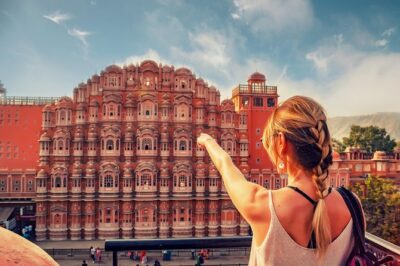
Jaipur Day Trip from Delhi by Car or Train – All Inclusive
Read our review →
Jaipur City Private Day Tour from Delhi by Car – All Inclusive
Read our review →
5 Nights 6 Days Private Golden Triangle Tour – Delhi Agra Jaipur
Read our review →
Browse the lists this tour appears in