
Reviewed · GOLDEN TRIANGLE WITH VARANASI
7 Day Golden Triangle Private Heritage and Varanasi Tour
The most memorable feature here is the sharp change in mood from Mughal Delhi and Agra to sacred Varanasi. In seven days, you see imperial forts, Rajput palaces, a marble tomb, Hindu temples, and the Ganges before returning to Delhi.
I like the private format, which gives you a guide and vehicle for your own group, and I like the mix of four-star hotels and overnight trains. The trip also includes breakfast, fuel, tolls, parking, and Delhi pickup, which makes a complicated route easier to manage.
The main catch is the pace. Long road transfers, a night train, and many monuments leave little spare time. At $76 per person, the price looks remarkably low, so confirm exactly which entrance fees, train arrangements, and Varanasi boat rides are included before paying.
In This Review
- Key points to know before booking
- What this seven-day route is really like
- Delhi begins with Gandhi, Mughal power, and Qutub Minar
- Jaipur brings Rajput palaces and planned astronomy
- Agra gives the tour its grandest single sight
- Overnight trains make the route possible, but add a tradeoff
- Varanasi changes the tone from monuments to ritual
- The final Delhi day returns to Mughal design and modern India
- Who will get the most value from this tour?
- Practical booking advice before you pay
- Should you book the seven-day Golden Triangle and Varanasi route?
- FAQ
- How long is the tour?
- Where does the tour start?
- Is this a private tour?
- What destinations are included?
- Is the Taj Mahal included?
- Are hotels included?
- Are breakfasts included?
- Does the tour use trains?
- Are Varanasi boat rides included?
- Can I cancel for a full refund?
Key points to know before booking
- The Taj Mahal anchors the route: You get two hours at the monument, plus Agra Fort, Itmad-ud-Daulah, and Mehtab Bagh.
- Varanasi adds a very different India: Dawn on the Ganges, Sarnath, and the evening Ganga Aarti bring religion and daily life to the front.
- Jaipur receives a full sightseeing day: City Palace, Jantar Mantar, Albert Hall Museum, Birla Mandir, and the Monkey Temple are all included.
- Delhi is covered at both ends: You see Old Delhi and Qutub Minar early, then Humayun’s Tomb, India Gate, and Lotus Temple on the last day.
- Private guiding is a real advantage: Mohammad Kadir and Irfan Ali are named guides associated with praised Agra and Jaipur visits.
- Check the fine print on inclusions: The tour description says some entry tickets and boat rides cost extra, while individual stops show certain tickets as included.
What this seven-day route is really like
This is not a slow, stay-in-one-place holiday. It is a fast introduction to four major North Indian destinations, with private transport for sightseeing and trains used for longer overnight travel.
You begin in Delhi, move to Jaipur, continue to Agra, then reach Varanasi before returning to Delhi. The route covers a lot of ground, but it also gives you a useful first look at the changing cultures and architecture of North India.
The private setup matters most in cities such as Delhi and Jaipur. You can ask questions as you go, move at your group’s pace within the planned schedule, and avoid being tied to strangers. Still, private does not mean leisurely. The listed sightseeing days are full, and the road journey from Delhi to Jaipur takes about five hours.
Six breakfasts are included with six nights of accommodation. Hotels are described as four-star, and overnight trains replace at least some long daytime travel. You should see the train class and hotel names before booking, since those details are not provided.
More itineraries that add Varanasi:
- Delhi Agra Jaipur & Varanasi Tour – Taj Mahal & Ganga Aarti
★ 5.0 · 50 reviews - 7-Day Golden Triangle & Varanasi Tour from Delhi with Guide
★ 5.0 · 38 reviews - 9 – Days Private Golden Triangle Tour with Khajuraho & Varanasi
★ 5.0 · 22 reviews
Delhi begins with Gandhi, Mughal power, and Qutub Minar
Your first pickup can be from a Delhi hotel or airport, and the operator provides pickup and drop-off anywhere in Delhi. That is useful after a long flight, especially when you are arriving without local transport arranged.
Raj Ghat is a quiet opening stop. This memorial to Mahatma Gandhi is less about grand architecture than a moment of reflection. The planned visit is about 30 minutes, so it will not take over the day.
The Red Fort then shifts the focus to Mughal Delhi. Built for Emperor Shah Jahan, the fort was the main home of Mughal rulers. A 30-minute visit gives you a first look, but it is a short window for such a large complex. If the fort interests you most, ask your guide how the time will be used.
Jama Masjid receives about an hour. This huge mosque, also commissioned by Shah Jahan, gives you a strong sense of Old Delhi’s religious and architectural scale. Dress respectfully and follow any instructions given at the entrance.
Qutub Minar rounds out the day with a very different period of Delhi’s past. The 73-meter tower rises above the Qutub complex and was begun in 1193 by Qutub-ud-din Aibak. The one-hour visit should give you time to study the tower and surrounding remains.
This first day is a good example of the tour’s broad approach. You get national memory, Mughal architecture, Islamic religious design, and early Sultanate history in one day. You do not get much unscheduled time in Old Delhi, so consider this an overview rather than a slow neighborhood visit.
Jaipur brings Rajput palaces and planned astronomy
After breakfast, you leave Delhi at 8:30 a.m. and drive about five hours to Jaipur, arriving around 2 p.m. That is a significant transfer, so the day is mainly about reaching Rajasthan and getting your first view of the Pink City.
Jal Mahal, the Water Palace, is a brief stop of about 30 minutes. The palace sits in Man Sagar Lake, and the view is the main attraction. Since the visit is short, treat it as a photo and orientation stop rather than a full palace tour.
The next day is the most packed sightseeing day of the trip. Hawa Mahal is first, with about 30 minutes. Its honeycomb-like facade was designed to allow royal women to watch street life without being seen. The stop is brief, but it gives you one of Jaipur’s most recognizable views.
At City Palace, you have about an hour to see the former royal complex. Jaipur can feel like a direct step into the Rajput era, with courtyards, palace buildings, and decorative details. Your guide can help connect the architecture to Jaipur’s ruling family and the city’s planned design.
Jantar Mantar is especially rewarding if you enjoy unusual sights. Sawai Jai Singh II built this collection of 19 astronomical instruments, completed in 1734. The site includes the world’s largest stone sundial, according to the provided tour information. An hour is enough to appreciate the huge instruments, but the guide’s explanation will make the visit far more useful than simply walking among the structures.
Albert Hall Museum adds an indoor stop to the day. Built in 1876 as a concert hall, it takes its name from London’s Victoria and Albert Museum because of the similar architectural style. You have about an hour to see the collection of paintings, sculptures, and archaeological objects.
Birla Mandir is a 30-minute stop at a white-marble Hindu temple built in 1988 by the B.M. Birla Foundation. It is a more modern religious site than the Mughal and Rajput buildings earlier in the tour. Dress and behave respectfully, since this is an active place of worship.
The Monkey Temple, part of the Galta complex, closes the Jaipur day. The site includes temples amid the Aravali Hills and is described as a peaceful retreat with monkeys around the complex. The scheduled visit is only 30 minutes, so you may get a quick look rather than a long walk through the area.
The praise connected with Jaipur specifically points to Irfan Ali, described as friendly and cooperative, with good travel management. If he is assigned to your group, his role may be especially helpful on a day with six separate stops and several different kinds of sites.
Agra gives the tour its grandest single sight
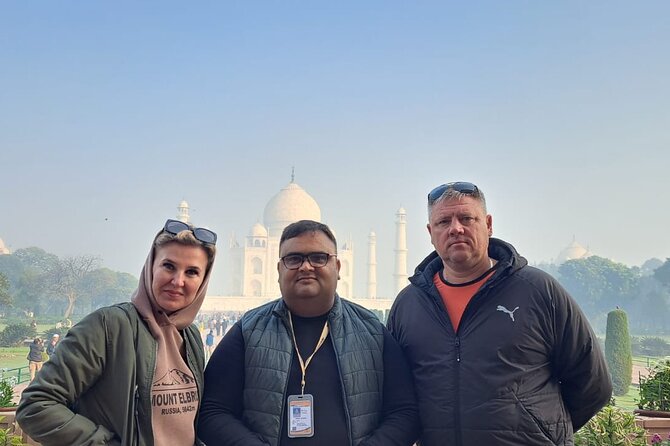
The Agra day begins at 9:30 a.m. with the Taj Mahal. Two hours is a sensible amount of time for the main monument, gardens, photographs, and an explanation of Shah Jahan’s mausoleum for Mumtaz Mahal.
The Taj is famous for good reason, but it is also the point where timing matters. Your guide will control the order of the visit, and the crowd level can affect how much time you spend moving, listening, and taking photographs. Ask in advance about the exact ticket arrangement because the tour details are not fully consistent about which admissions are covered.
Itmad-ud-Daulah follows for about 30 minutes. Often called the Baby Taj, this smaller Mughal tomb is sometimes described as a jewel box. It gives you a closer look at fine decoration and a more intimate setting than the Taj Mahal.
Agra Fort receives an hour. Built between 1565 and 1573 for Emperor Akbar, the fort later served as a major Mughal residence. The red sandstone walls and palace spaces help explain the political world behind the Taj Mahal. I would give this stop your full attention, since it is more than a quick photo stop.
Mehtab Bagh finishes the listed Agra sightseeing. The garden lies across the Yamuna River from the Taj Mahal and offers a different angle on the monument. A 30-minute visit will likely focus on the view and garden setting rather than a long exploration.
Mohammad Kadir is named in connection with an Agra visit and is described as friendly, honest, funny, and responsible. Those qualities matter here. Agra can be tiring, and a guide who keeps the day organized while explaining the sites can make the difference between a smooth visit and a rushed one.
More Golden Triangle itineraries from New Delhi:
- 3-Days Private Golden Triangle Tour: Delhi, Agra & Jaipur by Car
★ 5.0 · 1,107 reviews - 3-Days Private Golden Triangle Tour: Delhi, Agra & Jaipur by Car
★ 5.0 · 1,098 reviews - 3-Day Delhi, Agra and Jaipur Private Tour – India Golden Triangle
★ 5.0 · 812 reviews - Four-Day Private Luxury Golden Triangle Tour to Agra and Jaipur From New Delhi
★ 5.0 · 807 reviews
Overnight trains make the route possible, but add a tradeoff
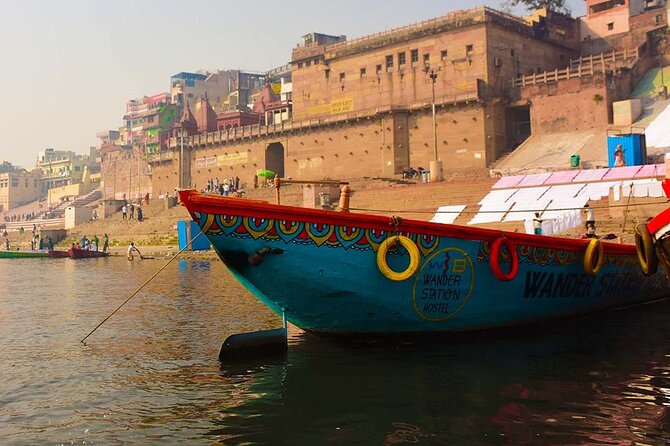
The tour uses overnight trains as part of the connection to Varanasi and back to Delhi. That saves daytime hours that would otherwise be spent on a long journey, allowing you to use those hours for sightseeing.
The tradeoff is sleep. A train night is not the same as a hotel night, and the provided details do not specify the train class, berth type, or exact departure times. Ask these questions before booking, especially if you need a private compartment or have trouble sleeping on trains.
The private vehicle covers sightseeing transfers, with fuel, tolls, parking fees, and taxes included. That is a useful cost control on a route where road charges can add up. Complimentary bottled water is also provided.
The $76 per-person price deserves careful checking. For a seven-day private trip with six breakfasts, hotels, guides, transport, and trains, it appears unusually inexpensive. That can be a strong bargain if the advertised arrangements match your booking, but the terms should be clear. In particular, ask for a written list of included entrance tickets, train costs, hotel names, and Varanasi boat charges.
Varanasi changes the tone from monuments to ritual
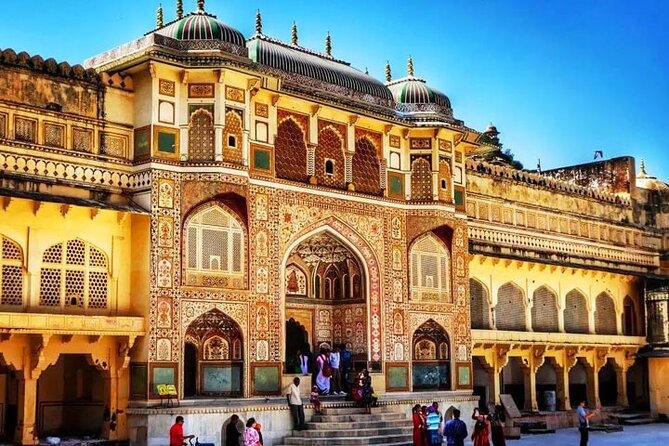
You arrive at Varanasi Railway Station in the morning, where a representative meets you and takes you to the hotel for check-in assistance. The first listed visit is Sarnath, about one hour away in the itinerary.
Sarnath is important to Buddhist tradition and gives the Varanasi portion a wider religious context. After several days of royal architecture and imperial power, this stop turns your attention toward teaching, pilgrimage, and spiritual practice.
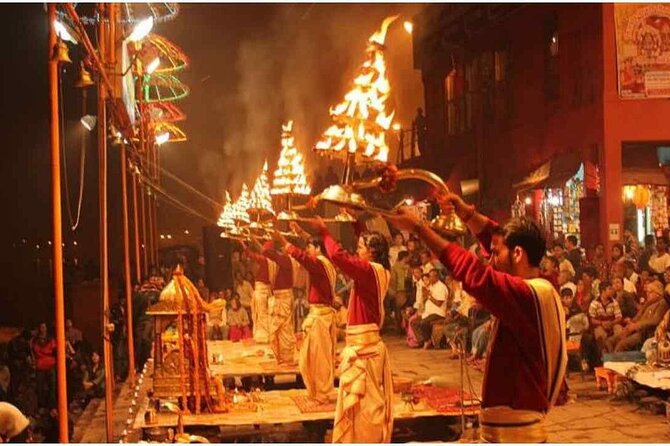
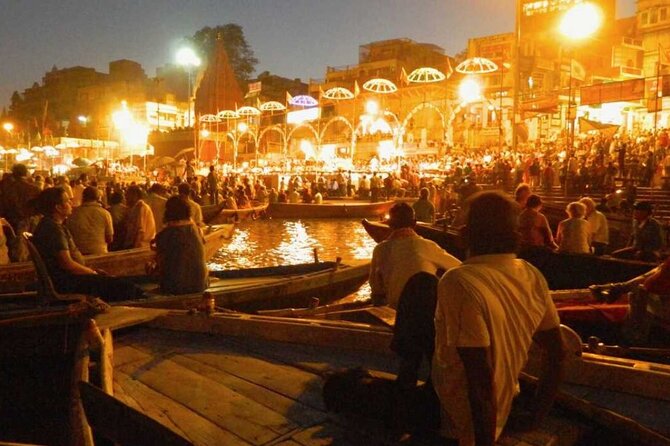
At sunset, you take a cruise on the Ganges to watch the Ganga Aarti. The ceremony includes prayers and oil lamps, and viewing it from the river gives you a broad view of the ghats and ceremony. The cruise lasts about an hour.
This is one of the tour’s strongest moments because you are not only looking at a building. You are watching a living religious ceremony in the place where it takes place. Keep your expectations respectful. The experience is meaningful because it is part of local worship, not a staged theater performance.
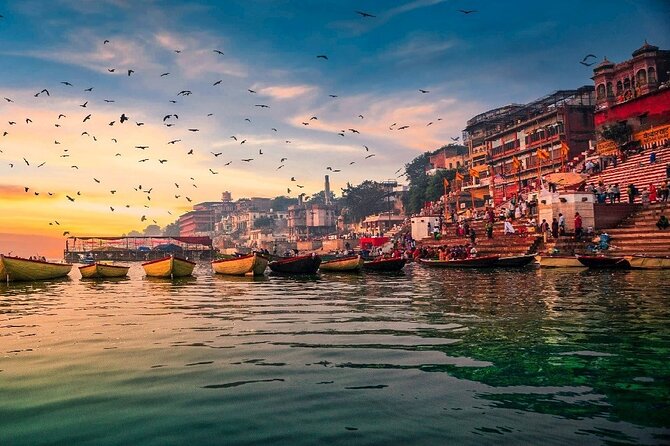
The next morning begins early with a two-hour boat cruise on the Ganges. Dawn is the key time, when pilgrims come to the river for their morning dip. You also visit Dasaswamedh Ghat, the best-known ghat, for about an hour.
The river view lets you see Varanasi from a different position than the walkways and steps along the ghats. You may see people practicing yoga, bathing, praying, and carrying out ordinary morning routines. The tour information emphasizes the visual activity along the ghats, but your guide’s explanation will help you understand what you are seeing.
Bharat Kala Bhavan adds an indoor museum visit. Its collection includes paintings, Hindu and Buddhist sculpture, and archaeological objects. One hour here gives you a useful counterpoint to the river ceremonies.
Boat rides are mentioned as extra in the overall tour description, although the individual Varanasi stops show an included admission. This is exactly the kind of detail to settle before departure. Ask if the sunset cruise and dawn boat are included in your specific booking, and ask about any local boat fees.
The final Delhi day returns to Mughal design and modern India
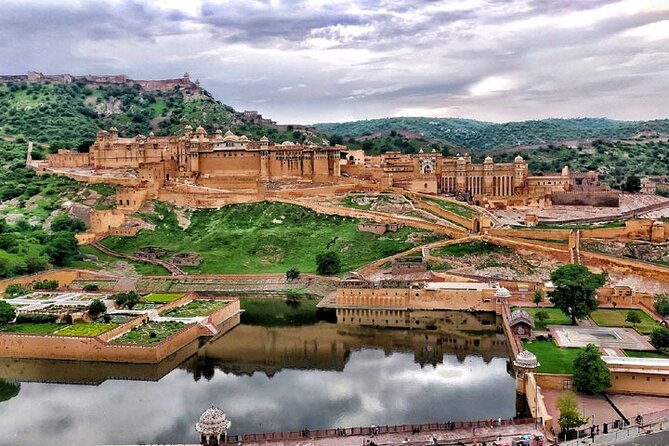
After the Varanasi sightseeing, you take a train back to Delhi and spend the night on the train. Once you arrive, a representative meets you at the station. You get time to freshen up and have breakfast before the final sightseeing.
Humayun’s Tomb is a fitting first stop. This splendid mausoleum for Emperor Humayun is one of Delhi’s major Mughal monuments and helps link the capital to the architecture you have seen in Agra. Plan for about an hour.
India Gate shifts the mood again. The war memorial honors more than 70,000 soldiers who died in the First World War and the Third Anglo-Afghan War. The visit takes about 30 minutes and works well as a short outdoor stop between larger monuments.
Lotus Temple closes the tour with a modern architectural landmark. Its lotus-shaped design has won recognition for its form, religious concept, and beauty. You have about an hour here, though the tour details do not say how much time is spent inside or around the building.
The last day can feel tiring after the overnight train, so keep that in mind when judging the schedule. It is useful that pickup from the station, breakfast, and transport are arranged, but you should not expect the energy of a full night’s sleep.
Who will get the most value from this tour?
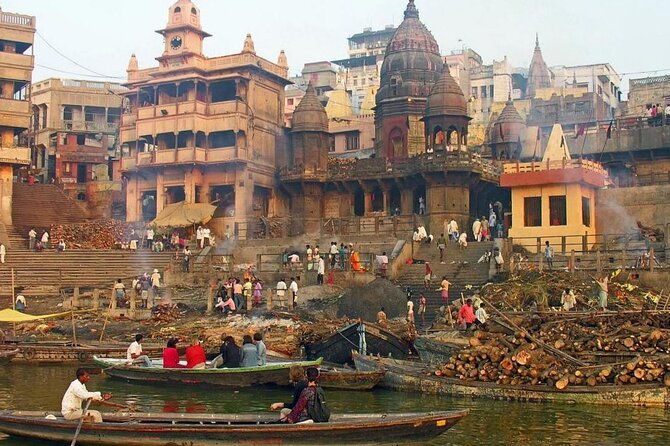
I would recommend this route to a first-time visitor who wants the major sights organized without handling every hotel, transfer, and train booking alone. It suits people who prefer a private guide to a fixed group and who want several destinations in one trip.
It also works well for families or small groups that can split the cost. Group discounts are offered, and a private format means the guide can focus on your group rather than a large coach party.
You should be comfortable with early starts, long drives, busy sightseeing days, and overnight rail travel. This is not the right choice if you want long afternoons at cafes, time for shopping, or several quiet days in each city.
The tour is also a good fit if religion and architecture both interest you. Delhi, Jaipur, and Agra supply palaces, forts, tombs, and museums. Varanasi adds Hindu ritual, Buddhist history at Sarnath, river travel, and the Ganga Aarti.
Practical booking advice before you pay
The tour offers mobile tickets, pickup, group discounts, and free cancellation up to 24 hours before the local start time. Changes made inside that 24-hour window are not accepted, and poor weather can lead to a different date or a full refund.
Most people can take part, and the tour is near public transportation. It is a private activity for your group only. Gratuities are optional.
Before booking, ask for these details in writing:
- The names and locations of all six hotels
- The overnight train routes, class, and berth type
- Which entrance tickets are included
- The total cost of both Varanasi boat rides
- The exact pickup time and location each day
- Whether Mohammad Kadir or Irfan Ali will guide your Agra or Jaipur visits
The strongest service praise is connected to friendly, careful guides and well-managed vehicles. The Agra visit with Mohammad Kadir received particular praise for care and good humor, while Irfan Ali’s Jaipur guiding was described as cooperative and well organized. Guide assignments can change, so treat these names as useful possibilities, not a guarantee.
Should you book the seven-day Golden Triangle and Varanasi route?
Book it if you want a high-coverage private introduction to North India and accept that the pace will be brisk. The Taj Mahal, Jaipur’s palace district, Delhi’s major monuments, and Varanasi’s river rituals make a powerful combination.
Think twice if your priority is comfort, spare time, or precise control over hotel and train standards. The low price is appealing, but the unclear treatment of tickets and boat rides means you should confirm the final cost first.
For the right group, this can be an efficient and memorable way to connect Delhi, Jaipur, Agra, and Varanasi. Go in ready for long days, ask clear questions before booking, and you will know exactly what kind of trip you are buying.
FAQ
How long is the tour?
The tour lasts approximately seven days and includes six nights of accommodation and breakfast.
Where does the tour start?
The tour starts in New Delhi, with pickup available from your Delhi hotel or airport.
Is this a private tour?
Yes. The activity is private, and only your group participates.
What destinations are included?
The route includes New Delhi, Jaipur, Agra, Varanasi, and Sarnath.
Is the Taj Mahal included?
Yes. The itinerary includes a two-hour visit to the Taj Mahal, though you should confirm the final treatment of entrance fees before booking.
Are hotels included?
Yes. Six nights of accommodation in comfortable four-star hotels are included.
Are breakfasts included?
Yes. Six breakfasts are included.
Does the tour use trains?
Yes. Overnight trains are used for parts of the route, including travel connected with Varanasi and the return to Delhi.
Are Varanasi boat rides included?
The tour information says entry tickets and boat rides in Varanasi cost extra, while individual itinerary details show admission included for some stops. Confirm the boat charges for your booking before departure.
Can I cancel for a full refund?
You can cancel up to 24 hours before the experience start time for a full refund. Cancellations or changes made less than 24 hours before the start are not accepted for a refund.
More 7-Day Experiences in New Delhi
- 7-Day Golden Triangle Tour with Ranthambore Tiger Safari
★ 5.0 · 53 reviews - 7 Day Golden Triangle Tour { Delhi Agra Jaipur Tour }
★ 5.0 · 23 reviews - 7 Days Golden Triangle Delhi,agra, Jaipur
★ 5.0 · 20 reviews - Journey to India’s Heart: 7-Day Golden Triangle Escape
★ 5.0 · 19 reviews
More Historical Tours in New Delhi
- The Great Indian Food Tour: Old Delhi Food and Heritage Walk
★ 5.0 · 1,698 reviews - Old Delhi Food, Heritage&Cultural Walk with Rickshaw ride to Masterji Kee Haveli
★ 5.0 · 742 reviews - Old Delhi Heritage Walking Tour
★ 5.0 · 247 reviews - 3-hour Old Delhi Heritage Walking tour with Rickshaw Ride
★ 5.0 · 240 reviews
Just added around New Delhi
- Delhi: All-Inclusive Full or Half Day Tour With Hotel Pickup★ 5.0 · 3 reviews
- From Delhi : All Inclusive Taj Mahal Tour by Gatimaan Express★ 5.0 · 3 reviews
- Skip the line: Taj Mahal Agra Private Day Trip From Delhi By Car★ 5.0 · 3 reviews
- Delhi: Old and New Delhi One Day Private Guided City Tour★ 5.0 · 3 reviews
- New Delhi Night City Tour★ 5.0 · 3 reviews
- Old Delhi Half day private city tour★ 5.0 · 3 reviews
- A full-day tour of Old & New Delhi Monument Express Entry★ 5.0 · 3 reviews
- Sultanpur Bird Sanctuary Tour Near Delhi★ 5.0 · 3 reviews
Golden Triangle with Varanasi, compared.

Delhi Agra Jaipur & Varanasi Tour – Taj Mahal & Ganga Aarti
Read our review →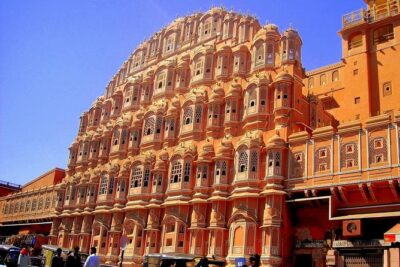
7-Day Golden Triangle & Varanasi Tour from Delhi with Guide
Read our review →
9 – Days Private Golden Triangle Tour with Khajuraho & Varanasi
Read our review →
6-Day Private Tour of Delhi, Agra, Jaipur, and Varanasi from Delhi
Read our review →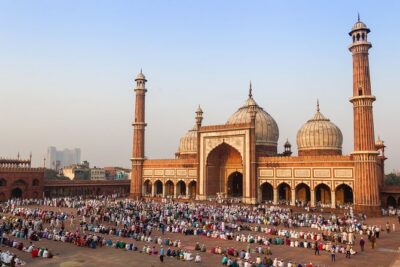
11 Days Golden Triangle & Varanasi With Luxury Accommodation,internal Flights
Read our review →
8-Day Private Luxury Golden Triangle With Spiritual Varanasi Tour
Read our review →
10 Day Private Luxury Golden Triangle with Khajuraho and Varanasi
Read our review →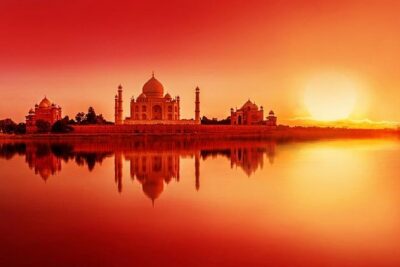
Private Luxury Delhi, Agra, Jaipur & Varanasi from Delhi – 5 Nights 6 Days Tour
Read our review →Browse the lists this tour appears in