
Reviewed · GOLDEN TRIANGLE TOURS
Best of India – 4 Days Golden Triangle Private Trip
The Taj Mahal at sunrise is the star here, but the real appeal is the route around it. In four days, you move from Delhi’s crowded lanes to Agra’s Mughal monuments, then on to Jaipur’s forts and pink-painted streets, with a private car linking it all.
I like the private vehicle and flexible format, especially for a first visit to India. I also like having a local guide in each destination, rather than trying to make sense of the forts and palaces alone. The main drawback is the pace: long drives and early starts leave little room for slow meals or unplanned wandering.
In This Review
- Key points to know before booking
- How the private Golden Triangle route works
- Day 1: From Delhi to Agra and the Mughal monuments
- Agra Fort and the Mughal court
- Itmad-ud-Daula, the Baby Taj
- Sunset from the Yamuna River side
- Day 2: The Taj Mahal at sunrise, then Rajasthan by road
- Five hours toward Jaipur
- Chand Baori at Abhaneri
- Day 3: Jaipur forts, palaces, and the drive back to Delhi
- Hawa Mahal and Jaipur’s best-known views
- Jal Mahal on Man Sagar Lake
- City Palace and the living royal complex
- Day 4: Old Delhi, Gandhi, and modern New Delhi
- Jama Masjid, Chandni Chowk, and a rickshaw ride
- Gandhi Smriti and Humayun’s Tomb
- Lotus Temple and India Gate
- Gurudwara Bangla Sahib
- What the guides and driver add
- What the $299 price does and does not cover
- Who should book this four-day trip
- Final verdict: a strong first taste, with a fast pace
- FAQ
- How long does the Golden Triangle private trip last?
- Where can pickup be arranged?
- Is the tour private?
- What type of vehicle is used?
- Are hotels and meals included?
- Are monument entrance tickets included?
- Can the itinerary be customized?
Key points to know before booking
- Sunrise at the Taj Mahal: The monument is scheduled for the cool, softer light of early morning.
- Private transport for up to five: A sedan is used for one or two people, while three to five share a seven-seat MPV.
- Three major cities in four days: Delhi, Agra, and Jaipur are all covered, but the schedule is full.
- A useful rural stop: Chand Baori at Abhaneri breaks up the Agra to Jaipur drive with one of Rajasthan’s most striking stepwells.
- Old Delhi gets serious time: Jama Masjid, Chandni Chowk, the spice market, and a rickshaw ride are part of the final day.
- The advertised price is $299 per person: Accommodation, meals, monument tickets, shopping, and tips are extra, so check the final group price carefully.
How the private Golden Triangle route works
This is a road-based tour beginning and ending in Delhi. Pickup is available from a Delhi, Noida, or Gurugram hotel, airport, railway station, or another requested location. Airport drop-off at the end is also available.
The car stays with you for the whole trip. Fuel, tolls, parking, road and state taxes, and the driver’s food and lodging are included. Bottled water is provided in the car. That matters in India, where changing vehicles and negotiating each transfer can consume time and patience.
For one or two people, the vehicle is an air-conditioned four-seat sedan. Groups of three to five use an air-conditioned seven-seat MPV. The tour is private, so your party controls the pace to some degree. You can request changes after booking, which is useful if you want to adjust sightseeing or pickup details.
Still, private does not mean leisurely. The route covers major sights across a large part of northern India. You should expect several hours on the road, early morning sightseeing, and busy days at each destination.
The tour price is listed as $299 per person, while the terms also describe the rate as applying to a private group of up to five passengers. Since those two details can affect the value greatly, confirm how the total is calculated for your party before paying. For a group of four or five, a private car and separate guides can be a strong deal. For one person, the value depends more heavily on the exact fare and what you choose to add.
More Golden Triangle itineraries from New Delhi:
- 3-Days Private Golden Triangle Tour: Delhi, Agra & Jaipur by Car
★ 5.0 · 1,107 reviews - 3-Days Private Golden Triangle Tour: Delhi, Agra & Jaipur by Car
★ 5.0 · 1,098 reviews - 3-Day Delhi, Agra and Jaipur Private Tour – India Golden Triangle
★ 5.0 · 812 reviews
Day 1: From Delhi to Agra and the Mughal monuments
The first day begins after breakfast with a roughly three-hour drive from Delhi to Agra. The transfer is not sightseeing by itself, but it gets you quickly to the city associated with the Taj Mahal and the Mughal emperors.
After checking into your Agra hotel, you have a two-hour break for lunch and rest. Accommodation is not included, so you arrange and pay for the hotel yourself. This pause is welcome because the afternoon continues with several important sites.
Agra Fort and the Mughal court
Agra Fort takes about an hour. Its walls and palaces tell a different story from the Taj Mahal, one centered on royal power, military defense, court life, and imperial wealth.
A local guide explains the architecture and the Mughal dynasty as you move through the complex. That service is valuable here. Without context, the courtyards and buildings can blur together. With a guide, you can better understand how the fort functioned as a royal residence and why its grand rooms were built as they were.
The visit is relatively short, so do not expect to see every corner. The schedule favors a broad introduction to Agra rather than a slow architectural study.
Itmad-ud-Daula, the Baby Taj
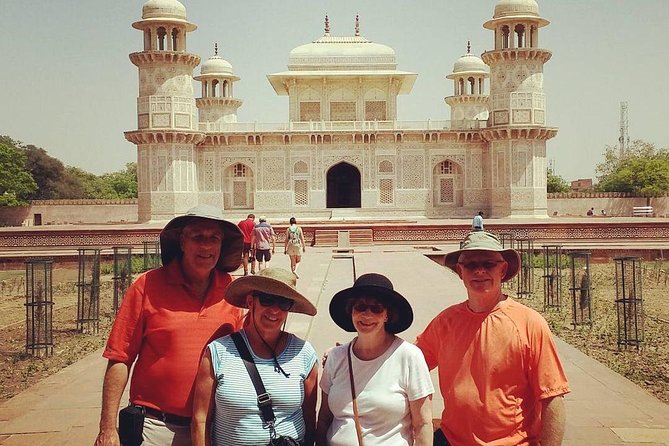
The next stop is Itmad-ud-Daula, often called the Baby Taj. The monument is smaller and more delicate than the Taj Mahal, with fine decorative work and a calmer scale.
A guide accompanies you and explains the building’s background and details. This is a good place to pay attention to the smaller touches that can be lost at the larger monuments. Plan on about 45 minutes.
A few more New Delhi departures worth comparing
- 4 Days Golden Triangle Tour
★ 5.0 · 499 reviews - Private Luxury Delhi – Agra – Jaipur Golden Triangle Tour – 3 Nights 4 Days
★ 5.0 · 306 reviews - Private 4-Day Golden Triangle Tour with Ranthambore Tiger Safari
★ 5.0 · 248 reviews - From Delhi: Private 4-Day Golden Triangle Luxury Tour
★ 4.8 · 226 reviews
Sunset from the Yamuna River side
The day ends at a Taj Mahal viewpoint on the bank of the Yamuna River. It offers a panoramic view of the monument at sunset without the same interior visit as the next morning.
This is a smart addition to the route. You see the Taj Mahal from a different angle, and the late light gives you a chance to take photographs before the sunrise visit. The viewpoint is described as open from sunrise to midnight, but the schedule allocates about 45 minutes.
Monument entrance fees are not included at Agra Fort, Itmad-ud-Daula, or the viewpoint. Keep a separate budget for tickets and personal spending.
Day 2: The Taj Mahal at sunrise, then Rajasthan by road
Day two begins early with a two-hour sunrise visit to the Taj Mahal. This timing is the strongest part of the itinerary.
The cooler morning is easier for walking than the heat of the day, and the light can be gentle across the white marble. You will have time to see the monument, take photographs, and listen to the guide explain its place in Mughal architecture and Agra’s past. The exact sunrise conditions naturally depend on the season and weather, but the early start remains worthwhile.
The Taj Mahal is not a quick roadside photo stop. Plan for a proper visit, and wear comfortable shoes. The entrance ticket is not included, so account for that separately.
After returning to the hotel for breakfast, you check out and spend about two hours with Agra’s arts and crafts. This portion can add a shopping element to the day. If you want to buy something, ask clearly about prices and take your time. If shopping is not your priority, ask how much of this period can be used for rest or another local stop, since the tour can be customized.
Five hours toward Jaipur
The drive from Agra to Jaipur takes about five hours, including an en route lunch break. This is the longest road transfer of the tour, and it is worth treating it as a major part of the day rather than a minor connection.
The private, air-conditioned car makes the journey easier, especially in warm weather. You can stop for breaks more easily than you could in a large group, but the distance still takes time. Keep water with you, even though bottles are supplied in the vehicle.
Chand Baori at Abhaneri
The stop at Chand Baori breaks up the drive. This stepwell reaches about 30 meters into the ground and is known for its repeated flights of steps and strong geometric design.
You have about 40 minutes here. That is enough to view the structure and take photographs, but not enough for an extended village visit. The site gives you a glimpse of Rajasthan beyond Jaipur’s royal buildings, and it makes the long transfer feel more purposeful.
You spend the night in Jaipur, with the hotel arranged at your own expense. Since the accommodation is not part of the tour price, make sure your booking is close enough to the next morning’s route.
Day 3: Jaipur forts, palaces, and the drive back to Delhi
Jaipur’s sightseeing begins with Amber Fort, the largest scheduled visit of the day at two hours. The fort and palaces reflect the power of Rajasthan’s Rajput rulers, with courtyards, defensive walls, and grand royal spaces.
This is another place where the included local guide adds real value. The complex is large, and the story is not obvious from the stone alone. Give yourself time to look at the setting as well as the buildings. The entrance ticket is extra.
Hawa Mahal and Jaipur’s best-known views
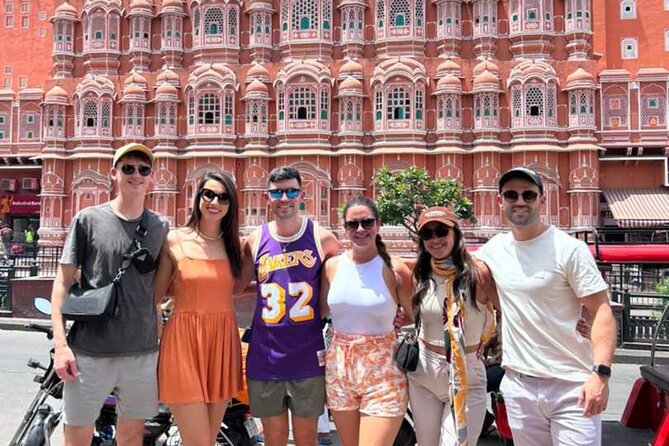
Hawa Mahal, or the Palace of Wind, receives about 30 minutes. Its ornate facade is one of Jaipur’s most recognizable sights, and it works particularly well for photographs from the street side.
The guide can help with photo angles and timing. Do not expect a long interior visit in this slot. The stop is mainly about seeing the facade and understanding its role within Jaipur’s old city.
Jal Mahal on Man Sagar Lake
The itinerary calls this the Jewels Lake Palace, commonly known as Jal Mahal. The palace sits in the middle of the lake, and the visit is planned as a short photo and walking stop of around 30 minutes.
The viewing area is the main attraction. This is not a full palace tour. Treat it as a scenic pause between the larger fort and palace visits.
City Palace and the living royal complex
City Palace takes about an hour. The complex combines courtyards, decorated rooms, and royal buildings in the heart of the Pink City. The itinerary notes that the local king still lives with his family in part of the palace complex, which gives the site a continuing connection to Jaipur’s royal household.
The included city guide can help separate the public museum areas from the parts still used by the family. As with the other major monuments, admission is not included.
After sightseeing, you have a two-hour lunch and arts-and-crafts break. Again, this gives you a chance to eat and shop, but it is also a useful moment to ask for a slower pace if your group prefers fewer purchases and more time at a monument.
The day then turns into another road transfer, about four hours from Jaipur to Delhi. You spend the night in Delhi, with accommodation again excluded. This return drive makes day three quite demanding. If you are sensitive to long car journeys, the private vehicle helps, but it does not shorten the road.
Day 4: Old Delhi, Gandhi, and modern New Delhi
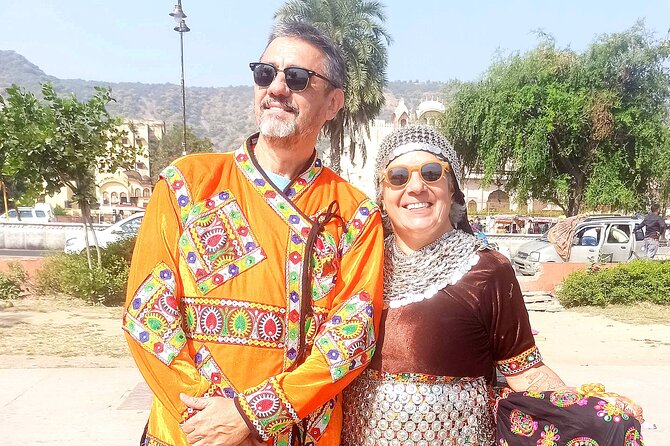
The final day starts at 9 a.m. and focuses on Delhi. It covers religious sites, markets, memorials, colonial-era avenues, and a Sikh temple. The range is impressive, but the schedule is full, so expect short visits at several stops.
Jama Masjid, Chandni Chowk, and a rickshaw ride
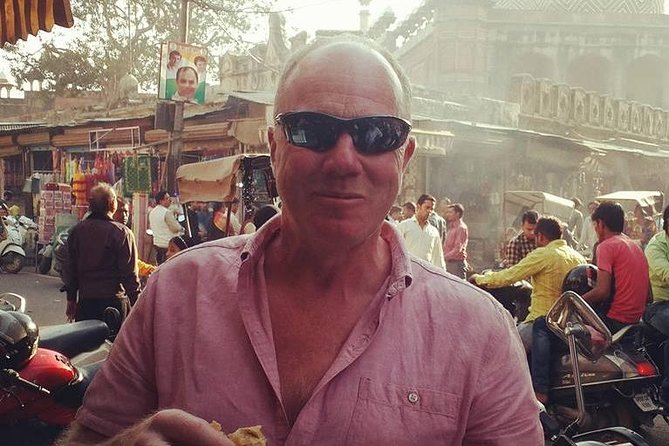
The morning begins in Old Delhi with Jama Masjid, Chandni Chowk, local bazaars, and a rickshaw ride. The total time for this section is about two hours, followed by 30 minutes at the spice market.
This is the most street-level part of the tour. You see a working part of the city rather than only grand monuments. Chandni Chowk can be crowded and intense, but that is exactly why a guide and private transport are useful. Your guide leads you through the market, points out photo opportunities, and helps you use the time well.
Dress respectfully for Jama Masjid and follow the guide’s instructions inside the mosque. Admission is not included.
The spice market adds strong smells, narrow lanes, and a more commercial side of Old Delhi. If you dislike crowded markets, tell your guide early. The private format makes that conversation easier.
Gandhi Smriti and Humayun’s Tomb
Gandhi Smriti takes about 45 minutes. This museum occupies the house where Mahatma Gandhi lived during his final days and where he was assassinated. The visit gives the tour a modern political and human focus after the Mughal and Rajput monuments.
Humayun’s Tomb follows for about an hour. This World Heritage site is a major Mughal building commissioned by a wife for her husband. Its formal design and garden setting help explain the architectural ideas that later reached their most famous expression at the Taj Mahal.
The two visits work well together. Gandhi Smriti connects you with India’s independence story, while Humayun’s Tomb reaches back to the Mughal period.
Lotus Temple and India Gate
Lotus Temple is scheduled for about 40 minutes. The Bahai temple is open to people of all faiths and is known for its flower-like design. The tour allows time to enter and sit quietly, not simply photograph the exterior.
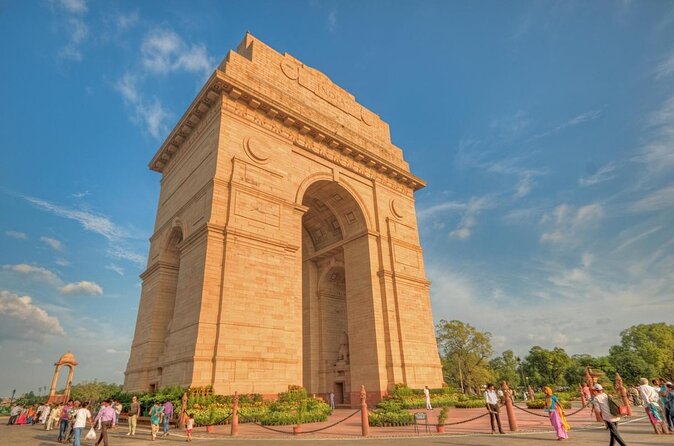
India Gate takes about 30 minutes. It is a war memorial from the British colonial period, and the drive continues through Lutyens’ New Delhi and past the President’s Estate. This section shows the city’s political center and its broad ceremonial avenues.
These stops are shorter than the Taj Mahal or Amber Fort. Think of them as a final survey of Delhi rather than extended visits.
Gurudwara Bangla Sahib
The last major stop is Gurudwara Bangla Sahib, scheduled for an hour. This Sikh temple is known for its community kitchen, where free food is served to everyone.
The visit offers more than architecture. Your guide explains Sikhism and the role of the kitchen as a working community service. Follow temple etiquette, including any instructions about head coverings and footwear. The most meaningful part is seeing the place function as an active religious and social center.
At the end, you can be dropped at a Delhi hotel, airport, or another desired location. Allow enough time if you have a flight, since the final day includes several city stops and Delhi traffic can affect the transfer.
What the guides and driver add
A guide is included in each destination, while the chauffeur remains with you for the full trip. That split is practical. The driver handles the long intercity route, and local guides take over at the monuments where regional context matters most.
One driver named Raza received special praise for both his driving and his helpful advice. That is worth noting because road time is a large part of this experience. A safe driver who can communicate in English and knows the area makes the schedule less tiring.
The service description also says the driver has an excellent record, sufficient English, and local knowledge. You should still treat the driver primarily as your transport provider, while using the city guides for detailed explanations at the sights.
What the $299 price does and does not cover
At $299 per person, the value depends on your group size and the final fare calculation. The price includes the private air-conditioned car, driver, city guides, fuel, tolls, parking, taxes, road and state charges, water bottles, and airport transfers.
It does not include hotels, meals, monument admission, shopping, tips, or other personal costs. Those extras can add up across four days, especially because tickets are excluded at most major sites.
For a group of up to five, the private arrangement may compare well with arranging separate cars, drivers, guides, and intercity transfers yourself. You also save time by avoiding repeated negotiations at each city.
For a solo visitor, the price is less obviously economical. The benefit is comfort, privacy, and a fixed route, not simply low cost. Confirm the group pricing language before booking, then estimate your hotel, food, and entrance-ticket budget.
The tour is highly rated at 4.9 from 61 reviews, with 100 percent recommendation shown in the supplied information. That rating supports the basic service model, especially the transport and guide arrangement, but it does not remove the need to prepare for long drives and early mornings.
Who should book this four-day trip

I would choose this tour if you want the major Golden Triangle sights without managing Indian rail tickets, hotel transfers, local guides, and intercity transport yourself.
It suits:
- First-time visitors who want a clear route through Delhi, Agra, and Jaipur
- Couples, families, or friends who value a private car
- Groups of three to five who can share the MPV
- Visitors with limited time who want the Taj Mahal, Amber Fort, and Old Delhi in one trip
- People who prefer a guide at each major destination
- Anyone who wants airport pickup or drop-off built into the transport plan
I would hesitate if you want long afternoons at one site, unplanned walks, or a slow food-focused trip. The route is efficient, but it is not relaxed. I would also think twice if you dislike shopping stops, since Agra and Jaipur each include time for arts and crafts.
Ask for a custom version if you want to change the balance. The tour can be adjusted after booking, and a private group has more room to request different timing or sightseeing priorities.
Final verdict: a strong first taste, with a fast pace
Book this Best of India Golden Triangle trip if your priority is seeing the essential monuments with a private driver and local guides. The sunrise Taj Mahal visit, Chand Baori stop, Jaipur palace circuit, and Old Delhi market time give the four days a good mix of famous sights and everyday city life.
The cost is strongest for a small group, and the included transport charges remove several common travel headaches. Just budget for hotels, meals, tickets, and tips, and accept that the road transfers make this a busy introduction rather than a restful holiday.
FAQ
How long does the Golden Triangle private trip last?
The experience lasts approximately four days and covers Delhi, Agra, Jaipur, and the return to Delhi.
Where can pickup be arranged?
Pickup is offered from an airport, railway station, hotel, or another requested location in Delhi, Noida, or Gurugram.
Is the tour private?
Yes. Only your group participates. The private vehicle can carry up to five passengers.
What type of vehicle is used?
One or two passengers use an air-conditioned four-seat sedan. Groups of three to five use an air-conditioned seven-seat MPV.
Are hotels and meals included?
No. Accommodation and personal expenses, including meals, shopping, and tips, are not included.
Are monument entrance tickets included?
No. Admission tickets for the major monuments and attractions are listed separately from the included car, driver, guide, taxes, tolls, parking, fuel, and transfers.
Can the itinerary be customized?
Yes. The tour can be customized to meet your requirements, and you can request changes after booking.
Just added around New Delhi
- Delhi: All-Inclusive Full or Half Day Tour With Hotel Pickup★ 5.0 · 3 reviews
- From Delhi : All Inclusive Taj Mahal Tour by Gatimaan Express★ 5.0 · 3 reviews
- Skip the line: Taj Mahal Agra Private Day Trip From Delhi By Car★ 5.0 · 3 reviews
- Delhi: Old and New Delhi One Day Private Guided City Tour★ 5.0 · 3 reviews
- New Delhi Night City Tour★ 5.0 · 3 reviews
- Old Delhi Half day private city tour★ 5.0 · 3 reviews
- A full-day tour of Old & New Delhi Monument Express Entry★ 5.0 · 3 reviews
- Sultanpur Bird Sanctuary Tour Near Delhi★ 5.0 · 3 reviews
Golden Triangle Tours, compared.
3-Days Private Golden Triangle Tour: Delhi, Agra & Jaipur by Car
Read our review →3-Days Private Golden Triangle Tour: Delhi, Agra & Jaipur by Car
Read our review →
3-Day Delhi, Agra and Jaipur Private Tour – India Golden Triangle
Read our review →
Four-Day Private Luxury Golden Triangle Tour to Agra and Jaipur From New Delhi
Read our review →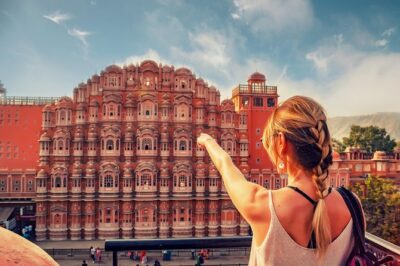
Jaipur Day Trip from Delhi by Car or Train – All Inclusive
Read our review →
Jaipur City Private Day Tour from Delhi by Car – All Inclusive
Read our review →
5 Nights 6 Days Private Golden Triangle Tour – Delhi Agra Jaipur
Read our review →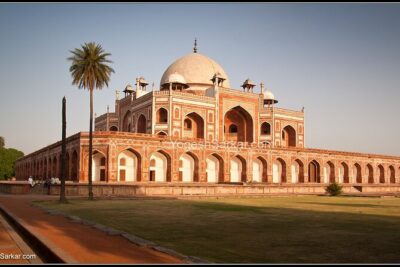
Browse the lists this tour appears in