
Reviewed · COMMUNITY AND LOCAL LIFE WALKS
New Delhi Sanjay Colony slum Tour (Private Tour)
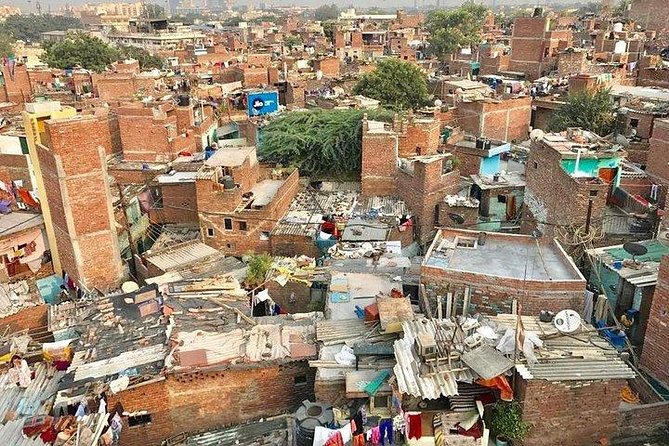
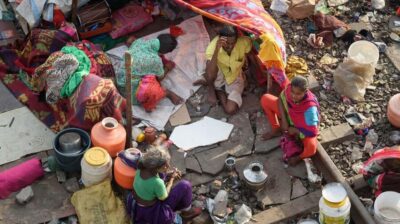
Sanjay Colony is not a sightseeing backdrop. It is a working community of about 60,000 people, and this short walk shows you how residents earn money, manage homes, practice faith, and handle daily needs such as water and electricity. You get a local view of Delhi that a monument tour cannot provide.
I like two things here. First, the tour connects ordinary details, such as clothing work, tea, school, hygiene, and temple worship, to the larger systems of life in Delhi. Second, 50 percent of the profits go to Learning by Locals, a nonprofit in the community. The main consideration is that the tour lasts only about 90 minutes, so it offers a focused introduction rather than a full picture of Sanjay Colony.
In This Review
- Key points to know before you go
- Why Sanjay Colony offers a different view of Delhi
- Meeting at Harkesh Nagar Okhla Metro Gate 2
- Seeing clothing work and daily homes
- A public school and the role of education
- Entering the temple and understanding faith
- Water, electricity, and hygiene in a crowded area
- Chai, conversation, and a no-camera rule
- What the $35 price really buys you
- Who will get the most from this walk
- My call: book it for context, not spectacle
- FAQ
- Where does the Sanjay Colony tour start?
- Where does the tour end?
- How long does the experience last?
- Is this a private tour?
- Is photography allowed?
- What is included in the price?
- Will I visit a school and a temple?
- How much of the profits support the local nonprofit?
- What is the cancellation policy?
Key points to know before you go
- A working community, not a staged attraction: You see clothing-related work, homes, local services, and religious life as part of a normal neighborhood walk.
- Photography is not allowed: This rule protects privacy and keeps the visit respectful.
- The tour is private: Only your group participates, with a maximum of six people.
- Your guide explains daily systems: Expect discussion of water access, electricity, hygiene, schooling, and faith.
- Tea and water are included: A cup of local tea and a bottle of water provide a simple break during the walk.
- The meeting point is at Harkesh Nagar Okhla Metro Gate 2: The tour returns there at the end.
Why Sanjay Colony offers a different view of Delhi
Delhi is easy to experience through forts, markets, temples, and grand government buildings. Those sights matter, but they do not always explain how the city works for the people who make, repair, sell, teach, worship, and raise families here.
This tour shifts your attention to the practical side of city life. You learn how people connected to the clothing industry work, how homes function in a tightly packed area, and how residents deal with basic services. The focus is not on poverty alone. It also includes education, electricity, hygiene, business, faith, and the ways people build useful community institutions.
That balance matters. A tour of a low-income neighborhood can easily become a quick look at hardship. Here, the stated aim is to explain both the difficulties and the systems that function within the community. You are encouraged to understand the place as a neighborhood where people live full, complicated lives.
The experience is led by Delhi by Locals, a group that sends half of its profits to Learning by Locals. That gives the $35 price more weight than a standard short walking tour. You are still paying for a guide and a local experience, but part of the money also supports education and nonprofit work in the area.
More community walks in New Delhi:
- Sanjay Colony Slum Tour
★ 5.0 · 498 reviews - New Delhi Slum Walking Tour
★ 5.0 · 360 reviews - Delhi: Ethical Sanjay Colony Slum Tour
★ 4.9 · 242 reviews
Meeting at Harkesh Nagar Okhla Metro Gate 2
The walk begins at Harkesh Nagar Okhla Metro Gate 2 in New Delhi. The location is near public transportation, which is useful if you are exploring without a private car or driver. The tour also finishes at the same meeting point, so you do not need to arrange a separate ride from the neighborhood.
Because this is a private activity, your group has the guide’s attention. The booking limit is six people, which is a sensible size for narrow streets and personal conversation. A small group also makes it easier to ask questions without turning the walk into a crowd.
The exact guide can vary. The team includes local guides such as Pradeep, Sukh, and Badal, all named in visitor accounts connected with the company. Badal is described as living in the area, while Sukh is praised for sharing community stories with warmth and care. Pradeep is the founder of Delhi by Locals and is closely involved with the organization.
You should confirm the meeting time when booking, since the information provided here gives the meeting place but not a fixed departure hour. Confirmation is sent at booking.
Seeing clothing work and daily homes
One of the most useful parts of the walk is its attention to work. Sanjay Colony is connected with the clothing industry, and the guide explains how people earn a living through this sector. The tour does not simply point out buildings. It helps you connect the clothes sold in larger Delhi markets with the labor and small-scale business activity that support local families.
This is a good place to ask clear, respectful questions. You might ask what kinds of work are done locally, how families organize their working space, or how business fits alongside home life. The guide can explain what is visible without turning private spaces into a display.
You also learn about how people live in their homes. The wording of the experience promises an explanation of home life, not an invitation to enter every private residence, so you should expect to observe from public areas and listen to the guide’s context. That distinction is important. You are visiting a real neighborhood, not walking through a museum of poverty.
The area is described as tightly built, with systems such as electricity and hygiene working within limited space. You may notice the physical constraints of the neighborhood, but the point is to understand how residents manage them. A good guide helps you see practical solutions and community habits instead of reducing everything to visual impressions.
A public school and the role of education
The first named stop is the S.D.M.C. primary school. The tour explains Delhi’s education system and the role of schooling in the community. You visit the public school from the outside, so do not expect a classroom tour or an extended school visit.
That limitation is worth knowing. The stop is brief, listed at about five minutes, but it gives the guide a clear opening to explain how public education fits into local life. You may learn how schooling is viewed by families, how children’s education connects with future work, and how the nonprofit’s educational efforts relate to the neighborhood.
Learning by Locals is also part of the route and the wider purpose of the activity. The organization works in the slum community, and some experiences with the company include meeting students connected with the nonprofit. The supplied tour details specifically promise an explanation of education and a visit to a public school from outside, so the exact interaction with students may vary.
If education is a major reason you are booking, ask at the start what is planned for that day. That keeps your expectations accurate and gives the guide a chance to explain the current program.
A few more New Delhi departures worth comparing
- Delhi: Old and New Delhi Private Full or Half-Day Tour
★ 4.9 · 3,776 reviews - From Delhi: Taj Mahal & Agra Private Day Trip with Transfers
★ 4.9 · 3,181 reviews - All Inclusive Private Taj Mahal Luxury Tour from Delhi by Car
★ 5.0 · 2,564 reviews - Delhi: Private Old & New Delhi Guided Half- or Full-Day Tour
★ 4.9 · 2,309 reviews
Entering the temple and understanding faith
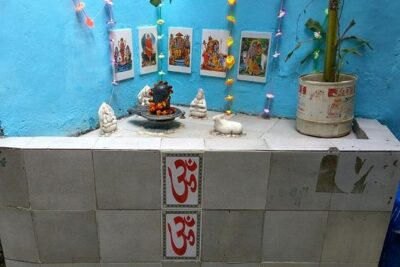
The temple visit adds an important layer to the walk. Faith is presented as part of everyday life, not as an isolated religious sightseeing stop. Your guide explains the role worship plays for people in Sanjay Colony and shows you a temple within the community.
The value here is context. Delhi has famous temples that draw visitors from across the city, but a neighborhood temple can show how religion fits into ordinary routines. It may help you understand the social and personal importance of faith for local families, even during a short visit.
As with any religious site, follow the guide’s instructions. Dress and behavior should be respectful, and you should avoid treating worshippers as part of the scenery. Photography is not permitted anywhere on this tour, which is especially fitting around homes, schoolchildren, workers, and religious activity.
The temple stop is listed at about 15 minutes. That is enough time for an introduction, but not enough for a long religious discussion. If you want a fuller explanation, use the walk between stops to ask questions.
Water, electricity, and hygiene in a crowded area
The tour’s strongest practical feature is its focus on basic services. You learn about access to water, electricity, and hygiene, and how these systems affect daily routines. These subjects may sound ordinary, but they often explain a neighborhood more clearly than a list of landmarks.
Water access, for example, shapes when people collect water, how much they can store, and how households plan their day. Electricity affects lighting, appliances, work, study, and safety. Hygiene depends not just on personal habits but also on drainage, waste systems, shared facilities, and available water.
The guide explains these challenges in the setting where they occur. That is more useful than hearing a general statistic in a classroom. You can ask how residents manage practical problems and what has improved or remains difficult.
Still, do not expect a technical infrastructure tour. The experience is short, and its purpose is broad understanding. You will receive an introduction to these issues, not a full policy lesson or engineering study.
Chai, conversation, and a no-camera rule
A cup of local tea and a bottle of water are included. The tea is a small detail, but it gives the walk a natural pause and creates room for conversation. It also adds a taste of ordinary hospitality without turning the tour into a food excursion.
The no-photography policy is central to the experience. You cannot take pictures during the tour. That may disappoint you if you usually document every stop, but it keeps the focus on listening and reduces the chance of turning people’s homes or working lives into souvenirs.
I see this as a fair trade. In a community visit, a camera can change the mood quickly. Without one, you are more likely to pay attention to the guide’s explanations and to interact in a less intrusive way. Bring your curiosity instead of your camera.
You should also avoid assuming that every person you see wants to talk. Let the guide manage introductions and follow local etiquette. The best interaction is mutual and brief, not an interrogation.
What the $35 price really buys you
At $35 per person, this is not Delhi’s cheapest 90-minute walk. It is also not priced like a simple route from one attraction to another. You are paying for a private guide, a small group, local interpretation, tea, water, and a community program that receives half of the profits.
The value depends on what you want from Delhi. If you only want major sights, the price may feel high for a short activity. If you want to understand how people work and live beyond the tourist center, the cost is easier to justify.
Private format is another part of the value. With no more than six people, you can ask direct questions and move at a pace that suits your group. A large group would be less comfortable in a compact neighborhood and could make the visit feel more disruptive.
Group discounts are available, though the exact reduction is not stated. If you are booking with family or friends, check the final price for your group before paying. Free cancellation is available up to 24 hours before the start time. Changes or cancellations inside that window are not refunded.
Who will get the most from this walk
I would choose this activity if you have already seen some of Delhi’s famous sights and want a clearer sense of everyday urban life. It suits adults, older children, students, and anyone interested in education, social issues, local business, or community-led work.
The tour is also a good fit if you prefer a small private group. You can ask more questions than you could on a crowded city walk, and the guide can adjust explanations to your interests.
It may not suit you if you want extensive photography, a long itinerary, or a conventional sightseeing route. The short duration means you will not cover every part of Sanjay Colony, and the no-camera rule is firm.
Most people can participate, according to the activity information, but the tour takes place in a densely settled neighborhood. If you have mobility concerns, ask the operator for current details before booking, since the supplied information does not describe the walking surface or step-free access.
My call: book it for context, not spectacle
I recommend the Sanjay Colony walk if you want a respectful, local-led look at Delhi’s working life. Its best features are the practical focus on water, electricity, hygiene, education, clothing work, and faith, plus the fact that half the profits support Learning by Locals.
Go with the right expectations. This is a short introduction, not a full-day social study and not a photo stop. You will get the most from it by listening closely, asking thoughtful questions, accepting the photography rule, and treating the neighborhood as people’s home.
At $35, it is good value for a private, community-focused activity that puts local explanations ahead of spectacle. If that is the Delhi you want to understand, book it.
FAQ
Where does the Sanjay Colony tour start?
It starts at Harkesh Nagar Okhla Metro Gate 2, New Delhi, Delhi 110020, India.
Where does the tour end?
The activity ends back at the meeting point at Harkesh Nagar Okhla Metro Gate 2.
How long does the experience last?
The tour lasts approximately 1 hour and 30 minutes.
Is this a private tour?
Yes. Only your group participates, with a maximum of six people per booking.
Is photography allowed?
No. Photography is not allowed during this tour.
What is included in the price?
The experience includes a local guide, local tea, and a bottle of water.
Will I visit a school and a temple?
You will visit a temple and learn about faith in the community. You will see a public school from the outside and learn about the education system.
How much of the profits support the local nonprofit?
Fifty percent of the profits go to Learning by Locals, a nonprofit based in the community.
What is the cancellation policy?
You can cancel at least 24 hours before the start time for a full refund. Cancellations or changes made less than 24 hours before the experience are not accepted for a refund.
Just added around New Delhi
- Delhi: All-Inclusive Full or Half Day Tour With Hotel Pickup★ 5.0 · 3 reviews
- From Delhi : All Inclusive Taj Mahal Tour by Gatimaan Express★ 5.0 · 3 reviews
- Skip the line: Taj Mahal Agra Private Day Trip From Delhi By Car★ 5.0 · 3 reviews
- Delhi: Old and New Delhi One Day Private Guided City Tour★ 5.0 · 3 reviews
- New Delhi Night City Tour★ 5.0 · 3 reviews
- Old Delhi Half day private city tour★ 5.0 · 3 reviews
- A full-day tour of Old & New Delhi Monument Express Entry★ 5.0 · 3 reviews
- Sultanpur Bird Sanctuary Tour Near Delhi★ 5.0 · 3 reviews
Community and Local Life Walks, compared.


Moral Slum Tour in Delhi with hotel pickup & drop
Read our review →Browse the lists this tour appears in