
Reviewed · COMMUNITY AND LOCAL LIFE WALKS
Sanjay Colony Slum Tour
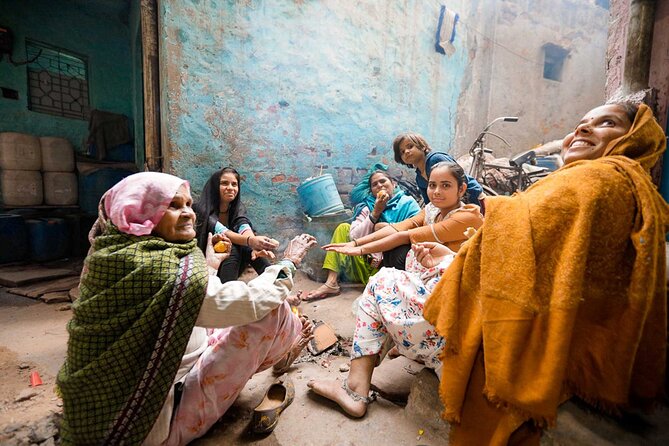
Sanjay Colony is not a museum of poverty. It is a working neighborhood, with homes, workshops, shops, temples, a school, and people getting on with daily life. This walking tour helps you read the tight lanes and understand the community through a local guide, including former residents such as Ajay.
I like two things here: the money supports education and social projects, and the guides offer personal context rather than simply pointing at difficult living conditions. Guides including Hema, Kavita, Chitti, Dolly, Sam, and Ajay have been praised for clear English, patience, and warm storytelling. The main consideration is emotional: seeing cramped housing and hard working conditions can be uncomfortable, and the no-photography rule means you must pay attention instead of collecting pictures.
In This Review
- Key points about the Sanjay Colony walk
- What Sanjay Colony reveals about Delhi
- The Harkesh Nagar meeting point
- Following the market and industrial lanes
- Homes, temples, and a community at work
- The local school and community projects
- Why the guides matter so much
- Group size, pace, and comfort
- The emotional side of visiting a slum
- Who will get the most from this tour
- Should you book the Sanjay Colony Slum Tour?
- FAQ
- Where does the Sanjay Colony tour start?
- Where does the tour finish?
- How long does the tour last?
- What is included in the price?
- Is hotel pickup included?
- Can I take photographs in Sanjay Colony?
- What should I wear?
Key points about the Sanjay Colony walk
- A working South Delhi neighborhood: See homes, small businesses, workshops, temples, a market, and a local school rather than a staged display.
- Local guides shape the experience: Ajay has lived in the colony, while guides such as Hema, Kavita, Chitti, Dolly, and Sam bring different personal links and stories.
- About 1 hour 45 minutes on foot: The pace is described as relaxed, with time for questions and explanation.
- Community benefit is central: A significant share of the proceeds supports educational and social projects, including services for children.
- No photography inside the colony: This protects residents’ privacy and keeps the visit from becoming a photo hunt.
- Easy metro connection: The walk begins and ends at Harkesh Nagar Okhla, near Okhla Phase II.
What Sanjay Colony reveals about Delhi
Delhi is often presented through grand monuments, wide roads, and polished shopping areas. Sanjay Colony offers a different view: a dense residential and industrial community in South Delhi where homes and workspaces sit close together.
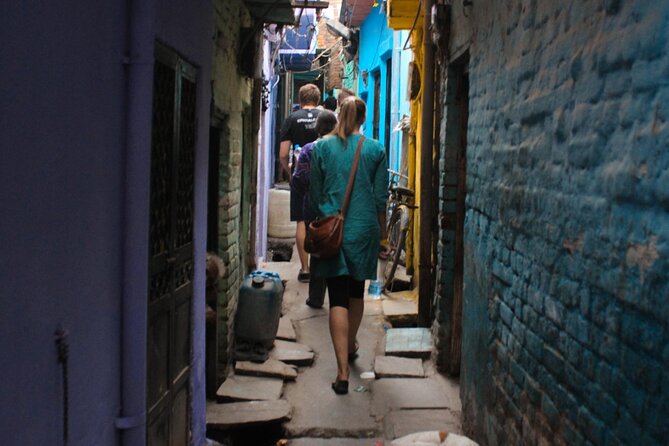
The point is not to treat the neighborhood as an attraction. The point is to understand how a community functions when space and resources are limited. You may see family homes beside small enterprises, narrow lanes leading to places of worship, and work carried out in modest surroundings. The tour puts these details together so you can see the colony as a place where people live, work, study, worship, and raise children.
That distinction matters. Without a local connection, walking through a residential area can feel intrusive or confusing. You may not know which lanes are appropriate, what a business does, or how the local school fits into the community. A guide provides the social context and helps keep your visit respectful.
The tour also pushes back against the idea that a low-income neighborhood is defined only by what it lacks. The area has difficulties, but it also has local businesses, religious life, medical support, schools, and a sense of community ownership. Some guides have described how conditions changed after basic services were introduced. That gives the walk a more useful focus than simple shock.
More community walks in New Delhi:
- New Delhi Slum Walking Tour
★ 5.0 · 360 reviews - Delhi: Ethical Sanjay Colony Slum Tour
★ 4.9 · 242 reviews - Sanjay Colony Slum Tour with Local Guide
★ 5.0 · 160 reviews
The Harkesh Nagar meeting point
You meet at Harkesh Nagar Okhla, in the Okhla Phase II area of New Delhi. The tour ends at Harkesh Nagar Okhla metro station, which makes the return journey practical if you are staying elsewhere in the city.
Hotel or residence pickup is not included, so you need to arrange your own way to the meeting point. The metro connection is the clearest advantage. If you are unfamiliar with South Delhi, allow enough time to reach Okhla Phase II and locate the starting point without rushing.
The exact meeting instructions should be checked carefully after booking. Confirmation is provided at the time of reservation, and the tour is offered in both morning and afternoon departures. That gives you useful flexibility around a day of sightseeing.
The walk lasts about 1 hour 45 minutes. Water or a cold drink is included, but you should still arrive prepared for a walking tour in Delhi. Wear comfortable shoes and modest clothing that covers your shoulders and knees. Conservative dress is expected throughout India, and it is especially important in a residential community with temples and family homes.
Following the market and industrial lanes
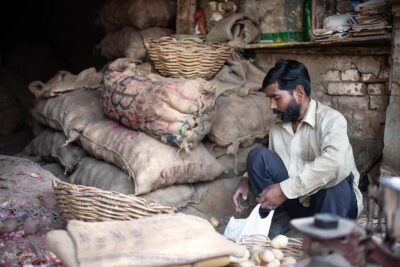
The route includes Sanjay Colony market and the All Surplus Store area. The market is a practical introduction to the neighborhood because it shows how residential and commercial life overlap. Sanjay Colony is mainly residential, but its many industries give the area a steady working rhythm.
From there, the guide leads you through the community rather than keeping you on a single commercial street. The route may include family homes, small shops, workshops, temples, and other local institutions. The exact order can vary, and some places may be closed on a particular day. One account noted that not every stop was operating during the visit, so it is best to see the route as a look at daily life, not a guaranteed checklist.
This is where the guide makes the difference. A lane that seems like a jumble of doors and wires can become a place with a clear purpose: a home, a shop, a workshop, or a route children take to school. Guides have explained local industries, working conditions, and the ways residents support themselves.
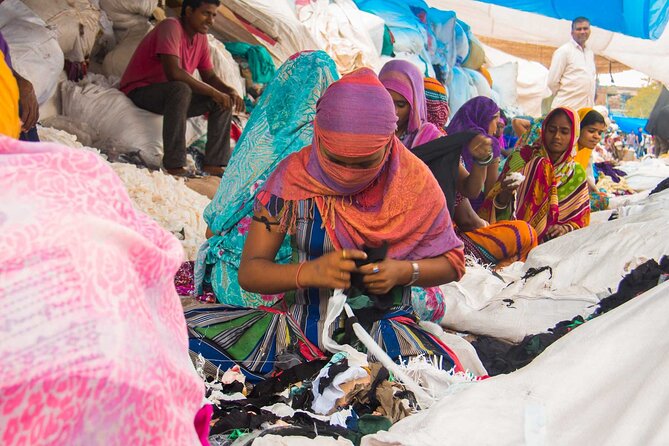
Some accounts describe visits to work areas where women are employed by the hour. This offers a closer look at how income is made in the colony, but it can also be difficult to see. You are not being shown a comfortable version of the area. The value comes from receiving an explanation of the work rather than drawing quick conclusions from appearances.
Homes, temples, and a community at work

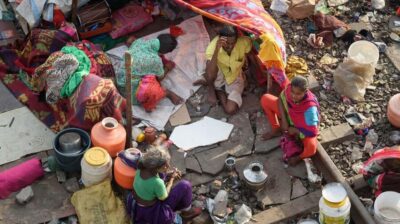
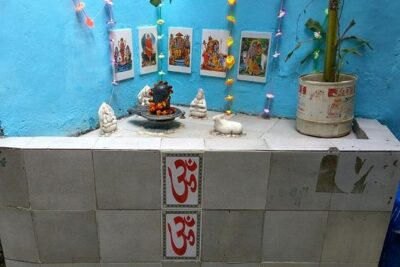
The walking route also takes in the ordinary places that make Sanjay Colony a neighborhood rather than a backdrop. You may see family homes, temples, local stores, and small businesses operating within a very compact area.
The guides describe a community where people of different religions live and celebrate together. That is an important part of the visit. The tour is not only about economic hardship. It also shows the social ties, faith communities, and local routines that help residents manage daily life.
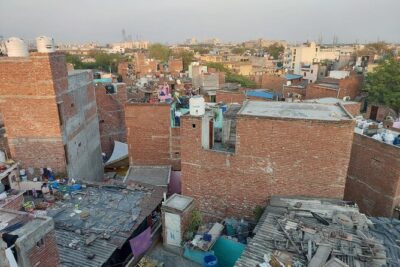
Some guides have taken groups to a rooftop or another higher point to look across the area. From there, you can better understand how tightly packed the colony is. This is a useful visual pause, but it should not turn the neighborhood into a spectacle. The no-photography rule applies inside Sanjay Colony, and you should respect it without exception.
Children may approach to say hello, and some people in the area may be curious about the group. The best response is simple courtesy. Listen to the guide, avoid handing out money, and do not photograph anyone. If you want to support children, buying something through a local shop, where appropriate, is less intrusive than distributing sweets or cash directly.
Same city, a completely different day out:
- Old & New Delhi City Tour – Half or Full Day Options Available
★ 5.0 · 4,811 reviews - Old & New Delhi City Tour – Choose Half or Full Day Experience
★ 5.0 · 4,513 reviews - Same Day Taj Mahal, Agra Fort & Baby Taj Tour from Delhi by Car
★ 5.0 · 4,304 reviews - Taj Mahal Day Tour from Delhi by Superfast Train – TOP RATED TOUR
★ 5.0 · 4,166 reviews
The local school and community projects
The school is one of the most meaningful parts of the walk. The tour operator supports educational projects in the local community, and the route can include a school serving local children. Seeing the school helps explain where part of the tour fee goes.
The school may not be active during every visit. One account specifically noted that it was not possible to see the school at work that day. Even so, learning about the educational program gives the tour a practical result. You are not simply paying for access to a neighborhood. A significant share of the proceeds is directed back into education and social support.
The supplied information says a large portion of the fee goes back to the community, with several accounts specifying 80 percent of profits. Since the wording refers to profits rather than the full ticket price, I would read this as a social-impact tour with a stated community contribution, not as a direct donation of 80 percent of your $21.20 payment.
That distinction does not cancel the value. At $21.20 per person, the price is reasonable for a nearly two-hour guided walk, an English-speaking local guide, and a drink. The stronger value is that the fee helps fund work connected to the place you are visiting. If community benefit is important to your booking choices, this is one of the tour’s best features.
Why the guides matter so much

The guide is the main reason this experience can feel respectful rather than intrusive. The strongest guide descriptions focus on patience, first-hand knowledge, clear English, humor, and the ability to answer questions without rushing.
Ajay is a former resident of Sanjay Colony and has offered personal insight into living conditions, local work, and community life. Hema has been described as passionate, friendly, and funny, with a clear sense of how to show both the hard parts and the supportive side of the area.
Kavita has guided visitors through the colony with first-hand information about its people and industries. Chitti has been praised for a polite, friendly manner and for showing how residents work to improve life for their families. Dolly has been noted for precise explanations and strong storytelling, while Sam has been described as informed and personally connected to the community.
Your guide will depend on the departure date. I would not book this expecting a particular person unless the operator confirms that in advance. I would book it expecting a local English-speaking guide who can explain what you are seeing and help you behave appropriately.
The guide also sets the tone for questions. Children, poverty, religion, work, housing, public services, and education can all be sensitive subjects. Ask with respect, listen to the answer, and remember that the people you see are residents, not performers.
Group size, pace, and comfort

The experience is promoted with groups limited to six people, with a private option available for an added cost. The general activity information also gives a maximum of 25 participants, so group size may depend on the booking option and operating arrangements. If a small group matters to you, confirm the exact format before paying.
A small group is useful here. The lanes are narrow, and a large crowd would make the visit feel heavier for residents and harder for you to hear. A smaller party also gives you more room to ask questions and stay close to the guide.
The pace is generally described as relaxed and without pressure. That suits the subject. You need time to absorb what you are seeing, and a rushed walk would turn the experience into a quick look at difficult conditions. The route is on foot, so closed-toe shoes are a wise choice. The tour includes water or a cold drink, but hotel pickup, drop-off, and other transport are not included.
Most people can participate, but the experience does involve walking through a dense residential area. If you have mobility concerns, ask the provider about the route before booking. The available information does not promise a fully accessible path.
The emotional side of visiting a slum
You should think carefully about your reason for booking. If you want photographs of poverty or a dramatic story to tell, this is the wrong experience. Photography is not permitted, and the tour is built around privacy, explanation, and community benefit.
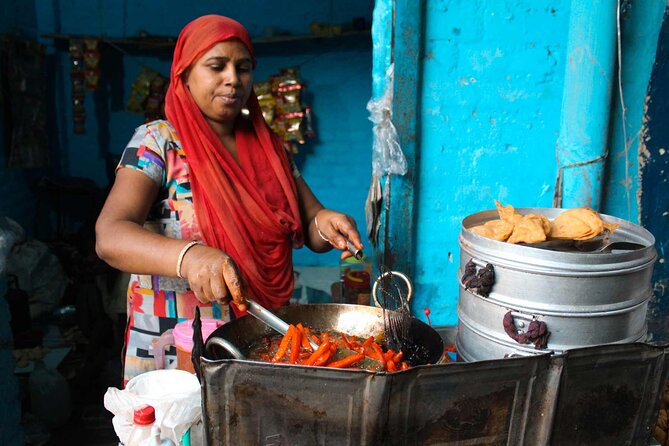
If you want a more honest understanding of how people live and work in one part of Delhi, the visit can be worthwhile. You will see hardship, and some people find that difficult. At the same time, the walk shows pride, enterprise, faith, family life, and local effort. Several guides stress that residents are not simply waiting for help. They are working, organizing, and supporting their children.
Safety is another concern many people will have. The experience is described as safe, and guides accompany you throughout the route. That does not mean you should switch off your manners. Dress modestly, stay with the group, follow instructions, and do not wander into homes or workspaces without an invitation.
The no-photo rule is a benefit, not a nuisance. It changes your attention. Instead of checking your phone, you listen to the guide and notice how the community works. You leave with observations and explanations rather than images taken from someone else’s private life.
Who will get the most from this tour
I would recommend this walk to you if you have already seen Delhi’s famous sights and want to understand a less familiar part of the city. It also suits families with older children. One guide was praised for answering an eight-year-old’s questions, suggesting that the experience can work well for curious children who can handle serious subjects.
It is a good choice if you value local guides, small groups, responsible tourism, and community education. The morning and afternoon departures make it easier to fit into a busy Delhi schedule.
You may want to skip it if you are looking for a polished attraction, a photo-heavy outing, or a route with guaranteed access to every stop. The school or other businesses may not be open, and the conditions can be confronting. This is a real residential community, so the day will not unfold like a scripted show.
Free cancellation is available if you cancel at least 24 hours before the local start time. Changes or cancellations inside that window are not accepted for a refund.
Should you book the Sanjay Colony Slum Tour?
Book it if you want context, not spectacle. At $21.20, the cost is fair for nearly two hours with a local English-speaking guide, a drink, and a tour designed to return money to educational and social projects in the community.
The best version of this experience is a small group with a guide who has a personal connection to Sanjay Colony. Arrive modestly dressed, use the metro to Harkesh Nagar Okhla, leave your camera ready to stay in your bag, and bring an open but respectful attitude.
I would not make this your only view of Delhi. I would add it to a broader visit that includes the city’s history, food, architecture, and public life. Taken on its own terms, this walk offers a useful correction to the usual Delhi itinerary and a direct way to support local education.
FAQ
Where does the Sanjay Colony tour start?
It starts at Harkesh Nagar Okhla in Okhla Phase II, Okhla Industrial Estate, New Delhi, Delhi 110020, India.
Where does the tour finish?
The walk ends at Harkesh Nagar Okhla metro station, providing public transport connections to the rest of Delhi.
How long does the tour last?
The tour lasts approximately 1 hour and 45 minutes.
What is included in the price?
The tour includes a local English-speaking guide and water or a cold drink.
Is hotel pickup included?
No. Hotel or residence pickup and drop-off are not included, so you need to reach the meeting point yourself.
Can I take photographs in Sanjay Colony?
No. Photography is not permitted inside Sanjay Colony out of respect for residents.
What should I wear?
Wear modest, respectful clothing that covers your shoulders and knees. Comfortable closed-toe shoes are also sensible for the walking route.
Just added around New Delhi
- Delhi: All-Inclusive Full or Half Day Tour With Hotel Pickup★ 5.0 · 3 reviews
- From Delhi : All Inclusive Taj Mahal Tour by Gatimaan Express★ 5.0 · 3 reviews
- Skip the line: Taj Mahal Agra Private Day Trip From Delhi By Car★ 5.0 · 3 reviews
- Old Delhi Half day private city tour★ 5.0 · 3 reviews
- Delhi: Old and New Delhi One Day Private Guided City Tour★ 5.0 · 3 reviews
- New Delhi Night City Tour★ 5.0 · 3 reviews
- A full-day tour of Old & New Delhi Monument Express Entry★ 5.0 · 3 reviews
- Sultanpur Bird Sanctuary Tour Near Delhi★ 5.0 · 3 reviews
Community and Local Life Walks, compared.



New Delhi Sanjay Colony slum Tour (Private Tour)
Read our review →
Moral Slum Tour in Delhi with hotel pickup & drop
Read our review →Browse the lists this tour appears in