
Reviewed · GOLDEN TRIANGLE TOURS
Private Golden Triangle Tour 3 Night/4 Days – All Inclusive
The Golden Triangle packs Delhi, Agra, and Jaipur into four busy days, linking Mughal mosques, Rajput forts, grand palaces, and noisy market streets. At $175 per person, this private tour gives you a car, driver, attraction fees, water, and WiFi while keeping the schedule focused on the big sights.
I like the private setup, since your group is not tied to strangers or a fixed coach schedule. I also like the human touch from guides Vikram in Agra and Raj in Jaipur, who explain the sights without turning every stop into a long history lecture.
The main drawback is pace. You cover a lot of ground, and accommodation is not included, despite the all-inclusive name. You must arrange your own hotels, and some days leave little room for wandering or rest.
In This Review
- Key points at a glance
- What the four-day route is really like
- Delhi begins with Mughal grandeur
- Mehtab Bagh gives you a different Taj Mahal view
- The Taj Mahal deserves your best energy
- Agra Fort adds the Mughal power story
- Fatehpur Sikri and Chand Baori make the transfer worthwhile
- Jaipur opens with Amber Palace
- Jaipur’s short stops reveal the city’s style
- The final five-hour drive returns you to Delhi
- What $175 includes, and what it does not
- The guide and driver setup is a major strength
- Who should book this private Golden Triangle tour?
- Should you book it?
- FAQ
- How long is the Golden Triangle tour?
- Which destinations are covered?
- Is this a private tour?
- Is hotel accommodation included?
- Is transportation included?
- Are attraction entrance fees included?
- Is bottled water provided?
- Is WiFi available?
- How long is the drive back to Delhi?
- Can I cancel for a full refund?
Key points at a glance
- The Taj Mahal gets a full two-hour visit, giving you enough time for the approach, marble details, and garden views.
- Agra and Jaipur each have local guides, with Vikram named for Agra and Raj for Jaipur.
- The private air-conditioned car makes the long drives more comfortable and lets only your group take part.
- Admission fees and taxes are included, along with bottled mineral water and onboard WiFi.
- The route covers major landmarks, from Jama Masjid and Akshardham in Delhi to Amber Palace and Hawa Mahal in Jaipur.
- Hotels, drinks, insurance, tips, and personal costs are extra, so budget beyond the $175 tour price.
What the four-day route is really like
This is a sightseeing-heavy circuit rather than a slow cultural holiday. You move from Delhi to Agra, continue toward Jaipur, then spend the final day driving back to Delhi.
The private format helps. You have an air-conditioned car for the drives and city visits, and only your own party joins the activity. That matters in India, where traffic, heat, and long road stretches can make a shared coach feel tiring.
The schedule also demands energy. The first three days are full of stops, and the final drive to Delhi takes about five hours. If you want time for cafés, shopping, or unplanned street wandering, you may need to protect some free time yourself.
More Golden Triangle itineraries from New Delhi:
- 3-Days Private Golden Triangle Tour: Delhi, Agra & Jaipur by Car
★ 5.0 · 1,107 reviews - 3-Days Private Golden Triangle Tour: Delhi, Agra & Jaipur by Car
★ 5.0 · 1,098 reviews - 3-Day Delhi, Agra and Jaipur Private Tour – India Golden Triangle
★ 5.0 · 812 reviews
Delhi begins with Mughal grandeur
Your first stop is Jama Masjid, built by Mughal emperor Shah Jahan between 1650 and 1656. The mosque sits on a hill near the Red Fort and gives you an immediate sense of Old Delhi’s scale and religious importance.
The planned visit lasts about 30 minutes. That is enough for a brisk look, but not a long, quiet visit. Dress and behave respectfully at this active place of worship, and expect the stop to feel more like a strong introduction than a full architectural study.
From there, you enter Chandni Chowk by ride or on foot. The itinerary describes a small covered rickshaw that carries two people, a useful way to move through the market area without trying to manage the streets yourself.
This is one of the most characterful parts of the day. The point is not a polished monument. It is the sensory rush of Old Delhi, with narrow market routes and constant movement around you. The listed time is only 30 minutes, so you should treat it as a quick taste, not a full shopping expedition.
Swaminarayan Akshardham follows, with about 50 minutes at the Hindu temple and spiritual-cultural complex near the Noida border. Its scale and decorative style contrast sharply with the Mughal sites earlier in the day.
The itinerary then places Mehtab Bagh in Agra on Day 1. This garden lies across the Yamuna River from the Taj Mahal and is known for its view toward the monument. The visit lasts about 40 minutes.
This first day appears to combine Delhi sightseeing with the transfer toward Agra, so expect a long day in the car. The advantage is that you begin Agra quickly. The cost is less downtime between major sights.
Mehtab Bagh gives you a different Taj Mahal view
Mehtab Bagh is useful because it changes your angle. Instead of entering the Taj Mahal complex, you see the famous white mausoleum from across the river, where the surrounding space gives the monument more breathing room.
It is a short stop, but a worthwhile one for photographs and perspective. If your priority is entering the Taj itself, remember that the main visit comes the next day. Mehtab Bagh is an outlook, not a substitute for the interior and gardens.
The stop also prepares you for the visual contrast that defines Agra. The Taj Mahal is refined and pale. Agra’s other major monument, the fort, is heavier and more defensive.
The Taj Mahal deserves your best energy
Day 2 begins with the Taj Mahal and allows about two hours. This is the right place to spend serious time, since the monument rewards a slower look than a quick photo stop.
The mausoleum was commissioned by Shah Jahan in 1632 as a tomb for his wife. Its ivory-white marble, formal gardens, and position beside the Yamuna make it one of the world’s most recognizable buildings, but the scale is still striking when you approach it.
I would plan to arrive ready for this visit rather than treating it as just another item on the schedule. Two hours can pass quickly once you have taken in the main building, the grounds, and the changing views.
The private guide arrangement should help here. Vikram is the named guide in Agra, and the available feedback specifically praises his ability to give the right amount of information without making the visit feel like a school lesson. That is exactly the role you want at a place where the setting can speak for itself.
A few more New Delhi departures worth comparing
- Old Delhi Food Tour: A Night Time Feast
★ 5.0 · 326 reviews - Delhi: Guided Evening Tour of Delhi City
★ 4.8 · 233 reviews - Night View of Delhi Tour – 4 Hrs
★ 5.0 · 197 reviews - 3 Days 2 Night Golden Triangle Tour – Private Luxury Experience
★ 5.0 · 191 reviews
Agra Fort adds the Mughal power story
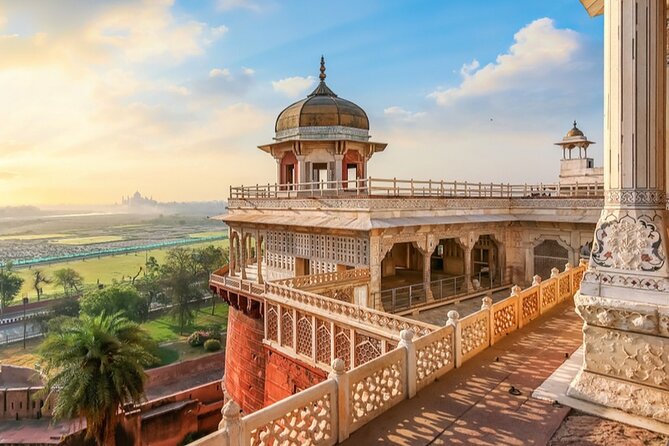
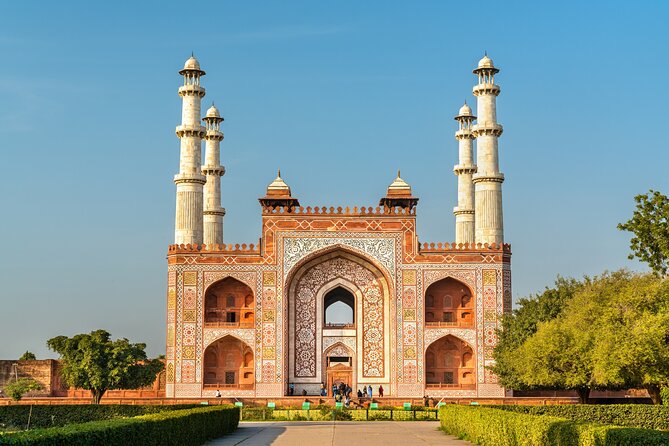
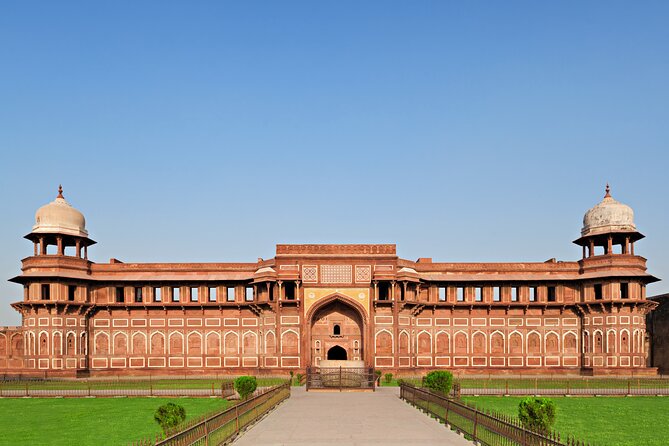
After the Taj Mahal, you spend about 40 minutes at Agra Fort. Built between 1565 and 1573 for Mughal emperor Akbar, the fort became a major residence and seat of power.
The red sandstone walls and enclosed courtyards present a different side of Mughal rule. At the Taj, the focus is love, mourning, and beauty. At Agra Fort, you get military strength, court life, and imperial control.
Forty minutes is enough to see the main sections with a guide, but it is not enough for every corner. Stay close to the guide and keep your questions focused if you want the visit to fit the day.
Fatehpur Sikri and Chand Baori make the transfer worthwhile
Fatehpur Sikri is about an hour from your day. The former Mughal city lies west of Agra and is built largely from red sandstone. Buland Darwaza, the great gateway, leads toward the Jama Masjid complex and gives the stop a powerful sense of arrival.
The city is important because it shows an imperial capital that was planned and built, then later left behind. The red stone creates a clear visual link with Agra Fort, but the open courtyards and abandoned setting give Fatehpur Sikri a different mood.
Admission is listed as free for this stop, which helps keep the included-cost package simple. You still need to watch the clock, because the route continues toward Rajasthan.
Chand Baori is a 30-minute stop at a massive stepwell dating from the eighth or ninth centuries. Its water was reached by about 3,500 steps, arranged in a sharp geometric pattern.
This is an excellent roadside break because it is unlike the palaces and forts elsewhere on the route. You get a glimpse of how water shaped older settlements and architecture in a dry region. The short visit lets you see the structure and take in its repeating steps, but you will not have time for a long exploration.
Jaipur opens with Amber Palace
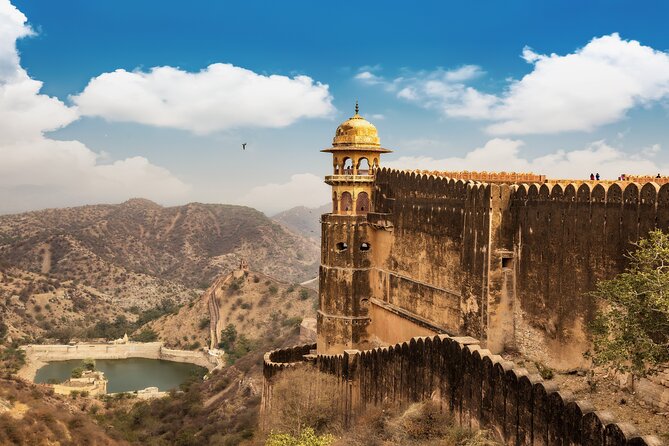
Day 3 is the Jaipur day, and Amber Palace gets two hours. Also called Amer Fort, it sits in Amer, about 11 kilometers from Jaipur.
This is one of the strongest stops on the entire route. The fort combines defensive walls, palace spaces, and decorative interiors, and its hill setting gives you a broader view of the old Rajput capital area.
Two hours is a useful amount of time here. You can move beyond the entrance, see the main palace sections, and listen to Raj, the named Jaipur guide. The personal guide matters at a complex site like this because the buildings can otherwise blur together.
The Rajput character also gives the tour a fresh turn. Delhi and Agra center on Mughal and later imperial sites. Amber Palace shifts the story toward Rajasthan’s royal courts, fort building, and regional power.
Jaipur’s short stops reveal the city’s style
Jal Mahal is a 15-minute photo stop at a palace set in the middle of Man Sagar Lake. The building dates originally to 1699 and was later renovated along with the lake.
Because you do not enter for a long visit, keep your expectations clear. This is about the view from outside and the unusual sight of a palace surrounded by water. It is a brief pause between larger monuments.
The City Palace receives about an hour. Maharaja Sawai Jai Singh II established it when he founded Jaipur and moved his court from Amber in 1727.
The palace helps connect Jaipur’s old capital to its planned city center. You will see another side of Rajput royal life, with formal spaces and court architecture rather than the stronger defensive feel of Amber.
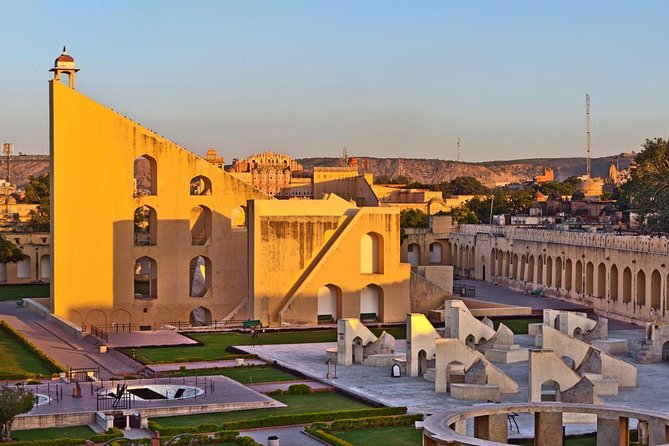
Jantar Mantar follows for an hour. Sawai Jai Singh II built its collection of 19 astronomical instruments, completed in 1734. The site includes the world’s largest stone sundial, according to the supplied description.
This is one place where a guide adds real value. The instruments can look abstract until someone explains how they track time and celestial movements. Raj’s role should be especially useful here, since the meaning of the structures is not always obvious from their shape alone.
Hawa Mahal gets 15 minutes. Built from pink and red sandstone, the Palace of Breeze sits along the edge of the City Palace and extends to the women’s chambers.
This is another short exterior-focused stop. Its many windows and delicate front make it one of Jaipur’s most recognizable sights, but 15 minutes is enough mainly for photographs and a quick explanation. If you want a longer look at Jaipur’s streets or shops, this schedule will not provide much spare time.
The final five-hour drive returns you to Delhi
After breakfast on Day 4, you drive back to New Delhi, with about five hours listed for the transfer. The tour ends with a drop-off in Delhi.
This final day is simple, but the drive is a real part of the experience. The air-conditioned car, WiFi, and bottled water become most useful here. You should not expect another sightseeing program in Delhi unless you arrange one separately.
The route is practical for someone who needs to finish where they started. It is less attractive for someone hoping for a relaxed final morning in Jaipur, since the day is centered on the return journey.
What $175 includes, and what it does not
At $175 per person, the price is strong if you value a private car and want the major entrance fees handled. You get an air-conditioned vehicle for transportation and city touring, bottled mineral water, onboard WiFi, and all listed fees and taxes.
The important catch is accommodation. Hotels are not included, so the real trip cost depends on where you stay in Delhi, Agra, and Jaipur. You also pay separately for tips, laundry, phone bills, beverages, medical and baggage insurance, and any service not specifically listed.
The phrase all inclusive should therefore be read as transport and listed sightseeing costs, not a complete holiday package. Ask yourself what you want to buy: a private four-day sightseeing framework, not four nights of lodging and meals.
Group discounts may improve the value for larger parties. Since this is a private activity, the price may make particular sense when split among several people in the same car, though the exact discount is not provided.
The guide and driver setup is a major strength
The clearest personal touch comes from the named guides. Vikram handles Agra and Raj handles Jaipur. The available feedback also praises the driver and describes both guides as attentive, helpful with photos, and careful about giving information in manageable amounts.
That balance matters. The Golden Triangle can become a parade of facts, names, and dates. A guide who explains the important points, then lets you look around, makes the monuments easier to enjoy.
The tour does not name the driver, so you cannot assess that person in advance. Still, the private vehicle and direct support are valuable on a route with long drives and several city transfers.
Who should book this private Golden Triangle tour?
I would choose this tour if you want to see the essential sights in a short period and prefer a private car to a shared group. It suits first-time visitors who want help with the major monuments, especially if they appreciate local guides at Agra Fort, the Taj Mahal, Amber Palace, and Jantar Mantar.
It also works well for families or friends who can share the private vehicle and want control over their own group. The onboard WiFi and water are small comforts that matter during long road days.
I would hesitate if you want a slow pace, extensive market time, or a package with hotels and meals already arranged. The schedule is ambitious, and the $175 price does not cover accommodation or many personal expenses.
Confirmation arrives at booking. Most participants can take part, and the tour is near public transportation. Free cancellation is available up to 24 hours before the local start time. Within 24 hours, changes and refunds are not accepted. Poor weather or failure to meet the minimum number of participants may lead to a different date or a full refund.
Should you book it?
Book this private Golden Triangle tour if your priority is coverage, convenience, and the main sights at a reasonable starting price. The combination of included admissions, a private air-conditioned car, and Agra and Jaipur guides named Vikram and Raj gives the trip more substance than a bare transfer service.
Skip it if you want hotels included, flexible mornings, or long unscheduled breaks. Before paying, add your accommodation, meals, drinks, insurance, and tips to the $175 price. If that total still fits your plan, this is a practical way to connect Delhi, Agra, and Jaipur without having to manage the route alone.
FAQ
How long is the Golden Triangle tour?
The tour lasts approximately four days and includes travel between New Delhi, Agra, Jaipur, and back to New Delhi.
Which destinations are covered?
The route covers New Delhi, Agra, Jaipur, and the return to Delhi.
Is this a private tour?
Yes. Only your group participates in the private tour or activity.
Is hotel accommodation included?
No. Accommodation is not included in the tour price.
Is transportation included?
Yes. The tour provides a safe, air-conditioned car for drives and city sightseeing.
Are attraction entrance fees included?
The listed itinerary includes admission tickets at the specified attractions, and all fees and taxes are included. Fatehpur Sikri is listed with free admission.
Is bottled water provided?
Yes. Bottles of mineral water are available in the car.
Is WiFi available?
Yes. WiFi is provided onboard the vehicle.
How long is the drive back to Delhi?
The return drive from Jaipur to Delhi takes approximately five hours.
Can I cancel for a full refund?
Yes, if you cancel at least 24 hours before the experience start time. Cancellations or changes made within 24 hours are not refunded or accepted.
More 4-Day Experiences in New Delhi
- 4 Days Golden Triangle Tour
★ 5.0 · 499 reviews - Private Luxury Delhi – Agra – Jaipur Golden Triangle Tour – 3 Nights 4 Days
★ 5.0 · 306 reviews - Private 4-Day Golden Triangle Tour with Ranthambore Tiger Safari
★ 5.0 · 248 reviews - From Delhi: Private 4-Day Golden Triangle Luxury Tour
★ 4.8 · 226 reviews
Just added around New Delhi
- Delhi: All-Inclusive Full or Half Day Tour With Hotel Pickup★ 5.0 · 3 reviews
- From Delhi : All Inclusive Taj Mahal Tour by Gatimaan Express★ 5.0 · 3 reviews
- Skip the line: Taj Mahal Agra Private Day Trip From Delhi By Car★ 5.0 · 3 reviews
- Delhi: Old and New Delhi One Day Private Guided City Tour★ 5.0 · 3 reviews
- New Delhi Night City Tour★ 5.0 · 3 reviews
- Old Delhi Half day private city tour★ 5.0 · 3 reviews
- A full-day tour of Old & New Delhi Monument Express Entry★ 5.0 · 3 reviews
- Sultanpur Bird Sanctuary Tour Near Delhi★ 5.0 · 3 reviews
Golden Triangle Tours, compared.
3-Days Private Golden Triangle Tour: Delhi, Agra & Jaipur by Car
Read our review →3-Days Private Golden Triangle Tour: Delhi, Agra & Jaipur by Car
Read our review →
3-Day Delhi, Agra and Jaipur Private Tour – India Golden Triangle
Read our review →
Four-Day Private Luxury Golden Triangle Tour to Agra and Jaipur From New Delhi
Read our review →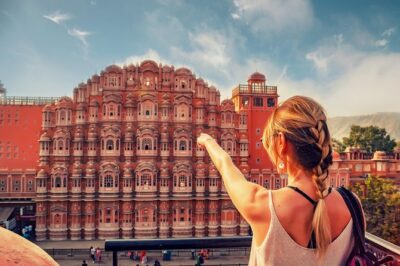
Jaipur Day Trip from Delhi by Car or Train – All Inclusive
Read our review →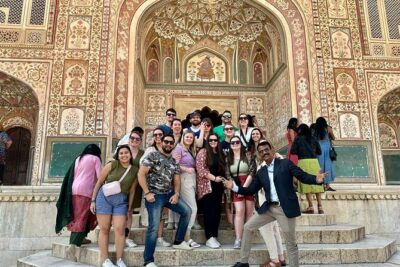
Jaipur City Private Day Tour from Delhi by Car – All Inclusive
Read our review →
5 Nights 6 Days Private Golden Triangle Tour – Delhi Agra Jaipur
Read our review →
Browse the lists this tour appears in