

Reviewed · GOLDEN TRIANGLE TOURS
8-Day Private Golden Triangle Tour with a Ranthambore Wildlife Safari From Delhi
India’s great north circuit is packed into eight days here: Mughal forts, marble tombs, royal palaces, crowded markets, and two safari outings in Ranthambore. The private car and driver take much of the strain out of a first visit, while local guides handle the major sights.
I like the door-to-door planning, from airport pickup to the final Jaipur to Delhi transfer. I also like the mix of famous monuments and less polished stops, especially Chandni Chowk, Galtaji’s monkey temple, and Ranthambore Fort. The tradeoff is a lot of road time, plus entrance fees are mostly extra and the safari vehicle is shared.
In This Review
- Key points to know before booking
- A strong first look at India’s Golden Triangle
- Day 1: A soft landing in New Delhi
- Day 2: Delhi’s Mughal core and grand avenues
- Day 3: The Taj Mahal and Agra Fort
- Day 4: Fatehpur Sikri on the road to Ranthambore
- Day 5: Two safari outings in Ranthambore
- Day 6: From tiger country to Jaipur
- Day 7: Jaipur’s forts, palaces, and observatory
- What the $1,065 price really covers
- How the private setup affects your days
- Who should book this eight-day route
- Should you book the Golden Triangle and Ranthambore tour?
- FAQ
- How long is the tour?
- Where does the tour begin?
- Where does the tour end?
- Is this a private tour?
- How many people are required to book?
- Are hotel stays included?
- Are meals included?
- Are monument entrance fees included?
- What is the cancellation policy?
Key points to know before booking
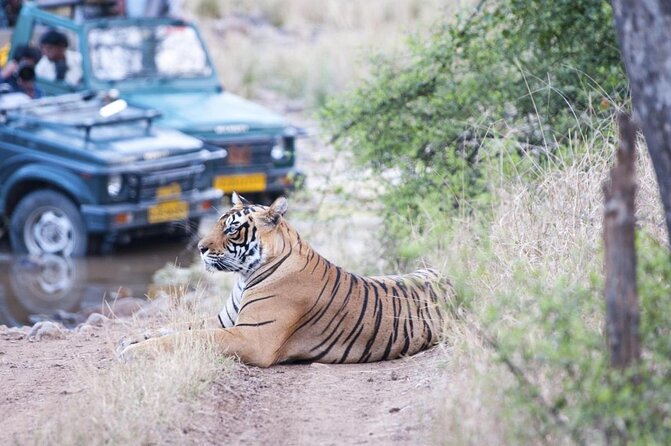
- Two Ranthambore safaris give you a real chance to see wildlife, but tiger sightings can never be promised.
- Private transport means your own group travels by air-conditioned car, with a driver handling India’s difficult traffic.
- Delhi’s major sights include the Red Fort, Jama Masjid, Humayun’s Tomb, Qutub Minar, and Lotus Temple.
- Agra includes the Taj Mahal and Agra Fort, with Fatehpur Sikri added on the way to Ranthambore.
- Jaipur gets a full sightseeing day, covering Amber Fort, City Palace, Jantar Mantar, Hawa Mahal, and more.
- The $1,065 price includes seven hotel nights, seven breakfasts, two dinners, guides, transfers, and safari costs, but not most monument tickets or personal spending.
A strong first look at India’s Golden Triangle
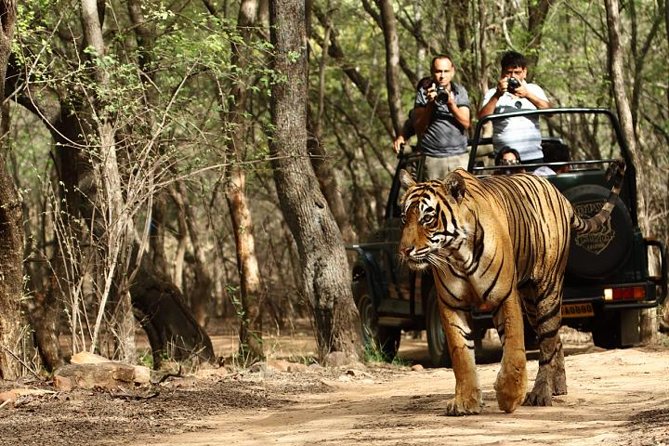
This private 8-day journey connects Delhi, Agra, Ranthambore, and Jaipur in one continuous trip. You are not simply ticking off the Golden Triangle. The route adds a wildlife stop, so the experience shifts from Mughal architecture to tiger country and then to Rajasthan’s royal past.
The main benefit is organization. A representative meets you at the airport, assists with the hotel transfer, and helps with check-in. From there, a private air-conditioned vehicle carries you between cities, with English-speaking guides assigned in Delhi, Agra, and Jaipur.
That arrangement matters in India. You do not need to work out each hotel transfer, find a driver for every monument, or negotiate transport after a long day. The driver also deals with the traffic, which can be intense around Delhi, Agra, and Jaipur. Babulat was singled out for safe driving and helpful sightseeing suggestions, although his English was described as limited.
This is a private tour for your own booking party, but the Ranthambore jeep or canter safaris are shared. That is an important distinction. You get personal attention on the road and at the city sights, but the wildlife portion is not exclusive.
More tiger safari itineraries from New Delhi:
- Private 4-Day Golden Triangle Tour with Ranthambore Tiger Safari
★ 5.0 · 248 reviews - From Delhi: 4-Day Golden Triangle & Ranthambore Guided Tour
★ 4.7 · 121 reviews - 4 Day Golden Triangle with Ranthambore Tiger Safari Tour from Delhi
★ 5.0 · 110 reviews
Day 1: A soft landing in New Delhi
The first day is intentionally light. Airport pickup, hotel transfer, and check-in are the main tasks, and you can arrive between 8 a.m. and 11 p.m. If your arrival time allows, a short visit to Akshardham Temple may be possible.
I like this gentle start. Delhi can feel like a lot in the first few hours, and having someone meet you at the airport is useful after a long flight. Do note the early-arrival rule: if your flight lands before 8 a.m., a room may need to be booked for the previous night at an extra cost.
There is no full Delhi sightseeing schedule on this day, so do not book this tour expecting an immediate morning of monuments. Use the first evening to rest and get ready for a busy second day.
Day 2: Delhi’s Mughal core and grand avenues
The Delhi sightseeing day covers a broad sweep of the city. You begin with the Red Fort, the former residence of Mughal emperors and a UNESCO World Heritage site. Its scale gives you a useful introduction to the power of the Mughal court, though one hour is a brisk visit.
From there, you walk through the Chandni Chowk area toward spice and jewelry markets. This is one of the most revealing parts of the day. The lanes are crowded and energetic, and the market visit gives you a closer look at daily commerce than a palace courtyard can provide. Keep your pace flexible and stay close to your guide in the busy streets.
Jama Masjid follows. Shah Jahan commissioned the mosque in 1656, and its broad courtyard and large scale make it one of Delhi’s key landmarks. Dress appropriately for a religious site, and remember that admission charges are not included.
At Raj Ghat, you visit the memorial marking the place where Mahatma Gandhi was cremated. It is a quieter stop after the market and mosque. Humayun’s Tomb then offers a more open setting, with formal gardens, water channels, and a carefully proportioned double-domed mausoleum. The garden design is especially worth noticing because it helped shape later Mughal architectural work.
India Gate and Parliament House are drive-by sights rather than full visits. India Gate honors Indian soldiers who died serving in the British Army during World War I, while Parliament House is known for its circular form and 1927 opening.
The day finishes at Qutub Minar and Lotus Temple. Qutub Minar rises 73 meters and includes five tapering levels of red sandstone and marble. The tower has 379 spiral steps, though the visit does not mean you should expect to climb them. Lotus Temple, a Baháʼí House of Worship dedicated in 1986, provides a very different architectural finish.
The range is impressive, but the schedule is full. The Delhi guide quality can make a big difference. One especially strong guide was praised for answering questions clearly and explaining the sites in detail. Since guides are assigned separately by city, the experience may vary from Delhi to Agra and Jaipur.
Day 3: The Taj Mahal and Agra Fort
After breakfast, you drive about four hours from Delhi to Agra. Once you check in, the afternoon is given to Agra’s two major sights.
The Taj Mahal gets about three hours, which gives you time to take in the complex without rushing through it. Shah Jahan built the monument in memory of Mumtaz Mahal, and its appeal is not limited to the central white structure. Pay attention to the balance of the building, the surrounding gardens, and the way the monument changes as you approach it.
Your guide can add meaning to what might otherwise become a quick photograph stop. The Taj is the emotional center of the trip, but it is also a place where timing and patience matter. The schedule gives you more breathing room here than at some of Delhi’s shorter stops.
Agra Fort follows, with about two hours. Emperor Akbar began the fort in 1565, and the complex includes structures such as Moti Masjid and Musamman Burj. The fort also connects directly to Shah Jahan’s final years, since he is believed to have died there after being imprisoned.
I like the pairing. The Taj Mahal shows Mughal refinement and memory, while Agra Fort gives you the political and domestic setting behind the dynasty. Monument admission is not included, so budget separately for both sites.
More Golden Triangle itineraries from New Delhi:
- 3-Days Private Golden Triangle Tour: Delhi, Agra & Jaipur by Car
★ 5.0 · 1,107 reviews - 3-Days Private Golden Triangle Tour: Delhi, Agra & Jaipur by Car
★ 5.0 · 1,098 reviews - 3-Day Delhi, Agra and Jaipur Private Tour – India Golden Triangle
★ 5.0 · 812 reviews - Four-Day Private Luxury Golden Triangle Tour to Agra and Jaipur From New Delhi
★ 5.0 · 807 reviews
Day 4: Fatehpur Sikri on the road to Ranthambore
The route shifts from Agra toward Ranthambore, home to one of India’s best-known wildlife sanctuaries. The drive is part of the experience, but it also means another long travel day. You check into your Ranthambore hotel on arrival and have time to prepare for the early wildlife outing.
Fatehpur Sikri is the main stop on the way. This former Mughal city was founded in the 16th century, and its red sandstone buildings are grouped around the center. The Buland Darwaza gate leads toward Jama Masjid and gives the site an immediate sense of scale.
The listed stop is about 40 minutes, so think of Fatehpur Sikri as a compact introduction rather than a full exploration. It is a worthwhile pause because it breaks up the road journey and adds another Mughal setting to the trip.
The included accommodation and transfers are especially useful on this day. You do not need to find your own transport after reaching the park area, and dinner is included on two nights during the tour. The exact hotel names are not specified, so confirm the property details before booking if hotel style is important to you.
Day 5: Two safari outings in Ranthambore
This is the tour’s change of pace. You set off early for Ranthambore National Park, a former hunting ground of the Maharajas of Jaipur and now a protected area known for its tiger population.
Two jeep or canter safaris are included on a shared basis. The schedule allows up to 12 hours for the park experience, with an early outing and another part of the day set aside for wildlife viewing. That long window is valuable because animals follow their own timetable, not yours.
The description suggests that tiger sightings are easy, but you should treat that claim carefully. A large tiger population improves your odds, yet no wildlife drive can guarantee a sighting. The real value is the chance to see India’s wildlife in its natural setting, along with the sounds and scenery of the park.
The safari vehicle is shared, so this is the one part of the trip where your private arrangement becomes a group activity. If personal space and complete control over timing matter greatly to you, ask for the exact vehicle arrangement before paying.
Ranthambore Fort is another short stop, located within the national park near Sawai Madhopur. You get about 30 minutes there, which is enough for a brief look but not a long fort visit. The combination of ruined fort and wildlife area is unusual, and it gives the day a stronger cultural layer than a safari alone.
Plan for an early start and a long day. Wear suitable clothing for the weather, since the tour runs in all conditions. The park day is rewarding for someone who wants variety, but it is not a restful interlude between cities.
Day 6: From tiger country to Jaipur
After breakfast, you leave Ranthambore for Jaipur, known as India’s Pink City. The day is mainly a transfer and hotel check-in, with the rest of the afternoon at leisure.
That free time is welcome after the safari schedule. You can rest, walk near the hotel if convenient, or simply save energy for Jaipur’s packed sightseeing day. The tour also includes Galtaji Temple, often called the Monkey Temple, with its temples, natural springs, and sacred water tanks.
Galtaji is a good choice because it feels different from the formal palace circuit. It is a Hindu pilgrimage site with a more active religious character. The visit lasts about 40 minutes, and admission is extra.
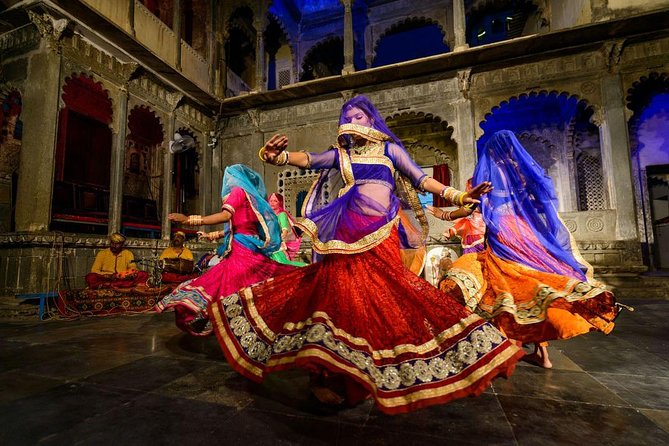
In the evening, you can attend the sound and light show at Amber Fort. The program focuses on local legends, folklore, traditions, and folk music. It is an optional-feeling addition rather than the central reason to visit the fort, and its ticket is not included.
Day 7: Jaipur’s forts, palaces, and observatory
Jaipur receives the tour’s fullest sightseeing day. You start at Amber Fort, outside the city, with a jeep ride included. The fort’s halls and courtyards show the meeting of Mughal and Rajput design, and the Diwan-e-Khas, or Hall of Private Audience, is among its most striking spaces.
Only about an hour is allocated to the main Amber Fort visit, followed by a separate hour for Diwan-e-Khas. That is enough for a guided overview, but you may want to confirm the exact order and walking time if you prefer a slower fort visit.
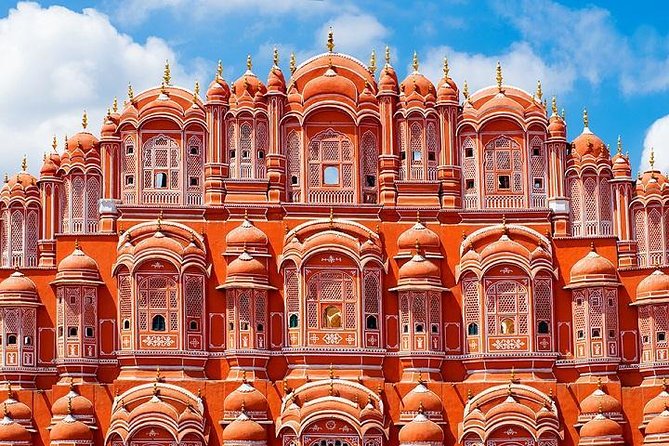
Hawa Mahal, the Palace of the Winds, was built so royal women could watch street life from behind screened windows. You get about 40 minutes here. The familiar pink facade is best understood as part of Jaipur’s urban design, not just as a photo backdrop.
The City Palace follows with a two-hour visit. Once the seat of Jaipur’s Maharaja, it is now a museum combining Mughal and Rajput elements. The longer time allocation makes this one of the day’s more substantial palace stops.
Jantar Mantar is next. Its enormous instruments turn astronomy into architecture, and the site includes the world’s largest sundial. You have about an hour to see it, which is useful because the instruments make more sense when a guide explains what each one measured.
Albert Hall Museum adds an Indo-Saracenic building and collections to the day. It was built in 1868 by Maharaja Sawai Ram Singh II and is one of Jaipur’s oldest museums. The one-hour visit keeps the pace moving, though you will need to be selective.
Jal Mahal, the Water Palace, is a 20-minute photo stop at Man Sagar Lake. Birla Mandir Temple, built of white marble at the base of Moti Dungari, gets about 30 minutes. Both are shorter visits, but they provide visual variety after the forts and museums.
This is an ambitious day. I like the range, but you should not expect to study every palace room and museum display in detail. The assigned Jaipur guide becomes important here, especially when deciding what deserves your attention.
What the $1,065 price really covers
At $1,065 per person, the package includes seven nights in double or twin-share hotels, private transfers and sightseeing in an air-conditioned vehicle, seven breakfasts, two dinners, English-speaking guides in Delhi, Agra, and Jaipur, the Amber Fort jeep ride, and two shared Ranthambore safari outings.
That is a useful bundle for a first visit. You are paying for transport, coordination, hotels, and several guided days, not just admission to monuments. The private vehicle is the largest practical benefit because the route covers several cities and ends with a roughly six-hour drive from Jaipur back to Delhi.
The price does not include most monument entrance fees, personal expenses, gratuities, or other costs outside the inclusions. Put money aside for the Red Fort, Jama Masjid, Humayun’s Tomb, Qutub Minar, Lotus Temple, the Taj Mahal, Agra Fort, Jaipur sights, and optional sound and light show.
The safari cost is included, but the vehicles are shared. Group discounts are offered, and at least two people must book. For two people who want a structured introduction without arranging hotels and intercity transport, the price is sensible. Solo booking is not available under the stated minimum.
How the private setup affects your days
You travel only with your own booking group in the car, which gives you more control than a large coach tour. You can ask questions, spend longer at a favorite monument when the schedule permits, and avoid repeatedly organizing local transport.
The arrangement is not fully private at every stage. Local English-speaking guides cover Delhi, Agra, and Jaipur, while Ranthambore safaris are shared. Guide quality can differ by city, so ask questions and tell your guide what interests you most.
The driver is another key part of the experience. Safe driving matters on this route, and Babulat received particular praise for staying calm in difficult traffic and offering useful suggestions. His English was described as so-so, so use the city guides for detailed cultural questions.
Who should book this eight-day route
I would recommend this tour to a first-time visitor who has limited time and wants India’s main sights arranged in a clear sequence. It suits couples, families, and small groups who prefer a private car to a coach and want hotel nights, breakfast, and transfers handled in advance.
It is also a good fit if Ranthambore matters to you. Many Golden Triangle routes focus only on monuments, while this one adds two wildlife outings and the chance to see a tiger sanctuary.
I would hesitate if you want slow travel, long unscheduled afternoons, or complete privacy during the safari. The route is full, road journeys are substantial, and admission costs can add up. You should also be comfortable with a varied guide experience rather than expecting the same person and style in every city.
Should you book the Golden Triangle and Ranthambore tour?
Book it if you want an efficient first taste of Delhi, Agra, Jaipur, and Ranthambore without handling the transport puzzle yourself. The strongest features are the private car, the broad city coverage, the Taj Mahal and Agra Fort pairing, and two included safari outings.
Before booking, ask for the hotel names, the exact safari vehicle type, and a current estimate of monument entrance fees. If you accept the long drives and shared safaris, this is a practical way to see a great deal of northern India in eight days.
FAQ
How long is the tour?
The tour lasts approximately eight days and includes seven nights of accommodation.
Where does the tour begin?
The tour begins in New Delhi, with airport pickup and assistance transferring to the hotel.
Where does the tour end?
After breakfast on Day 8, you are driven from Jaipur to Delhi, a journey of about six hours, and dropped at your hotel or chosen airport.
Is this a private tour?
Yes. Your booking group has a private tour and private sightseeing vehicle. The Ranthambore jeep or canter safaris operate on a shared basis.
How many people are required to book?
A minimum of two people per booking is required.
Are hotel stays included?
Yes. Seven nights in double or twin-share hotels are included.
Are meals included?
Seven breakfasts and two dinners are included. Personal expenses and meals outside the stated inclusions are not covered.
Are monument entrance fees included?
No. Most admission tickets listed for Delhi, Agra, and Jaipur are not included. The Ranthambore safari costs and the Amber Fort jeep ride are included.
What is the cancellation policy?
You can receive a full refund if you cancel at least three full days before the experience start time. Cancellations or changes made less than three full days before the start time are not accepted for a refund.
More Wildlife in New Delhi
- Golden Triangle with Wildlife and Royal Castle Stay
★ 4.5 · 101 reviews - 14 Days Golden Triangle with Wildlife Safari & Heritage Rajasthan
★ 5.0 · 37 reviews - Same Day Tajmahal at Sunrise and SOS wildlife sanctuary tour
★ 5.0 · 28 reviews - From Delhi :Taj Mahal And Agra Tour with Elephant wildlife sos
★ 5.0 · 22 reviews
More Safari in New Delhi
- Private 5-Day Ranthambhore Tiger Tour from Delhi including the Taj Mahal, Agra and Jaipur
★ 5.0 · 197 reviews - Old Delhi Food Tour Safari – The Capital of Flavors
★ 5.0 · 96 reviews - From Delhi: 5-Day Tiger Safari & Golden Triangle Tour
★ 4.5 · 81 reviews - From Delhi : 6 Days Delhi, Jaipur, Agra & Ranthambore By Car
★ 5.0 · 73 reviews
Just added around New Delhi
- Delhi: All-Inclusive Full or Half Day Tour With Hotel Pickup★ 5.0 · 3 reviews
- From Delhi : All Inclusive Taj Mahal Tour by Gatimaan Express★ 5.0 · 3 reviews
- Skip the line: Taj Mahal Agra Private Day Trip From Delhi By Car★ 5.0 · 3 reviews
- Delhi: Old and New Delhi One Day Private Guided City Tour★ 5.0 · 3 reviews
- New Delhi Night City Tour★ 5.0 · 3 reviews
- Old Delhi Half day private city tour★ 5.0 · 3 reviews
- A full-day tour of Old & New Delhi Monument Express Entry★ 5.0 · 3 reviews
- Sultanpur Bird Sanctuary Tour Near Delhi★ 5.0 · 3 reviews
Golden Triangle Tours, compared.
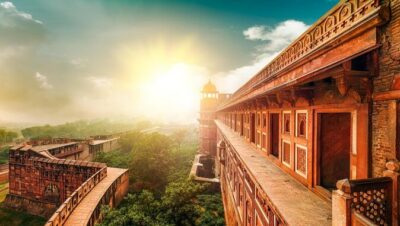
3-Days Private Golden Triangle Tour: Delhi, Agra & Jaipur by Car
Read our review →3-Days Private Golden Triangle Tour: Delhi, Agra & Jaipur by Car
Read our review →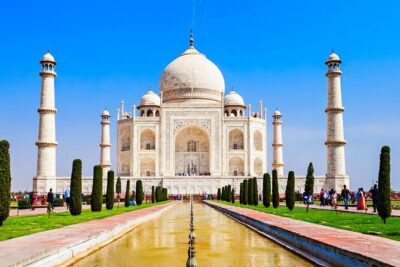
3-Day Delhi, Agra and Jaipur Private Tour – India Golden Triangle
Read our review →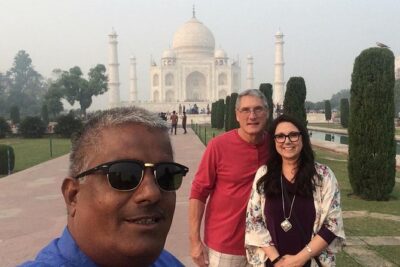
Four-Day Private Luxury Golden Triangle Tour to Agra and Jaipur From New Delhi
Read our review →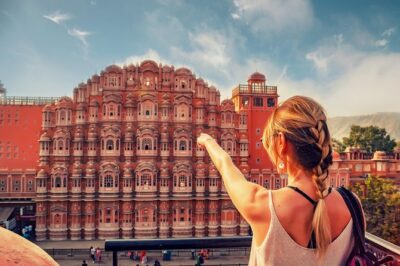
Jaipur Day Trip from Delhi by Car or Train – All Inclusive
Read our review →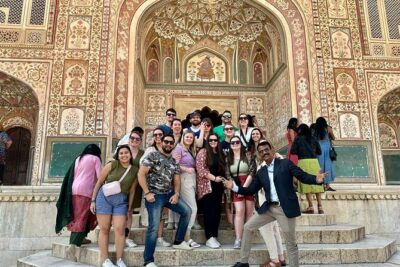
Jaipur City Private Day Tour from Delhi by Car – All Inclusive
Read our review →
5 Nights 6 Days Private Golden Triangle Tour – Delhi Agra Jaipur
Read our review →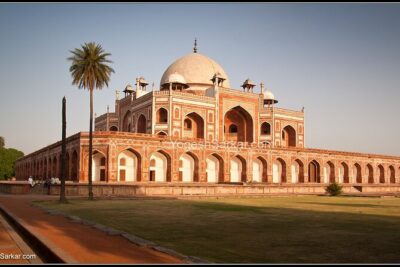
Browse the lists this tour appears in