

Reviewed · COMMUNITY AND LOCAL LIFE WALKS
New Delhi – Ethical Sanjay Colony Slum Tour with Local guide
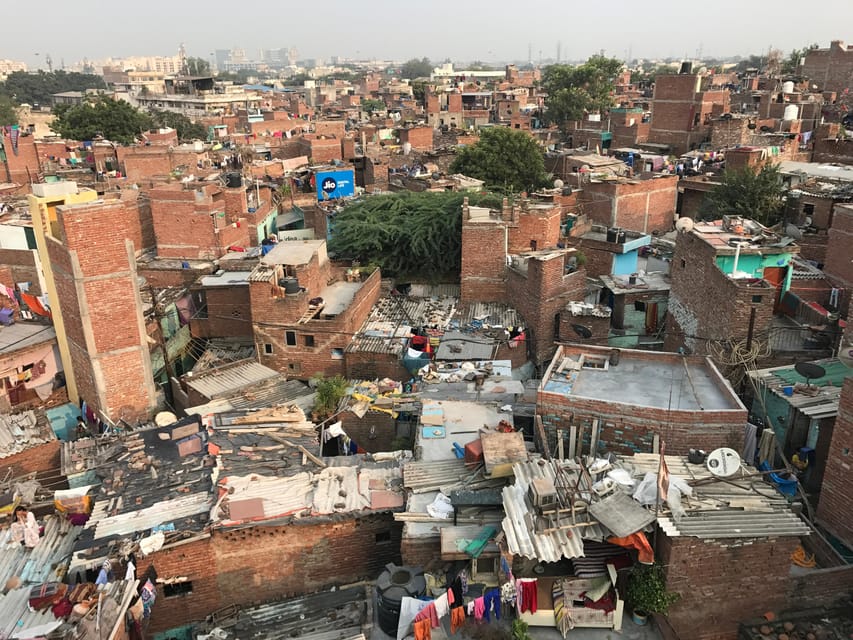
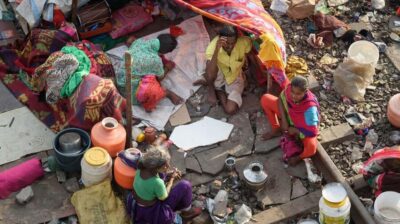
Sanjay Colony is not a sightseeing set piece. It is home to roughly 60,000 people, and this small-group walk gives you a direct look at daily life, local work, faith, schooling, and the constant task of securing water and basic services. I like the focus on local conversation and the fact that the tour supports Learning by Locals, a nonprofit education project that receives half of the profits.
I also like the compact format: a 1.5-hour tour, a maximum of six people, and an English-speaking guide who can answer questions as you walk. The main consideration is simple: this is a sensitive visit to a working community, not a polished attraction. Photography inside is not allowed, wheelchair users may find the route unsuitable, and you should join with respect rather than curiosity alone.
In This Review
- Key points to know before you go
- Why Sanjay Colony is worth seeing with a guide
- Starting at Harkesh Nagar Okhla Metro Station
- The public school and Delhi’s education system
- Walking through homes and clothing work
- Water, electricity, hygiene, and the work of daily life
- Faith and the temple at the end
- Learning by Locals and the project your ticket supports
- Tea, water, and a quiet end to the walk
- Is $19 good value?
- Who should book this experience?
- Final call: book it if you want context, not spectacle
- FAQ
- Where does the Sanjay Colony tour begin?
- How long does the tour last?
- What language does the guide speak?
- Is photography allowed inside?
- What is included in the price?
- How much of the tour’s profit supports the local nonprofit?
Key points to know before you go
- Meet at Harkesh Nagar Okhla Metro Station: The tour begins outside gate number 2, so arrive with the meeting point clear.
- See daily life beyond the main roads: The walk covers homes, clothing work, water, electricity, hygiene, schooling, and faith.
- Visit a public school from the outside: You will learn about Delhi’s education system without entering the school.
- Enter a local household: This offers a more personal look at how families use limited space.
- Finish at a temple with tea and water: The final stop connects faith with everyday life and gives you time to reflect.
- Support local education: Fifty percent of the profits go to Learning by Locals in Sanjay Colony.
Why Sanjay Colony is worth seeing with a guide
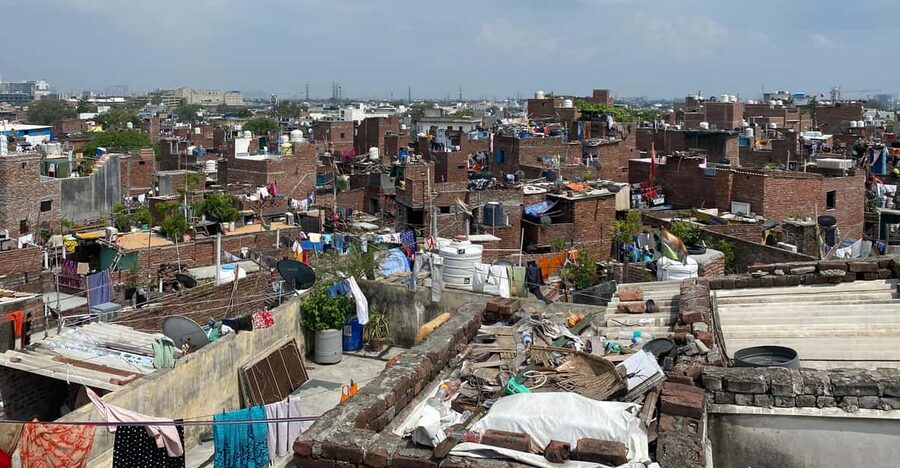
Delhi can be hard to read from a taxi window. You may pass crowded settlements without knowing who lives there, how people earn money, or how families manage basic needs. This tour gives those questions a human scale.
Sanjay Colony is described as home to about 60,000 people. That number matters because the experience is not about one unusual building or a single dramatic story. It is about a large community where daily routines continue amid limited space and uneven access to water, electricity, hygiene, and education.
I appreciate that the tour does not focus only on hardship. You also learn about work in the clothing industry, home life, local faith, and the education efforts taking place in the area. That wider view helps you avoid reducing the community to poverty alone.
The guide is central to the experience. You can ask questions as you walk and hear personal stories instead of trying to interpret everything from a distance. Recent tours have been led by guides including Salman and Shiva. Salman, described as a volunteer, has talked about life and survival in Sanjay Colony with warmth and care, while Shiva has also led groups through the area.
The small group limit is important here. With up to six participants, you have a better chance to hear the guide and ask a thoughtful question without turning the walk into a crowd. A larger booking has also taken place, but the stated small-group format is the better fit for a sensitive neighborhood visit.
More community walks in New Delhi:
- Sanjay Colony Slum Tour
★ 5.0 · 498 reviews - New Delhi Slum Walking Tour
★ 5.0 · 360 reviews - Delhi: Ethical Sanjay Colony Slum Tour
★ 4.9 · 242 reviews
Starting at Harkesh Nagar Okhla Metro Station
Your meeting point is outside gate number 2 at Harkesh Nagar Okhla Metro Station. This is a practical start because you do not need to arrange a separate ride into the area, but you should still allow enough time to find the correct exit.
The tour returns to the same metro station after the walk. That makes it easy to continue sightseeing or return to your accommodation without wondering where the experience ends.
Your guide speaks English. Since much of the value comes from explanations and questions, make sure you are comfortable following spoken English for the full 1.5 hours.
Before setting out, I would keep your clothing and behavior modest and low-key. You are entering a residential community, so avoid drawing attention to yourself. The no-photography rule inside is especially important. It protects privacy and keeps the visit from feeling like people are being put on display.
The public school and Delhi’s education system
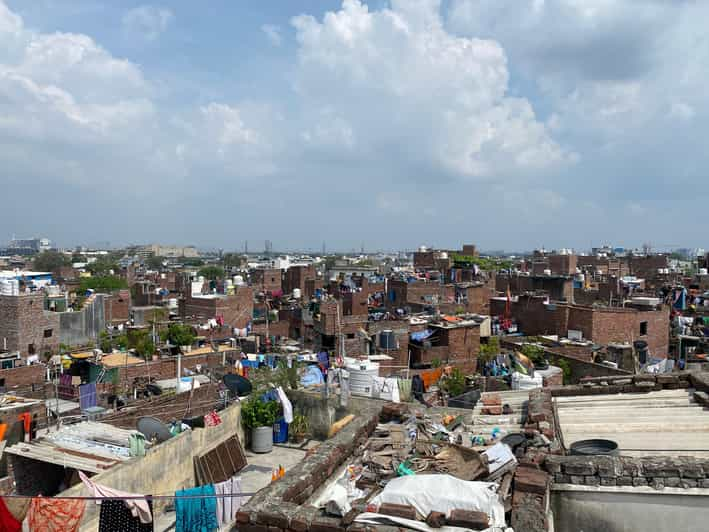
The first educational stop is a public school, viewed from the outside. You will learn how the education system works in Delhi and how schooling affects children in Sanjay Colony.
Because you do not enter the school, this part is about context rather than a tour of classrooms. That may sound limited, but it keeps the visit from interfering with school life. Your guide can explain the place of public education and discuss the pressures faced by families in the community.
This is also a useful moment to ask specific questions. You might ask how children reach school, what makes continued attendance difficult, or how local education projects help young people. The supplied information does not promise detailed answers to every question, but the format is designed for conversation.
For me, the school stop gives the tour a useful frame. You are not only seeing where people live today. You are also considering what might change future opportunities for children and young adults. Learning by Locals is part of that story, and the tour helps connect your visit with its work.
Walking through homes and clothing work
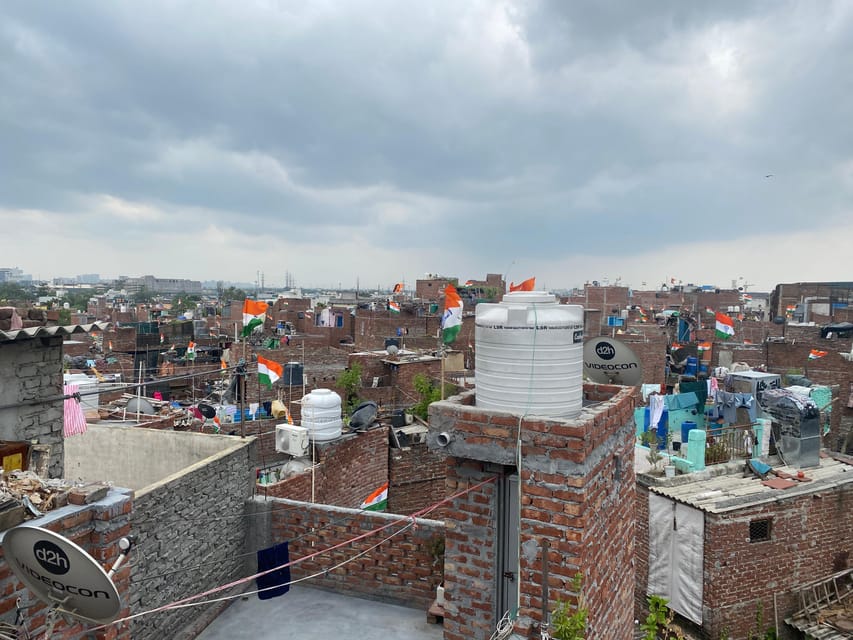
From the school area, the route continues into Sanjay Colony. Here you will see how people work in the clothing industry and hear about the ways families earn a living.
The word work matters. Informal settlements are often described only through housing conditions, but a community is also shaped by jobs, skills, trade, and routines. Seeing clothing-related work gives you a clearer picture of the economic life around you.
The tour also includes a visit to a household. This is one of the most personal stops, and it should be approached quietly. You will learn how people live in their homes and how space is used when a family has limited room.
Do not expect a staged interior or a museum-style display. The point is to listen and observe respectfully. Photography inside is not permitted, so bring your attention rather than your camera. A short visit can still be meaningful when the guide explains what you are seeing and the household visit is handled with care.
This is also where the tour may feel most confronting. You could find the living conditions difficult to process, especially if you are used to having more private space and easier access to utilities. The right response is not pity or forced cheerfulness. Listen, ask politely, and remember that the people you meet are residents, workers, parents, students, and neighbors, not simply subjects of a tour.
A few more New Delhi departures worth comparing
- Delhi: Private Old & New Delhi Guided Half- or Full-Day Tour
★ 4.9 · 2,309 reviews - Delhi: Old and New Delhi Guided Full or Half-Day Tour
★ 5.0 · 976 reviews - Private Delhi Day Tour with Tour Guide
★ 5.0 · 284 reviews - From Delhi: Jaipur Private Tour with Guide & Hotel Pickup
★ 4.9 · 257 reviews
Water, electricity, hygiene, and the work of daily life
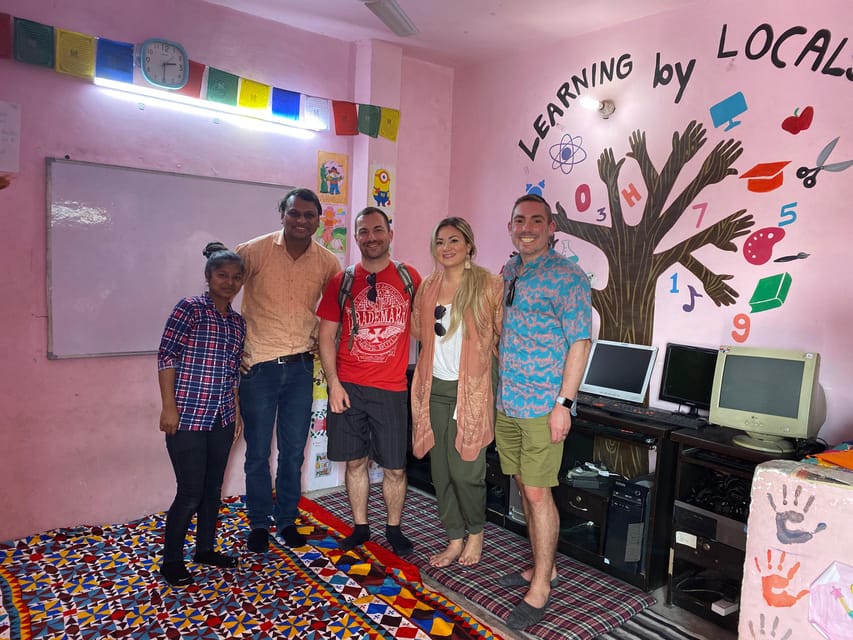
The guide explains practical problems that shape everyday life in the settlement. Water access is one of the clearest examples. Finding water affects how households plan their day and how much time and energy routine tasks require.
You will also discuss electricity and hygiene. These topics may sound basic, but they are the building blocks of ordinary life. They affect cooking, cleaning, studying, working, and staying healthy.
A good question here is how a problem changes a person’s schedule. Instead of asking only what is difficult, ask what people do to manage it. The tour is at its best when it links a service problem to a real routine.
The short duration means you will not receive a full social or economic study of Sanjay Colony. That is a fair limit for a 1.5-hour walk. Think of the experience as an introduction that gives you facts, personal stories, and a better set of questions for understanding Delhi.
Faith and the temple at the end
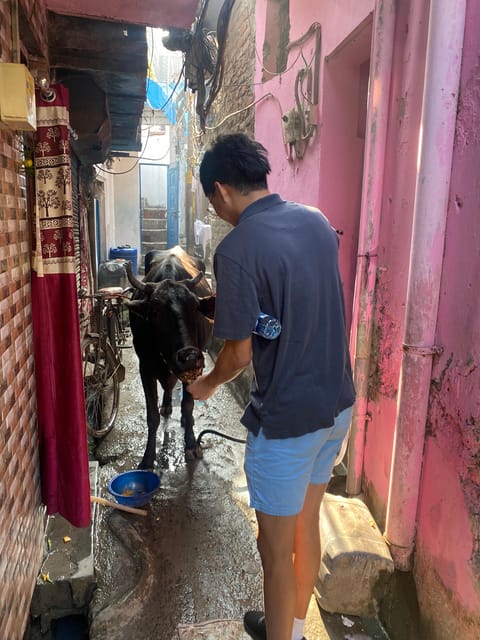
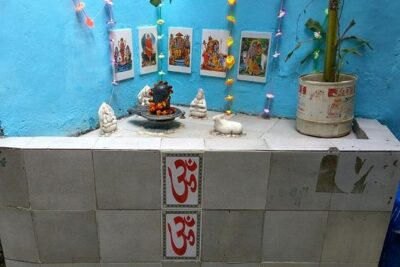
Faith is another major part of the visit. You will learn about the role religion plays in people’s lives and finish with a visit to a temple in the settlement.
Ending at the temple gives the walk a different tone. After discussing housing, work, water, and education, you see one of the places where people gather around belief and community. The temple is not presented as a decorative stop. It is part of ordinary life.
As with the household visit, behave with care. Follow your guide’s instructions, keep your voice down, and do not photograph inside. The information provided does not specify particular temple customs, so let the guide explain what is appropriate when you arrive.
I like this part of the route because it avoids presenting Sanjay Colony only through material problems. Faith, like work and schooling, helps explain how people understand and organize their lives.
Learning by Locals and the project your ticket supports
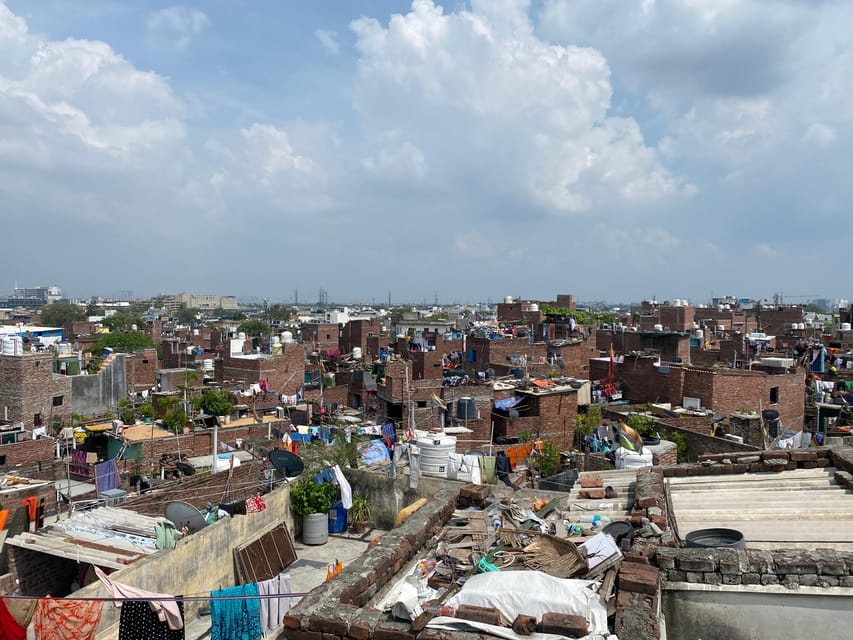
The tour includes a visit to Learning by Locals, the nonprofit education project based in the slum. This is more than a final name on the itinerary. It gives you a chance to understand how local people are working to improve education for children and young adults.
Half of the tour profits go back to the organization. At $19 per person, that makes the price reasonable if you want a guided introduction with a clear local benefit. You are paying for a guide, a small-group experience, a cup of tea, and water, while part of the fee supports education.
Still, you should not book solely as a donation. The visit works best when you genuinely want to learn and can take part respectfully. A short tour cannot solve the area’s challenges, and no responsible visitor should expect it to. Its value is in directing some money toward local education while creating a structured way for you to listen and understand.
The project also helps explain why the guide may speak with particular feeling about young people and schooling. A visit led by someone connected to the local effort can make the discussion more personal. Guides such as Salman have been praised for giving their time and speaking with care about life in Sanjay Colony.
Tea, water, and a quiet end to the walk
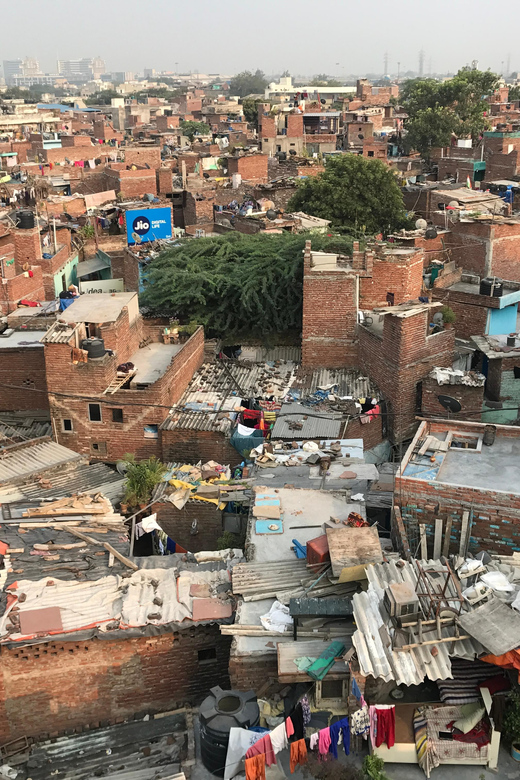
After the tour, you receive a cup of local tea and a bottle of water. These are modest inclusions, but they matter after walking for 1.5 hours, particularly if the weather is warm.
The tea also gives the experience a natural pause. You have time to think about what you have seen and ask a final question without rushing straight back into Delhi traffic.
Do not expect a meal or a long social gathering. This is a simple refreshment, not a food tour. Its purpose is practical and friendly, and it gives the walk a more human ending.
Is $19 good value?
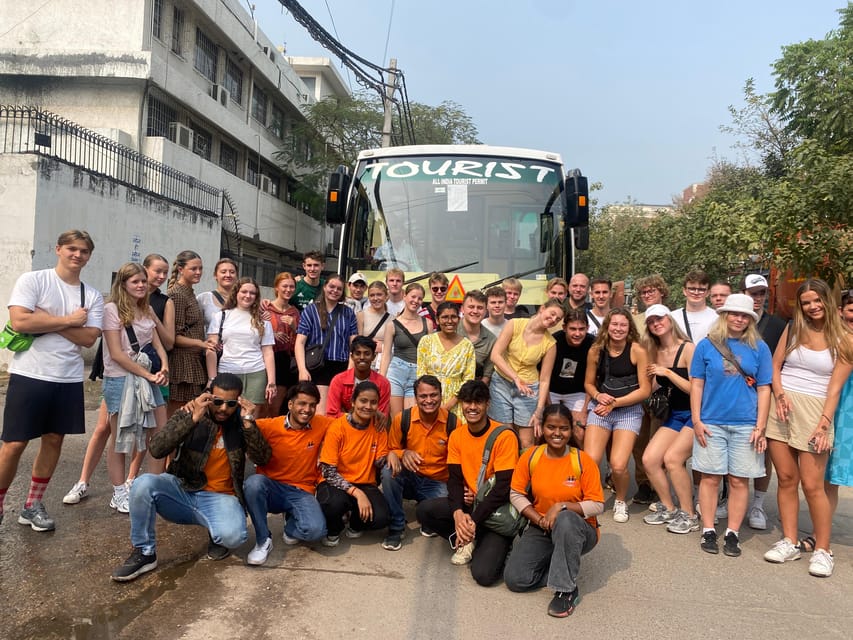
I think $19 is fair value for this experience. You get 1.5 hours with a local English-speaking guide, a small group limited to six people, tea, water, and access to a part of Delhi that you would not understand well from independent sightseeing alone.
The stronger value comes from the local education support. Half of the profits go to Learning by Locals, so your payment has a stated community connection. That does not make every part of the visit automatically right for every person, but it gives the price more purpose than a standard neighborhood walk.
The main limit is time. You will cover several subjects quickly: schooling, clothing work, household life, water, electricity, hygiene, faith, and education projects. If you want long conversations at each stop, this tour will feel brief. If you want a focused introduction that fits into a busy Delhi schedule, the length works well.
The free-cancellation policy allows you to cancel up to 24 hours before the start for a full refund. You can also reserve and pay later, which helps if your Delhi plans are still changing.
Who should book this experience?
I would recommend it to you if you want direct social context and are prepared to behave as a respectful guest. It suits people who ask questions, listen well, and understand that a residential community is not a photo backdrop.
It is especially useful for first-time visitors to Delhi who want to understand how education, informal work, utilities, faith, and housing fit together. Students, families with older children, and visitors interested in ethical tourism may also find the format useful.
I would hesitate if you mainly want photographs, shopping, or a fast, polished attraction. Photography inside is prohibited, and the subject matter can be uncomfortable. Wheelchair users should also note that the experience is listed as unsuitable for them. It is also not intended for people over 95.
Final call: book it if you want context, not spectacle
Book this Sanjay Colony walk if you want a short, guided introduction to daily life in one of Delhi’s large informal settlements, with money directed toward a local education project. The strongest reasons are the small group, the chance to ask questions, the household and temple visits, and the guides’ personal connection to the community.
Skip it if you are not ready to put privacy before photography or if you want a conventional sightseeing tour. For the right visitor, $19 buys more than a walk. It gives you a clearer understanding of how people work, study, worship, and manage daily needs, while supporting Learning by Locals at the same time.
FAQ
Where does the Sanjay Colony tour begin?
The tour begins outside gate number 2 at Harkesh Nagar Okhla Metro Station.
How long does the tour last?
The experience lasts 1.5 hours and returns to Harkesh Nagar Okhla Metro Station.
What language does the guide speak?
The live tour guide speaks English.
Is photography allowed inside?
No. Photography inside is not allowed.
What is included in the price?
The tour includes a local guide, a cup of local tea, and a bottle of water.
How much of the tour’s profit supports the local nonprofit?
Fifty percent of the profits go to Learning by Locals, the nonprofit education project in Sanjay Colony.
Just added around New Delhi
- Delhi: All-Inclusive Full or Half Day Tour With Hotel Pickup★ 5.0 · 3 reviews
- From Delhi : All Inclusive Taj Mahal Tour by Gatimaan Express★ 5.0 · 3 reviews
- Skip the line: Taj Mahal Agra Private Day Trip From Delhi By Car★ 5.0 · 3 reviews
- Old Delhi Half day private city tour★ 5.0 · 3 reviews
- Delhi: Old and New Delhi One Day Private Guided City Tour★ 5.0 · 3 reviews
- New Delhi Night City Tour★ 5.0 · 3 reviews
- A full-day tour of Old & New Delhi Monument Express Entry★ 5.0 · 3 reviews
- Sultanpur Bird Sanctuary Tour Near Delhi★ 5.0 · 3 reviews
Community and Local Life Walks, compared.



New Delhi Sanjay Colony slum Tour (Private Tour)
Read our review →Browse the lists this tour appears in